

S6 E9: Athlete-Centered Skating w/Garrett Lucash
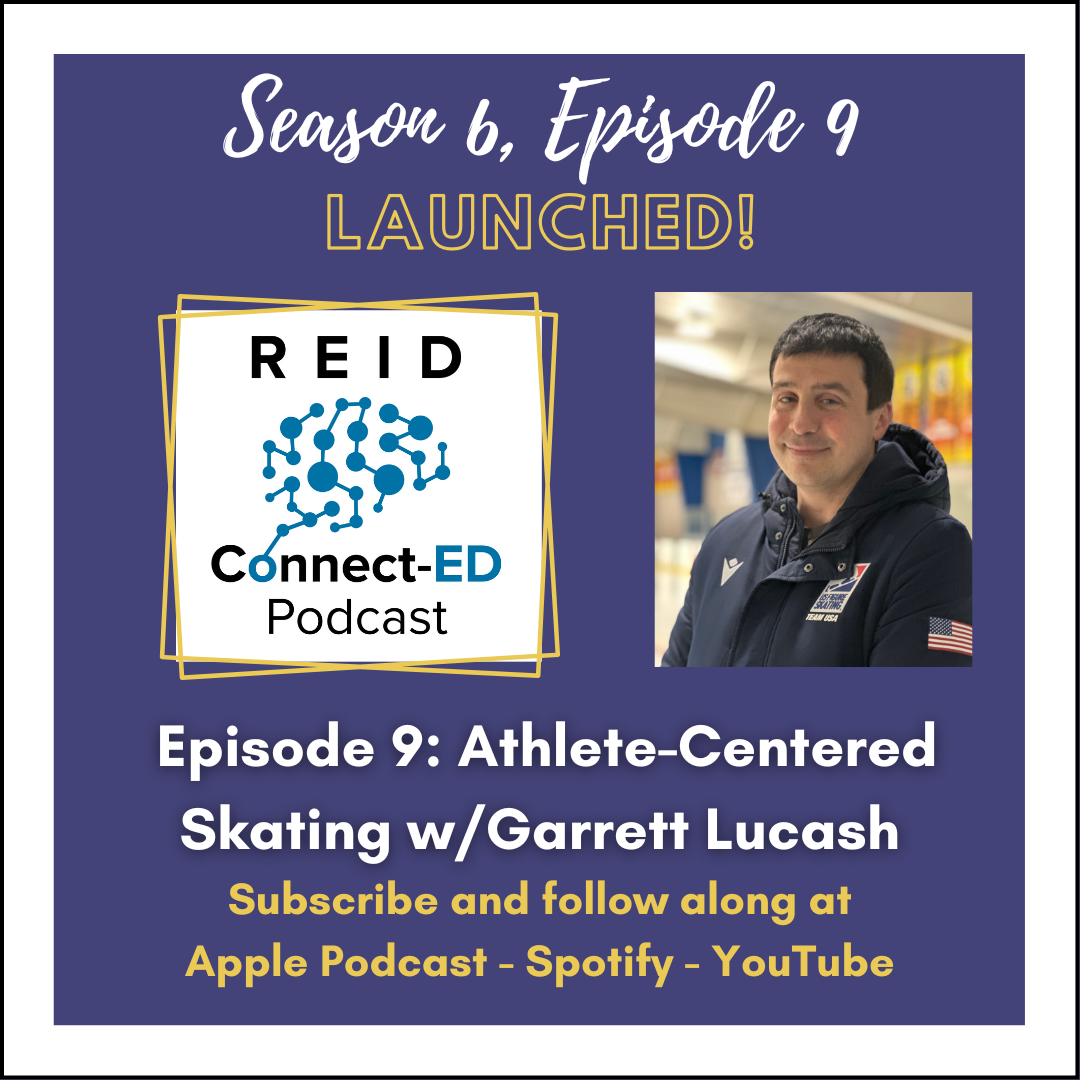
Listen Now!
-
Garrett Lucash is a retired competitive figure skater with accolades ranging from being ranked 12 in the world, being a 3-time US World Team Member (and 3-time Junior World Team Member), and a 2-time Olympic Team Alternate. His passion for the sport did not end once his competitive career ended; no, Garrett has gone on to coach competitive skaters since then for over 20 years. Garrett has won numerous coaching awards for his innovative ways of using sport science and psychology in his coaching, most recently earning the US Figure Skating 2023 Doc Counsilman Science and Technology Award. This award is given to the best coaches in all Olympic Sports. Garrett is a Team USA Coach; he is a member of the US Figure Skating Sport Science and Medicine Committee; he is Chair of the Professional Skaters Association Sport Science Committee where he creates curriculum for coaches continuing education; and he recently published a book titled “A Constraints-led Approach to Figure Skating”, published in 2022 by Routledge. Following his time in Boston at the Skating Club of Boston, Garrett reconnected with coach Sean Marshinski and brought his Athlete Centered Center program to the Detroit Skating Club where he is the Coaches Education Director.
“A Constraints-led Approach to Figure Skating”, published in 2022 by Routledge.
Garrett:
https://dscclub.com/coaches/garrett-lucash
Dr. Gerald Reid speaking at ISU World Championships Healthy Skaters Seminar
(16:50 onward for Dr. Reid)
-
Garrett shares how in his early teens, he began to reclaim his experience in skating, as his involvement in figure skating started simply by his parents inviting him into the sport as a young child.
He described making a major change in the type and atmosphere of training, which had a very positive impact on his motivation to improve in a very intrinsic and internally motivated way.
Garrett shared how much he sought to understand why and how he was being trained.
Garrett shares how figure skating is such a challenging sport and how important autonomy support and structure can coexist, rather than viewing coaching as a dichotomy between the two (all structure/no autonomy or no structure/all autonomy). He shared how his mother simply wanted him to use his time well while also granting the autonomy for how he used the time without controlling his experience or only expecting ‘successful’ outcomes to justify his involvement in sport. The structure they provided was not centered on requiring outcomes.
Alexis shares how Maria Montessori’s teaching philosophy revolves around having firm external limits but flexibility and openness in how the goal is achieved.
Alexis shares how having ‘markers’ for performance gains does not necessarily mean the athlete is earning medals, but rather it can be a way to acknowledge the long-term and big-picture progress they are making over time.
Garrett shares how once an athlete’s career is over, they will have their medals and awards, but ‘they are in a box somewhere’. Conversely, he can share all the experiences he’s had, the learning, the growth, the relationships that shaped him. He finds this to be the most important part of sport. How this can be a robust way to build yourself as a person. He shares other athletes who were ‘very successful’ who did not have a fulfilling experience and sort of ‘close the chapter’ of skating in their life and move on from it. Every athlete has their own individual journey with it.
Garrett shares how he used his negative experiences to motivate him to make things better for athletes so they can have more fulfillment in addition to ‘success’.
We discuss the way that the coach-athlete communication should involve dialogue, rather than a one-way transmission of information from the coach to the athlete.
Garrett explains how standards of performance as a dynamic and evolving criteria since each athlete is different. As a coach, his role is to shine a light on how to move forward in a way that is educational rather than just making directives.
Garrett shares how self-regulation is a skill to develop within his athletes over time. During lessons, he embeds opportunities for his athletes to make choices. This helps them to understand their process of improvement rather than just being told what to do. It also empowers the athlete to feel a sense of autonomy and empowerment. His goal is for the athlete to no longer need to rely upon him as a coach, as the bandwidth of choices they make expands. This helps his athletes to also be able to assess their progress independently.
Gerald shares how this is similar to therapy in the sense that his patients learn how to process things better; with more clarity and understanding.
Garrett shares how coaches can find it difficult to have athletes and their parents to embrace long-term progress over short-term fixes. Within-session improvements can be overly-emphasized in 30 minute coaching sessions; whereas long-term improvement could involve struggle and not showing outward signs of ‘improvement’. Struggle may be part of the longer-term improvement. Therefore, coaches may have a hard time straddling this line between prioritizing the short- versus long-term.
Gerald shares how this is much like in therapy such that patients may feel worse before they get better because of exposure to their problems and difficult aspects of life that they would need to confront to make long-term progress in therapy.
Gerald also shares how important it is for people to be open and vulnerable enough to share challenges and struggle with others, including their coach. Not doing so can stifle learning, as Alexis shares, and Garrett explains how important it is to understand the reason for the struggle
Alexis shares how sometimes adults can struggle to see their child struggle, and even excuse ‘saving kids’ from their struggle. She shares how supporting children through their struggle can help them to move from frustration to insight and confidence.
Garrett shares how learning and performance are not the same. Athletes can perform well at something they already do well, appearing to be ‘successful’ but they may not be learning anything new.
We share how important it is to be aware of what influences what is contributing to whether or not the athlete is performing well. Reflection and collaborative dialogue helps athletes to be more resilient by way of reflection. Even to consider - when do they perform their best and what goes into that? It’s an inquiry and takes time to reflect upon. It’s not just being reactive but being prepared and proactive by way of learning from experience
Gerald shares how many high level athletes hold back from asking for help, as they want to prove what they can do on their own independently. That is why Garrett’s reflective coaching process is so important because it normalizes reflection and asking for feedback and help. Alexis shares how this reflective process is very much a scaffolding for their long-term journey.
Garrett has his athlete-centered principles, which can be implemented in different ways. Just saying your expertise to the athlete is not enough to facilitate learning in every athlete. Alexis relates this to adapting to the individual.
Gerald shares how it’s easy to judge a behavior as ‘good’ or ‘bad’ rather than trying to understand the meaning or function of the behavior. Garrett’s approach helps to facilitate validating the athlete’s internal experiences rather than just judging the athlete. It acknowledges that the athlete is not going to experience the coaching and sport experience in the same way as other athletes or as the coach.
We discuss how athletes are exposed to so much on social media that it may lead youth athletes to think they should be beyond where they are; may lead them to be afraid to not ‘keep up’ with some idealistic optimization program, which may come at the expense of their well-being and long-term longevity in the sport due to burnout.
Garrett shares how his former coaches, who tragically passed away in the recent plane crash, were the first coaches he had who encouraged him to take time to himself instead of ‘push push push’.
We share how important relationships are in one’s athletic journey; the relationships make it all meaningful and make the memories that much more fulfilling.
-
Gerald Reid 00:10
Welcome back to season six of the reconnected podcast. A few episodes ago, we had an incredible conversation with Dr John McCarthy from Boston University about the psychology of coaching and the importance of teaching and learning in athletic coaching. In this episode, we're joined by Garrett Lucash, who has not only been one of the best figure skaters in the world during his prime but has since then taken his passion for the sport and his incredibly thoughtful approach into coaching competitive figure skating. In this episode, we're going to learn about his personal journey in figure skating, how he got into coaching, and then hear all about his coaching philosophy and program that he describes as athlete centered skating, just an incredibly thoughtful and powerful approach that is informed by sports science, psychology and the field of education. How can I properly introduce Garrett Lucash? Well. Years ago, Alexis and I were so grateful to be connected with Garrett, where he Alexis and I would have endless conversations about the nuances of psychology, education, mental health and sports and lo and behold, Alexis and I started a podcast about these very topics, and what a treat this is to have Garrett come on to add to this conversation in such a rich and meaningful way for the listeners. Here's Garrett's robust resume. Garrett Lucash is a retired competitive figure skater with accolades ranging from being ranked number 12 in the world being a three time us world team member, a three time Junior World Team member and a two time Olympic team alternate. His passion for the sport did not end once his competitive career ended, Garrett has gone on to coach competitive skaters since then, for over 20 years, Garrett has won numerous coaching awards for his innovative ways of using sports science and psychology in his coaching and most recently earning the US figure skating 2023 doc Councilman Science and Technology Award. This award is given to the best coaches in all Olympic sports. Garrett is a Team USA coach. He is a member of the US figure skating sports science and medicine Committee. He is chair of the professional skaters Association Sports Science Committee. He recently published the book titled A constraints led approach to figure skating, published in 2022 by route ledge. Following his time in Boston at the skating club of Boston, Gerald went on to bring his athlete centered coaching program to the Detroit Skating Club, where he is the coach's education director. So to start, for any listener who is not sure if they're interested in a talk about figure skating, let me spark your interest. Recently, in March, Boston hosted the World Championships with a rare opportunity to see the best figure skaters in the entire world, and it was hosted right here in Boston. Is unbelievable event. The International skating union invited me to be part of a panel to speak on athletic resiliency and mental health, and that was alongside Dr Katherine Ackerman and Dr Margo malanjoy, who spoke on relative energy deficiency in sports. That's red-s it's a very important topic as well. And Alexis and I, we were honored to be able to attend the Friday event. It was the women's singles event for the World Championships, and we were absolutely blown away by their performances, their gracefulness, their passion and even the sportsmanship, was just breathtaking to be able to witness at the end of the event, and came down to one final skater, American, Alyssa Liu. And not often do I get to see an athlete perform at such a high level, but with such ease, it was a remarkable thing to witness. And the thing was that when you read about her story, it's quite interesting, because Alyssa Liu at the very end actually won the entire event. Was kind of like a walk off home run in baseball, you know, the very last batter in end of the game kind of walks off with a home run. She was the last skater, and she just blew everyone away and won the entire event. The story goes is that she actually retired from figure skating following some incredible early accomplishments as a youth skater, and the story goes that when she returned, nobody expected much, because it's rare to do quite well after coming back from retirement. But when she came back, she actually found that she skated with a new found freedom from all the pressure that she felt as a youth skater, and she was skating with passion and intention and more ease. And in my opinion, the side effect, what seemed to be the side effect of that is actually won the entire world championships event. And I think this is just an amazing story about the psychology of skating, and just one story of many. There's going to be plenty of stories that Garrett Lucash is going to share today. He. He's an incredible person. He's just a just has an incredible heart and incredible soul, and he's a gift to the world of sports. So we're so happy to have you today. Garrett, well, I'm so happy to be here talking to you both.
Garrett Lucash 05:15
You know, we, as you said, we've had so many endless discussions together that they were so fun and so invigorating and inspiring, and, you know, that was such a special time that, you know, even as I'm coaching now in Michigan, I still look back on those discussions, you know, with the decision making that I have with my coaching here. So I'm just really happy that we're connecting, and I hope that we can share some fun stories, learn some more from each other, and hopefully our listeners will have something fun to get out of this experience as well.
Alexis Reid 05:53
I have to say that, you know, some of those conversations were the impetus for us starting this podcast, because how Fortunate are we to get together and talk about such incredible, thoughtful, you know, ideas of how to continue to give back to the fields that we're a part of? And you know, this conversation today will hopefully be an extension of
Garrett Lucash 06:14
that. Yeah, that's awesome. I feel honored to be honest.
Alexis Reid 06:18
So, okay, let's just talk about skating itself, like, Why? Why did you go into figure skating? What was your allure with the sport?
Garrett Lucash 06:28
Well, it's kind of a funny story, because I, actually, I shared this on national television when I was a little kid. I guess the reason I started skating is because my parents signed me up. And so I didn't really, you know, I just sort of was one of those kids that were wherever my parents took me. I just did whatever it was. So I didn't really think much of it at first. It was just that there was a local skating rink down the street from where we lived, and it seemed to be that was the cultural thing of that area. You know, everyone signs up for learn to skate, and there's this annual show that you do, and there are a lot fewer boys in skating. And so being a boy kind of gets the attention of coaches because they want to have more boys to train. And so that kind of opened up opportunities to me earlier, like whether I was successful as a competitor or not in that just the fact that I was a boy and there were coaches that wanted to train me. But the funny thing was, my interest or passion for the sport didn't develop until later on, and there was a challenge when I was kind of in my early teens, of, Hey, I didn't decide this when I was little. Like, this wasn't what I chose, necessarily. It sort of like it was chosen for me. But I realized, well, just because it started that way doesn't, didn't mean that I couldn't take ownership of it and make it my own. And when I realized I could do that, that I could say, well, sure, you know, I was brought up in this, but that does, you know, I can still take this and make it my own. When I finally did that, that kind of turned on what they call that rage to succeed.
Gerald Reid 08:30
Say more about that.
Garrett Lucash 08:34
the rage to succeed. I forgot the person who coined that term, but it's been around for a long time, and it's just this, well, I guess it's fueled by this intrinsic motivation, this internal drive to get better at something for just the mere sake of getting better. For me, I am a very, I think I would say I'm a very, like, stubborn type of person who, like, you know, I'm very, I'll persist, persist at something, and keep pushing myself because I want to, I don't want to stop until I've, you know, I keep going up, up up and getting better and better and better. And that kicked in, you know, it kind of kicked in in several different gears. So the first gear was when I realized that I could make figure skating my own. And then it, it really kicked in stronger when I was in my later teens, when I changed my training environments. And it was, it was actually a very polarizing change from like, kind of two opposite ends of a spectrum, so to speak, on not only like the way to be trained, but also the atmosphere that I was training in and being put in that situation. It wasn't like, you know, oh, maybe I can adopt this new, you know, this new culture or not. It was like a. Okay, I I have to adopt this new culture, or I'm just not gonna, it's not gonna work for me. And I did, and this was a positive thing, and I did, and I turned what was kind of a big a
Garrett Lucash 10:17
negative for me, which was that I didn't, I didn't feel that I was training in a way that was effective for what I needed to do, into this desire to want to learn more and to know why. So, like, you know, okay, why am I being trained this way? Why was I being trained in a different way before? And that ultimately led to my dive into the research literature. So,
Alexis Reid 10:45
you know, you brought up some really important points because you were exposed to skating, because your parents, you know, just introduced you to it. And I think that happens so often, right where parents are like, Oh, just try this. And I love how you're describing that it wasn't about them wanting you to do this that sparked your passion. It was more about your desire to want to improve and make it your own, and make it something that you can really fully embody and embrace. And the thing that we've gotten to know about you over the years Gerald is that when you are curious about something, if you are on a mission or a goal for something you devour as much as you can, to learn as much as you can, to do your best. And you just are like, like you said, just really set on this mission, and it's often driven by, I've noticed at least like, this passion to give back, to help, to serve, to support others who might also be interested in, you know, figure skating, which happens to be your role. But I would imagine, if you were a chef, you might have that same passion, the same desire, and you know, that same, you know, fuel that rages through you. But I love that figure skating, especially as a male, is your passion and desire. Because I think there's a lot of people who might not gravitate to that, that might really love it if they tried it. Figure
Garrett Lucash 12:08
Skating is a extremely challenging sport. Yes, extremely challenging. And it is for that reason that I think that it can be such a positive have such a positive impact under the right circumstances for someone, for someone's growth and development and maturation. And you know, my this story of my parents and having them put me on the ice. And you know, we'll say that in the beginning, they were the stimulus, or whatever, and that, you know, throughout the years, that's been a big topic of, you know, parental involvement, and also it's tied into ideas of athlete centered coaching and, you know, autonomy, support versus structure, where, where. You know, structure does not have to imply a lack of autonomy. Support and autonomy, support does not have to imply a lack of structure. And so what I mean by that, in this case is, you know, just because my parents were the factor, the main reason why I was skating when I was young, and I didn't even decide to do it more, or to add more hours, or this or that. The The important part is that, and I think this is a good lesson for parents, is it's it's good to have structure for your kids. I mean, you know my mom, her main rule was that, if you know, when I'm doing my training, she didn't want me to be wasting time, and she didn't care what place I got. She didn't care, you know, you know how, how quickly or rapidly I was improving, but she wanted to make sure that I was using my time well. And when I look back on that? I think that that was a really healthy way of creating structure and boundaries for me, where she wasn't placing an expectation like a controlling aspect of you know, to please me, to make me proud of you, you have to win a medal or something like that. Yeah, and, and, I think that is a huge there's a big difference there where, you know, I I work with a lot of skaters, and I see a lot of parents who, they're kind of driven on the success side of the, you know, the metals and the the external, extrinsic factors. And while my parents did have structure for me, it wasn't centered on that
Alexis Reid 14:47
well, you know, and we've talked about this before too, my background in both Montessori education and universal design for learning are so closely related to what you're saying. And even thinking about the development of our prefrontal. Cortex, right? Which a lot of these young skaters, their brains aren't fully developed yet. So to have that structure and those boundaries are so important because, you know, I always say, This is why adults are in the lives of children, right? We need to help to create some of those boundaries and that structure that they can work within, that they can learn within, and providing those options for autonomy and for individuality and and to practice and try things out and to make those mistakes, I think, is the most formative opportunity that we could have, and to do it through sport with a little bit of joy, I think, is the most beautiful thing. Maria Montessori said, you know, we need to make sure that we have to have flexibility within our boundaries, right? We want to have those, those firm external limits, but have flexibility in how we reach our goals, how we navigate through environments, how we do the things that we do to learn and improve. And I have to just add in too, from an executive function perspective, that you know, having these markers, these points where you can see improvement doesn't necessarily mean you're winning a medal or having the best performance ever. I'm frequently coaching parents, caregivers and young people alike to think about the small improvements that they make that are so impactful to the greater goal. Right? I know the your Student Center, your skater centered approach is, is really about understanding the process instead of just the outcome. And I think that's such an important point to make, just for for athletes, for skaters, for parents, especially, to remember that it's about, you know, this journey that we're on, not just necessarily that everybody's going to get an award in the end, yeah, I
Garrett Lucash 16:42
mean, at the end of the, you know, when you look back at the end of a chapter and say, for me, it would be, you know, at the end of my competitive skating. You know, once it's over, all you have is your you have your experiences, then, you know, you could say, well, I've got my medals. And I've always said this before, and I probably told you this when we first met, I have a bunch of medals somewhere in a box. And I'm very, you know, I feel very proud that I have those medals, but they're in a box somewhere. I don't even, I don't even know where they are, but I can tell you all these experiences that I had, the challenges, the struggles, the people that came into my life for the positive, the not so positive. I'm so thankful for that, because I think about that every day of my life, you know, and that that is the most important part of sport it is. It can be such a, such a what's the word? Robust way to build yourself as a person. And I know plenty of athletes who are very, very successful, who did not walk away from the sport feeling like they had such a great experience. So we know that a fulfilling spirit experience does not require winning a medal.
Garrett Lucash 18:27
I've had plenty of very negative experiences in just from sport in general, and I was one of those people who I chose to take those experiences into something positive, to help myself become stronger, but also as Okay. I see that these things have been happening or happened to me, and they can happen for other people. Now, I can be a person who can come forward who I certainly want results. I certainly want to develop high level athletes who are winning medals, of course, but you know, how can I do, you know, I want to do that, but the most important factor is developing the person behind the athlete first.
19:21
So, you know, the the
Garrett Lucash 19:23
I came to the end of my my that chapter, wanting to take that information and use it for something, and I think others maybe, and this is totally fine and okay for them, they decided to kind of close that chapter off and kind of start a new book. Maybe
Gerald Reid 19:41
there's a psychologist, Nancy McWilliams. She's kind of a veteran in our field. She talks about what is mental health. We always talk about, like, what is mental illness? We don't talk about what mental health is. And one of our factors, there's many of them. There's a video on YouTube. It's a fantastic video about these 10 things. She thinks one of them is actually just love. Love and Love, not only in relationships, not romantic love, but just love in aspects of your life. And part of that is, is is wrapped up in exploration and genuine, genuine curiosity. And so it sounds like you were able to regain, kind of a sense of that freedom as you got older. And as you said, you re kind of reclaim that. Can Can you describe, you know, that in relation to the experience, because I'm very much interested in the the mental health of athletes, right? Can you, can you describe that in terms of the experience of being an elite athlete with that kind of controlling aspect, you know, Dr McCarthy, in our coaching episode, talked a lot about how, in many ways, sports nowadays has become almost like a compliance factory, like you kind of everything's about compliance. Do what I say, Do what I tell you to do. He's like, coaches don't even ask questions anymore. They just tell them what to do. It's just, you know, like it's just not part of their their their dialog. It's just, there's no questions, right? And so I immediately thought of you when he said that, right? Because you know how opposite that is to the way that you approach. You know, obviously you do tell people what to do to get better. But could you speak about just the emotional experience of being an elite athlete in these two different types of experiences? It's not an either or either, right? It's not like there's all structure. There's no structure, right? There's nuance to it. But just talk a little bit about the emotional experience of an elite athlete who's basically their whole life revolves around sport. Well,
Garrett Lucash 21:28
I mean, you just, you opened up a lot right there. And you know, you mentioned about coaching nowadays, and you also mentioned the word dialog. Well, if you don't, if you don't have questions, or if you're not talking to the athlete, then there isn't dialog. A dialog is a two way exchange of information. Well, Said, right? So, yeah, we're, you know, when it's just coming from the coach, that's a one way transmission of information, and that's the controlling aspect of it. In order, if I'm a controlling coach or coach centered, then what I'm looking to do is demonstrate my wisdom, and I just need you to comply with it. The athlete centered approach, at least from my point of view, is sure I have my wisdom that I've developed over time, that's grown. But I use my wisdom to develop yours the athlete, and to do that. So I'm kind of going down. You asked me one question, which I'll I guess I'll get to after I talk about this. But so the idea of developing the athletes wisdom, and this is where my approach is kind of more influenced from the academic side of things. So this is like higher education research that I've read, where you have standards of performance. And you know, in order for someone to get better at something, they need something to compare their performance to, to get better. Otherwise, you know, progress or improvement would be kind of luck or random or chaotic. And so if you think of like self regulation and feedback loops and things like that, you know, feed a feedback loop works where you know the performer is they're comparing their their performance to a standard of some kind, and they adjust their general methods and pattern of performance accordingly. You know, if you get like a heating system in your house, obviously, if you set if the temperature is set to 70 degrees, then the heating system, it's going to compare what the current temperature is to that standard. And let's say it's if it's 65 then it turns the heat on and it brings it up to 70. The thing is, so you know that heating system is now an athlete, and that standard of performance, we know it's not something that's supposed to be, that should be etched in stone or unchanging. We need to think of standards of performance as some sort of dynamic, evolving thing, and also that coming back to me as the coach, and using my wisdom, I have a standard of performance that I'm constantly growing and evolving, but the one I'm trying to develop in you, the athlete, It may be something different than mine, and that's okay. And my expertise comes in where, okay, you know, you're the athlete who I'm training and I'm developing your standard performance. My experience comes in in that I make sure that your standard is, let's say, you know, I'm gonna take an analogy from author Kenneth Ginsberg, you know, I think of myself as sort of a lighthouse. I shine the light on the way. Allow you to go forward, but I'm not going to let you go, you know, run your boat on the shoals and get, you know, stranded. So there's that, that balance in there, of like, you know, I. I see things. You know that. I know what's expected by the judges. I know what different choices and decisions are made can lead to certain things. Again, obviously, there's nuance in everything. But you know, if an athlete decides that they, let's say, don't need to warm up before they go on the ice, I know that that's not generally healthy. So that's where I would have to I would step in with my experience and try to guide them back on track. You know, not by demanding of them, but having a conversation about, well, you know, this is the benefit of warming up before you go out on the ice. This is how it can help you. What do you think about this? Yeah,
Alexis Reid 25:39
rather than the directives making a teachable moment, right,
Garrett Lucash 25:42
right? And you know, that same author, he he has a term called choreographed conversations that I really liked. So this is talking about dialog again, and it's sort of like, as coaches, we tend to just think of the skills, the physical skills, that we need to teach. So for me, it would be teaching the jumps and the spins, but there's this whole life skill, part of the process where, you know, sure, some people have different starting points than others, but I think of like self regulation, and, you know, the ability to make decisions for oneself, those are skills as well, and I have to develop those in my in my athletes, and I start with them when they're very, very young. I just, I look at it as like a bandwidth. And now these are some of my terms, but I call them choice opportunities, where, when I'm coaching a lesson and sure, I want to teach the physical skill, I'm going to try to embed opportunities for my athletes to make choices. And clearly, when I'm working with a six year old, they're not going to be able to just to make choices that are long term impactful on their training, but I can start with A or B choices, which is like, Okay, do you want to work on skill a or Skill B first? And you know, the structure side of it is that I the coach. I've made the decision that we're going to do these two skills, but I'm giving you the choice to decide which one is first. The answer may be inconsequential, but that's not important. What's important is that I'm teaching this little six year old.
27:22
You're going to make choices.
Garrett Lucash 27:26
And so what what starts out as something that is inconsequential, eventually it will be, because my goal is for that, you know, little six year old to one day no longer need to rely upon me. And so through the through the structure of the of the years of training, I'm going to expand that bandwidth where now they're making impactful choices on maybe their hour of training, or then maybe it becomes their week of training, and then there's their their long term choices. And that was the real fun that I, that I've had with my athlete centered program is one, realizing that kids at younger ages than I would ever imagined, can self regulate and manage themselves far better than I would have ever expected. Number two, they are far better at monitoring their progress and what they can do or not do, and what they're they need to improve upon. And then number three, coming kind of back to the differences in standards. You know, we would do regular assessments with our athletes, and part of that process was that we would have categories like kind of psychological abilities or things like, you know, commitment to the sport, their coping, proactive coping, we called it during their sessions or at competitions and things, And we found that these young kids were really good at doing that. And the even more interesting piece was that, because we would, you know, we'd have the kids give themselves a score from, say, a one to five, and we'd give them a score from a one to a five, and then we'd find out, we'd prioritize, you know, which aspects we, you know, maybe two factors we'd want to focus on. Every once in a while, we'd find that a skater would come up with a very different number than we would, and so we would get their number first, and then the coaches would get together and talk about it. We'd say, Hey, little Sammy gave him, gave himself a really high score for this, and we kind of gave him a mid range or a lower score. That's kind of interesting. Then we go have our meeting with little Charlie, and he and we say, Charlie, why did you give yourself that score? Then we learned something profoundly interesting about what Charlie was thinking. And it's like, oh my gosh. You know, we didn't even think about that. And the crazy part,
Alexis Reid 29:57
Garrett, I'm like, smile. And nodding for those of you who are listening, because you know how hard it is for me to actually train and teach and coach teachers to do the thing that you're saying that you do with your athletes. It's very difficult for them to pause and have students check in with themselves, and I genuinely think that is probably the most important thing at not just being an academic learner or an athletic learner, just being a learner in life to as you say, and as we always say here too, to learn about ourselves in figuring out what we need at different points in life. And I'm so glad you're saying that even the youngest skaters, the youngest kids that you work with, have these abilities, because I think we have, we make these assumptions that they can't, and we do a lot of compensatory like, you know, let me just give you an iPad to regulate your in a long line or at a dinner table, or when something might be boring, I'll think
Gerald Reid 30:54
of a step further too, like in therapy. Lex, this is like such a good point like you're saying. The people who I've found have really made long term benefits from therapy are the ones who they're not just like, Okay, tell me a skill to be able to like, regulate myself, or to get rid of my anxiety or to feel better, right? They're the ones where we have really good in depth dialog. They learn about themselves. It's very reflective. And at the end of therapy, when they're done, or they like, move on, right? I ask them, like, what's gotten better? They're like, you know, I'm really better at processing things than I'm experiencing and Garrett, what you're doing is exactly that. You're helping people to process, process more efficiently, process more with more clarity. Understand why they're doing what they're doing, which you and Alexis always say, is an essential part of any type of learning. Why are we doing this? What's the decision making that you said, you know, like even making decisions, and also, like, if people are making decisions for themselves, that's autonomy, like you said, that feels good, instead of just being told what to do all the time, right? That's engagement.
Garrett Lucash 31:55
Yeah, you're exactly right. And you know you were saying about, yes, you mentioned, you know, the quick fix of, you know, give me a tool to get me better. I'd say that. I'm assuming that there are, you know, technological factors nowadays that kind of promote that in the world, you know, having access to answers on an iPhone for everything. And then in sport, you know, in figure skating, at the end of the day, you know, my performance as a coach, or what I'm doing as a coach, you know, I'm watched by the parents all the time. So it's not like at school, where your parents stay home. So, you know, you it's, it's, this is what can potentially be a challenge in sport, is that you want to have someone achieve a long term goal, yet you have some, you have your your client sitting watching every little detail that you're doing that they might not necessarily know what it is that you're going for. And kind of what I'm really getting at here is, and I think when you said, Give me a quick tool, there's a big difference between a short term fix and a long term solution. Yes, and in the motor skill acquisition space, they call it within session improvements. So maybe you can relate to this. Jerry with psychology, I don't know, but I find that because there is, like a monetary value put on a coaching session with me. You know, it's sort of like, okay, what can what is my child going to improve in the next 30 minutes with my coach, and whereas what I looking at is, what is this? How can I get this next 30 minutes to have a long term impact on my skater? And the solution, or the answer to that might not be to show within session improvement. It might mean that we have to struggle and make mistakes a little bit. It might mean that we have to, well, I don't look at it as taking a couple steps back, because if you're exploring and struggling, you're not
34:13
but
Garrett Lucash 34:16
in a way, that is a hard sell as a coach. Gary,
Gerald Reid 34:20
this is exactly what happens in therapy if you really want to work through something painful or challenging, right? We always say in our field, you might get worse before you get better. You might feel worse before. And it's not that you get worse, it's that you feel pain, you feel discomfort, right? That's actually exposure to things that are hard, and that is what makes therapy useful, that you process difficult things, you work through it with the comfort and the safety of someone supporting you, and you play such an important role. I know what you're saying is important in terms of learning and growth, but it's also important that it's you doing that. Mm. And I really want to emphasize and point out that you being who you are, and just having the attitude and the intention of caring about your relationship with your athletes, caring about providing a space that they feel safe, to struggle, to be open and vulnerable, right? That is, is like being a good therapist. It's really that that's as important as the technique, as the learning strategy that you're using? Yeah,
Garrett Lucash 35:24
I would say that it's the most important thing, because, again, at the end of the day, I want to see my kids do amazing things on the ice. I would, I want to be the coach of Olympic medalists and champions. That would, that would be awesome. But if I want that to happen. I need athletes. I need children. I need I need skaters who can, you know, take control and feel good about what they're doing, because if they do that, that allows them to achieve their their greatest successes and to feel
Gerald Reid 35:57
comfortable failing in front of you or being confused or asking a question or saying, Hey, this is hard for me, right? That's only, that's the only way they can actually get better in the first place, is they'll even admit it and be there with you and invite you to help them, rather than feeling ashamed of it, right? Sometimes kids can feel ashamed or or guilt, or whatever, right to even like be vulnerable in that type of way, which is perfectionism in its, you know, fearful form. We always talk about perfectionism could be helpful, but it's when it's driven by fear that that's going to create burnout, that's going to create, you know, not understanding what you need for yourself to recover, to be resilient. So like, yeah. And it also stifles
Alexis Reid 36:35
learning,
Garrett Lucash 36:37
right? Yeah. And I think this is also, you know, this ties those topics together, of academics and psychology and sport that we, you know, so passionately talk about, you know, helping, you know, not only kids, but also parents understand, well, what is, what is the reason for all of this? And coming back to, you know, buy in, you know, getting buy in for what's going on. And you know the idea you mentioned about, you have to sometimes you have to feel worse to feel better. There were, from what I understand, Alexis, you'll know better than I would about this topic, but I did dip into it a little bit, but I kind of learned in academics that there were certain factors in place, where the way the system was set up, that some, in some ways, some of the teachers who were putting kids in situations where they did have to struggle, and they did have to, as Jerry said, maybe feel worse, to get better, as far as you know, their comprehension of a subject, or their ability to regulate, self regulate through something. It doesn't necessarily feel good in some points. And if you take an early on consensus of, okay, is this working or not? And you go on, well, I'm struggling right now, so this can't be good. And then now we change it. You're not really helping that long term process. And I found that I have to have constant discussions with parents so they understand. And in order for anyone to get good at something, or to get better at something, they have to struggle. They have to
Speaker 1 38:23
make mistakes. And I also
Garrett Lucash 38:27
know that some of the you know top CEOs in the world, they want to sometimes they put questions on their on their job, resumes of or the questionnaires Tell me about your struggles. What are the three biggest mistakes that you made, because they want to know that the people that they're hiring have made mistakes, and that they're they're not they're not afraid to talk about them, and they've learned something from
Alexis Reid 38:48
them. You know, I mentioned before that adults are in the lives of young people to help them build skills and navigate through challenges, to create some structure and boundary for young children to work within. But I think we've sometimes taken those boundaries a little too far, because the adults in the lives of children often will put, you know, a lot of rubber foam around those boundaries. They might, you know, actually have an air of anxiety that circulates those boundaries. And I think it's the adults sometimes that step in and are uncomfortable with their children struggling, which can often stifle the kids experience. And I say kids broadly, right? It can even be adult children when there's too much control, when there's that micromanaging and the discomfort with the struggle, it actually can impede this really beautiful, organic opportunity to learn through a challenge and to be able to take things to the next level. And and I see in what I've heard from the most elite athletes that I've worked with or known that they. Often had their tipping point where they found that they've pushed themselves, or if they've grown the most once they get to the other side of that struggle. Right? We there's a couple different ways of of talking about Dr Nottingham, who calls it the learning pit. You know, we talk about productive struggle, and I bring this up around and to teachers and parents all the time, that that's actually where some of the greatest moments come from. In my book, I talk about how we can take like, a her moment and turn it into an aha moment, if we allow to like, allow ourselves to sit through that discomfort, to get through the other side. Yeah,
Garrett Lucash 40:33
and there are definitely a lot of coaches that I know who you know they share the they share in some of the values that I share in about this, the idea of struggle and the long term development, but they feel pressured by the constraints of their business of, okay, you know, I have Sammy here coaching, and sammy's parents, they're paying me a lot of money, and they expect to see Sammy improve, and they're In that 30 minutes with me? Yeah. And so I have a choice to make. Do I, you know, focus on the things that are going to make Sammy better for the long term, or do I give in? Because at the end of the day, I have my own livelihood and a family to feed. And now, basically, I have a choice to make between those two things, and it's a very hard choice for coaches to make. I don't blame any of them for, you know, let's say, choosing one way or the other. It's very difficult.
Alexis Reid 41:27
Well, I think this is where what you said before, the dialog and communication is so key between the coach and the athlete. But I think, you know, the athlete is an extension of a family, of a community, of a support system. And it's important to say, you know, what I say in my work. And maybe this is helpful for you too, Garrett, you probably have your own way of saying it. I always joke. I'm like, I know you think I have a magic wand, and sometimes it feels like I do. I said, but that's not actually the reality. And and our my job is actually to collaborate with you and your child and their schools, if that's the case, or whatever the case might be, to work together on these goals that we're intending to aim for, because ultimately, we're aiming and, you know, and any given week, especially young people, can have a number of factors that come up that they didn't expect or anticipate that can impact their performance, whether It's, you know, from an athletic perspective on the ice, or with a test in school or in a social interaction, there's so many things that we just need to consider and just be mindful of the fact that, you know, stuff happens, and sometimes we need to take a step back and do what you are exemplifying in the way you think about coaching, and ask the question, what do you think we could have done differently there? What do you think we want to tweak or improve next time we try that? Instead of it being, oh, you nailed it. We're good. You were successful. It's like, okay, what do we learn from this experience? And that's the takeaway, instead of the complete execution, which, of course, that's the goal you're working towards, but we need to be able to have those steps in between to get there. Yeah,
Garrett Lucash 43:07
and this can kind of tie into the distinction between like learning and performance and motor skill acquisition. So they say that the very conditions that may seem ideal for learning may not be ideal for performance, and vice versa in that, you know, let's say you the basis for how you judge a successful training session is on how many jumps you landed. Well, then now you're basing it off of your performance and not learning. And there was one very interesting study done. There was an expertise study on figure skating maybe 25 years ago. I forgot the researcher's name. I can't remember but the kind of they came out of the study, the researchers saying, well, it's very interesting to see that even expert figure skaters seem to just work on the stuff that they already do well. And so, like our sport, I'll just speak more, you know, in our sport, but our sport is very performance oriented, in that even when you're practicing, you're expect, there's this expectation to perform well. And, you know, it's, it's kind of influenced by a lot of different things. Because, number one, it's sort of like, well, if you fall, then that means you it didn't go well. Or at least you, you think it didn't go well. But then it's, you know, what is the first question parents ask their kids after they get in the car, oh, how did it go with your axle? Jump? Or, you know, how many triple sow cows did you land? Yeah, and now you're basically putting your the child's learning that. Okay, success means my practice, my a successful practice means I stood up and landed my jumps, and a bad practice means I fell on everything
Gerald Reid 44:57
and their worth, right? Yeah. For.
Alexis Reid 44:59
You know, and Gerald, it's funny, when I when I see a skater land a jump, my brain immediately goes to, how many times did they fall before they got there? Because that's like, that's my measure of success. Is like, How many times did they have to get back up again and then keep going to get to where they are right now, in this competition that I'm able to see
Garrett Lucash 45:23
countless times you fall and fall and fall and fall and it is and you keep falling, yeah, and that like that. This part of our discussion about performance and learning is, like, one of the huge things that I start with when kids are young, too, because I've even found that even when I nurture this and a young child is like five or six, because I have the interesting situation where I can start working with a kid when they're three, until when they're 23 Wow, yeah. And so I get to see them grow and learn through decades, which is incredible. But I found that even children who I've like nurtured to think, you know, to kind of measure their their practice success based on what they've struggled the thing, the the difficult things they've chosen, sometimes when they hit certain different points of their lives, that can sort of, you know, other factors come into play, so to speak, where you're thinking what all those things we worked on when we were very younger. So
Gerald Reid 46:30
again, during the healthy skating, healthy skaters seminar, which was at the World Championships, the panel, right, this is exactly the point that I brought up. Is that if you don't reflect on what your needs are, you're not going to be as resilient as you can be if you're not really reflecting on what influences how you're doing, how you're feeling, right, which is so many factors, right? It could be things going on outside of skating. It could be, you know, relationship. Maybe you feel like you're maybe you have like you're not having fun, right, because you're just so wrapped up in the sport. Maybe you're not doing other things. Maybe there's stress at home. Maybe there's all these factors that could get in the way. It could even be confidence, right? Which is, like you can be so prepared for a performance, and then you lose your confidence leading up to it, and you're not going to be able to do what you could do right because of that lack of confidence in yourself, the belief in yourself for whatever reason. And so like, and I believe that this is part of your program too, is to help people to like, reflect on what what their needs are. When do they perform their best? What are the factors that are involved in it? And all the things that you bring to the table? Absolutely help facilitate that, and there's so much to it that could influence how someone's feeling and how someone's performing.
Garrett Lucash 47:47
Yeah, I mean, I relate that to and you can jump in if I'm off off here, but you know, simply being reactive to situations versus gathering tools to equip yourself and make you better prepared for the future situations. So, like, one is more of a reactive way to approach where you know something happens and you just sort of React, and then the other one is you use your reflection to be future oriented, so to speak. So that's kind of an important thing to me, is that kind of like what you were
Gerald Reid 48:23
saying or, yeah, I think it relates, right? Like, because things are always going to happen in life, you can train perfectly well for competition, and that doesn't mean your life is going to go perfectly well. There's going to be things that are going to influence it. So we can either, as you said, be reactive and kind of let these things kind of pull us down and kind of get in the way of you know how things are progressing, or we can learn how to cope, as you say, we can learn how to process, right, reflect on what's happening and work through it, use resources to get support. So many athletes, who are elite athletes, are super competitive. They don't want to ask for help, sometimes, because they want to prove that they can do something by themselves. They want to be super independent, right? There is that that's kind of preventing long term resiliency, not only in sport, but in life. So your your approach of helping athletes reflect on themselves, goes even deeper than just performing better. It goes into just, you know, resiliency over the long term
Alexis Reid 49:18
so so thinking about this idea of resiliency and thinking for the long term. I think it's really difficult for children to do that, and it's important for all of us as adults in their lives to remember that developmentally, oftentimes, they are just in the moment, and it might seem mindful or it might seem impulsive, but really it's their brains might need some extra scaffolds and supports to see how what's happening here in the moment will impact them in the future and then later in the future, to remind them of the journey that they've been on to get to where they are. So I think this is the important part about what you're talking about, too, to be able to build that resiliency. To be able to help support them for the their long term role in goals, in what they're doing and and I'm thinking about your approach to athlete centered coaching, and I wonder if you can kind of break it down to talk a little bit more about what exactly that looks like. Is there like a recipe or a guideline that you often use, or you teach coaches to use in interacting with the athletes and the skaters that they're working with.
Garrett Lucash 50:27
So I think, you know, we talk about recipes and things like that in ways. And you mentioned earlier that the recipe can always be changing. And I talked about standards earlier, and I mentioned the word dynamic standards, which means that things are always evolving and changing. So for me, like it's important to
50:49
mention, again, like
Garrett Lucash 50:53
it's, I think it's good to have some guiding principles with with my approach. I would call it my approach as athlete centered, and then, you know, how I, you know, take that approach into action. There's, there's many different ways that I would, that I would do it. It's just that I have, you know, the guiding principles in front of me that, you know, obviously, every, every person is different. You know, children can have similar experiences and have extremely different outcomes. They can have extremely different extremely different experiences and have similar outcomes and this and that. But at the end of the day, there are some things that we can, you know, tools that we can use as coaches to, you know, not make sure everyone's on the exact same pathway, but to make sure that children are growing and developing and becoming, you know, capable human being who will be able to enter the workspace one day when they get older. Yeah, and with coaches. I think you know, we talked about this earlier, but I always come back to this idea of developing the athletes own standard of performance and and having coaches trying to teach coaches to understand. In fact, I'm going to be giving a lecture at the the US figure skating access of excellence camp in May, in two weeks, about this exact topic of, yes, I am the coach. I have expert knowledge. I have wisdom to share,
52:31
but I need
Garrett Lucash 52:33
to use that in a way to help make this person in front of me who is uniquely different from everyone else into having their own and,
52:45
you know, we are,
Garrett Lucash 52:47
you know, we have to look at the sport in general. And figure skating is a judged sport, which means that people are looking for certain things to look a look a certain way. You know, a triple sow cow jump has to sort of check off a few boxes, so to speak, kind of like a maybe a rubric at school in order for it to even count as a triple South cow. So we do have the structure in place. And my athletes, they have to understand what that triple South cow should look like, or could look like to get a high score, but I can still develop their, you know, the subtleties that can go around that which, you know, maybe they have a preference for one top athletes, triple Sal cow jump versus another, and it might not match mine, and that's okay. And so I think the one of the biggest things that I like to talk to coaches about is you know you're you're
Speaker 1 53:48
you're not trying to get people to
Garrett Lucash 53:55
comply with just your Standard. And you know you demonstrating what you know doesn't necessarily mean you're you're being helpful to the athlete. It's great. It's
Alexis Reid 54:06
very humanistic psychology of you. And there's a lot of work of Abraham Maslow and Scott Barry Kaufman who talk about this idea of self actualization. And it's directly in line with what we've always talked about in Universal Design for Learning, right? That you have the goal. You know what the triple sow Cal looks like, you know what those mechanical components are, but how you're going to teach it and how you're going to get there might differ, and it might be look like a different path, depending on who the athlete is and what the entry point and what those points of progress monitoring are, until you get there. Yeah,
Gerald Reid 54:40
and Garrett, you're, you're so wise to say someone could do something this, do the same thing and have a different experience with it. And I love how you said, like, Okay, let's take this particular person's technique and that's the one you want to emulate, rather than another one. And the reason that's so profound is because, you know, like, sex. Psychology, we always say, like, what is the Alexis always says to what is the behavior telling us? What's the meaning of it? And as a coach, it's easy to look at behaviors as just behaviors. They did something, they didn't do something, and to ask why, or what the meaning of that behavior is, is, number one, extremely validating to a person. So, like, if someone makes a mistake or doesn't do something the exact way you expect them to, to inquire as to why, is extremely valid. It honors the person. It doesn't suggest, Oh, you didn't want to do it or you weren't trying hard enough, which, in sport, in this, like elite, you know, sport atmosphere of work harder, try harder, you're not working hard enough, right? Sometimes kids get gas lit. You know, being gaslighting in the sense of, like, being blamed for something that is not actually their fault, as in, like, Oh, you didn't try hard enough, or you're not putting enough energy into it, or you don't care enough, right? When, on the surface, it may look like that, but it actually may not be that at all, and all you have to do is inquire and have a relationship with the athlete, to have that, as you said, dialog, to understand the cognitive process, like what was going through their head and their feelings that led to the behavior. It's profound. Garrett, you know, doing that, it's really important.
Garrett Lucash 56:18
What you're kind of talking about to me is, I mean, these are some of the components of being autonomy supportive, right? So to be an autonomy supportive coach, I need to acknowledge the feelings and perspectives of my athletes, and again, knowing that their feelings and perspectives most certainly could be different than mine, and there should be no surprises there if they are and, you know, we're we talked about giving them choices to make decisions about things, and also providing rationale for what we're doing and why we're doing it, because if you provide rationale, then that certainly could increase the chances of feeling good about buying into it or not, you know, having the choice to to buy into whatever the training that you provide. And you know, this comes back to kind of, you know, now, the idea of structure and autonomy support and how they both can be harmonious with each other. So, you know, you an athlete, comes come to me. Well, first of all, I ask you, well, what are your goals? And let's say that this is someone who's a bit older, and they say, Well, I want to, you know, qualify for the US championships. Okay, so then I would say, Okay, well, then you would, you need to do A, B, C and D to get that gets those goals, or something like that. You know, this is what your what your what your training would be. That's where I provide the structure. Here's what I'm providing or offering that you should do if you would like to achieve those goals. Okay, now if you want to buy into that, now we go to our training and where I keep this, the structure in places, okay, if I see you are, you know, you bought into doing a, b, c and d, but I don't see you doing C and D. Maybe it's an aspect of your off ice training, or it's a, you know, using your warm up time or whatever. Then we have another discussion. I say, Okay, we talked about you doing a, b, c and d, c and d are not happening. So we can either change we can change your goals to match up with what you're doing now, or we can ramp up that C and D so we can get ourselves on track. And that is how I provide the structure. But it's still autonomy supportive, because at the end of the day, they have choice. They have choice that they were able to they set their goals, not me. And you know, my relationship with this athlete is not, is not reliant on them achieving their goals. So my relationship with you is, is the same, you know, whether you do them or not. And then, you know, then you also have the choice of, Okay, do I really want to commit to these things to achieve the goals that I have. And so there's lots of choice layered in there.
Gerald Reid 59:05
And Garrett, it's even more profound than that, because when you kind of check in at these checkpoints, right? Okay, you're doing a and b, but you haven't done C and D yet. Rather than shaming the kid or saying, like, why aren't you trying hard enough to get to the higher level, inquiring is extremely important. Like I as a working as a therapist and a sports psychologist, you get to actually understand what the person is going through. There could be a plenty of reasons that are conscious or unconscious, right? Sometimes kids are just afraid to get to the next level. There's some fear, right? Oh, okay, if I actually try harder, then I have this pressure, right, to actually confront the goal that I set a long time ago. The expectations are going to change. People are going to see me as this amazing athlete, and therefore I'm not going to be able to have any mistakes anymore, right? I don't know if I want that pressure, right? That's one example. There's plenty of. Other examples of why, but you're not just assuming the behavior means, oh, they don't care, or they're lazy, or so forth, right?
Garrett Lucash 1:00:08
No, of course not. And you know, as I always say, as a coach, you know my coaching, it's has a lot of psychology tied into it, but I am, I am not a psychologist. So when it comes to those types of things, I know where, like my boundaries are as a coach, where I need to, I need people like you as my support system, because if and when those situations come up through the through the dialogs that I have with my athletes. Then i i have an ex like I have expanded my tools on how I can support them, and at the end of the day, the last thing I want to do is create a controlling situation where, you know, again, the athlete success is, you know, our relationship is riding on whether or not they meddle or they comply with what I want them to do, because it doesn't work. It creates this, what they call a vicious cycle, where, you know, once that pressure, that pressure is there, it might get some short term, you know, reaction, but then the vicious cycle of it is it goes away, and then the behaviors or whatever that happens resumes, and then now pressure applies again. And it's this horrible thing that I just I'm not I don't coach for that. I'm not interested in that at all, and I've seen it around me a lot, and it's I think I'd be involved in something else if that was the only choice. I think
Alexis Reid 1:01:49
it's so important because one of my sayings that I find myself saying more often than I would have hoped, but I keep sharing with people that I can't always change the darkness that might be around me. I can only control my own light. And I think that's a lot of what you're doing in figure skating, in terms of coaching, is really shining your light on the process in developing not only great skaters, but great human beings who are developing skills along the way. Because especially for, you know, I look at a lot of figure skaters who, you know, sacrifice a lot. Sometimes they're not in traditional schools. If they're really at a high level of competition, and they might be kind of isolated, they might not always have as many social experiences as quote, unquote, a traditional student might have, and it's a different path, and for you to see that in them, because I know that was a lot of your experience, too, and for you to acknowledge and really embrace their journey, to help them learn about themselves as they're learning the skills to be a great skater is just such a beautiful thing. I appreciate you shining that light so brightly. And I interviewed and had a conversation with Dr John McCarthy from bu about coaching. And I think what Jerry was saying, and then in the introduction is we wanted to talk to you about this, because you really embody this idea of being a coach of coaches, a coach of human beings that are developing, not just athletes, which I think is a beautiful thing. Yeah,
Gerald Reid 1:03:23
you're only a kid once, too. Garrett, you know, like these kids are, they're they, they're their kid once. I mean, it's okay sometimes we lose childhood experiences. We try to recreate that as we get older and earn ways to bring back the joy that we may miss out on. But if kids in all sports now, if kids are at an elite level. They're so involved in their sport, it's like a job. It's like they are going to work every day. And why would we want to create conditions where kids are just not having fun, enjoying or have any type of love or relationship that are like meaningful in this environment? We wouldn't want even, we wouldn't even want adults to experience that little in the child. So you know, what you're doing is really, really meaningful. Garrett, it's appreciated. Thank
Garrett Lucash 1:04:06
you so much. And that kind of brings it back full circle to the beginning, when I was talking about early specialization sport and
Speaker 1 1:04:16
one of the kind of biggest
Garrett Lucash 1:04:21
challenges that I had when I first hit the research literature was I was looking for, what are they talking about with figure skating and research literature, and it was basically only about it being an early specialization sport. And, you know, I could see that it was like, just the way that it was talked about, it was kind of like a frowned upon thing of because in general, you're looking for, you know, diverse experiences, and to, you know, engage in different things, and to grow and develop and this and that. And, you know, here I am in this sport where you're coming to the same place every day for hours and hours a day. And. I don't know if you remember this, Jerry, but I actually had talked to you about it a while back. I almost was wondering if I'm doing the right thing by being in a sport where I'm telling parents of young kids to be good, you have to come in every day. And I don't know if you remember, do you remember this conversation?
Garrett Lucash 1:05:24
like, yeah, it helped me a lot, because I it helped me realize that, you know, coming back to, you know, having different experiences in different situations, is that I realized that I can have kids come in and makes make a commitment to this. But it can be engaging and enriching, and it can, and it can, can be all these amazing things and, gosh, you know, when I talked to my other friends who did many, many different sports and different things, and they would talk about, you know, me and the sacrifices, so to speak, that I made. I don't really look at it as sacrifices. I looked at it as opportunities, you know, I had, I had an opportunity to, you know, let's say, let's say I'm doing, you know, five different sports a week. Well, I don't, I could say that by doing the the one, you know, with the right support system and mindset. When I hit a struggle, I get to face that struggle down, and I don't just, you know, have to, like, shove it to the side and forget it's there. Then, you know, now I can do something else, and now I can do something else. I had the opportunity to have to deal with something get to a point where I'm going to hit a brick wall with my progress is, so to speak, and now I've got to find a way to cope through it and to work through it, and that's how I'm going to become a stronger, more capable person. And I don't think if I had those that experience, there's no way I would have written a book. There's no way I would have been a guest speaker at Boston University on genetics for a pathophysiology course, which I never studied in high school or college. So I am so thankful for that. And it's not to say that someone who's sampling and experiencing many different things can't but what I realize now is that just because you're really engaging in something, and, you know, as, like figure skating and all the kind of demands of what you need to do to be on successful I feel okay knowing that I'm putting my athletes in a healthy environment when they do
Gerald Reid 1:07:38
it. Yeah, it's like when you look back on your you know your favorite teacher, you know that was an important person in your life that you think fondly about as you go forward. Garrett, I have one last question for you, and it's kind of setting the stage for you know, the way sports are, and until a little bit in line with what we just talked about in the age of just being exposed to everything, right? Here's the best skater in the world. Here's how they're training. You're gonna see behind the scenes videos of all the things they're doing, the skills they're doing that are like well beyond what a youth athlete should be able to do, right? Like, and they see all this stuff, right? They see, oh, this is the nutrition. This is like, everything that is going perfectly well to reach the top of the top.
Alexis Reid 1:08:21
Garrett mentioned it optimization, right? This idea of, how do we optimize everything? Optimize
Gerald Reid 1:08:25
it's literally it's in the air, right? And said it's in the air, or it's in the, I don't know, electronically,
Alexis Reid 1:08:32
right?
Gerald Reid 1:08:35
Do you feel like it's important as a coach to encourage parents and kids to not be afraid to just not do something sometimes, and to experience other. Like, even in this is not an all or nothing. I'm not saying like, just stop skating or like, take, like, a couple weeks, like, take a month off right, to do little things throughout their experience in sport, to not be afraid to not do what they think is, like, the perfect thing to do to become the perfect athlete, to get into the perfect next step, whatever that is. I mean, because I hear that with sports a lot where, like, there's this ethos of, like, you have to do everything perfectly well to get to the best college, to get into the best program, the best this. And it's like a fear based thing where it's like, oh my god. Like, if I'm not doing everything that way, I can't take care of myself. I can't, like, go hang out my friends on Saturday night. I can't do this. I can't and it's a self reinforcing cycle that, like, feeds on itself.
Garrett Lucash 1:09:33
Yeah, you know, I like to think of it as well. I mean, it's the same thing, but not being not afraid to do something, but to feel really good about doing something. So, yeah, so the whole idea of you know, you this, you know this outcome, and how every this feeling that every little decision that you make is going to have an impact of whether, what college you're going to get. To or not, that that fuels all these short term things that we were talking about this whole session on, you know, within session improvements, and you know, the expectation of trying to make progress, and, you know, not having time for struggles or this or that, that's a huge potential pressure on on on this whole journey. And
Speaker 1 1:10:23
you know, at the end of the day, there are, certainly,
Garrett Lucash 1:10:28
there's a lot of you know, to be great at anything, you have to put time into it. That's for sure. To be great at Figure skating, you've got to be on the ice for a lot, a long, long time. You have to be strong, you have to be flexible, you have to have a level of artistry. You know, there's so many things that go into
Speaker 1 1:10:50
it, but none of that matters if you're not a healthy individual on the inside. And
Garrett Lucash 1:11:00
sometimes it, you know, perspective is a really valuable thing. So getting away, you know, actually one of the greatest lessons I learned from my coach, who recently passed away from those tragic events, yeah, and this is a, you know, Russian coach who, you know, they're notoriously known for, you know, pushing, pushing, pushing, pushing. He was the first coach to tell me, Garrett, get out of the rink and go rest. Go, take long walks, Go, get out in the air, breathe the air. And I think that that's a really vital piece, is sometimes you gotta step away and step back to get that breath of air so you have some reflection. You can piece some things together, and then you can come back in. And that ties into who our current world champion is, Alyssa Liu. I
Alexis Reid 1:12:02
think that's a great way to wrap up, and a beautiful tribute to those who've paved the path for the work you're doing now, and thinking that sometimes we can just step away, take a moment, take a breath and reset ourselves to figure out what the correct next step might be, and the people that are going to best bolster support and nurture that and I'm grateful for you again, sharing your LIGHT, shining your light, being a part of our lives and the lives of all the athletes and families that you have the beautiful honor and opportunity to work with. Yeah,
Gerald Reid 1:12:37
and Garret, we're so sad about your loss, you know, just to validate and acknowledge what you have been through in the past couple months with the tragedy that happened to your coaches. And I don't know if there's anything you do want to say just in tribute of them in terms of their role in your life. I know you just mentioned something, but if there is something, if not, that's okay too.
Garrett Lucash 1:12:58
Well, my coaches were Vadim namoth and evgenias COVID, and so they were on the plane that crashed, and, you know, there, yeah, Vadim and I, we were such an interesting matchup, because, you know, he, I was his first student in the US, and he had just retired from his own skating. And they were World Champions together.
Speaker 1 1:13:24
And we were, we
Garrett Lucash 1:13:28
were such an interesting pairing, because we had so many things that were similar about us, then we had so many things that were very, very different,
Speaker 1 1:13:34
and he was
Garrett Lucash 1:13:38
the one thing that we both had was that we were both like lifelong learners. And you know, he came from a very successful system, you know, the Soviet Union sports machine, but it wasn't necessarily a effective system. So there's a difference between successful and effective. And I think he recognized that really, really well. And you know, I'll never forget that when I gave my first classroom lecture at a coaching seminar, the first person to walk in the door was him. The first coach, the first coach that walked in the door was him. And you know, of all the things that happened in our in our career, in our lives together. And you know, obviously winning us championships with him was obviously amazing, but seeing him walk in the door to learn from me his student was
Speaker 1 1:14:34
such a profound moment. I have the chills. Wow.
Gerald Reid 1:14:41
What a show of respect to you as a person, 100%
Garrett Lucash 1:14:45
and to what type of person he was. Oh, my
Gerald Reid 1:14:48
God, I do have the chills too. Thank you so much for sharing that. And if anything you know this, this story represents the meaningful of relationships with more power. Full than that, nothing well with this all being said. Garrett, thank you so much. This has been an incredible conversation. We miss you here in Boston, very much, and we hope to have you come on here again to talk more about your wisdom, but hopefully just to spend some more time with you, and maybe we'll try to take a trip out to Detroit to see your new, your new your new digs out
Garrett Lucash 1:15:27
there. That would be so fun.
Alexis Reid 1:15:31
We're really grateful for you, Garrett, just sending so much love to you and the skating community. It has been really tough year, but also, you know, hopefully some bright spots that can continue the tradition and the wisdom and the honor of the sport as we continue to move forward. So thank you for all that you do, and again, for all who you support. Thank
Garrett Lucash 1:15:54
you both as well, and I agree 100% and I really can't wait to see you both in person again and continue on from where we left off.
1:16:03
Thanks so much, Jerry.
Thanks for tuning in to the Reid Connect-ED podcast. Please remember that this is a podcast intended to educate and share ideas, but it is not a substitute for professional care that may be beneficial to you at different points of your life. If you are needed support, please contact your primary care physician, local hospital, educational institution, or support staff at your place of employment to seek out referrals for what may be most helpful for you. ideas shared here have been shaped by many years of training, incredible mentors research theory, evidence based practices and our work with individuals over the years, but it's not intended to represent the opinions of those we work with or who we are affiliated with. The reconnected podcast is hosted by siblings Alexis Reid and Dr. Gerald Reid. Original music is written and recorded by Gerald Reid (www.Jerapy.com) recording was done by Cyber Sound Studios. If you want to follow along on this journey with us the Reid Connect-ED podcast. we'll be releasing new episodes every two weeks each season so please subscribe for updates and notifications. Feel free to also follow us on Instagram @ReidConnectEdPodcast that's @ReidconnectEdPodcast and Twitter @ReidconnectEd. We are grateful for you joining us and we look forward to future episodes. In the meanwhile be curious, be open, and be well.
We had the honor of sitting down with competitive figure skating coach, Garrett Lucash, to talk about his athlete-centered approach to coaching figure skaters. Garrett is a former competitive figure skater himself, with countless accolades as one of the best skaters in the world during his prime (see his bio). However, Garrett’s meaningful journey extends well beyond his medals and outward accomplishments. He has paved a new way of coaching in competitive figure skating, known as ‘athlete-centered skating’. His unique approach aims to support athletes’ long-term growth and development as athletes and as humans in a sustainable and empowering way. His approach is based upon aspects of sport science, psychology, and education. This episode is filled with a depth and breadth of stories, wisdom, and insights that coaches can integrate into their day to day interactions with athletes.
Be curious. Be Open. Be well.
The Reid Connect-Ed Podcast is hosted by Siblings, educational therapist, Alexis Reid, M.A. and licensed psychologist, Dr. Gerald Reid, produced by CyberSound Recording Studios, and original music is written and recorded by www.Jerapy.com
*Please note that different practitioners may have different opinions- this is our perspective and is intended to educate you on what may be possible.