

S6 E2: Shane Sager - Wisdom Gained from a Life in Music
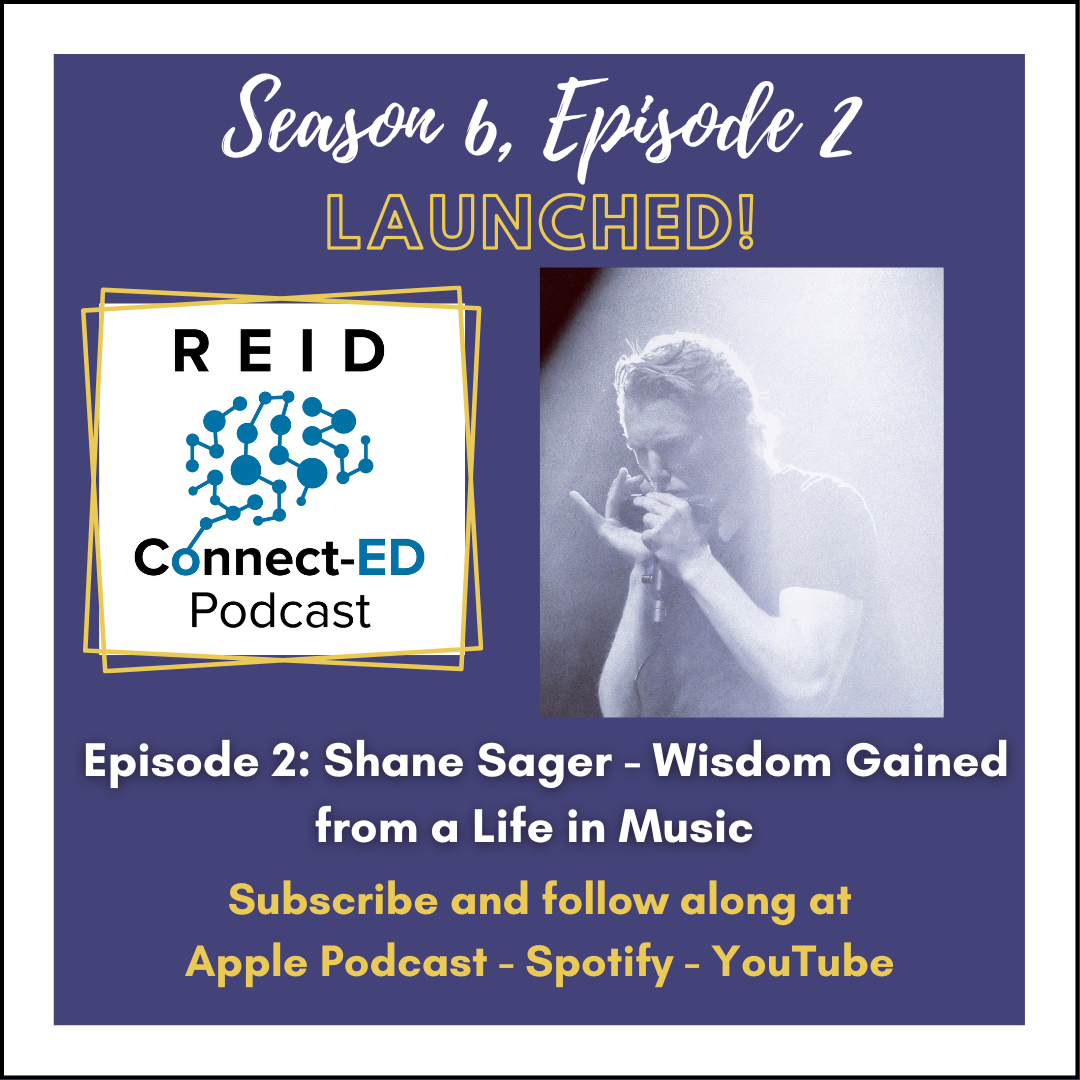
Listen Now!
-
-
-
Alexis Reid 00:09
Welcome back to the ReidConnect-ED Podcast. We're grateful to be joined today in the studio by Shane Sager, an old soul with a curious mind, and take on life, though he's known for his accolades and accomplishments on stage, playing harmonica. He possesses a veracity for learning as he strives to constantly expand his repertoire of wisdom and experiences, he aims to explore the possibilities of life each day, an avid reader, writer and athlete in his own right. When he takes on a challenge, he dives deeply into all that he does, from committing to becoming a Boston marathon runner as he raises money for cancer research, to reading over 75 books in one year and writing his own soon to be published book (s, plural?). Talk more about that in a minute. Traveling to perform on stages around the world with the one and only, Sting and his band while savoring each moment and experience that he has. Shane has a lot to share today. We aim to traverse some of his passions as we discuss music's role in his life, the enjoyment he finds in teaching and learning and so much more.
So as a quick bio, here we go. If you don't know who Shane is yet you will know. Shane Sager is a musician, teacher, and writer born and based in Boston, MA. He began playing the harmonica at fourteen and became a professional at twenty. He toured as a featured soloist with Grammy Award winner Sting for five years (2019-2024) and has performed for millions of people worldwide. He has played at iconic venues such as Carnegie Hall, Red Rocks, Montreux Jazz Festival, Times Square New Year’s Eve, and the Hollywood Bowl. At 31, he has established himself as one of the best harmonica players in the world and has toured in more than fifty countries. For the last several years, he has written articles for the SPAH Organization (Society for the Preservation and Advancement of the Harmonica) and has published over 70 articles on his Substack promoting harmonica education and holistic practices to make the instrument more accessible and valuable in daily life. Beyond Breath: The Journey of A Harmonica Player is his first book, being released in May 2025.
Welcome. We're glad to have you here. (Shane: thank you for having me. Appreciate it.) I feel like this is a long time coming, because couple years ago we went to see Sting, who is mom's favorite? (Jerry: One of my favorites). One of mine too, but we were always blown away by seeing performances by staying but Jerry especially was just captivated by the harmonica playing. And I remember he posted on Instagram like, you gotta check out this guy. He's from Boston... And we were just in awe of your stage presence, the way in which you just melded, not only with the band, but with the whole environment and the vibe. And it was so cool to see the harmonica center stage on a few songs, which is, you know, kind of rare, unless you're Stevie Wonder.
Shane Sager 03:28
Yeah, its increasingly rare, I would say. No, that I remember that the MGM show, yeah. That was a very special show. I'd been kind of waiting, waiting with bated breath for the Boston show. And I had been on the gig already for three years at the time, and I was just so looking forward to having a show in my own backyard. I think, like every, everyone who grows up in Boston who plays music like you, dream of playing Fenway and doing all these things, but the MGM was was sick too. (Alexis: It's such a cool venue, too). The sound is so good. I said to to one of the sound guys there, I said, like, this is the best sound that we've had in the States, hands down. And you can tell it's like, when you has, like, that new car smell that that's kind of how like playing on that stage sounded it was like, Oh, they haven't figured out, like, how to how to mess it up.
Alexis Reid 04:26
Yeah, it's such a cool space. And a lot of musicians that I've talked to have said the same thing, not only as a performer, but also as somebody experiencing the music and the audience. It just, it's so powerful. It's so cool that that got to be your first hometown gig with Sting, which is very cool.
Shane Sager 04:43
You know, it's interesting, like, I guess, technically, my first hometown one was my very first show with him, which was in 2015 it was at the Liberty hotel, and it was for about 200 people. And it was myself, Sting, a bass player named Jabari who was a Berklee grad, and some drummer who I'm forgetting the name of right now. And it was a charity gig for the Lenny fund in Boston from Lenny Zakim, the Lenny Zakim bridge. And played two songs. And it's funny, because I never played harmonica on those songs ever again. It was just kind of like an ornament for the night. Um, yeah. And that was kind of the inception of the Sting gig. Was that that night, and then playing in 2024 almost 10 years later, was fell full circle.
Alexis Reid 05:32
That's so cool. All right, so let's fill in some of the gaps. Harmonica is not an instrument here in the states that most people pick up and say, I'm going to become an excellent harmonica player. Yeah, tell us a little bit about your journey of how you found it.
Shane Sager 05:45
Well, it's interesting, because I started music has kind of always been in my life. Neither of my parents were musicians, but they were very musical people. My sister, when I was very, very young, brought me Motown Records. My mom, we would drive in her old Bentley, and she had one of those cassette players. So it was really only four cassettes. So it was like Van Morrison, Bob Dylan, Bruce Springsteen and Neil Young. There's like, from, from the time that I was, like six, so like, harmonica was always there, but it was just kind of like, it's always just the harmonica. Like, what more can there be besides (breathing)?
But what was interesting was that, so I started playing drums when I was nine because I was bit of a rebellious kid and wanted to kind of be like, like a Ramon, basically. And I loved, like, Neil Pert, and I loved Ginger Baker and all those great drummers. And then one day, when I was in 10th grade, I during a soccer game, busted my finger really, really badly. I was a goalie at the time, and led to my arm being in a cast for about six months. So I couldn't play the drums, so I was desperately searching for one handed instruments, as one does, and the list, when you go down, it is pretty low or pretty short for one handed instrument. So I went to my music teacher at the time, and I said, Help me out here. But like, what can I do here? Because I don't want to sing, I don't want to, you know, I don't want to play the triangle. I think he kind of, at the time, it was, like, a little facetious. He was like, Oh, well, once you play harmonica, like, okay, and it was cheap, and it was, you know, at the time, I was really just looking for something to fill the band credit. Like I wasn't really looking for a life changing, which I think is it was kind of serendipitous in that way.
Alexis Reid 07:40
I was gonna ask about that. Were you? Did you have to play music in high school?
Shane Sager 07:43
Yeah. So I was in, so I was, when I was in ninth grade, I was the main drummer for the jazz band that was in and we played all kinds of things, but was predominantly playing jazz.
Alexis Reid 07:54
It's a great plug for the arts and education. So I wanted to emphasize that,
Shane Sager 07:58
yeah, it was, it was great. Yeah, I was. And as a drummer, I, like, I didn't know very much about melody or harmony or those things. I really just wanted to, you know, be an ape and hit drums as hard as possible. Yeah. But then harmonica came into my life, and I, you know, the first, like, two months, were just kind of getting comfortable with it, understanding how to hold it, which is actually a lot harder than people understand, and just trying to get basic sound out of it. But one of the things about when you start learning harmonica is there's a very steep drop off after the first two months, is people don't really know where to go with it next. It's like, okay, I can play these long kind of Bob Dylan like, exaggerated notes, and that's pretty much it, and that's what they think the ceiling is. And that's when most of the time, like I always say in my articles, like, harmonica is usually banished to the kitchen drawer and then it is never found again,
Alexis Reid 08:53
or in our case, it goes in the piano bench.
Shane Sager 08:56
Yeah, exactly, yeah, because it basically becomes like a paperweight at some point, but that didn't happen to me, because I was again, a serendipitous moment. The guy who was the technology teacher at my high school, Mr. Langlois, who was great, great guy, gave me a big stack of albums, and they were blues albums. So like Little Walter, James Cotton, Paul Butterfield Junior, wells, like all the classic blues guys. And he was like, this is going to be your school. Basically, (Alexis: not typical teenage listening), no. And yeah. And I was like, 15 at the time, and everyone was listening to, you know, Red Hot Chili Peppers and people like that, which I also love. But yeah, there was something in those records that really like it frustrated me, because I couldn't figure it out for the longest time, like, how are they getting that big bluesy sound? And one day it just kind of clicked. I remember I was sitting in my living room and I was annoying my parents, like, just trying to, like, it's one thing to if you my sister always tells me it's one thing if you. Live with a drummer, it's a very different thing. If you live with a budding harmonica player, then it's just absolute chaos, like you want to strangle but especially if it's your little brother.
Alexis Reid 10:10
Is it because you brought it around with you everywhere? Because it takes a special family to appreciate somebody learning the drums or, like, I guess, the violin, I think about too, because those sounds could just be piercing, (Shane: that's rough), but I imagine, if you're learning the harmonica, did you just bring it everywhere with you.
Shane Sager 10:28
Everywhere those first two months because I just wanted to be like. That guy wanted to be like but then I finally the technique on harmonica that when people think of the blues, or they think of the real sound of the harmonica. The technique is called bending, and that was what I finally, after a couple of months of driving people nuts, figured out how to do. And once you learn that it's like, it's like a light flips on, and then the whole instrument opens up to you. And what's interesting about the harmonica is that it was never designed to do that. It was actually a manufacturing defect when the Germans first designed the modern harmonica. Modern meaning like 1846, because the harmonica is actually much older than that. It's it was originally constructed as a free reed instrument in what was his name. The Emperor's name was Wu Tin? in the in ancient China. And the way that it was designed was that it was a free reed instrument, so the air would run back and forth across the Reid. So this is a single Reid and a long like bamboo tube and harmonica is basically just 20 of those put together on a micro scale. But when the Germans designed it, it was only ever designed to go in and out. It was never designed for you to be able to change the pressure in your mouth to to induce the harmonica to bend, and that sound kind of like a crazy accident of the of the instruments manufacturing ended up being what we all know, know it for today.
Gerald Reid 11:57
Can I share a quick story about that? So this is like a full circle story. And then I want to get back to your story of where you were at that time of your life. Someone listened to someone down in the cape who's a musician. He's a drummer. He listened to the song that you had played on for my one of my songs, your harmonica. And I said, What do you think? He goes, Oh, that sounds like Shane Sager, I swear to God. And it was like to to your point about your story, right? You have done something with the harmonica. A lot of people don't get to the point of doing to use it in a certain way, with the bending and all that stuff. It was interesting that he can point out that, oh, you're one of the few people who do something like that.
Shane Sager 12:34
Yeah, it's and I, again, everything that I've done on the harmonica, I always give the credit to all the people I listen to, because all I am is kind of an amalgamation of them. That's cool. What was his name? (Jerry: Dickie Buck). Does he play harmonica?
Gerald Reid 12:50
He plays drums. Down in the cape.
Shane Sager 12:53
Huh, Wow. Dickey, if you're listening, thank you.
Alexis Reid 12:59
It's so interesting. I when I think of, like, especially you playing the harmonica, or the harmonica in general, I always have this great appreciation for singers, because in a little bit of admiration, because I'm like, you walk around with your instrument all the time that you could just, like, sing, right? And that becomes your expression. I imagine it felt the same way, even when you were learning, like, just carrying your harmonica around being able to play whenever you wanted to.
Shane Sager 13:22
Yeah, exactly, yeah. And that's one of the beautiful things about the instrument, is that, you know, it might not be the quote, unquote coolest instrument, like,
Alexis Reid 13:31
I don't know, I think you're transforming this whole vibe of harmonica.
Shane Sager 13:34
I'm trying to that, you know, it's that SPA, which is the Society for the Preservation and Advancement of harmonica. Can you tell I've had to say that a bunch of no had to say that a bunch of they have a festival every year in August, which I'm actually headlining this coming August. And I went to my first one last year. And one of the coolest things about going there was the amount of young people that are there, because harmonica is I always tell people, it's a retired man's instrument. That's really what it is, is you know, you arrive at a point in your life where you want to play music, but you don't want to invest an arm and a leg into a piano or a guitar or a saxophone even, but you want something that's accessible. And harmonica is not only accessible, but it's portable, it's soulful, and it doesn't take itself too seriously. And that's something that's a characteristic that I've found with harmonica players, is, because I know quite a few of them now, is they? They have all of those characteristics. So it's kind of like the instrument becomes you. You become the instrument kind of thing. And it's a little carefree, and it's, I had a great friend, my friend, Adam Gussow said to me, he said, it's a renegade like when it comes to instruments, it's it doesn't really abide by the laws of conservatory or categorization, because it can be whatever you want it to be.
Gerald Reid 14:54
Can I ask you a question about that? So you had said at that time in your life, you kind of felt like that rebellion. Side of you, do you feel like that was kind of how you channeled that into something positive?
Shane Sager 15:04
Oh, for sure. And especially listening to all those old blues records like, that's all they're talking about, is rebellion and sexuality and breaking rules. That's the whole Muddy Waters and Helen Wolf and all the Chess Records guys, Etta James, that's what they were all about. Was this kind of new paradigm of music. It's like, not only are we making this because the music itself is blues itself is really simple. It's just three chords, but the attitude was, what I was drawn to is like, the presence that they had on the stage. Like, if you see, like, Howlin Wolf on the stage, it's just like, he, like, sits down, and he's just like, hey, I'm here. Yeah, I want that, and that's what I was drawn to, is the sound is one thing, and actually getting into the weeds and studying the technical aspects of these players was something to happen later. But like, I always tell my students, like, you need to be down for the vibe. Like, if you're down for the vibe, the technique will just come it just takes a while. But if you're so immersed in the culture of blues and so immersed in the culture of harmonica, you're gonna turn into a great player.
Gerald Reid 16:07
Do you feel like that relates to kind of the sports psychology literature on like performance, where you know you're too technical, you're too kind of analytical about how you're doing things that it prevents you from getting into the flow of being one with what you're doing.
Shane Sager 16:21
Yeah, exactly. That's, you know, I used to box a lot, and that was something that my coach used to tell me was, like, if, like, it's this idea, like this, Josh Waitzkin, idea, the numbers to leave numbers idea, it's like, if you're so you need to become, I think it is like, a necessary part of becoming a performer and becoming a great athlete becoming a great musician is you need to be technical enough in order to forget about the technique. And sometimes, if you're so focused on the technique, you don't allow your subconscious to kind of to work on you, because it's too much your your rider brain, as opposed to your elephant brain. It's just too it's too analytical, and it's too like, like, this thing needs to fit in here, and it's no it's like, you can make mistakes, you can sound like crap. That's all a part of this. But so often, I think, especially nowadays, people are obsessed with the idea of perfection as opposed to getting comfortable with imperfection. And you know, whether it's sports or music or just life in general, I think that that's the most important thing you can do in life, is get comfortable with imperfection.
Gerald Reid 17:29
That's great.
Alexis Reid 17:30
We're gonna come back to that for sure. But I have to share this too, because thinking about, you know, the sequencing of you becoming a harmonica player, and everything you've learned along the way, I keep having this picture come up in my mind of, like, you know, the thinking back in history. This is not my expertise, but I have this image of, like, you know, the guys working on the railroads, and, like, having their tunes. And for some reason I'm picturing it for sure, like somebody breaking out a harmonica to take a break right to just, like, bring some joy and some rhythm to a moment. And I feel like that's such a beautiful addition to just life in general. And it could be simple, it could be creative, it could be spontaneous, and it can create this whole overwhelming sense of joy.
Shane Sager 18:14
You know, what's interesting is that the earliest harmonica players, the earliest guys who did it in the States, and if you want a crazy story about how the harmonica came to the States, that's a I'll tell you that. But the harmonica originally in the States, the first sound that it was, that it was, it was meant to mimic, was the sound of a train. So on those on those on those railroads, like, that's what they were trying to imitate. Was this, like, yeah, hey. So it was literally, from its inception, meant to imitate life, which is, you know, that's what art does, that imitates life. But the crazy story about harmonica coming to the states. So the guy who originally designed the modern harmonica, 1846, his name was Matthias honer, Austrian guy realized there was a market for it, sent a box of 18 Hohner Marine Band harmonicas to his relative who was living in Virginia at the time. From those 18 harmonicas, 18 different people got their hands on those harmonicas and created the vocabulary of the earliest blues music, the earliest harmonica blues music. So all of the DeFord Bailey, all the like, the really old school guys, the grand old Opry guys from those 18 harmonicas. And then they found in those 18 they're like, oh, there's actually a market for this in the South. Then they started shipping harmonicas over like crazy. And remember, this is all pre World War like, this is all pre all that stuff
Alexis Reid 19:45
that's amazing. Wow. It's so cool how it spreads. And you know, that's actually point of this podcast is like, how can we inspire people to think a little bit outside of their worlds? Hear different influences, different experiences, test waters and. You know, reflect on what they need in their lives.
Shane Sager 20:06
And, yeah, yeah. And it simplifies everything too. I think that's why I tell people a lot to play an instrument, is because I think that, again, to the point about technique is that, like, if you're not so obsessed with that and you can just play that's such a powerful thing to be able to do like I feel like everything nowadays requires a handbook, or it requires a YouTube tutorial, or not say, harmonica doesn't, but there's something about an instrument that immediately gratifies you with sound, because that's not the case with almost every other instrument. Well, you and
Alexis Reid 20:36
I could probably geek out about this, but even like the rhythm of our breath, right? If you pay attention to that sound and how it has such like a therapeutic aspect to it, also, yeah, like and to add the music component to it just takes on a whole nother life.
Shane Sager 20:49
Yeah, one of the best harmonica players I know, he's kind of like the patron saint of harmonica. His name's Joe Filisko. Always talks about he's a big breath work guy. He also has the biggest harmonica tone you'll ever hear sounds like a whole orchestra when he plays Wow, he often talks about that like the rhythm. And he designs his curriculum for his harmonica students based off of their breathing patterns, so off of box breathing, and off of these different things. And it's crazy, the rhythm, the rhythm that you can get from just tuning into how you're breathing, yeah.
Alexis Reid 21:20
I mean, in my work, I don't know if I've ever shared this before, but in my work, there's something about finding that rhythm and finding that flow that helps you to be more present. And if we can, you know, understand how our emotions can kind of guide us in one direction or another. If you can just tune in like you're saying to your breath to a moment, it can open up so many different pathways. And yours just happens to be with the harmonica as an instrument, yeah, to guide you sometimes.
Shane Sager 21:47
Yeah, yeah. I try to get as many musicians as I can to pick it up, because they're at least starting from they're not starting from square one. There is something cool about starting square one, but it's just such a it's such an incredible instrument. And everyone, like I was talking about before, about there being a steep drop off after two months, if you can just get over that. It's like the three day hump, like they talk about with smoking cigarettes. Like, if you can get over three days of not having cigarettes, then you're good. It's the same thing with harmonicas. Like, if you can get over three months, it will. It will change your life. It will. It will just be that thing, that thing in your in your back pocket, that you'll always have and you can always pull out, and always people will think it's really, really cool.
Alexis Reid 22:29
I love that. That's so funny. You were saying how you're trying to get other musicians to play harmonica too. Yeah, and it's cool that that the harmonica became your second instrument. And from what I've seen of you playing, you know, the the drummer is supposed to keep the rhythm for the band, but I see you actually do that with your harmonica too when you're playing, which is pretty cool. I wonder if you can speak to a little of that too.
Shane Sager 22:50
Yeah, there was definitely a lot of crossover when I, when I first started playing harmonica, I actually was trying to be one of those people who would play the rack harmonica. (Alexis: I don't know what that is). It's like. So, so if you ever watch like Bob Dylan or Neil Young playing guitar, right? So I was trying to do that with drums, which does not work,
Gerald Reid 23:11
Your brain was just like, going haywire.
Shane Sager 23:14
It's like, it's like, whatever it's called, like, rubbing your head and patting your belly, or whatever it is on steroids. Just a terrible idea, but
Alexis Reid 23:23
Impressive you tried though
Shane Sager 23:27
I really, I really did. And, like, for some things, it worked. Like, I remember one time I was playing like dust in the wind, which has no drums, and I was like, Oh, wait, I can actually do this. And then the next song was like, (Alexis: totally makes sense. Shane) yeah, I tried, but no. What was interesting is that harmonica, the way that, going back to the blues guys, the way that we make sound on the harmonica, and specifically the blues guys make sound, is with syncopation of the tongue. And when you think about drums, there's a rudiment in drums called a flam, which is like I really wish I could demonstrate here, but it's basically just like, and that's basically what your tongue is doing with the air flow in your mouth. So if I blow out, and then my tongue comes really quickly after that, that's accenting, that's accenting a chord, and it's accenting it rhythmically. And I can go ba boom, ba boom, ba boom, ba boom. With my tongue,
Alexis Reid 24:23
Is it kind of like when you roll an R, when you're, like, speaking Spanish,
Shane Sager 24:27
It's kind of like, it's kind of like if you were licking the world's like, biggest ice cream, and you're just going really, really slowly, like you just want to savor every drop of it. So, so it's, it's really, it's really rhythmic, like the from the kind of, from the blues guys on, it's always been very rhythmic, and I think as a drummer, I didn't fully grasp that at the beginning, and then after I'd spent some time studying those guys, it was like, Oh, wait, this actually rhythmically all makes a lot of sense, and it's not crazy complex, because. Because you're only playing with 10 holes. It's not like I have a whole piano or a whole guitar neck in front of me. It's just, no, there's just 10 holes. And that simplifying it down to that, I think, is another really important thing. I try to tell my students, like, don't think about holes six through 10. Just think about holes one through six, and you'll be a lot happier.
Alexis Reid 25:18
So breaking it down into smaller parts helps to teach bigger instrument (Shane: Correct.) Sorry, just had to get that in there from an executive function perspective.
Shane Sager 25:27
That was very good. Yeah, yeah, because you really do, because, like, I've one of my first harmonica teachers had me like, he would literally have me tape the harmonica. So I would like, like, I would tape holes four through 10, and I would only have access to the bottom three holes so I can still get a full chromatic scale out of it. But I just had the three holes. He's like, No, you can't go beyond that. You got to master these first three holes. First.(Alexis: How hard was that for you?) Oh, it was like, the biggest, the biggest ego check of all time. Like, I remember the first time I had a, I had a lesson with him. I was 18, something like that. I thought I was pretty good. I wasn't, which, in retrospect, I can say, but, uh, yeah, I sat down in his piano in his living room. He's like an old like, you know, Oscar the Grouch. He kind of like, you know, I'm not gonna say his name, but he looks exactly like but he's an incredible musician. But I sat down with him, and I like, you know, playing my little blues riffs. And he's like, Okay, stop. And then he took my harmonica, taped it, handed it back to me, and he was like, Okay, now try. Oh man. I was like, Oh man,
Gerald Reid 26:36
Sounds like Miyagi.
Shane Sager 26:37
Yeah. He's literally the Miyagi of harmonica. He's an incredible, incredible musician, and he plays so that's another thing I should mention. Is harmonica. When we speak the colloquial term for harmonica, there's really four different types of harmonica. There's diatonic, which is the one that everyone knows, the Blues harmonica, the one that Bob Dylan and Neil Young played. There's chromatic harmonica, which is, if you think of someone like Stevie, wonder that's what they're playing. And then there's weird, esoteric ones, like chord harmonica and bass harmonica that you'd seen orchestras or on like a Martin Scorsese soundtrack. But I play primarily diatonic and chromatic, and he also played diatonic and chromatic and and he was the biggest influence on me, and what led to me getting the sting gig was intensive study with him on the chromatic intensive study of all the Stevie Wonder stuff, all the Yeah, all that stuff.
Alexis Reid 27:33
I think it's such a good example, especially for our listeners and people that Jerry and I work with, especially young people who have these like natural gifts and talents or an inclination towards something that that they've worked on, and they've gotten to a point where they're like, I'm really good. I got this. And then all of a sudden there's this, like, a little bit of a reality check. Sometimes, like you were saying with this teacher, that you know, sometimes, even when you feel like you've gotten there, there's still more to learn and expand upon. And in my intro, I was talking about how you know, in getting to know you. You just want to keep expanding and growing and learning. And I think it's, it's such a great example, not just for musicians, just for like, how we approach life in general. So I appreciate the story, and also going back to thinking how you were when you first picked it up, because I imagine a lot of young people might not even think they're musically inclined, or that they can even pick up an instrument that has strings or keys or whatever, because it can be overwhelming. Could feel like a lot, but I like your idea of, like, can you keep it simple and you could probably still make music?
Shane Sager 28:34
Yeah, yeah. And it's also, I think it's also sometimes, if it's forced too much from the parents, that can be a, that can be a difficult thing for kids, because if there's one thing kids don't want to do, it's listen to their parents. And you know, I think that was something that was great about my mom and dad, is that music, it's wasn't like a job, it was just, it was something that like, I remember when I when I brought my harmonica home the first day, my dad heard me playing. He's like, he's like, he's like, you actually sound pretty good. I was like, it's like, Oh, thanks, I appreciate that. He's like, Yeah, you should, you should keep going with that. Like, cool. but, like that, but, but it was never like, a you have to go practice or you have to, like, I knew that from from day one. I was like, no, if, if I want to take this and I knew the same thing with drums, like, if I want to take this seriously. There There are hours required. And I think that was just something I intrinsically knew. But I think that for a lot of kids who are starting music that it just, they kind of go like, I want to do this, and that sucks, but I think that it is up to the to the kid themselves, to take the responsibility of learning the instrument. Yeah,
Gerald Reid 29:48
Lex, everybody that we've interviewed on this podcast who was a performer previously said the same thing, that they didn't have their parents force them, and they that kind of allowed that intrinsic motivation to really shine and come out. Rather than be inhibited. But I love what you said, too. It's also a responsibility. It's like, with freedom comes responsibility, yeah, if you have that freedom, it's on you to tap into that and to make it happen. And
Shane Sager 30:12
yeah, and yeah. And it goes back to this numbers, to leave numbers ideas that like, can you explain that to the audience? Yeah, for sure. So, so for those of you who haven't heard of this Josh Waitzkin, who wrote a great book called The Art of Learning. He talks about a concept in the book called, uh, numbers to leave numbers, which is essentially for anything you're doing in life. But let's use music for an example. You learn your technical aspects of your instrument inside and out, um, almost to the point where your conscious mind can forget about it, and you can create from a subconscious level. So they say that with improvisation, especially like in kind of, you know, really advanced jazz and and blues even, and all these really improvisation of music that your subconscious is able to drive the car, basically, but that's only after taking a long time learning the ins and outs of your instruments that could take a decade or more. I didn't feel comfortable improvising until at least six years into playing. Now, say I didn't do it, but I didn't feel like that connection to my subconscious until I had really exhausted everything in those 10 holes. But that takes a long time. And I think when you're a kid and you're a sponge, that's the time to be learning all your technique, and that's the time to be ingesting and that's the time to like, that's one of the biggest advantage of youth is energy. It's, it's energy for capacity to learn, capacity to ingest. And that was like when I was younger. I would read so much. I would just read everything. I'd get my hands on. I don't remember much of it, but I remember that feeling of collecting, like I just loved that idea, and that stuck with me for a long time. Um, but it's the same thing in music, like you have to, you have to be a sponge. The best musicians are the ones who have listened to the most music. That's, that's just how it is.
Alexis Reid 32:07
There's an NPR show episode, I don't even remember what it was. Is probably like 10 years ago, and they were talking about how, like, there's really nothing that's new in our world anymore. Like, creativity is often spawned from inspiration from something else. Yeah, right. It's not that it doesn't transform in turn. It's something that's unique in a lot of ways. But really, it comes from being exposed to all of these different styles and approaches and perspectives, and for us, you know, I'm really grateful that we've been exposed to a lot of people in a lot of different fields that help to inform how we do what we do. It's not just one perspective or one approach. It's really looking at the bigger picture. But for music, that's like probably one of the most important things, because even when you look at I was talking to somebody about the Grammy Awards this year, and most of the albums that were celebrated were those that had influences from other genres and other areas of music, which is pretty neat and pretty cool that we don't always think about.
Shane Sager 33:07
Yeah, and again, it's that. Going back to that idea about the subconscious is you just don't know what two or three ideas are going to collide and make something new. I like that idea that there's Austin Cleon who wrote a book called steal, like an artist. At the end of the book, he just says, At the end of the day, the idea that there's nothing new to create is 4000 years old. Yeah, that always, that's always reassuring. He's like, he's like, when they when they did the pyramids, they also thought that was, that was the pinnacle,
Alexis Reid 33:35
(Jerry: literally, and figuratively)
And they didn't have the technology we have today.
Shane Sager 33:38
Yeah, exactly that. Yeah. Now we can take pictures of it on our on our smartphones, but a lot of my students come to me and ask me about how to get their own sound and how to, you know, create kind of individuality and authenticity on the harmonica. And my very blunt answer is, you have to be inauthentic for a very, very, very, very, very long time. That's every great improviser, every great every great soloist has takes from, you know, a few very choice influences, and then it's the rest of life. Like, it's kind of like an 80-20 thing, the 20% like, if you've read the book the 80-20 principle, the 20% is the thing that ends up mattering the most. So your life experience, the things you read, the people you meet, the other things you're into, besides music, that's what really influences your creativity.
Alexis Reid 34:33
And often, as you get older, you tend to only remember the 20% because our brains are constantly pruning back the stuff that we don't pay as much attention to
Gerald Reid 34:41
you, kind of hold on to the themes of it, you know, like I teach at BU, and I teach the therapist and training in the graduate program, and I try to do, I try to help them to learn the way that I did, which is you try to dive in as deeply as you can to all the theories and all the techniques and strategies. But. But at some point it's got to be unconscious, subconscious, when you're implementing it, when you're working with a with a person in therapy. And to your point, it's such a great metaphor for you know it is, it is nuance and creativity in the therapy session. Because, as you said in the beginning of the of our interview, like everything's a protocol now everything's like, follow this step by step by step in the real world. That doesn't really work. I've had engineering students I work with who were patients, and they're like, you know, we learn all this theory about engineering and in school, and then we go into the real world. And people are like, well, that doesn't really work in real life.
Shane Sager 35:35
Yeah, you know Mike Tyson. You know Mike Tyson's famous line of everyone has a plan until they get punched in the face. That's what life is. It's like, it's not, it's not in a book, and it's not in a theory. It's, it's, it's real, like, that's why everyone says, like, when you're learning jazz, the best way is not from a book, The best way is to be on the bandstand. And that's why I tell my students all the time too, is the more real world exposure you get, the more comfortable you will be in that setting of being uncomfortable. Because you know, it's all well and good to, you know, do things in your woodshed and to and to practice all these concepts. But if you're not out there playing, you're missing out on a lot of what potential growth. A lot of people don't want to take that next step into that kind of uncomfortable zone.
Gerald Reid 36:26
Can you share some stories about that, or something?
Shane Sager 36:28
This could be like a three hour podcast. Let's see. I'll give. I'll give three because I got, I got three really good ones. So the I always say like it was my it was basically my audition for the sting band. I played with sting a couple times between 2015 and 2018 just kind of random, one off gigs. And in 2018 I got an offer in, I guess it would have been the beginning of December to play Times Square New Year's Eve in Yeah. And it was not only to play that, it was to play a song that was predominantly harmonica focused. So it was brand new day, which is like a New Year's Eve song. Wow. Love that song. So the way that it was presented to me was, you have to play this note for note. And I'd heard the song before, and I was like, okay, cool. So I'd, I'd played it a little bit, but I basically had three weeks to get ready, and the build up to (Alexis: no pressure) Yeah, for sure, yeah. And it's Stevie Wonder. I was like. I was like, okay, cool. So I for three weeks, woke up at like the crack of dawn, started practicing, and I would stop like around the time, like noon came around, and then I just wouldn't touch the harmonica again, but I would still be I probably listened to the song like, I don't know, 30 times a day for those three weeks. And again, all of that practice couldn't have prepared me for the night when it finally came. So the night finally comes. My whole family comes to to New York to see me. I get up, we go to go do our sound check. Keep in mind, this is Times Square on New Year's Eve, so it's already packed. So you're doing sound check to what you believe to be the audience that you're going to be playing to, and I can't hear anything in my ears. I can't, I can't, like, everything's so echoey. I can't hear my harmonica. My hands are like, shaking like this. I'm just like, oh, there's gonna be a catastrophe. I'm never gonna work again. (Jerry: How do you feel in that moment?) Oh, it was like, I remember coming off the stage, and I went back to my hotel, and I just stopped for, like, for like, 30 minutes. I was just like, then this is not going to be good. Luckily, that was not the case. So we come back whatever for, I think it's like 30 minutes before the ball drop. And, like, it kind of felt like, like being like one of those, like, like, Roberto Duran, or like, Sugar Ray Leonard, like walking into a fight. Like, I just felt like I really had to, like, you know, get my kind of nerves out. So I was walking from the they did the green rooms in a hotel that was like two blocks away from where the stage was in Times Square. I remember walking to the stage with there were three singers with us, and there was sting. I remember just like loosening up my shoulders and like throwing punches. I was like, oh yeah. Like, like, they don't know what's coming for them. Put my ears in, got up on stage and and we played. And the thing about the song, brand new day is that it comes in right on the one, so it's 12345, 345, so if I didn't hear that, 1234, the whole thing is shot. Luckily, in sound check, I didn't hear the 1234, this time I did. And then after that, I was like, as long as I get that, I'm good. And then I was chilling after that. I was very nervous. US and but the good news about that was that the lights were so bright I couldn't see anything in front of me, which is kind of a good thing. And I just had my eyes closed. I was like, I'm in the zone. I'm crushing this. I'm crushing this. And then I messed up the last note. I was like, Okay, well, it's not gonna be perfect, but whatever, at least we pulled it off. And then yeah. And then two months later, I got an email saying, Do you want to come do the summer tour? And I was working with a different band at the time. I was working in just outside of Philadelphia, and I said, Yeah, absolutely. And then that kind of sent me off on my in May. We started that tour, and then we were on until 2024.
Gerald Reid 40:40
Wow, that's an incredible story. I have to ask the question, How did you build up? That sounds like confidence was what you were trying to embody, to get yourself to get back on stage after that, and you kind of like, Let out your emotions and like, allow that to be maybe cathartic, to just kind of get it all out and then regroup and build your confidence up again.
Shane Sager 41:04
Yeah, I think that at a certain point, everything like it kind of just needs to be bad. Like, something I also tell my students is, like, don't be afraid to have a really bad gig, because in doing so you kind of it's like, worst worst case scenario, like, this is what's going to happen. And, like, sometimes you need to feel what that feels like is worst case scenario. Yeah, then it's kind of like hitting rock bottom. Like, okay, it can't possibly be that bad again. And that was kind of what that was, was like, that, that sound check. Like, I needed that in some ways, to have such a good show, because I've kind of exhausted the this is the worst thing to possibly get. But I think another thing was that when I was walking to the stage, one of the things I kept thinking about was just the sheer amount of times that I had played that song, and when I was on stage, I wasn't thinking about the crowd or what Sonny Rollins, who's a great saxophone player. He has a great book called the notebooks of Sonny Rollins, which was published posthumously. And one of the entries, he talks about how I didn't pay play for the crowd. I played for the sound. And that was something that helped me, too, as I was just thinking about the actual sound I was getting. And when you concentrate too much on what people are thinking about you, that also puts you into a bad mindset. But if you just focus on, it's kind of like a stoic virtue, like, if you just focus on like you, how you respond to to whatever it is that's being thrown at you, then it, then it becomes a lot easier to maintain like, No, I can just focus on making a good sound
Gerald Reid 42:37
Totally because it's like, once you start to think about what other people thinking about you, that usually what we are worried about leads us to want to do something about it. And when it comes to like, oh, that person is thinking this about me, now we have to do something about that. It's a complete distraction from just doing the thing that you're meant to do on stage, which is play the song.
Shane Sager 42:57
Yeah, yeah. Because in the end, like, that's all we can do is just play, um, and that was something like, you know, I worked for sting for a long time. That was something that, that he always looked for, was he loved it when we would make mistakes, um, because that means that you're paying paying attention. Like, if you're, if you're not making mistakes, and you're kind of on autopilot, that's a really bad place to play music from, um, because there's no, there's no life like. It's literally like, if AI was like, doing the job for you. Wow. So looking for and I would talk to him about it all the time. I remember, here's the second story I had. We had a gig in Stockholm. This is the first summer that I worked for him, and this had been after like, two months of touring. It was the longest single tour that I did with him was five months, and we get to Stockholm and we play, and it's the worst show that I've ever played. Like, things are like, not my harmonica is not working, like technical difficulty, just everything was bad. I went back to the dressing room and I just, like, sat in there, and I just like, needed to decompress for a little bit. And I don't know who said something to him, but we were in the vans on the way back to the hotel. Got out of the van, and I was walking to the hotel because I just want to go to my room. I just want to go to sleep. He comes up to me, he's like, he's like, this isn't exactly what he said, but he was like, Why are you being so uptight? You played great. And I think that that was, that was like a really, really powerful moment. Because the following day, him and I had coffee together, and we were talking, and he had this great piano player who used to play from Kenny Kirkland, who's sadly passed away. He was a huge part of that dream of the blue turtles. Bring on the night kind of sound. And Kenny Kirkland had a philosophy of music where there are no wrong notes except the note that you follow with. So you can basically make any wrong note sound right if you just follow it up with a with a correct choice. And that's, I think, a good philosophy for life. Too is like, you know, we all kind of stumble, we all lose our way. But it just, it's all based on whatever that next step is, um, and you know him, and I, he said that to me, and it really resonated with me, and my philosophy forever changed on like I was so uptight before, um, and then it just became like, oh, wait, no, there are no wrong notes.
Alexis Reid 45:24
You guys are speaking my language, because I frequently tell the people I work with that there really are no mistakes or failures. It's always about how you adjust, recalibrate afterwards, like what comes next is what I care more about than the mistake, because mistake is only an opportunity for us to learn from and grow from. And I'm reminded of when you and I had talked before about how Sting was a teacher. Yeah, right. And it sounds like a lot of the wisdom he imparted was just coming from being a really great teacher. I wonder if you can share a little bit more about that.
Shane Sager 45:55
Oh, man, it was just just so much. It's really, I think the best teachers are the ones who show you by example. And, you know, being in a band is, like, it's like having, you know, six roommates, like, you have, like, a little bit of time alone, but it's not really time alone, because you're always thinking about being on stage, you're always thinking about doing all these things. But he was kind of, like, I would always see him, like, when we were at the hotel, he was up every day at like 6am he was in the gym. He was like doing all these things to put himself in the best possible situation, to have the best possible show. And you know, that was a lesson in and of itself. Is like touring is one thing. The show is only two hours. Like you have to figure out how the other 22 hours of the day go for months and months and months displaced away from your family, dealing with all of the craziness that happens when you're living on a bus for six months. Um, but I think that it was his, it was his way that he showed you know, hey, I've been doing this for 50 years, and I know what I'm doing. And then there were other, like, little things too. Like I became a incredibly voracious reader when I was on when I was on tour, because you're looking at, I don't know, five hours of being at the venue, of just like you're either looking at your phone or you doing something productive. So I just brought, like, a huge suitcase of books. And he was an English teacher, so every time he would see me reading something, he would just like, Oh, what's that? Oh, I've read that. It was everything I like, I tried to find, like, those esoteric, strange books. He's like, Oh, are you enjoying that? Yeah, it's good. I can't, I can't bust this guy, but he is. He's such a great and he's such a veteran. And, you know, he's had the greatest musicians, the greatest drummers, the greatest saxophone players play for him. And it was just like, it means a lot when you see someone like that, like, that's so violently creative. Just have this very ordinary existence
Alexis Reid 47:59
I love kind of breaking down that what do they call it? The fourth wall right, to be able to see like inside of what is reality, instead of just the performance, and to remember that some of the most talented people are just ordinary, curious, real people, I think is so important, and I think we lose some of that in our social media packed worlds, yeah, so to be able to share those stories. And, you know, the thing that struck me, of course, this is the way I think about things in life, is, you know, Sting was a teacher before he was a musician, before he was Sting. And I imagine that a lot of the lessons and the way in which he showed up for his classes and his students was a lot of the way he showed up on tour too, and with his band, and just creating this community of learners together. Because every night, every performance, I'm sure, was something else you learned from it,
Shane Sager 48:49
yeah, and it was also that was another thing is going back to this idea about being on autopilot, is when you tour for that long, the shows can kind of start to feel a little like the same but, like, you'll just play the same set night after night. He's really good about changing micro, like, making micro changes to the set. Um, so it keeps not only himself interested, but us on our toes. And I think that that's as a band leader, that was something that was really, uh, inspiring about him. Was so many people who just, you know, you'll put a clock down on the stage and will say 90 minutes and you play, you know, every breath you take. Roxanne, okay, I'm out, but no, it's, it's much more personal than that. And as a performer, you know it's not only like making it fresh for the audience, it's making it fresh for you, because it again, it's still like a, it's a creative act. It's not like a, it's not creative autopilot.
Alexis Reid 49:46
I think about that all the time. It's like, how do you play the same hits over and over for decades? Right? It must get boring, actually, I imagine.
Shane Sager 49:54
Well, you know, what's interesting about his music is that there's, there's so many little i. Little things in it that you're like, I don't know what that is like. Why is that chord there? This Voicing is super, super weird, and it just like, it will never make sense. But I think that because he's so intricate and detailed, and I think this comes also from his study of he's a very much a renaissance man. Loves to put his fingers and everything, but it it's how, like, I really respect his skill as a composer, as a musician, because there's no other artist who would have written the songs that he's written. He's completely unique in terms of, like, if you listen to a song like ‘fortress around your heart’ changes keys three times before it goes to the chorus three times unbelievable. Or you listen to a song like, I mean, there's so many all kinds of like strange jazz infused and and that's another thing. Like we were talking about authenticity before his range of influence is so wide, and that's what makes his music so different, like you'll if you played me like 10 artists, and you didn't tell me who was singing, I could tell you who was staying because of the chords and because of the voicings.
Alexis Reid 51:14
So I imagine you reflected on this, but forgive me if I'm putting you on the spot, if you were to think about a few takeaways from that experience of being on the road, performing at that level with that kind of artist, like, what are some of the things you took away from that experience that you're bringing with you into your work you do now?
Shane Sager 51:34
I mean, I think that the biggest one would would probably just be that it's, you know, everyone, everyone thinks of it as very glamorous of touring, but in the end, it's really, it's functioning chaos. That's I wrote an article a long time ago that was about touring, and that's the way that it is, and that's the way that life is, is that we're all operating in this chaotic, increasingly vain, capricious world. And to your point, you choose how you respond to all of those things. On Tour is very easy to respond with. I'm gonna go out and party every night that we're not playing. I'm gonna sleep till noon. I'm gonna be on my phone for 10 hours a day. So all very real choices that people make when they're when they're on the road, which makes sense, which makes sense because you want to decompress, but, but I think that the quality of your free time is something that's that's something that I took from him was, was you really have to tailor that to to who you want to be. Because, you know, if we live in a society where most people are on their phones for four hours a day. What else could you possibly be doing in that time that would might make you incrementally better not say there's nothing wrong with social media content. I think that a lot of it's great, but I think that there is, there's a trade off, and you need to be very conscious about how you're spending those off hours. I think another big takeaway was just the physicality behind playing music. I think that I never really I'm 31 now, and when I started touring, I was 25 and I think that, like the physical toll that that touring took on me was something that I only really appreciate now. And I think that even just simple practices, like, like, I would stand up when I play now, like I used to all the time, just like, be sitting, it was terrible for me, but that's something that's really helped. And I think that at the end of the day, the one of the biggest ones was just to going back to this concept of no wrong notes, like it doesn't have to be perfect, and we've played for crowds that were upwards of 100,000 people and made 100 mistakes. Doesn't have to be perfect. They won't remember it, but you'll remember how you responded.
Gerald Reid 53:59
Awesome. I love it. I love you know what you're saying really fits into what our message of the podcast is, which is to be aware of yourself and what your needs are. And to your point, like we can get our needs met and in different ways if we're more intentional, more aware and more open. And it sounds like you know you've been open to what other people have suggested to you, but you've been in tune with yourself, and by doing so, you can make small adjustments that could be more authentic to what your needs are and more authentic to, you know, evolving into, you know, who you become as a person.
Shane Sager 54:32
Yeah. And I think that another thing this be, the last thing that I took from Sting is there's a very, very big difference between confidence and arrogance. Confidence like especially being on the stage was a feeling of comfortability and arrogance. For me, was a feeling of superiority. And I think that one of the things that makes life on the stage comfortable is trust in the people around you, like, I my bandmates that I had on the on the ‘my songs tour’ are still like, there's my family and then there's them in terms of who I'm closest with in the world. But I think that that comfortability that I had with them really allowed all of us to to grow. And I think one of the things that he's so good at, and one of the things I took from him was you don't create a band based off of egos, like you create a band based off of who everyone has it in their who everyone has the potential to become as it relates to everyone that's around them. So that's what I think about
Gerald Reid 55:39
That makes me so happy. I love hearing about that. It's so it's so true about the energy around you. And I remember seeing everybody on stage when we saw you at MGM, the backup singers, everybody involved. And you can just tell the vibe of the people were just, you know, they got good energy, you know. And it seems like there's, it's like a safety, psychological safety, to feel like you guys are, you know, one with each other and care about each other. And that's when the best things happen in life, is when you have that. And what a great leader. It seems like Sting was to create that and to prioritize that. Same thing in sports, same thing in being a teacher. In my class, my students open up. They talk about, you know, they talk about stuff openly, mostly because they feel safe with me in the classroom as a leader, and I prioritize that. And they can feel that, and they sense that, and they they say, that's one of the best parts about being in the class.
Shane Sager 56:34
Yeah, yeah. It's a beautiful thing when you can make when you can make people feel comfortable. That's, I think that's the highest order of a musician. Is like everyone always asked me, who my favorite people to play with, and I just say the people who make it easy, my favorite drummers, my favorite bass players. They're the ones who just, they know how to, how to sit right in there and just make you feel like you can, you know, do anything. And you know, in a culture where ego is kind of a very, a very hot topic nowadays and very prevalent in our social media feeds, bringing it back to kind of, you know, harmonica and my students, I always tell them, like, you're playing for the band, you're not playing for yourself. Like, like, the second that you start playing for yourself is the second you gotta take a step back and just be like, Okay, what am I actually doing this for? And you know, most of the time, like that kind of stops people in their tracks, especially if you play a soloist instrument. I think that it's inherently a little egotistical, but, yeah,
Alexis Reid 57:37
t's a good check. And there's so many themes that you're sharing here that are like true to your experience in life, but I think true to so many people's experiences Right? Like feeling comfortable and safe, having a sense of trust and community, celebrating both the mistakes and the accomplishments, and really just this idea of support, and while still like being true to what we said before, that responsibility to really own your craft and to be able to show up feeling ready and prepared. Yeah, and, you know, I think, you know, I don't like to give so much credit to social media, but it is such a big part of our world that I think sometimes we see the outcome instead of seeing what that process is to get there. So I love having these conversations kind of pull the, you know, the curtain back a little bit to see what happens behind the scenes, because I think it applies to people in all aspects of life.
Shane Sager 58:30
Yeah, my my dad's a photographer, and I remember I used to be an archivist for him when I was, like, kind of very early 20s, it was like a part time job. And I used to go through these, these roles of, uh, these digital roles of film, basically. And, you know, I'd find one really good picture, and then I would scroll through the last like 30, and they would all just be horrendously bad everything. But then I would find this one really, really beautiful picture. And that's basically when I think about social media. That's what I think about, is that it's, it's just about, is that it's, it's just a, it's a highlight reel, saying it, it's a, it's a, you know, it's a dystopian highlight reel, yeah? Like, what's the thing from Brave New World, the tablets, yeah, the Suma, is that what it is, I don't know. That's basically what, what, what Instagram and all these things are, is like you're seeing people at their kind of almost plastic best selves, but you don't actually get to see how the sausage is made.
Alexis Reid 59:31
Yeah, it's so true. So okay, we've touched upon pretty much all the questions I wanted to ask, but I want to also give you the opportunity to share a little bit more about you know, you've taken this passion in your you're taking this passion in your own journey, and now you're sharing it with others through teaching. And you know, we were joking before about like, how not everybody picks up the harmonica as their instrument, but you educated me on how in different countries actually, that is. Really big, popular instrument, which is opened up a lot of different pathways for you, teaching and guiding and supporting young musicians. So I wonder if you could share a little bit more about that too.
Shane Sager 1:00:10
Sure. Yeah, the harmonica, you know, it has the reputation it has in the states of you know, it started with the blues, and then, you know, people like Bob Dylan, John Popper, kind of has that reputation in the States, but in Germany and Japan and China, the way that we teach recorder in the in the States is kind of like that first basic entry level thing into music. That's how harmonica is taught over there. Harmonica is in many countries, I think, especially in Germany and China, the first instrument that people are given, very affordable, easy to follow. You can play all kinds of things on it, especially
Alexis Reid 1:00:45
if you tape off most of the holes,
Shane Sager 1:00:49
especially if you have Oscar the Grouch teaching you. I've had a lot of like, really fantastic teachers and he, but he, of all of them, he was the one that catapulted me to, to the next to the next steps. But yeah, so in other countries, it's taught as basically our recorder. And then in the kind of the whole wide world, like in Europe and in South America and in the States, it harmonica is kind of a word of mouth instrument like you really just learned from people. Like, the way that I really first started to learn was I would go to blues jams when I was way too young to be going to blues jams in Boston, like 1516 and I would hang out at the bar, and I would ask harmonica players how they were getting the sounds that they were getting. And it's the usual, like, you know, like, I don't want to talk to you. Kid again. (Alexis: Oscar the Grouch.) Yeah, like most harmonic players end up being Oscar grouch.
Alexis Reid 1:01:46
But like, people are Oscar at the Grouch these days, actually,
Shane Sager 1:01:50
but, um, but you basically take what you can get. And one of the very positive things about social media is that about 20 years ago, harmonica started to become taught online in the like, basically from YouTube. But that was how, when I first was hungry for information, that was where I went looking and actually met my longtime teacher and great friend, Ronnie Shellist, who runs a harmonica teaching program called harmonica, 123, that I've contributed to a lot. That was that was kind of, that was he inspired me to be a better player, but he really inspired me to want to teach people, because everyone has a unique perspective on on harmonica, who, who's played for a long time? And the thing that I noticed was, again, this idea of going back to the the kind of the next generation, the younger generation of harmonica players, there wasn't really a lot of content that was aimed towards them. In order for the instrument to survive, in order for the instrument to stay relevant and to stay popular, it needs to be able to it needs to be accessible to younger students. So when I first started taking on students during COVID, that was primarily who I was aiming at, was people, kids that I wanted to kind of carry the carry the torch, because I'm 31 I'm not, like, I'm not a spring chicken anymore, but, and it's like that thing from Indiana Jones, like, it's not the years, it's the mileage.
Alexis Reid 1:03:20
I'm laughing because it's, it's like, the best time of life to be for age you're at right now. Embrace all of it, for sure.
Shane Sager 1:03:26
For sure. But like, I'm having students that are like, you know, when I first start, like, 15 or like 20, and they can play Bach, and they can play all these like crazy concepts. But one of the things that I try to do is just try to incur like, I think a lot of teaching is the encouragement process is like, the validation of like, you know, am I doing this? Right? Am I doing this? And I just try to kind of set the the schedule, for lack of a better term, like, this is what you should be practicing. This is how long. Big proponent of people who are engaging in a musical journey to track their progress. I think it's a really important metric. Because, you know, at the end of the day, it's not about the hours that you play, it's about the minutes that you play.
Alexis Reid 1:04:11
It's kind of like if you could turn things into a game of some sort, right? Like young people, especially, they get so much feedback from video games, but in real life, we don't really get that feedback every day. But I imagine, like, I like the idea of, like, can you track how many minutes you're practicing and playing? Because then you can almost, like, level up, like, I got to the next level, yeah, because I put in this much time and effort.
Shane Sager 1:04:32
yeah, and, and most of the time. You know, with a lot of the students that I've taught, really, what they're looking for is a road map. Like, like a lot, one of the very, very positive things about the people that I've taught is that they don't really need to be pushed to practice, but they do need to know how to do it.
Alexis Reid 1:04:48
It's very executive function. And saying it that way, sometimes we need a little path to follow,
Shane Sager 1:04:52
yeah, because it's that old line about, you know, if you forget what it is. Like, if you don't have a destination, any road will take you there. And that's what I think about with harmonica, is that, because the wealth of information is so much, it leads to almost like a paradox of choice, where you don't actually practice because you're just overwhelmed by the amount of stuff that there is. But no, I've but teaching has been and I when I was on the road, I did it sparingly. It's kind of cool to, like, teach people, like when I was in Amsterdam and, like, I'm teaching a kid in like, Dayton, Ohio, but, but it's a very, you know, it's something I learned from when I was boxing too. Is like, the best, the best players are the ones who can teach the concepts. It's like we talk about with learning new skills. Is like, you know, if you read something in a book and then you write it in your own words, you're more likely to remember it. That's something that I try to get my students to. The harmonica. Equivalent of that, basically, well said. Well said,
Gerald Reid 1:05:57
the best, the best coach in basketball, college basketball history. One of them John Wooden was a former teacher. Yeah. So similar concepts of like, how do you learn best?
Alexis Reid 1:06:07
is this the impetus for your book? Right?
Shane Sager 1:06:11
Yes. So, so it's actually interesting story. So I've been writing for a long time. I my dad pushed journaling on my sister and I'm we're really, really young, and we traveled extensively when I was younger, too, all over the place, Middle East Africa, all over the place. But again, it's one of those things, like when your parents push it on you, you're like, oh, wait, I know. I don't want to do that. That sounds terrible. What am I supposed to write? Like the sun was shining. My head hurt today, more tomorrow, love.
Alexis Reid 1:06:44
But like, like you were saying before the minutes you put it in the practice you do, yeah, even if it's like, not always, the best can lead to really great outcome,
Shane Sager 1:06:53
for sure. And I think that part of the it's very cathartic to to actually put words on paper. And to this day, I'm a very big proponent of it, like I was saying, in a musical concept or context, I think that it's, it really does add a lot to the experience of becoming a musician. And I think that's one of the things with journaling, is that it's, it's a great, uh, tool in your experience of becoming and so whatever it was two years ago, I started writing for spa because I started writing the sub stack that people actually were getting things out of. It was like, Oh, that's cool. And then I was approached by a company called manuscripts to write a book about harmonica. I was like, Cool. That's a very, very, that's a very ambiguous job description. But that was in December of 2024 so I was just about to start a sorry, December of 2023 so I was just kind of at the end of my rope with Sting. And I was, I was thinking about it because I had stacks and stacks and stacks of journals. It was like, this would be cool to turn into a book. So I just kind of wrote voraciously for about eight months. Took stuff from my journals, and the way that I described the book to people is that it's the book that I wish I had had when I first started playing harmonica. It's the book that I wish that I had, like, someone had handed me and said, Hey, if you just picked up the harmonica, this is how you're going to get better. Because it kind of cuts through all of the, you know, you have to all the really, really technical things. It's just, no, it's like, this is the roadmap. This is who you have to listen to. This is how you plan your kind of schedules for this is how you, you know, like, if you're trying to play diatonic and chromatic, this is how you balance them. So it's all those really, really specific things for harmonica players, because so much of the the harmonica books that have been written are really mostly technical books. This is much more like a a holistic way of looking at harmonica, not say that you won't get better technically, it's also written with that, but it's much more so ingraining the instrument into your lifestyle, like because if you're going to play an instrument, it has to fit into whatever you're doing in your life.
Alexis Reid 1:09:14
That's so cool. What a treasure that's going to be for the music world in general. I hope it ends up in like every school as an option for kids to dive into.
Shane Sager 1:09:23
I'm excited. It's a Yeah, it's great. My dad's also a writer, so he was, he was happy that that I finally got around to doing it.
Alexis Reid 1:09:30
Sure, I'm sure, great.
Shane Sager 1:09:34
Yeah, no. It's uh, yeah. And I, the title I came up with is predominantly, it's called Beyond Breath. But the reason is that harmonica is so much more than what has been, what it's known for now, and it can't has the potential to be so much more very cool.
Alexis Reid 1:09:49
And you carry this idea of like learning and inspiring others into so many other aspects of your life. You want to speak a little bit to, you know, the Boston Marathon, and just. Your your journey to, like, devouring as many books as you possibly can. It's a it's a really amazing approach to life.
Shane Sager 1:10:09
Yeah, I just, I'm always, I'm always curious, whatever it is like I love to be in situations where I can be curious. That's why I love to travel so much. I love to go somewhere, and hopefully I'm wrong about every single thing. I like to wander. I like to just kind of be nomadic. I like to I like to be uncertain, and I like to be wrong. I think that being wrong is a is a really good place to start and with reading, because I said before, I was always a very voracious reader, but I think that there were so many concepts that interested me that I could bring into my harmonica playing. That's why I started reading so much non fiction and psychology and neuroscience studies. Like I was interested in all of it, from the from the kind of wearing the glasses of a harmonica player, because, you know, Little Walter and Paul Butterfield weren't looking at this thing like that, and that was kind of my unique contribution to it was I was trying to find practices and ideas that I could bring back to the harmonica community, and it could hopefully help someone out. That's why I write these substack articles too, is because I'm just always curious, because I know that while it might not help me, necessarily, it might help someone else. And that's the thing about information, is that information is not for you, it's for it's for everyone. But if I can funnel that into a harmonica lens, I've done my job so awesome. But I also just love to read like, like, I love novels. I love short stories are my favorite thing in the world, and and I think as a creative person too, like you know, every creative person I know is a very, very big reader, either like a wide variety, or they've only read the same books like 150 times.
Alexis Reid 1:11:54
Sometimes you get something different out of it every time.
Shane Sager 1:11:57
I think if the book is I heard a quote recently that if the book is truly great, you will never finish reading it.
Alexis Reid 1:12:04
That's awesome. I feel like we can continue this conversation forever, but we're so grateful for you to just bring this lens to the conversation, of course, and sharing your perspective and your experiences with the audience, and hopefully, again, it inspires so many to think differently about you know, any vocation that you choose, that you want to pursue, and any passion that you're interested in, curious about, that there's never an ending, right? There's always more to learn and to incorporate and to expand upon. And I think that's what these conversations are all about. And I'm grateful to be a part of it, and to know you, and to be able to you know, share this wisdom with so many others. So thank you for all you do.
Shane Sager 1:12:43
Of course, yeah, it's it's really at the end of the day that you'll be a lot happier the more curious you are.
Alexis Reod:
Really great sentiment to end on.
Gerald Reid 1:12:50
Thank you so much. Shane, it's been amazing, of course.
Shane Sager: Thank you guys.
Gerald Reid
Thanks for tuning in to the Reid Connect-ED podcast. Please remember that this is a podcast intended to educate and share ideas, but it is not a substitute for professional care that may be beneficial to you at different points of your life. If you are needed support, please contact your primary care physician, local hospital, educational institution, or support staff at your place of employment to seek out referrals for what may be most helpful for you. ideas shared here have been shaped by many years of training, incredible mentors research theory, evidence based practices and our work with individuals over the years, but it's not intended to represent the opinions of those we work with or who we are affiliated with. The reconnected podcast is hosted by siblings Alexis Reid and Dr. Gerald Reid. Original music is written and recorded by Gerald Reid (www.Jerapy.com) recording was done by Cyber Sound Studios. If you want to follow along on this journey with us the Reid Connect-ED podcast. we'll be releasing new episodes every two weeks each season so please subscribe for updates and notifications. Feel free to also follow us on Instagram @ReidConnectEdPodcast that's @ReidconnectEdPodcast and Twitter @ReidconnectEd. We are grateful for you joining us and we look forward to future episodes. In the meanwhile be curious, be open, and be well.
It's not every day that someone dedicates their life to playing harmonica… but when they do, they can do something extraordinary. Shane Sager has proven himself to be a unique sound and masterful musician on the harmonica. To boil down Shane's life to just being a harmonica player would be an understatement, so we took the opportunity to traverse so many parts of his interests, experiences, and wisdom on this episode of the Reid Connect-ED Podcast. Shane is incredibly thoughtful, curious, and passionate.
Listen in to learn about what it took to become such a skilled musician, lessons he learned while touring with the incomparable Sting, deep dives into literature, performance psychology, the nuances of teaching and learning, and so much more. Whether you are a music fan, interested in how musicians hone their craft, or just looking for inspiration in life, this episode has something for everyone.
Be curious. Be Open. Be well.
The Reid Connect-Ed Podcast is hosted by Siblings, educational therapist, Alexis Reid, M.A. and licensed psychologist, Dr. Gerald Reid, produced by CyberSound Recording Studios, and original music is written and recorded by www.Jerapy.com
*Please note that different practitioners may have different opinions- this is our perspective and is intended to educate you on what may be possible.