

S5 E3: Stay True to Yourself w/ 3x Hockey Olympian Alina Müller
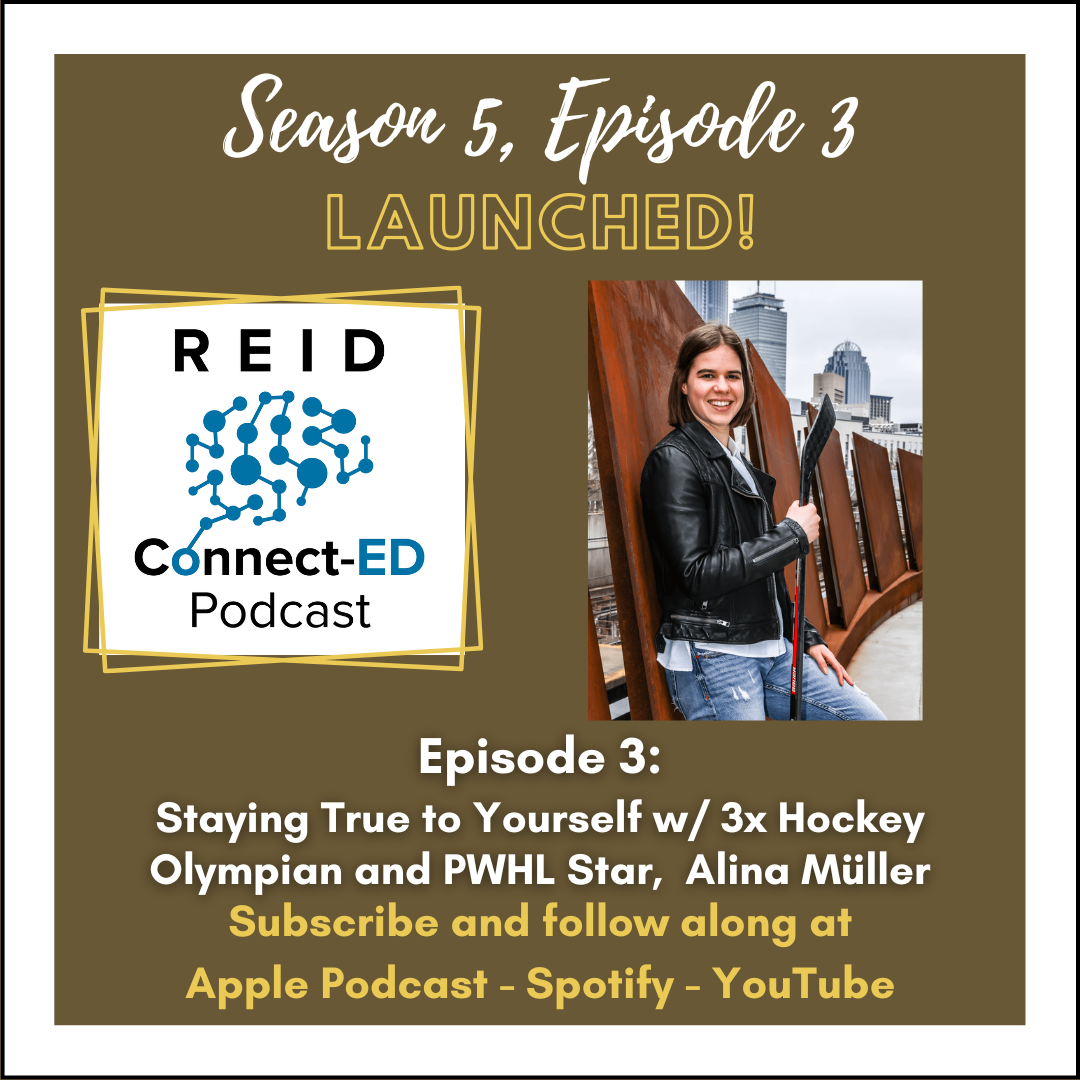
Listen Now!
-
-
At a young age, Alina played a lot of different sports but found hockey to be the one she loved the most.
Alina talked about growing up playing hockey against boys because of the circumstances of not having a girls team where she grew up in Switzerland.
Alina did not grow up with adults in her family who played hockey. She appreciates being a trailblazer for her own path to pursue hockey on her own with the support of her parents.
Alina talked about the extra organization and efforts to plan how to include her on the boys team due to logistical differences. She is very happy that coaches went out of their way to do this for her.
Alina was passionate about playing hockey. She loved it being a team sport and all the thought processes that go into playing the game (e.g., tracking, focus, anticipating, balance, etc.).
She pretty much always was excited to go to practice. There were others along her journey who did not have that intrinsic passion who seemed to either burnout or move away from the sport over time, even if they were talented.
Alina describes how she feels hockey, and other sports, can keep people on track with what is healthy in life and avoids other unhealthy cycles or habits.
With all the time, commitment, and discipline it took to maintain a journey in hockey, she does not regret things she could have missed out on, as hockey has provided her so much in life in a very positive way.
This may not be the case for other athletes who could feel a lot of pressure and ultimately become burned out.
Alina is an example that can give hope to see that it is possible to pursue excellence in a way that does not break a person down in an unhealthy way. She feels that she had positive people throughout her journey that allowed her to feel this way.
Alina talked about learning that she cannot please everyone or be best friends with everyone in order to be a leader. She learned to have crucial conversations in a respectful way for the betterment and growth of both people and their goals. She talks about embracing the challenges and not shying away from them.
Alina loves to connect with people and learn from them, even if she does not agree with everyone all the time. It also brings empathy that people may appear perfect but may in fact have their own struggles off the ice.
Alina talks about how it is humbly to get to know yourself more and more, including through getting to know and connecting with other people. You learn what you’re good at, where you need to improve, and so forth.
Alina’s way of thinking is very integrated, not just a one-track mind of becoming the best hockey player. She tries to look at different perspectives. She’s humble to recognize that sometimes what she’s done in the past may not work in the present or that sometimes everyone can be wrong and it’s okay to be adaptable. Respect is important to her while navigating this all, as it was part of how she grew up and was raised.
Moving to the US from Switzerland was a big change for her. She had to step out of her comfort zone into a new environment. Her fear was if she were not able to be who she is. She was hoping to feel accepted for who she is, even if she did not fit certain ‘norms’ of college life. She felt so grateful that she was accepted by her team for who she is, which is living healthy and taking care of her body so she can have the best mind and body to succeed at sports and in life. It takes a lot of courage sometimes particularly when you are around new people who do not know too well to feel happy in her own skin and be confident in what she does.
Alina talked about living through Covid where it seemed a lot of people became more complacent, not having in person harder conversations that can make them better people and losing aspects of discipline; despite the positives that came from people coming together. She also felt grateful that she had a team to lean on during the covid pandemic. And for the team and university to keep their life going as much as possible during the chaos.
Alina talked about Neuroathletic training that she used during Covid isolation (starting when she first came to college) that helped her eye tracking improve.
Alina talked about how her mind-body training helped her to reduce pain she was experiencing.
Alina talked about how she learned growing up how important it is to feel good mentally and physically so that when things don’t go well, you can be more balanced and resilient.
Alina talked about how hard it can be to regain mental composure during a shift change if something did not go well or if she feels ‘stuck’. She’s learned to let things go by redirecting her attention and energy into helping her teammates and talking about strategy to get out of the negative thought spiral. Feeling connected with her teammates helps her to regain a more natural state of mind that allows her to feel free and play free again.
Alina talked about not playing in front of huge crowds as a women’s hockey player, which in some ways allowed hockey to feel like a hobby rather than a job.
-
Gerald Reid 00:00
Music.
Alexis Reid 00:07
Welcome back to season five of the Reid Connect-Ed podcast. We're so grateful to be joined in the studio today by hockey great Alina Muller. Alina's incredibly vast and accomplished hockey resume will be described in a nuanced way, as we get to speak with her in a moment. We hope, most importantly, that you get to know more than the athlete, but the person, Alina Muller, words to describe Alina include humble leader clutch. She's a force on and off the ice. On the Reid Connect-Ed podcast, we strive to bring on guests who we believe have qualities that can inspire our audience in a positive way, and we're looking forward to this conversation to accomplish just that. But for now, here's a brief overview of her bio. Elena Muller originally hails from Winterthur, Switzerland and has represented and played for the Swiss Olympic team three times in 2014 at the age of 15, Alina came in clutch as she scored the game winning goal to secure the win for her team and the bronze medal. She was the youngest hockey player ever to win a medal.
In 2018 her team placed fifth overall in the world, with Alina scoring the most goals in one game as a women's Olympic hockey player, four goals in one game. Most recently, Alina and the Swiss national team in 2022 placed fourth in the world. In addition to her roles on the Swiss national team, Alina played hockey right here in the city of Boston, Massachusetts, for Northeastern University. This program is run by Dave Flint and showcased Alina’s skills as a standout player and leader on the team, as a consistent powerhouse. Alina significantly contributed to the northeastern team, winning five straight conference tournament championships Hockey East and a third straight Frozen Four appearance.
Not only are her skills on the ice incredibly impressive, but also those in the classroom. During her time at Northeastern she earned a degree in behavioral neuroscience and Rehabilitation Sciences after her fifth year of college playing hockey, Alina found herself at a crossroads. But the story doesn't end at Northeastern a recent addition to the women's professional sports in general has come on the scene with the support of Billie Jean King, the professional women's hockey league is now a force on the ice. Alina was selected as the third overall pick in the inaugural draft by the Boston team, the Boston Fleet. The Boston Fleet represents strength in numbers and is led by coach Courtney Bichard-Cassell, as well as their inaugural captain and hockey legend, Hillary, Knight Elena. We're so happy to have you here.
Alina Muller
Whoa. Thanks for the intro. I'm so happy to be here.
Gerald Reid 03:01
It's great to have you here, Alina, it's hard to know where to start with you. You know, we had lunch with you and just heard so many amazing things about you and your life and your experiences. So for the audience, I think it's good to kind of start from the beginning. You know, talk, talk us through the hockey journey. Where did it begin? Because, you know, people can see you on the ice, on TV and be like, wow, like, she's amazing. When I watched you, I called you the horse. And chess, you know, the horse can just move in all these different ways that other chess pieces can't. So, but we want to know you as a person and your journey, you know, in the hockey world, and also just as a person. So, where did all this start Alina?
Alina Muller 03:54
Sure. I mean, Alexis mentioned it. I'm from Winterthur, Switzerland. I have an older brother. Grew up, yeah, my parents at home, and my parents were pretty athletic their whole life. My mom played handball. It's a very popular sport in Europe, and my dad played soccer, and yeah, we didn't have anything to do with hockey, but then we just lived close by a rink at home, and we just loved to go skate open skate. When we were young, my dad would usually bring my brother and I out on the ice, and we just play some pond hockey style. And then, like, one day, a bit about six years old, I saw the little ones, had practice after the open skate, and I loved their gear. And I just, I was like, I want to, I want to be part of this. I want to play hockey. And then we asked the coach, or my dad asked the coach if I can join them, and he said, Yeah, for sure, have her come the next day. So it's actually funny that I started before my older brother started, so he kind of ended up in the sport because of me. We both played handball, soccer. Yeah, I rode BMX, I did track and field, literally just like moving all day. We loved sports, just being outside, having fun, but, but hockey was the most fun. So, um, yeah, in the end we both stuck with hockey, and I played boys growing up, and then, luckily, my journey ended up, yeah, coming here to Boston.
Gerald Reid 05:29
Wow. So when you say you asked to be part of the team, you were talking about, actually, a boys team. Is that correct? Yes.
Alina Muller 05:34
Yes, still up to now, we don't have any junior girls team in Switzerland, so everybody starts playing on a mixed team or or mostly with guys. Yeah, boys.
Gerald Reid 05:47
This is so interesting because we interviewed Rachel Pittman, who is a Dartmouth women's soccer coach. She hails from England, and she's had something very similar how she grew up when there wasn't really much for girls soccer and she had to play against the boys. And I'm thinking to myself, I'm back in my head, I'm like, wow, Alina is going to have the same type of story. This is so interesting. What was that like?
Alina Muller 06:07
Yeah, I mean, I it was so normal for me. I didn't know anything else. And I I played them in my hometown with these guys like my age for about six, seven years. So I kind of grew up with them. They, they were my friends. They accepted me, like, like, I'm one of them. So they didn't know anything different too. Um, most of my um, years, I was the only girl in the team. Um, so, yeah, I loved it. I liked it. I mean, they play hard. They just, yeah, want to have fun. And they were very including. But, um, I have also heard of friends of mine, like girls that played with boys where they Yeah, they didn't, they weren't accepted the same I was, and it was a tough road for them. And they were just happy, like once they were able to play with the girls or or women at a certain age.
Yeah. So for me, it was a good journey. I learned a lot. I mean, I wouldn't be the player I am today if I didn't play. I played boys until I turned 18. So, yeah, between like 16, 17, 18, years old. It was definitely a different story. Some of the guys, yeah came into puberty and tried maybe yeah to be, to be cooler than they actually were. They just Yeah weren’t as nice sometimes. But I was really lucky with the coaches I had, yeah, always, I mean, being a girl on a on a on a boys team, comes also with a lot of extra organization and just a lot of extra effort for the coaches. For the whole team, usually have to organize a second changing room, or, like, when do we shower and just stuff like that, or when it's like, an overnight stay somewhere, just like some, some extra effort. So I'm, yeah, really thankful for the coaches that, yeah, that we're happy that I that was able to play, play for them.
Gerald Reid 08:17
What was it about hockey that stood out to you? You seem like you're kind of an adventurous person, to just go out and to play and, you know, play different games, be out in nature, have fun. What stood out about hockey compared to the other sports for you?
Alina Muller 08:31
I think number one was that at the very young age, there's already a lot of action going on. You have a lot of practice. You have a lot of games. You go to tournaments in other sports. It's usually like, once a week or twice a week, and then every two weeks you have a competition or a tournament. So we just, we were like, we want to do this every day. We want to practice and see the guys every day and be on the ice. So I think that's why we leaned towards hockey from the beginning, and then, yeah, after a while, we were not able to do all the sports together anymore, because just yeah, the time, it was too time consuming to play, to play hockey. So we had to decide, which sport do you want to go with? My brother actually decided when he was, like 12 years old, like, super late. Nowadays, I don't think that would be possible anymore, but, um, yeah, I decided that about nine years old, that I want to play hockey just it's you need. You need to be good at everything. You need to be fast. You need to use your mind, your head. You need to know the game. It's a team sport. You see, see your peers every day, and yeah, you can just already play and experience so much at the very young age. And. Um, yeah, it's the best sport in the world.
Alexis Reid 10:01
It's so interesting. I was talking to a student I work with who plays hockey recently, because I was trying to make the connection between focus, attention and executive function skills, and from a neuroscience perspective, helping them to think about how they have to track where puck is, where the different players are anticipating what might come next, finding balance on the skates, on the ice, like so many factors, and I know we can kind of break that down for most sports, but I think for hockey, because you're literally playing on an unstable surface, right? Because you're on an ice and you're on these thin skates that are keeping you up, that it does require an additional level of focus. And I think that's brilliant for a lot of young people too, because it does make a lot of the Mind Body connections as you're playing.
Alina Muller 10:51
Absolutely, I totally agree. And because of that, you, I don't you train a lot, you you are involved with the sport a lot. You can always improve and get better at certain areas. Doesn't have to be always skill, skill wise, exactly like focus wise, just mental performance. Gotta work on it too. And yeah, it just keeps you, as I say, for away from Yeah, going down a different route, just like losing track of maybe what's, what's, what's healthy in life. And I think, yeah, nowadays super, super hard for certain young people to to hop on the right train and not get caught in Yeah, just unhealthy, like cycles or habits.
Alexis Reid 11:43
It's so interesting that you said, you know, you decided at nine, and when your brother decided at 12, it felt like that was late in the game. But I think what you're saying is so important, because I think that's the beauty of youth sports, especially, right? All sports, because there's camaraderie involved, it almost becomes, if you're lucky, as you described, like a family atmosphere, where everybody kind of has each other's backs and they're working for everybody to improve and be better. But you're right. It does. It does require and develop a certain level of discipline, too. And one of the things, one of the things we love about bringing successful people on this podcast is to kind of like, peel back, like, some of the layers of what it took to get to where you are as a professional hockey player today, and having such an amazing bio of all the things you've accomplished at such a young age already. And I think a lot of young people kind of miss what goes into it, what that process is. And we're very process oriented in the work we do, and even in our personal lives, to kind of peel things back. And I I wonder if you can talk a little bit about, you know, what it took to get to this place. Because we were talking earlier about how much pressure young people sometimes have to, just like, Get really good and devote all their time and effort into things, but you had a little different path than extrinsic motivation. A lot of it really seems like it came from you within which is amazing.
Alina Muller 13:11
Yeah, I always say I think the luckiest part in my life is that my parents had nothing to do with hockey or nobody really in my family, or my closest, yeah, friends, or at that time, when I was younger, had anything to do with hockey. We didn't know the sport other than watching it on TV. So it just since day one, it just loved to play. It was just my own decision. And nobody ever pushed me, yeah, to do this for somebody else, or I just always wanted to do it.
And it's actually a funny story. I overheard my mom telling somebody else that story about, like, four years ago. I didn't know about this either when I was younger, obviously, I didn't remember, but it's obviously a lot of work and effort for the parents. Hockey is not an easy sport. Yeah, you have to drive your kids to all these tournaments practice. Can't really go alone because the gear is super heavy, and you don't even know how to put the gear on yourself when you're young, so they just honestly need to be with you all the time. Luckily, we grew up next to a ring, so we were actually walking with the trolley bag across the street the ring the first, like, almost 10 years of my career
And then, yeah, once I got a little older, I was able to go alone, so at least my parents only had to drive me to games or or events further away than our home rink. Because, yeah, they were like, I don't know if we would have let you guys play hockey if we had to drive somewhere every day to practice. So yeah, super lucky and thankful for them, of course. And then back to the story I overheard my mom telling yeah to her friend that she said, If one day she would have had to get me out of bed or push me to go to practice, would have stopped this right away, like she would have, she would have said, You go find another sport. So I mean, just hearing that, I realized it was a lot of lot of work for them, but also realizing that I just always enjoyed going to practice or going to see, yeah, my team and play with them.
I think there was up to now, I can't remember a single day that I didn't want to go to practice. I mean, there, there are certain workouts or days, I don't know you would rather play game instead of going to the gym. But big part is the discipline part. You just know what you do it for why you do it? Um, yeah, it's just part of it. Then people ask about, oh, like, are you not tired of playing hockey, of sacrificing so many other things in life? And no, I can. I can say, No, um, not at all. Hockey has given me so much more than I would have ever imagined. And I love the journey. I love the ups and downs. Yeah, on the road, I love just everything you experience with it and and how many people I met along the way, just through hockey. And I would never, I would not change it for anything.
Gerald Reid 16:41
That’s pretty special. And it's special in the context of how that story could be the opposite for a lot of athletes out there that we talked about earlier, that sometimes you can feel that pressure from anybody. It doesn't have to be from parents. It could be from literally anybody in the athlete's life. And it could be so much pressure that it becomes burnout. And burnout is a real thing that is not visible. You know, we talked about this too. It's not something you can necessarily see people's emotions, but it can come out. And I think you're such a great role model for people out there to see that there is a different way to love something intrinsically. And it doesn't mean that you always 100% are just like having joy within it, right? It's hard work, it's discipline, but that there could be a different way, rather than just burnout. Alexis and I have been watching the show the Bear, and it's about the restaurant business. You like the show?
Alina Muller 17:33
No, I actually, I'm not a show person at all. I think I've watched two shows in my entire life. One was all American, and the other one is The Bear.
Gerald Reid 17:44
Oh my gosh, what a coincidence. So but it's very similar. I'm spoiling kind of the end of the third season. But like a lot of the theme around that is around, do you need to does excellence have to come at the expense of your well being completely.
Does it have to ruin you to get excellent? You know, do you have to break yourself down? Do leaders need to break you down to become excellent? And I'm so grateful that you can share your story, and maybe you can share even more details about it to really exemplify it, because it's possible. And I think we all need hope. We all need to see a vision for something that's possible. Otherwise, A, we don't know any better, or B, we just fall into the same patterns that we see other people do. So just from our field, and you know, from the bottom of our hearts, we're just really grateful that you can share this for people to hear.
Alina Muller 18:38
Oh, I yeah, I love to be here. So I'm No, I mean, don't get me wrong. I it doesn't, it doesn't mean that I Yeah, exactly like, love to train or, um, get up at six in the morning and it's cold outside and, um, walking to the ring just freezing, and then go on the ice, um, and obviously, along the way, you need the environment that helps you to support around you. I Yeah, again, I was so lucky. I had the right people around me through my whole journey, and just learned from a very early age to put myself first. Think I like to please everybody, to be good friends with everybody. But the older, the older I became, the more I had to be a leader. I realized, you can't, you can't please everybody. You can't be best friends with everybody, and you have to learn to have Crucial Conversations. Doesn't doesn't mean you don't like that person. It's just for the better, for the growth of both of the humans and or the cause your your word. Came towards so just Yeah, learning along the way. And I love to just talk to people, connect with them, learn from them, yeah, and then pick, pick whatever works best for me. Doesn't mean that I have to agree with everybody, but just hearing other people's opinions, other people's stories.
It also helps, yeah, realizing what a great life you have yourself and just or realizing that everybody has some struggles to deal with, even though from the outside it looks like they're perfect. Yeah, just, it's just great to to live right now. I'm happy if I can inspire any anybody out there.
Gerald Reid 20:49
What you said is really insightful, because you kind of brought it back to even the challenges or something you embrace. And your website just says you're a student of life, and I can see that in you, because you know when you're saying, you know I had to grow myself and to realize I can't please everyone, and still can be a leader in a positive way, even though you know you can't be best friends with everyone, which is like great wisdom for people to understand you can get along with people even though you know you're not best friends, or even you have differences or you have conflict and and for you to say that you can still embrace that As part of the journey, and not let that become like so much pain or struggle that it ruins the experience. It's not an all or nothing thing. We always talk about this the way you perceive things is really important, because challenges could become all or nothing disasters to people where you're saying both things could be true. You know, if there's a challenge, you can embrace the challenge and learn and grow from it, you and the other person, if you find ways to do it. And by the way, dealing with conflict is not easy, so I'm sure there was growing pains with that, like there's for everybody, but that is part of the journey, as you're saying. And I love that as an example, because it's just, number one is real life, but number two, it's also hopeful and inspiring.
Alina Muller 22:00
For sure, totally agree. And part part of it, part of everybody's life, for sure.
Alexis Reid 22:06
I um, I just had a conversation with a high schooler yesterday about a similar theme, because I think as a woman, as a girl growing up, too, sometimes we feel a lot of responsibility to like you say like, Please everybody making sure we're doing all the things we often as as females, get into the habit of apologizing for things that we do even when we're taking care of ourselves. And I literally just had this conversation with a high schooler, and I said, You are allowed to care for yourself, right? If you're gonna change a plan or do something differently because you're just avoiding it, that's a different story. But if you're making a conscious effort and choice to care for yourself, because you know it's going to grow your soul yourself in whatever you're doing, there's nothing more admirable than that. And when you talk about leadership, a lot of people think there's like a playbook for how to be a leader.
But I think being a leader and as you know we've gotten to know you, and we continue to get to know you, I think your leadership comes from you being in tune with yourself as a person, as a player, as a teammate, as a friend, right? I think all of it is a part of the process. So I'm queuing you up, not only to talk about you and your life, but also I have in the back of my mind a lot of young athletes who are striving to be better and figure it out. And I think the answer is to, like, tune in and really get to know yourself a little bit better. But I wonder what you would say to some of those young athletes kind of going through it.
Alina Muller 23:39
Yeah, for sure. I mean, if Yeah, if you you get to know yourself better and better. You know where you're good at, you know where you're best at, you know where you're weak at, where you can improve. I think it just very humbling. If you Yeah, if you realize I always see that way, like every think, every person you meet, you can learn something from, from, yeah, anywhere. Is it like athletic wise? Is its personality wise? Is it how they deal with with something, how they talk to people? And that's what I just, that's why I love meeting, meeting people, and, yeah, just figuring out, like, what, what? What makes them special, and then again, trying to to see if, if that that's something I I want to learn from them, or if that's something I want to become better at. Um, yeah. So it's just, I think nothing goes over connecting, connecting with people.
Alexis Reid 24:44
What would you say to a young person, especially a young female athlete? Because, you know, in athletics, as far as athletics goes, whether you're in Europe or here in the United States or anywhere around the world, I think we as women are trying to learn how to show up and be powerful, not only as athletes, but also as forces. Just as times are changing…
Alina Muller 25:05
I think a big part is having a role models and yeah, nowadays, women's sports get get more attention, and we get to see we learn. We learn who, who these people on TV are, like the great athletes. We we get to know them as people. And again, we get to know that, that they they're not perfect. Um, just like realizing that they're normal people too, and you can become that person with which is a lot of hard work, a lot of passion, lot of grit, and yeah, going your path no matter, yeah, what it takes, just to do what it takes, and I think it's hard to do, to do it without role models.
So I'm super, super happy and excited to see even with our new league now. Mean, even for myself, having Captain Hillary Knight, she's the face of of women's hockey all over the world, and especially in America, getting to know her, I mean, I've played against her since since a few years, and I know how how great of a hockey player she is and how, how well she knows the game, but it just is on another level. If you get to know the person, if you if you see day to day, how she leads, how she treats her body, how how she treats other people, just the value she lives by is unbelievable, and it just makes everybody, everybody around her, better people. You want to be around her, you you want to be associated with her. You want to learn from her, and having somebody like her, you realize you want to be that person for somebody else, and you can be that person for somebody else, anybody, literally anybody, can be an inspiration for somebody else. And realizing that you can be that person also makes you just a better person.
Alexis Reid 27:16
It's so funny because we had Mia on the show a few seasons, Mia
Gerald Reid 27:21
Brown, assistant captain alongside Alina.
Alexis Reid 27:25
Yeah, and it's so funny because she spoke about you the same way you're just talking about your current captain. And it's, it's so funny because you're, you're hearing us, so you can't see Alina’s body language. But when, when we call her a leader, there's such a humbleness about you, right? It's not that you're squirming away from that title, but I think you're owning it, but also you're like, I just do what I need to do is what your body language tells me. Like, yeah, I show up and I'm there for people.
Gerald Reid It's genuine.
Alexis Reid It's so genuine, and it's so beautiful. And I just wanted to kind of narrate that a little bit for the listeners, because I think that, you know, there's a little bit of an acceptance of like, I know what it takes to show up, and I'm so honored to be an inspiration or a support system for other people too. And you know, you embody that. I just wanted to narrate for the audience, that this is kind of the nonverbal cues, also that you're putting out into the world, not just your words.
Alina Muller 28:19
Thank you. Thank you.
Gerald Reid 28:21
Yeah. Alina, you really are one of a kind person, and everyone's different. And I think we can all learn from the way you think about things. You're very integrated in how you think. It's not like you're just thinking one way, and that's the only way. You take a lot of different variables, and you kind of try to address them all in different ways, or look at different perspectives and try to see how they fit together, rather than just saying, Oh, it's just this way, and that's it, you know. And I think in athletics, it's so easy to fall into like a one track mind of, I'm just going to be the best. I have to improve all the time, and that's the only thing that matters. I have to impress everybody, impress my coach. I got to get playing time. That's all that matters. And can't blame athletes for thinking that way, because people want playing time, and they want to play and win and all that stuff, but to show that you can be successful and think and feel and act and relate with people in this type of flexible way where it's not just that that's not the only thing that matters is unbelievable. I mean, for any sport, women's sport, men's sport, even outside of sports, it's important.
Alina Muller 29:29
Thank you. Yeah, I think it has a lot to do with it, with how I how I grew up, just the values my parents instilled in my brother and I, they're always really kind. They're always really open for and accepted everybody around us, respected. Um, respect is, yeah, written really huge at home, um, just like again, not thinking, just with your with your one your own mind, and you think you what you do is the right way, but learning, learning from everybody and also realizing that sometimes you're wrong, and then that's totally fine, and could be the right way a year ago, but maybe now it's not anymore. And being adaptable, being just able to grow and leave your comfort zone.
I mean, yeah, leaving home at 20 years old, leaving my home country to come to the US, that wasn't easy. I again, I knew why I did it. I knew what I did it for. I knew I want to become a better hockey player, and that the only, the only way I could do that was coming to the US, but just how much I grew as a person here is unbelievable. It was the best decision of my life to leave home at 20 years old, yeah, just bringing my backpack, whatever I learned at home, and coming here, and I was just, I mean, I can't thank Northeastern and my teammates enough, because they accepted the way I am, the way I wanted to be since day one.
I think the biggest, the biggest fear I had was it had nothing to do with the country or hockey wise. The biggest fear I had was, can I be who I was at home? Can I be the person who I want to be in this new setting, in this new university life, because in Switzerland, you only know about college or college sports through movies, and you know that sometimes, yeah, they can go a little crazy, and it's a lot of partying, a lot of, I don't know, just drinking alcohol and stuff like that, and I just knew I'm not that type of person. I like taking care of my body. I like living healthy, because I knew in the end, I need to have the best mind and body possible to succeed in sports and in life. And that was my biggest fear, that I that I can't be that person, that I was at home with everybody around me that knows me, that know me, and just leaving, yeah, the comfort zone and yeah, dumping myself into a very, very new environment. And it has been, yeah, the best, the best journey and the best decision of my life,
Gerald Reid 32:42
You seem like you're confident as a person to being yourself, which probably plays a lot in terms of what you just said, like you've had other people embrace and accept you, and also you've learned to do that for yourself. I think there's nothing more important than life than learning genuinely you know how you are as a person, who you are. Strip away all those, strip away all the ego, strip away all the pred like, all the other external stuff, and to truly be genuine to your values, to who you are, and to feel confident in that, and to just accept yourself with your weaknesses and strengths, all of it is one of the most beautiful things. It sounds like you. You're a great example of that, too.
Alina Muller 33:18
Thank you. Yeah, it takes a lot of courage sometimes, for sure, especially if you, yeah, if you're around people you don't know too well, and you don't know what they think is good and their values or what they live by. And yeah, sometimes you have to make a compromise or bend a little bit. But yeah, for me, that's a definitely number one thing, just to always stay true to myself. And in the end, I know that I can only perform the best way or be the best version of myself if I feel happy in my in my own skin, or if I feel confident in what I do, and yeah, so that's what I hope I can prioritize always.
Gerald Reid I love that
Alexis Reid 34:07
you gave such a good overview, but I kind of want to rewind for a minute and highlight a couple of things, because not only did you come to a new country to go to school and play hockey, but you chose a really rigorous career path in your studies. And you didn't just come over here during normal times, because you, as we mentioned before, came over and then covid hit, and the world kind of froze, literally and changed a little bit. I wonder if you can kind of, you know, maybe zoom in a little bit more on that experience and some of the things that the people around you did to embrace you, and the things you had to do for yourself to adjust and adapt in those those times,
Alina Muller 34:52
For sure, yeah, uh, definitely, what wasn't wasn't easy, um, being being away from home during such a weird time. Yeah, on the planet,
Alexis Reid 35:06
I say the time that shall not be named, even though I named it.
Alina Muller 35:13
Yeah, I think definitely I was, again, pretty lucky with the people I was surrounded with at that time. And also lucky with the age I was in, the life stage I was in, can't even Yeah, believe like having to Yeah, nurture a child during that time, having no contact with anybody else, bringing up Yeah, 345, years old child that is not being able to interact with anybody else, then, then the mom and the dad, or, yeah, just like the closest ones and or having to start college, like coming here to the US and covid hits and the first year is all online, you I think, yeah, a lot of a lot of kids didn't have to have these hard conversations. That makes them better people. They can just text or just write an email and think they're fine. They didn't have to be disciplined, to do, to complete their homework, or just stuff like that. I think the world became little more complacent in that way.
But then there's also the positive side. I think that the world came closer together, realized that maybe slowing down a little bit and it's better for you, and prioritizing is better than getting everything done, done at once, and prioritizing the important things what really matters in life, the connection with the people. I mean, yeah, I have family in Italy that I probably haven't seen in, like, 10-15, years. And my I had my grandma, grandma die. I could not be with her. It was during covid. I couldn't travel. It just you can't get these moments back.
And I think it was very good for us to realize that we can get these moments back, back and from, yeah, I have to say, I live a different life since then. I'd rather take a day for myself, take care of myself, than in getting something done that is not important. Or, yeah, making it to an event or, um, just some materialistic stuff that, um, it's not gonna give you anything in life. Um, yeah, I think it was, it was helpful, but definitely a struggle, and athletically, obviously, also a big struggle, being pretty much alone. I mean, if I were not in a team sport, I don't, I wouldn't know how I would have done after these, like two, three years, isolated, really, and thanks God. We had our teammates to lean on, and we had at Northeastern a great support staff. The University did a lot for us that we could keep our studies going and keep our life going the best way possible. I mean, a lot of a lot of other a lot of friends of mine at home, like they Yeah, they had to to change their their pathway, had to find a new job or, yeah, just like, it's definitely something we will tell our grandchildren about later on.
Alexis Reid 38:50
For sure. Oh, for sure. What did you do to stay fit athletically? Were you guys able to all still practice and get on the ice and like, what did you have to do? I to get to where you are already. There's so much self discipline involved, but to have different barriers in your way. How'd you do it?
Gerald Reid 39:10
Can I ask a quick related question to that to connect with Alexis is saying, because you had contacted us about you want to talk a little bit about that neuro, that kind of neuro training, and the mind training that you've gone through and and maybe we can relate that to this experience too, in terms of the mental training.
Alina Muller 39:25
Yeah, again, I was really lucky with what life stage I was at when, yeah, when that time period came, came along, and we were not able to to practice as a team, really, for a couple of months. And yeah, we had to sometimes go in isolation and actually be alone, live alone, train in our, I don't know, little, little apartment or room, just trying to somehow move your body. I mean, if you're an athlete, you're used to. To moving around every day you go crazy if you have to stay, yeah, just laid lay down or stand still for for a couple of days. But again, I was even at that time, mature enough to to realize that it's okay if I can't be at my very best physically right now it is important to to to stay clear mentally. And yeah, I'm mean, as I was studying neuroscience, so I I am learning about about the mind, about how we process things, about how we how we learn, and emotions, how emotions affect us a lot. It's a very it's a very complex organ we have out there, and it's absolutely beautiful to learn about it. So I was definitely staying busy with just focusing on my studies, but then also use that for training and myself to you don't. You don't need, you don't need any room or space to train your mind. Really, you can. You can do it laying, laying in your bed.
Luckily, I've started with neuro athletic training about four or five years ago, before pretty much around when I started college. Because, yeah, I was just very interested in it, and I was getting to certain stage in hockey where everybody's skilled, everybody's fast, but I wanted to know, how else can I become this 1% better than than than everybody else? How can I keep improving without physically exer exertion my myself, because we already train a lot with the team. You can't do any additional trainings, really, because your body like needs rest and needs to recover. And then, yeah, learning that with neuro athletic training, I was training my eyes a lot. It's actually pretty crazy story. I'm wearing contacts, and I was like, negative one five and negative 2.0 or something. And after like, a year of neuro athletic training and eye training, I I was able to bring it down to 0.5 and 0.75 that's incredible. It's absolutely crazy. Um, just like very small and short exercises that you can do whenever you have time, and whenever you're you're waiting to, yeah, literally wait for the for for the train, the bus or wherever. You can do these exercises, and you can improve so much and being able to concentrate better, being able to focus better, being able to free your mind to just play hockey, even though you have an exam coming up, you have a relationship that is not going well, something you worry about, It all affects your performance. And it's, yeah, it's, I wish everybody gets access to it. I wish everybody tries to explore it and at least try it out and see how it makes you feel.
Gerald Reid 43:28
You know what you're saying is really interesting, too, because you know, when I work with athletes, it's like when I'm in my sport, that's when I got to do my mental training. And the reality is, you're you on the ice or wherever you are in your sport, and also when you leave. And your emotions are your emotions, your thoughts are your thoughts. Your focus is your focus. And so, you know the work Alexis does as well. It's, it's all encompassing. You know, everything is everything. You know it's you can always work on these things and learn about yourself and learn how to understand yourself, not just in the context of the sport, but outside of the sport, and then you can that also translates within the sport as well.
Alina Muller 44:05
Absolutely. I mean, I I'm sure every, every athlete has experienced practices or games where they're like, I was not I was not here, I was not in the game, and that's honestly like the worst thing, you don't want this to happen, because you prepare so well. You're ready physically, you train so much to have everything you need. But if your mind is not, is not participating or going or thinking the way you want it you want it to you can be as good as you can be. It's never gonna, yeah, you're never gonna be the best out there.
Alexis Reid 44:51
I think that relates to like every aspect of performance, like anywhere too. So everything you're saying, I think, is so applicable in so many aspects of life. And you know, when you were talking about kind of being isolated in your dorm room or your apartment during covid, that you know my dog, Rafa, he's a Vizsla, and he has a lot of energy. And my trainer always says, you know, you can work him out on the field, where he's running and he's doing work, but you can also do mental training with him too, where he needs to pause and inhibit or focus. And it's so interesting that we can see that for animals, but we don't always see that and appreciate that for ourselves as humans, right? Because the mental work is really just as important as a physical work, especially in athletics.
Alina Muller 45:38
Yeah, for sure. And you need, you need the support around you. You need people like the two of you, where, yeah, young kids and athletes can talk to and free their mind. I didn't do it alone. I could never do it alone. And it's, it's important to ask for help and just realizing that, yeah, the best, best players out there, best athletes and most successful workers in the world, nobody has done it alone, everybody, yeah, needs to support, needs to help. And it's also cooler to do it together than alone.
Gerald Reid 46:20
Yeah, absolutely, yeah. The relationship is meaningful, right? Yeah,
Alina Muller 46:23
very meaningful.
Alexis Reid 46:24
I have one more question about and please feel free to add more about the neuroscience work that you studied. And do I have a couple things that I remember from my graduate studies, and I'm like, Oh, this is such an aha moment for me. Do you have a couple of those from your training that, especially as being such an elite athlete, I'm sure there was a lot that resonated as you were learning about neuroscience, especially at this period of time where you were able to focus on your studies, maybe more than the athleticism when you couldn't actually do more. I wonder if there were any aha moments or things that really resonated for you in that work.
Alina Muller 47:01
Yeah. Um, well, athletically, like, with the neuro athletic training, um, I basically started it because, um, my body was started to break down a little bit. I had issues. I had pain, and I tried PT, and obviously, like, I don't know, had the best trainers out there to kind of maintain it, but nothing really helped it to to make it better. So I seek Yeah, new, new options and new solutions. And that's when I yeah found, I mean, during my studies, I learned how, how the mind, yeah, controls all our like the motor control and cognitive part as well, of course, but just like knowing that everything is connected, and everything starts through, like the nerves, or somehow starts from, from the mind, just like opened my eyes to also pain and injuries, to maybe not always, try to fix it surgically or in that way, just sometimes there's something stuck, yeah, in your mind.
And then I started neuro athletic training, and that was back home in Switzerland, going in for a couple of sessions, and just a difference in how I felt, and, um, how much like more range of motion and less pain I would feel was mind blowing. Um, just like all the hours I spent spent in the gym, compared to one or two sessions, um, in their athletic training. Um, was, yeah, it was mind blowing. And then I knew from them. I mean, I already believed in it before, but when it's actually helping yourself and you can actually feel different, you're like, Well, this is real, and now my interest grew to actually be able to learn what, why? Why does that? So, yeah, studying neuroscience was just the start of it, and I hope I will continue and pick it back up once. Once I'm done playing hockey.
Gerald Reid 49:21
We're gonna go back in time for a second. And I hope this is not a leading question, but you played on the Olympic team. How old were you again?
Alina Muller 49:29
15? My first time? 15?
Alexis Reid 49:32
Oh my gosh.
Gerald Reid 49:33
So sometimes you know the idea. When you're a researcher and a practitioner, you want to you want to learn, you want the research to teach you how to put into practice, and you want what you experience in the real world to inform the research. So I'm trying to make a metaphor here. But when you were 15, what did you learn about how the brain works in terms of performance back then that actually, like kind of fits into the research. Nowadays that you learn about that brain, and because there's probably things you were doing back then that you probably want to recreate now that really helped you to play so
Alina Muller 50:07
well, yeah, that's a tough question, because I'm I don't really remember how I actually felt back then, yeah, but one thing I just wish I realized earlier is how important mental health, sleep and nutrition is, I mean, when you're young, you just you feel great, your body feels great, your mind feels great. You don't have anything to worry about. Everything is taken care of, and you take it for granted somehow, and you just focus on physically training, training, playing, I don't know. And I just wish. I mean, I think I realized it pretty early on that recovery and nutrition and sleep and all that is really important, but there isn't. There's no too early. I mean, I wish, yeah, people do Yeah, start to do it in high school already, just just realizing how much, how much more you can give if you feel again, in tune with yourself, you can maybe have a little less skill, but you will, you will be able to to be even better hockey player or better human if, if you, if you feel great overall.
Gerald Reid 51:24
It makes you feel more confident, too. When you feel better mentally, physically, it's just like, Oh, I'm ready.
Alina Muller 51:30
I feel more ready, more confident and more more safe to not, to not fall in a hole if something is not going right, yeah. Just like being able to be more balanced, more leveled, yeah, if something is not going your way, yeah, that this is not the end of the world, that there's that there is a tomorrow that you know how, how it's usually going, or you know how to do it, and you know how to get out of there.
Gerald Reid 51:56
Can you do your best to describe what it's like when you're playing the way that you really hope to play ideally like, what is the mindset like that you try to recreate in in games that maybe the audience can learn from people who are trying to, kind of learn about them, the mindset to play, because hockey is interesting, because there's no set plays, necessarily, it's free flowing, so your mind's always on. I assume you know. So what you know, what is the type of mindset you're trying to get into? What does it feel like? What is, what's going on up there?
Alina Muller 52:26
I think the flow is a really important word that is used a lot. And this this stage when it's just flowing, it's just going right. Any negative moment does not pull you down too much. Any positive moment is not, yeah, makes you go too high, like, if you are in that stage, it's obviously ideal, but getting there is not easy, and definitely also not easy to describe. Otherwise, I would do it every day.
But just, I think in hockey, it helps that you have shifts like, you can always reset on the bench. You can reset in between periods. It's not like, I would say, like tennis or golfing, something that is just goes on for hours, like, maybe four hours and every point matters, like like every shot matters. It's way tougher thinking hockey. What is tough is to let go what happened in the shift before something did not go well on the ice, or you missed, missed the big chance. It's hard to let that go and not affect the next shift, or, yeah, the next couple of minutes. So that's something I still struggle with, and I sometimes I'm better at it. Sometimes I'm not, but I just realized myself it has a lot to do with how I feel already before the game, or how I feel in general during the day, um, again, if I'm able to let everything, um outside the locker room, if I, if I let all the other stresses, or like an nagging injury, if I, if I let that just be and not them affect the way I play. That's how I get to that flow, flow state the best.
And a really important part is I need to be connected. I need to feel connected with my teammates. So whenever, whenever I feel like I'm not feeling the right way. I'm not feeling free. I feel like I think too much hockey. You can't really think what's next. You just have to react, trust your instincts. And if I feel like I'm stuck a little bit and kind of wish I have somebody I. Say, talk to me or or help me. What helps me is I go and talk to somebody else or help somebody else. If I find myself maybe almost distracting a little bit or helping somebody else feel better. It makes me feel so much better. It gives me back so much, and I feel connected with that person. I feel like I know how she's doing right now. I know how she's feeling. I know where she is on the ice way better with my line mates. I need to be on the same page and talk a lot with my teammates, line mates, they just know that they're good doing good. So I'm doing I'm doing good.
Gerald Reid 55:48
That's really interesting. So it's almost least you were used the word distraction. It's like, you got the negative thoughts going. You're like, I just need to put my energy somewhere else. And then you're back into the game, because you're actually talking to them about the game anyway. So you're back in the game, and, you know, there's tons of literature about in sports psychology, like, when you're playing on the defensive and you're not being proactive, it's just that completely your brain, your mind, is completely doing things in a different way. It's like, you can't tell yourself, don't miss, you know, don't do this, don't do that. Your brain doesn't know what that means, right? If I tell you, like, like, don't look that way, there's no don't it's like you're looking at me now because you're looking at me.
Alexis Reid 56:28
Yeah, it's like the elephant in the room, right? I always say to my clients I work with, we have to sometimes distract from the distraction, right? Your distraction is like, Oh, I did that wrong. Redirect it. And you're redirecting, or you're distracting or you're distracting yourself from the narrative in your mind that's getting you out of the game. It's awesome. That's such a great way of putting it and well said.
Gerald Reid 56:48
Very interesting, very interesting. Alina, any other bits of wisdom, just in terms of the mental side, or just the experience of being a hockey player. Let me put this in a larger context, because not everybody's like you, maybe other people have different concerns or worries that impact them. You got people watching you, and I'm gonna assume, I'm gonna guess, this is my assumption, you're not thinking about the audience watching you too much. It's not bothering you and distracting you.
Alina Muller 57:14
No, it's not if, if only that. It makes me, yeah, more excited, more happy that the people like watch they can watch me do what I love doing. I can inspire people all over the world, and I, I mean, I can see how, how it can be a burden, or it can become too much, but we're in that sense, as women hockey players, we did not really play in front of a big crowd the last Yeah, the last decade. I don't know how it it has always felt like a hobby. It has always been like something I get to do, and, like my free time, and just it has never been like my job, or I never made money from from playing hockey, and I never had to, like, read bad comments online about about the performance. I mean, it's cruel.
I mean, I yeah, my older brother, he's a professional hockey player. He played in the NHL a few years and I mean, if you are playing at that level, and you have so many people watching, I mean, it's, it's okay that they're hard, hard on the players, but it's also just ridiculous. They can't even skate. They try to say, like, what they do wrong on the ice, and they, they don't care about, like, the person behind, behind the gear. I mean, they only and, and that's their right. It's um, it's um, it's hockey. The hockey it creates a lot of money. It's, it's a business, and people pay a lot of money to watch, watch you play, and then want to, want to see you perform well.
But luckily I got to see that from him, that it's, it's sometimes a big pressure if, if that's your job, and I always got to do it as a hobby. I never made money from playing hockey, and I always enjoyed it, and people would only write about us if we did well, if we did something special, if we won a medal, people would get excited and write about us, but if we didn't do well, nobody cared. So I think in that sense, you're very lucky. But now, obviously, I'm super happy that there is a future in women's hockey, and now we are a market, and now we get haters, and we get people that, yeah, expect more from us, and we make more money from playing hockey. So you kind of almost feel like you need to be even better. You need to fulfill the contract you signed. You need to be good at it.
You can't, yeah, allow yourself to to not play well. And beforehand, it was like, oh, had a bad day. Yeah, it happens like nobody really cares, except you didn't want to let your teammates down. But nobody in the stands or newspapers or anywhere really, really cared. So that's a new experience, but all we wanted, always like, was having that experience and playing in front of a sold out stadium, and last year was the first time we were able to do that regularly, and it has been so much fun, I can't even describe how much different it feels to play in front of a sold out crowd, compared to a few 100 people or friends watching main thing thank you that they all always came and supported us. But it's definitely different if you if you feel that community behind you, cheering cheering your team on, just like supporting you in what you do and watching you do what you love. So I never had that pressure so far, and I thrive, and people want to come watch me play, but I can definitely see the other side.
Gerald Reid 1:01:29
We can probably talk forever about you and your experience, and there's so much. Maybe we'll probably come back another time when you all win the championship. But, you're such a humble person that it's hard to put into words exactly what a great role model you are for people to hear this. Because, you know, like for kids watching professional athletes, it's just like, oh, like, they're great at their sport, they're superhuman, whatever. Like, this whole conversation, like, marginally, has been about hockey and I love that, and I hope that this is a good window for for people in athletics. And, you know, I I'm part time professor at BU and I help train the counselors in training in grad school. And some of them are going into sports psychology, and they're very passionate about just the well being of athletes. It's such a movement. It really is more than ever, and a lot of them are ex athletes. They're former athletes, and they really want to make a difference. And everything that we talked about, everyone's different. Everyone's journey is different. Everybody's mental journey is different, and all their experiences may not match up exactly like you, but everybody has a journey, a healthy journey, a positive journey, whatever you know, whatever that looks like for them. It takes time to figure out what that is, but your story is so profound, and you may not fully it's hard for me to fully express my gratitude for that, because it's hard to put into words. But thank you so much. Alina,
Alina Muller 1:03:03
thank you. No, it has been, yeah, really great talking to you guys. And thank you for the work you guys do, for all the athletes. And this podcast is really great. And, um, yeah, since Mia Brown told told me about you guys, I've been listening to a few episodes and just yeah, the people, the people you talk to, the stories they have is believable and it just just makes, makes you, makes you feel so much better when you, when you listen to yeah, those people telling their stories. Great.
Gerald Reid 1:03:37
Thank you so much, Alina.
Alexis Reid 1:03:39
thank you for being here with us, and you're now a part of our world too. So we're grateful for you and for really being a trailblazer in your in your craft. I'm not even going to say in your sport, because it really is a craft. It's about, like you said, all the different component parts of all that you do for yourself and for others, it's a really beautiful thing. We wish you all the best for this season ahead and for all of your endeavors,
Alina Muller 1:04:02
thank you so much. Thank you.
Gerald Reid
Thanks for tuning in to the Reid Connect-ED podcast. Please remember that this is a podcast intended to educate and share ideas, but it is not a substitute for professional care that may be beneficial to you at different points of your life. If you are needed support, please contact your primary care physician, local hospital, educational institution, or support staff at your place of employment to seek out referrals for what may be most helpful for you. ideas shared here have been shaped by many years of training, incredible mentors research theory, evidence based practices and our work with individuals over the years, but it's not intended to represent the opinions of those we work with or who we are affiliated with. The reconnected podcast is hosted by siblings Alexis Reid and Dr. Gerald Reid. Original music is written and recorded by Gerald Reid (www.Jerapy.com) recording was done by Cyber Sound Studios. If you want to follow along on this journey with us the Reid Connect-ED podcast. we'll be releasing new episodes every two weeks each season so please subscribe for updates and notifications. Feel free to also follow us on Instagram @ReidConnectEdPodcast that's @ReidconnectEdPodcast and Twitter @ReidconnectEd. We are grateful for you joining us and we look forward to future episodes. In the meanwhile be curious, be open, and be well.
We are thrilled to have hockey great, Alina Müller join us for an in depth conversation about her journey of becoming a 3x Olympian for her native Switzerland national team (starting at age 15), making 3 appearances in the college Frozen Four with Northeastern University, and most recently the 3rd overall pick in the inaugural 2023 Professional Women's Hockey League (PWHL) draft.
Alina is not only one of the best hockey players in the world but she is also an incredible role-model. In this interview, Alina talks about carving her own path on and off the ice, developing an integrated perspective in hockey and life, and staying true to her core values, including the importance of relationships. Of course, we get into mental training and sport psychology aspects of performance.
Be curious. Be Open. Be well.
The ReidConnect-Ed Podcast is hosted by Siblings Alexis Reid and Dr. Gerald Reid, produced by and original music is written and recorded by www.Jerapy.com
*Please note that different practitioners may have different opinions- this is our perspective and is intended to educate you on what may be possible.