

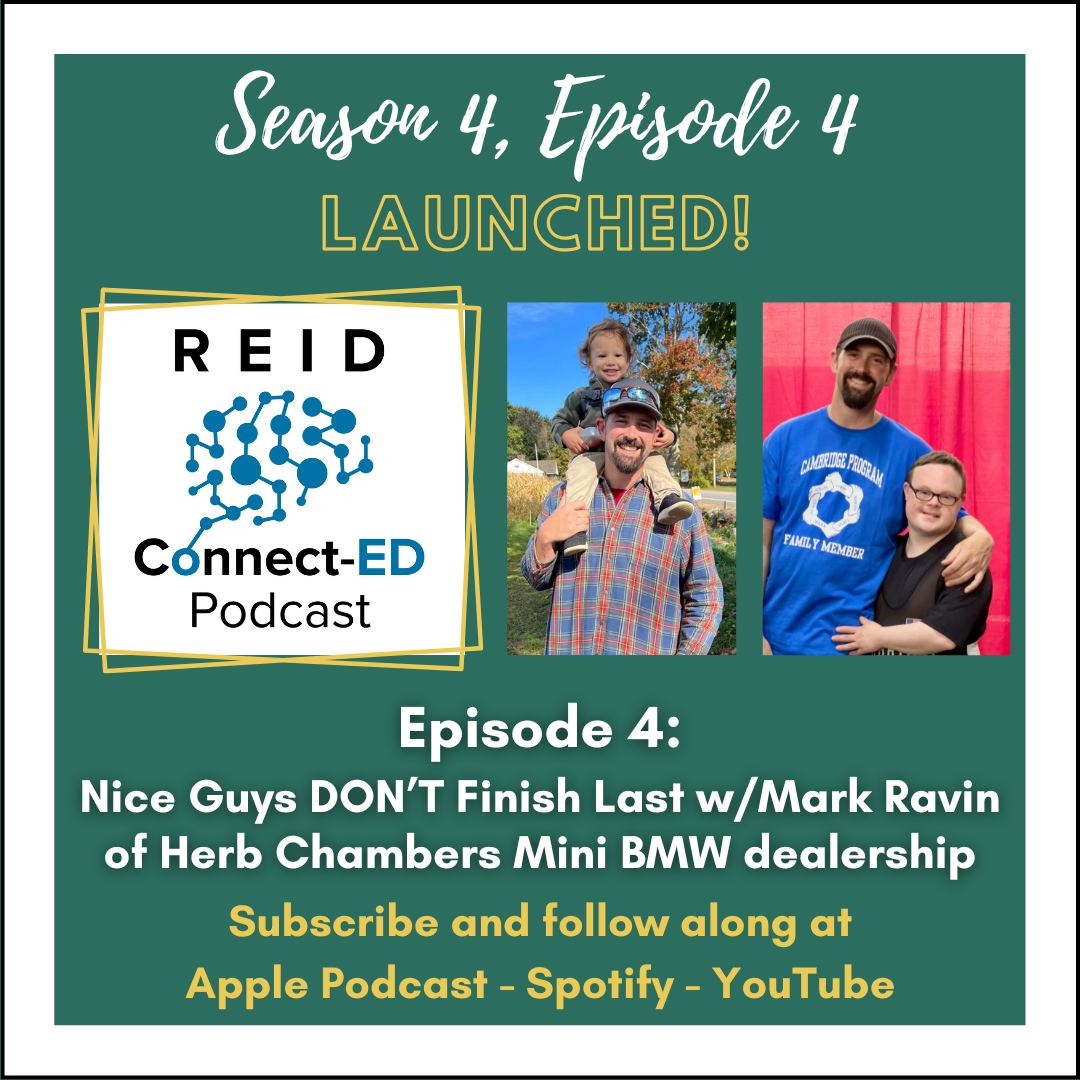
S4 E4: Nice Guys Don’t Finish Last w/Mark Ravin of Herb Chambers
Listen Now!
-
Herb Chambers BMW/ Mini Dealership: https://www.herbchambersmini.com/
-
Think about any person in your life who took care of you when you had a problem. Consider which of those people really stood out to you because of how they were so genuine, present, and showed up so well. That’s how Mark Ravin is to so many people in the service department of Herb Chambers Mini Cooper/BMW dealership in Boston, MA.
Mark has developed genuine relationships with all those he has come across throughout his career path.
Mark always wanted to help others as a child. His mother always taught him to look out for one another. Mark feels like it is just natural to live life this way, that we are all in this life together and should be supporting each other and helping each other. His mother commented that she got to know most of their neighborhood due to Mark doing little things for his neighbors.
Mark grew up having a hard time with academics in school (ADHD), as it did not come natural to him despite him and his mother knowing he was a smart guy. His mother always reminded him that he will be successful in life after high school, so long as he remained honest, treated other people well, and tried his best. As long as he tried hard, his mother very much positively reinforced his efforts rather than criticizing the actual grade. His mother was a great example of accepting Mark for who he is while also still encouraging him and pushing him in a way that made sense for his individual differences.
Mark always wanted to work. He had his own business as a child, like raking leaves and shoveling snow. When he cared about something, he was very highly focused and driven. He really appreciated middle school classes like culinary arts, woodshop, sewing, etc.
Different people have different paths in life and it’s important to acknowledge each person’s strengths and nurture where they can be used in a career path.
Mark felt fortunate to learn from those he worked with over the years.
Mark did not enjoy the sales aspect of car dealerships as technology led people to ‘place an order online’ and leave rather than developing a connection with the salesperson to identify the best car for the customer. As such, he moved to the service department and has felt like that is where real connection is made. Even more, the owner himself, Herb Chambers, described to Mark how important service is for his car dealerships. Sales makes a customer but service keeps customers is the idea. Mark has so many customers who have written letters to Herb Chambers, so much so that he made sure Mark would never leave his company due to how valuable he felt Mark was.
Mark bases the relationship with his customers on trust and honesty, not on trying to take advantage, which is supported by his boss. Mark feels like he can rest easy at the end of the day knowing that he did the right thing. Additionally, he finds that these relationships are more likely to last by approaching it this way.
Mark sees his relationships with his coworkers be a foundation, as there is little turnover where he works.
Mark’s brother has Down Syndrome and he’s described as a “miracle” to have lived through his very complicated birth. Mark spent a lot of time with his brother growing up. He sees the special nature of his brother as the love that he shared with everyone. It helped Mark to not want to sweat the small stuff and complain about the little things as much anymore. Mark stuck up for his brother when peers made fun of him and even lost some friends along the way by doing so.
Mark’s brother spends a lot of time in a program in Cambridge, MA called “Friends,” which focuses on teaching life skills in the community and creating positive experiences like putting on a play for the individuals with disabilities.
Mark has a fundraiser each year to raise money so that the kids can have funding to attend the Special Olympics and maintain the program’s services.
Mark learned a lot about empathy and helping others growing up with his brother.
Mark felt seen and understood by his family and certain teachers growing up, which helped him feel hopeful about his future despite his academic challenges. In his own job now, he shows up for his customers in a way that helps them feel seen and understood.
Mark has gotten so many letters written by his customers about his way of taking care of them over the years. His boss, Herb Chambers, who tends to receive them, copies them with a note and sends them to Mark.
Theme of the episode is that different people are not better or worse than other people. Everyone can have their own path all the while being validated and acknowledged.
Other theme is to do right by others as a simple credo for how to live life.
-
Gerald Reid 00:24
Welcome back, everybody to season four of the ReidConnect-ED podcast. This season is all about connection - connection with others, connection with something outside of yourself, and the connections we make within ourselves. And today we have a special local guest, Mark Ravin. And the question I'm going to pose for today's episode is - Do nice guys finish last? No, they do not. And we're gonna have plenty of proof today from these amazing stories that Mark Ravin is going to share. So let me introduce who Mark Ravin is. Mark Ravin works for the Herb Chambers Mini Cooper dealership in Boston, Massachusetts, and he works in this service department. So, my sister, my mother and I, at some point in our lives, have all driven Mini Coopers throughout our lifetime. And we have been so so so blessed to come across Mark Ravin, who works in the service department. For all those who are listening right now. Just think about your lifetime. And think about all the people who have taken care of you, whether it's when you're getting your car serviced, or any type of service industry where, you know, you're going to someone for help, right. And there's a problem. And you need someone to help you with your problem. In my job, my sister job is you know, people come to us with their, their challenges and their problems, and we show up for them. And we really value connection; connection is such an important value that we hold in our jobs in our careers. It's one of the most important parts. And just before Mark was saying, you know, connection is what makes his job so fulfilling. And I can tell you right now that you know, who Mark is as a person is unbelievable in terms of how he treats his customers and how he takes care of them. How he's so present. He cares so much. He's just such a great, great guy. And we hope that these really meaningful, interesting stories, sometimes even funny stories that Mark's gonna share today is going to enlighten you know, what leads someone to become someone like that, you know, what; how are these stories going to inform how Mark became who he is. Because, you know, sometimes you go through life and someone just stands out. And that person just they, you know, you hold them in your heart, you know, for one reason or another because they're so special in how they make you feel and when you go through life, you know, sometimes you realize that's maybe what life is all about. It's really having these important, meaningful, positive connections with people. And people really show up with positivity towards you and are genuine and really care. So without further ado, we're gonna introduce Mark Ravin today, and he's gonna get into his story about who he is, and how he got to where he is, there's gonna be really interesting stories about career development for young people or even for parents to learn about, you know, what goes into building a career understanding, you know, where are you going to fit into the working world? And how do you find your footing? How do you navigate that, and his stories are gonna really enlighten us today. So we are so happy to have mark with us today.
03:15
Thank you, man. Well, what an intro that was, I’m touched, man. You know, I've just always enjoyed working with you guys as well, just so you guys know that. I mean, I deal with a lot of people on a daily basis. And not everybody is as fun to deal with and as kind as your family has always been to me. So it goes both ways. And I appreciate it. But yeah, I mean, I've always loved cars, cars have been one of those things I've always enjoyed. But people more than anything. I mean, since I was a kid, you know, my mom was always like, you are helping everybody in the neighborhood do anything. rake leaves shovel the driveway, she just, you just like to help. She's like I met the majority of our neighbors because you help them do something in their yard because you help the lady two doors down carry her groceries into the house. She's just, that's just, you know, I guess who I was. I mean, I, my mom was always, you know, take care of people look out for people, you got to look out for each other. And we're here in this world together. I mean, what's the point of not taking care of each other? Really? I mean, silly not to. I think more people need to look out for one another, regardless of who they are, even if they're not your friend. Just helping a random person feels really good at the end of the day. No, but yeah, I mean, how I got into it just started out. I was 18 went to interview as a valet position at Herb Chambers and the rest is history. But what a fun time I mean, driving some of the coolest cars on the planet at 18. I think I got pulled over five times in the first six months of working there. That's a different story, I guess. I have a lead foot and that was probably the wrong car brand to work for. But luckily it never made it back to my managers. I kept that..
Gerald Reid 04:58
Is that like Ferris Bueller, the Ferris Bueller scene?
Mark Ravin
05:02
They’re like, you need to deliver this, you know, $140,000 car to P-Town. And I'm like, you know, how do you not take your car like that at 100?
Gerald Reid 05:11
Can you share the story real quick of the first car that they suggested you needed to valet?
Mark Ravin
05:16
Oh, yeah. So, he's like you drive stick, right? I mean, I was like, Yeah, driven stick a couple of times. And he's like, let's go, we're gonna see how good you are. And they put me right into a Porsche, Carrera like, 911. And the dealership’s right on a major highway. And I'm sitting next to this guy shaking in my boots, because I've never driven a Porsche. And he's like, here we go, this is it. He's like, make sure you give it a little gas. So I was like, that's no problem for me. It all went well. In the end, I did not stall the car out. I made it back in one piece. And the guy was like you're hired. And, you know, that was how I started. And I appreciate them giving me a chance. And I did the valet thing for like a year and a half. And they had a really veteran sales guy there that had been selling Benzes for like 45 years. And he had the craziest clientele. And he was just getting older, and he couldn't deliver all the cars and handle all the cars. So they were like, Mark, if you're okay with it, we'd like to move you to be Alan's personal assistant, and just take care of all his deliveries, all of his, you know, anything he needs. And I was like, How can I not want to learn from like the master, right? This guy's like, this guy's not even allowed to take phone calls or floor traffic because he has too much business already. Like so. You know, me and him got off real well. I mean, just a really nice guy, Alan, and yeah, I mean, he, I kind of learned a lot about customer service from him in general, just the way he treated his customers. It was like, you know, white glove like treatment. And it was like roses on the car, when the customer would come to pick it up a bow on the hood, whatever he was just; he was excellent with every final touch. And then, yeah, basically, when he retired, they were like, listen, there's a really new hip car line that's coming out in Boston that's called Mini Cooper. They’re coming to the United States from England. And I think you're ready to kind of be on your own. And I was like, Oh, cool. I'd love to do that. And they were like, well, you five days you leave for San Francisco for training. And then when you get back, you'll be downtown on Comm. Ave. So it was just this transition, right to there. And five days in San Francisco driving Minis on the track got me really amped up when I came back, you know, we got to drive on Lombard Street with the Minis on the Golden Gate Bridge, like it was crazy. And you know, launching a new product that just entered was nuts. I mean, I'm going on test drives in Boston with these people that are just complete fanatics. So they're yanking the brake on me sliding the car around. I’m in the backside of the car. I'm like, listen, this is my style, but at least tell me it's gonna happen. I'm smashing my head off the window. I mean, it was fun. I mean, it was crazy. But the tricky part for me being at the time 20; you don't get paid until the car gets paid for. So the first batch of Minis was nine to 12 months to get a Cooper S; six to eight months to get a Cooper. So I'm like 20. I'm starving for money. And I'm waiting for all these cars to roll in and everything like that. And yeah, finally they rolled in. And I'm like, Yes, you know, this is finally happening. But it was interesting, because the first three years on the Cooper S model, they didn't make an automatic, they were all stick. So it was a very specialized clientele. And that's why I ended up getting pulled over five times working there in the first year because the people would come in and be like, I want to go for a ride in one but I can't drive stick. And I'm like, well, I'll take you, you know, and I'm showing them what it's all about. You know, I'm beating this thing senseless. And they're, they're loving it. And I'm getting pulled over left and right. Now one of my quick fun stories about getting pulled over. So I get pulled over cop pulls right behind me on the test drive. And he's like, you know why I pulled you over? I was like, yeah, I came out of that corner like really fast. I was just trying to show this lady what the car is all about. She's trying to buy it. And she doesn't drive standard. So I just wanted to kind of show what it's all about. And he's like, well, I appreciate the honesty. But no, you have no license plate on the car. Well, I just gave myself away pretty bad. He’s like that's okay. I didn't see it. So you're good. And he's like, who makes this thing? I was like BMW, it's a BMW product, whatever. He's like, I have a three series this thing is really cool. And I was like, Hey, you should come by sometime. I mean, it’s a lot of fun to drive, whatever. So, he's like, I'm gonna follow you back to the dealership so you don't get pulled over again. And then I'll let you go from there. And then, you know, think nothing of it waved to him. Thank you so much for being so nice. Whatever. A week goes by he's in full uniform in my showroom. Me and him went for the craziest test drive. It was the best time ever. Yeah, he was the nicest guy. I had him. So I sold him a car. I had him from like, 03’ until probably six years ago when he got rid of it and retired from the police. And that guy helped me out so many times. I mean, it was it was a funny story of how I met this guy getting pulled over to having a really good relationship for like a long time.
Alexis Reid 09:58
I was thinking when Jerry was doing the intro about do nice guys finish last and I was just picturing you like driving really fast. I was like, no chance Mark is ever gonna ever finish last anything.
Mark Ravin
10:10
My mom was like you've been so competitive since you were little; you ran your dad off the go kart track the first time you wanted to be first and spun him into the tires like wiped him out. I always liked being first. I was like, Mom, I'm in first place, there's nobody in front of me that can screw up and cause an accident. She's like, Oh, that's the worst excuse you can possibly use. She doesn't like driving with me to this day. But I'm getting better now that I have a little kid in the car, I drive a lot differently with my little man. But my girls gotta lead foot, too. I mean, you know, so. But we're both on the same page.
Alexis Reid 10:40
That's great. Well, we'll get to that story in a minute. But I want to like I want to actually zoom in on that for a second. Because I have a similar experience with like, going too fast, right? If I'm going too fast, I sometimes get a little bit nervous. But to your point about being first and nobody else can mess it up in front of you. Like if I'm skiing or like skating or doing anything. If somebody is in front of me and like does something stupid it makes me more nervous. It makes me mess up. I wonder if that’s part of your experience?
Mark Ravin
11:08
Yeah. You have to avoid it. Me, I'm like, I can see every crack in the road. Yeah, I can see if someone’s merging in. I got you have everything. I'm like, Yeah, first is the best place to be. You know, it's like…
Alexis Reid 11:16
Alright, psychologist, brother. Is that a little bit of like us being like, a little bit like wanting to be in control because we care so much about things going well, because I think that's also an attribute of both of us that like, we want things to go really well. So we want to be out first. And if we get it done well, like fast enough, nobody can mess it up for us. Now I’m blowing my own cover a little bit.
Gerald Reid 11:42
Love those stories. For all the young people listening and parents like what qualities do you think you had that kind of allowed these things to progress? Right? Because you started as the valet but you didn't even get you know; the valet was a step in of itself. So what qualities do you think kind of allowed you to kind of get into this flow of your career developing over time?
Mark Ravin
12:05
Yeah, I mean, I've always, like, wanted to work. I was never really good in school like me, it was just a very hard thing. For me. I had a very tough attention span. I mean, you know, I guess you could say, what ADHD poster child of just trying to figure out my way, just, and yeah, I just had to find the right thing. And I mean, I feel like this job was perfect for it. I mean, I get pulled in 15 directions every hour. I mean, it's like, so it's perfect for that. But, you know, yeah, I mean, just one of those things with my family. My little brother, having Down Syndrome, and basically growing up, we were, you know, we're about five, six years apart. And just, it was just a constant, you know, work with him. And I was home a lot. I mean, he was, he was a miracle that he survived how he came out. But we were always just fairly close. And I spent so much time with him. And I was it was, it was more of a focus, I guess, to, you know, be with him and just make sure he was good. It was just a lot for my parents and, and when my, my parents split up, I think I was around 14, it was just like, my focus was to take care of him and take care of my family and just be there for them. And my mom's like, I know, you know, you don't like school, it's not your thing. But you know, you've always been good with people and you work hard. And that's all that matters. I mean, as long as you keep focused and do the right thing and do right by people and be honest, you'll be fine. So she always knew that I wasn't gonna go to college. My grandmother kind of helped put me in a private Catholic school because at that time of my life, maybe I was a little, little off the wall; Middle School. I really hated my family at that time for moving me to a school and I lost all my friends and had to start over. And after a year, I was like, this is the best thing that really happened to me, because I found friends from like, 15, 17 different towns and cities and I made friends from everywhere. And, you know, it was really a regimented school, which I'm not saying my grades got much better or anything, but it definitely gave me a little more focus. And once I made the hockey team, my freshman year, it like gave me drive to want to do better and, you know, actually stay on the team and keep playing. But yeah, it was. Yeah, I thank them for that to this day, although at that time, I was completely angry about it. But I stayed in touch with all my original friends from town, but I grew up in Melrose and I mean, I had those friends since, you know, kindergarten elementary school, so to leave them it was it was hard and we had played hockey together our whole lives and now I'm gone and you know, none of them; I didn't barely saw any of them. So that was that was challenging, but you know, stay focused and like I said, once I got the job, I was just like, all I wanted to do was work. I've just always wanted to work. I had like a leaf raking business when I was like 12 a shovel in business when I was like 12, 13 I was just something I wanted to do and my mom never never my mom never got on me about going to college or anything. She's like I know it's not for you, you try really hard. And I gotta give my mom credit. Like, even when I was getting C’s, she's like a way to go like, you know, you've studied your butt off for that test. If that’s the best you can do, that's the best you can do. If you weren't studying, and you weren't trying, it'd be a problem. But I've seen you try. I've seen you put the effort in. And I mean, so that's the best you can do that’s the best you can do. Just, I'm not a good reader. I'm not a good tester, I'm slow reader. Just comes natural, you know, for some people, not for me, so I would try my butt off.
Alexis Reid 15:28
Yeah, well, I have to tell you, I see. I work with a lot of people who are in a very similar situation across the lifespan, right, where they're like, I'm trying so hard. Why is it so hard for me to do this? Or I'm so good at all these other things? Why is this so difficult? Or how can I be so intelligent wise, but then not too well on tests? Right? And it's like this really difficult conflict.
Mark Ravin
15:49
The worst was multichoice.
Alexis Reid 15:53
They’re the worst. They’re really difficult. And a lot of people just kind of beat themselves up over that. And those experiences a lot of people I work with, too, especially. And I will say that like ADHD, it's interesting that you brought that up, because that's, that's my specialty, too. Yeah. And in fact, I hate using that term. Because people who are diagnosed with ADHD, they have great attention spans on things that work well for them and that they're interested in exactly.
Mark Ravin
16:19
Oh I could focus on the things I like. Like, you were trying to make me focus on algebra. Listen, I ain’t trying to be a rocket scientist. I don't even know who uses algebra honestly. Like, is it even a rocket scientist? Like, what does x plus y times this mean? I mean, so yeah, I didn't care. But like geography I loved it. History, I loved it. Like I could focus on those things. And those things I did good. And I mean, it was. I wish they could teach you like, towards what you want. Like, if you could, you know, this is what I'm good at. And you could; but they’re like nope, you have to take this. This is standard. This standard. I'm like, Yeah, but not everyone's cut that way. I mean…
Alexis Reid 16:54
Yeah. And how can you do so well, and the things that you're putting the right effort in the right processes towards and then do so poorly in other things? Why should that define you as a whole? Right? Why should it be like, Oh, these aren't good. But these are good. Just focus on the strengths. And I love that your mom was encouraging for the effort, that’s so huge.
Mark Ravin
17:12
Yeah and my dad was like, this math, super genius. So like, it was really hard for him to see me not do well in math, because like, he was just, you know, calculus trigonometry, like, super, super smart at math. And I mean, it just wasn't my thing. Like, I was extremely good at geometry, because it was visual. Yeah, I can see it. you know. Algebra? I was like, this is made up. I was like, I just feel like they should be teaching at this point, you know, stuff like life, you know, balancing the checkbook, you know, percentages, finance rates, stuff like that, like these kids, they come out, they had no idea and they're like, supposed to get up, go rent an apartment, and they don't even know what they're doing. It's crazy to me. It's like they’re lost. I mean, maybe the parents helped them with that. But the school really, I feel like that should be part of school. You're teaching them stuff like this not necessary. I mean, unless they end up going for that specific thing. And they're like, Alright, now we can take advanced algebra or advanced calculus, because you're going to use that in your position that you're going to college for something, you know.
Alexis Reid 18:10
Well, I think you'll appreciate this. When I was in high school, I was president of my class. And one of the things that I had the opportunity to do was sit down with the administration and tell them what I think the school needs to do differently; better. And I had the opportunity. That was exactly what I said, I'm like, we need to learn how to change tires. We need to learn how to balance a checkbook. And we need to learn how to cook and care for ourselves. And the things I don't know if they took my advice over the years, but it's so important. And now in my role when I work with schools, and I work with educators, like that's what I'm promoting these executive function skills, which are hard to navigate different things that don't make sense to you first, at first sight. Like those are the core skills that allow for you everything else.
Mark Ravin
18:47
I think the middle school stuff was better. I mean, in middle school, we had a sewing class. We had a cooking class we had woodshop I mean, it was like I learned so much from those. I mean, I love to cook and I'm not saying it's because of that but I'm saying it gave me like I wanted to go home and try stuff. Yeah, you know, and then I learned how to sew and people were like - you fix you fixed that yourself?
Gerald Reid 19:09
It's funny how people find that more impressive than like knowing how to do a math equation; nobody’s like... And like everyone's different right? Some people who are really good at math and like that's their path right? People have different paths and I want to give so much credit and love to your mom for for believing in you.
Mark Ravin
19:32
My mom's the best when it comes to…
Gerald Reid 19:34
All the moms; any parent out there right?
Mark Ravin
19:38
‘Cause there was just no push. It was like, Hey, I know you tried. She would be the one helping me study we'd be doing flashcards we'd be doing this; we'd be up all night. And you know, I'd come home and I got a C; and she’d give me a high five you know, because she knew like I didn't feel like I wasn't putting in the time. You know, she'd kill me if I wasn't putting in the time but I was putting in the time I was trying really hard and it just wasn't working for me. It wasn't natural for me.
Gerald Reid 20:01
You know, I think that's what real love is, you know. Real love is not necessarily saying like, Oh, don't worry about that or just being passive. Real love is being caring, genuine, but also given the push in the right way. And that's one of the best examples I have literally ever heard, you know, to say like, as long as you are focusing on this, you’re being honest, you're trying and we're gonna work together and all that other stuff is that's just who you are. And you know, some things are not going to come natural. And that's and to accept you for who you are. Oh, my God.
Mark Ravin
20:32
No, I mean, I was it was always a struggle with school. And, you know, as you get further into school, and then you go from middle school, like public to a private Catholic, you know, Bishop Fenwick, I was like, what is all this? This is so much work, and I don't know, you know. So I struggled the first year really hard. And she's like, Yeah, it's alright, you're gonna take a little time to get used to it, and so on. And I did get used to it, but, and I got a lot of help from a lot of teachers there that were just extremely, extremely nice. But yeah, I mean, in the end, I really liked it. And I made a lot, a lot of good friends there. And it was a lot of fun. It was a lot of fun.
Alexis Reid 21:04
I love the saying, you know, you don't always get what you want, but you often get what you need. Yeah. And to your point, Jerry, this morning, my cousin's wife posted something that said - don't focus so much on the academics, focus on your children being kind and empathetic and, and giving effort. And all these things. I don't know who to give credit to. There was no author of it. But it was so; it resonated so deeply with me, because a lot of people come to me being like, help my kid be better at school and I’m like, I want them to be better at life and feel good about their efforts at school is really the goal. And this is just epitomizing it, I’m so glad.
Mark Ravin
21:39
Now I’m experiencing that. My step kids, I met them when he was five, and she was 12. And she's just got word, the other day that she's going to be finishing Providence College, summa cum laude. And the 14 year old is like me with school, like. So it's crazy how me and him can relate because like, he's got that same issue with stuff. But he's, I'd say he's smarter than me. But like, he doesn't like it just the same way. And I'm like, listen, I know, like, I know, you don't like it, but you kind of have to do it. So we have put in a little more effort, you know. And now he's really trying, and he's doing really good. But it's just funny how he was we were just so alike in that aspect. And now I'm seeing, like, what I went through, like what he's going through in a different light, because I went through it the same way. And it's like, we're almost the same person going through school. And he's like, Mark, I don't think I'm gonna go to college. I'm like, Dude, you just started middle school, like high school. And he's like, Yeah, but like, you know… and I'm like, hey, well, that's fine. But if we're going to do that, we need to start focusing now on what that trade is gonna be. Because when you want to be ready, when you come out to get right into it, you don't want downtime. Because if you have downtime, you might not do anything. So because a bunch of my friends have done extremely well coming right out of high school into a union job, or, you know, they're building some of these buildings in Boston right now, or they are on the tunnel, doing the tunnel project. I mean, there's a lot of work, but, you know, they'll probably be retired 15 years before I am. So, I'm like, Hey, if you want to do that, I'm not gonna push you to go to school. I mean, especially spending that much money on college and you're not, you know, wanting to or enjoying. Like, my stepdaughter always want to go to school, she's gonna be spending an extra year for a master's. She's just the smartest, greatest kid, I mean, couldn't ask for better step kids in my life. And, you know, now we have a two and a half year old together, and they're the biggest help. So it's great.
Alexis Reid 23:36
Well, it's amazing how you all found each other. Well, we’ll go into that for a second. But I would be remiss if I didn't like zoom in a little bit to what you're talking about. Because the other piece too, is Jerry and I both sometimes have students who are in college who are like, I don't think this is what I'm supposed to be doing. And they end up feeling really anxious and get depressed sometimes. And it's a huge expenditure of energy of money of resources to just get stuck. (Jerry: And without, you can become self destructive). Oh, totally.
Mark Ravin
24:05
And you're burning a lot of money. I mean, it's a lot of money.
Alexis Reid 24:09
And there's this like, inner struggle of like, oh, society's telling me, this is what I'm supposed to do. And even in the government, the past, you know, 15 years have been pushing towards everybody going to college. And you know, I'm a huge advocate of education. Don't get me wrong. But I'm also a big advocate of find the right education for what you need. And I love the idea of apprenticeship in going into a trade. First of all, I think our country needs more people who have these skills, because we're going into a segment of time where most people don't know how to do things. Right. What were we talking about before?
Gerald Reid 24:39
Great opportunity to do it.
Alexis Reid 24:42
It's amazing. And I have a student that I'm working with who's at a trade school and she's in high school and she's loving it, you know, she gets to be hands on every day. She's learning a trade, she's building skills that most adults don't have. And it's incredible. She's so excited to be a part of it. And, you know, I think that we need to like relax a little bit as a country, especially and as a society in just pushing everybody to fit into a box that most education systems are providing for students that are going through their motions. And to your; to your stepsons point like high school is not actually set up for everybody. High School set up for kids were good at sitting down following directions. Doing the work, regurgitating information. (Jerry: For a long period of time)
Mark Ravin
25:27
Right. So was mine.
Alexis Reid 25:28
It's tricky. And there's like, there's pieces of it that are so powerful and so important. I'm not negating any of that. And there are some schools that have figured it out and are doing really great things. But on the whole, you know, when kids have that, have that thought, like you did the exact right thing have the conversation of, alright, if this is feeling this way, what can we do to one make it work because you have to get through it, and to start to plan for what comes next. I think that's amazing.
Mark Ravin
25:56
Yeah, no, that's why I was like, I'm like, let me get in the door while I'm in high school. I was leaving high school, whatever time you got out, and I'd get there at three work till nine. And you know, just picking up stuff from all these amazing salespeople around me. I just learned a lot. And I did like the sales thing, but at the same time, like with Mini - like it was, no offense to it. It was just brainless. I mean, people were ordering a Mini. Like they weren't shopping for their car. They're like, here's what I built online. When can I get it? Thanks. Here's my 500 bucks. I felt like I was like, you know, I felt fairly useless to me like I was. I must have had that first year. I must have had like, over 2000 games a solitaire on that computer. I mean, I legitimately you sit there. I mean, you just wait for someone to walk in the door. Yeah. What would you like? I want to order one here. Give me 500 bucks. I'll see you in nine months.
Gerald Reid 26:40
And it didn't have that connection piece.
Mark Ravin
26:44
Yeah, right. Cuz, well, yeah. Cuz you've lost now nine months, six months in, and they're like, Oh, tell that customer they can build one. So you call them - Great news, your orders up and you can build a car, and then I'll see you in three months. And, you know, it's like - Here's your keys. Here's your car, have a nice day. I didn't get to spend enough time with them and…
Gerald Reid 26:59
And what a terrible thing that is about the way society is with technology that as much as we yearn for, kind of for connection, and convenience, sometimes the convenience is at the expense of connection.
Mark Ravin
27:09
No, yeah. And that's why, you know, I was like, I feel like, I'm not able to be what I want to be up here. So it just happened like crazy how it happened. But the guy that was in Mini service at the time, and my GM, who still my GM, let him go without a replacement. And legitimately, the next day I like went downstairs and I was like, I want that job like. Woah, well, what about all the cars you have? Don't you have, like so many cars coming in with your name on it? I was like, listen, whoever takes my seat, they can have all the cars and just split the commission with me. She won't have to wait, you know, six to eight months for the cars to come in, she'll get 150 bucks. I'll get another 50 bucks, everybody's happy. And I'll be sitting downstairs taking care of customers that I probably already sold a car to. And she was like, oh my God, I would love you to be in that position. And now the rest is history. So like I did sales from March of 02’. And then I went down there like probably like June of 03’. And I've been down there ever since. I mean, it's just, it's such a better place in the essence of being able to help somebody out and build a long relationship with people. I mean, I probably have people that are on their fifth or sixth Mini that I've had since they were 18, 19 years old. And now they have kids, you know, and now those kids are getting ready to have a license. Like it's just it's a wild cycle. And I feel like in that time, I've been able to help people so much more than I could upstairs.
Alexis Reid 28:34
I got to ask before we go into that. So what was that movie with Charlize Theron when they're in Italy, and they're driving the Mini? (Mark: Oh, the Italian Job) (Jerry: And Austin Powers, too).
Mark Ravin
28:46
I was; actually that was funny. So The Italian Job. We had so many cars that were had just been delivered, and that movie came off. So we rented a whole entire movie theater and we invited all those people that had just picked up their cars and we filled this movie theater with all people that just bought Minis. It was a great idea until after the movie. All these people are trying to leave. Like sideways. Pulling the emergency brake turn reverse Jay turn to a parking spot. I was like, oh, no, we created a monster. This is bad. Just don't drive it down the set of stairs, please. Like that is gonna destroy the car. Don't think that what they did… They totaled 23 Minis making that movie. So like, don't do that.
Alexis Reid 29:34
My mom got me a Mini model because I was like, Yes, I want that car and eventually I ended up getting it.
Mark Ravin
29:43
People were coming in the next week the next day like, I want to drive one of those. Like, this is bad. This is really bad. So it was it was fun. But at the same time it was wild. It was a wild time. It was a good movie. It was it was a remake from the 60s one that Michael Caine was the lead but they used the 60s British Minis in that movie. Similar, just the technology looked cooler in this movie. But yeah, ya know, it's been it's been a fun ride.
Alexis Reid 30:11
All right, now let's dive into like where you're at now, because, you know, being in the service department; Jerry mentioned it in the intro, but and I told you this earlier in the week, we've been in Boston 15 plus years, and out of all the people we've met, like, you genuinely are one of our favorite people that we've met in the city. Yeah. And it's, you know, it's, it's really important. And when you think about connection, you think about customer service. It's not just about, you know, you have to have that sense of trust that you know that people are going to do right by what you're asking them to do. But the way in which you create this bridge between your job and the people that you're working with, and you're serving is, it's masterful, surely, it's really amazing.
Mark Ravin
30:55
It’s really important, especially in that business, like, it's one of those things where you screw that person, once they lose that trust once then now they're coming back again, they'll never trust you again, like you. So it was like, I tried to explain that to all the mechanics too; you know, I was like, listen, we're gonna sell what the car needs. I don't want to push stuff that is unnecessary. We want to keep these people here and happy. And it's simple concept. But a lot of places. They'll just be like, here's the car, quote the farm, like, you know, and then you'll never see them again. Yeah, they might have spent 3,000 that day, but they'll be like, I just got host never going back there again. So it was all about just helping people because I went through it with my personal vehicle and got the worst service ever. And I must have tried four different dealerships and just praying that I would get good service. And I'm not asking for much. I'm not trying to be like overcritical. I'm just like, give me give me a human being like not a robot. That's going to be like, This is what your car needs. This is how much it costs. Like, it was really like whatever. And I mean, I've just taken pride in just doing right by people trying to help people with the cost because to be honest, unless you come to me for an oil change, the cars usually broken. I'm usually given out bad news. You're usually not coming to me to say hi, unless you just happen to be in the neighborhood and wanted a carwash but…
Alexis Reid 32:09
You probably do have a lot of people stopping in to say hello to you.
Mark Ravin
32:13
And after all these years I love when someone just pops by and I'm like everything okay? And they're like, yeah, just want to say hello. I'm like, Man, that's awesome. Thank you so much. And yeah, here's a cookie from the bakery. I'm like, oh, man, that's my favorite cookie. You know? But yeah, it's, it's, that's the best part. Like, I've built those relationships on trust, and just being honest. And it's pretty simple. I mean, I feel like that's how it should work. I just feel like it's not because a lot of these companies are, they base your money on how much you can make off of a person, you know, like, I'm gonna pay you more if each of your tickets has more on it or cost more now, they didn't do that to me, which is what gave me that leeway where they, they were basically like, Hey, we're gonna adjust this, because I know how your clientele is, how many is it so that that doesn't affect you. And, you know, that was something that you know, Herb put into play for me. And I couldn't be more thankful for that. Because that allows me to help people the way I want to, without it affecting my paycheck. My friends when it used to be set up that way, would be like, Dude, you discounted the heck out of that ticket. I mean, like, Yeah, I mean, I sleep better at night, whether it affects my pay or not like I sleep better at night, knowing that that person got what they needed. Yeah, I'm not about taking money from people. Now, maybe some people like that. I mean, but I just wish the companies didn't make it that way. And there wouldn't be that way you could do what you needed to do correctly.
Alexis Reid 33:30
I love hearing you say that. I mean, our, our philosophy is like you care about the work you do. You're passionate about what you do, you do things to help people, and the money will come to take care of what you need to take care of, you know, it's not like it's not the money first. It’s always it's the relationship. It's the work. It's doing the right thing.
Mark Ravin
33:50
My mom always said honesty was the best policy now. She said maybe I was always a little too honest with like, maybe you didn't need to tell me that, but I appreciate. But, you know, she's like, some of those situations, you had me pretty worried. But, you know, like, mom, I'm good. Just don't worry about it. But, you know, it's one of those things. I've always taken pride in that at the end of the day, I sleep better at the end of the day, knowing that I did the right thing for somebody if someone comes to me and is like, Hey, I mean, it's $7,000 to fix this car. I mean, what should I do? I'm like - should not fix it. And um, you should really get another car. I mean, this is really not worth fixing at this point. And some would go - what are you doing, man? Seven grand, you just throw away I'm like. Yeah, but in the end, that person is going to be a much happier person with a new car. And we're going to still see them for three or four more years when their cars under warranty. So you just made a friend for life a customer for life. I mean, but just by doing the right thing once I mean, it's pretty simple. It's just I don't know why people don't fall into that line.
Alexis Reid 34:46
Well, let's say I probably need a bigger car with my big dog and I have not because we don't want to lose you.
Mark Ravin
34:53
The Countryman? Even that's not big enough?
Mark Ravin
34:59
Just the whole back seat’s down, make a huge bed back there. Guy’s having a good time. I mean, yeah, I've seen some wild stuff in Minis, I've seen some I've seen stuff that I never thought would fit in a Mini. A six foot eight guy like, 350 looks like a lineman from the Patriots. I'm like, Wow, man. He's like - people look at me funny when I get out of it, but. I'm like, hey, but bigger than you think. Deceivingly big inside. Maybe not on the outside. But yeah, I mean, with my family. We used to do three kayaks, the whole family, the dog, and like all the gear for Maine. And I’d put all the stuff on the ground behind the car, and my buddy would go, what are you like Mary Poppins? Where’d you put all that stuff, man? I was like, you know, jigsaw, Tetris. Made it work. I mean, I'd have to pack the kayaks full of stuff too. I maxed that roof rack out. We had fun.
Alexis Reid 35:50
Good move. Well, you know, you take pride in taking care of so many other people and you shared a story about how your Big Boss recognized that. You too. I wonder if we can give him a little props.
Mark Ravin
35:59
Oh no, that was that was, you know, something unexpected. I mean, I was having an issue with a manager at my work. And, you know, they whatever they did to my pay plan affected me heavily, like, you know, a lot of money in the course of a year. And then I begged this guy to fix it. I begged him to fix it, he woudln’t fix it. Six more months went by so now I've lost another bunch of money. And now I'm just getting really aggravated to the point where, yeah, I mean, I never thought I'd quit. But I quit. And our competition store Mini of Peabody hired me like right away. So I was supposed to start, like a week from then. And I was like, You know what I'm gonna take another week. I've been working here straight for God knows how long I'm gonna take some time off. And I was fishing up in Newburyport. And I got a call directly from Herb Chambers. And he's like, Hey, man, what is going on? I heard something happened. But I don't know logistics. I mean, if anyone can fix it, it's me. You have time to sit with me and I said, Of course, I owe you that you've been nothing but good to me. He's taken care of me for a long time at this point. It's got to be it's got to be 16 or 17 years at this point when this happened. And yeah, so he agreed to meet with me at his Mercedes Somerville store. And he came flying in in the helicopter and landed, we chatted for like an hour, he legitimately fixed everything that had gone wrong. My paycheck, everything. And then yeah, it was very unexpected, and then just flew off into the sunset again. And I started working again Monday. And I think it was maybe a couple of days after that. He popped in my office and was like, you good? And I was like, we're good. And he's like, good, thank you for coming back. And, you know, I guess with 2,000, 2,500 employees, it was extremely shocking to me that he came out of left field like that. But he's like, Mark, I get so many letters about you in customer service. Like I get more letters about you in a month than I get about some people in a year. And he's like, that's not customer service that I'm willing to lose from my company without a fight. And I mean, I just thought that was really crazy. I mean, Herb is one of those guys, that'll legitimately if you send him an email or a letter, like he will respond, which is nuts to me. I mean, he's, I think he's 81 or so now. And he legitimately still works, he still responds to those emails, he still responds to letters. If someone sends him a letter, he photocopies the letter he writes on the letter, like a thank you note and sends it to me. Like it's pretty crazy in the essence of how busy that guy is with 62 or 63 dealerships at this point. And so I felt big at that point and not little in this huge company. It was pretty, pretty cool for him to do that.
Gerald Reid 38:35
You represent the company, you know, like you are…
Mark Ravin
38:39
No and that’s what he said. Like, you've been with me forever. He's like, I've been stopped eating dinner for somebody to tell me how much they love you and love going to see you because you're there and stuff. And he's like, I appreciate that. You know that you make me look good.
Alexis Reid 38:50
That's incredible. That's so good to hear. I don't know that those stories get out.
Mark Ravin
38:55
I mean, Herb’s one of those guys who kind of you know, came from nothing. I mean, so like he worked his way to the top. I mean, true American dream guy. I mean, he didn't finish high school, joined the Navy came back, started just working his butt off and just worked his way to the top. Got treated like absolute garbage when he was going to buy his first car at Cadillac. And like because you know, the way he dressed the way he came in, they thought he was just, you know, a nobody a tire kicker. And they just ignored him. And so when he left, came back, bought the dealership the next time he came back, that was his first dealership, and his only dealership to this day that's out of Massachusetts. Yeah. And yeah, he just let everybody go and put his own team in place and then took off from there. And his whole thing was, you know, sales sells the first car service sells every car from that point moving forward. Service is everything to me. So, so it was a; it was; I respected that because I felt that that was true. I mean, I was just the order taker when I was in sales. And that's how I felt like somebody was just like, hey, this is what I want. Like service I was helping people and then they would get their next one so they could stick with me, and I appreciate that. That meant a lot to me to see someone on their sixth car, like they'd get one every three years or so. And like, yeah, you know, I have this car because I get to deal with you. And not just, yeah, really hits home. Like, it makes me feel really good about what I'm doing, and that I'm doing the right thing. That's what I always wanted to do.
Gerald Reid 40:19
And I just want to say real quick, all the people who've dealt with in the sales and people who got us set up with the car in the first place. They definitely been excellent as well.
Mark Ravin
40:27
Oh, no, yeah, I'm very happy with the guys I got in sales. I mean, I love my team. There's another guy, one of the guys there that's been with me. It's got to be 18 years now, together. And I mean, he’s like a brother, you know, so he takes care of me. He knows when he sends somebody to me, I'm taking care of him. So it's really good. I mean, I've never seen. In a dealership, it's usually a very heavy revolving door of changing people. And I've got techs that I've worked with for 22 years, you know, 18 years, 16 years, 17 years, I mean, crazy. Salespeople 18, 20 years? I mean, that's rare to find, you know, so you know that they're doing something right, and Herb’s, taking care of people. And yeah, I mean, that's very uncommon.
Alexis Reid 41:07
It's really rare, and it's so exceptional. And even, you know, the other day, I was over at the dealership, and you weren't there. But your other guy, Theo, was there.
Mark Ravin
41:16
I missed you by like, 30 seconds.
Gerald Reid 41:20
You were driving too fast Mark. (Mark: No I was picking up food on Harvard Ave. and she must have came when I was walking back or something).
Alexis Reid 41:26
No, but my point is, is like, you know, the nice part is that, whether it's through your example, or Herb’s example, or probably both, like you can leave, and you know that the team will do the same as you would for everybody else, which is amazing.
Mark Ravin
41:39
Oh yeah, no, we’re all on the same page. We help people out big time. Theo, the guy that sits next to me from Barbados, like he's been great. But yeah, and he's been like, it's got to be 16 years. And me and him actually have the same birthday. Which is crazy because we sit six feet apart. Yeah, same birthday. And then Sam, he's great, too. Like, we all just get along really well. You're in a 15 foot office. It's kind of nice when you do. And then Matt, who transferred up to the shop to do dispatch, he worked with me for 13 years in that office and, you know, became one of my best friends. I mean, I was his best man and his wedding. I mean, just like, Yeah, I mean, our families are like intertwined at this point. And it's just like, Yeah, I mean, you grow this barn here in this little office, taking care of people for 12 hours a day. And yeah, it's; great people there. Like I love the place I work, the work, the place is extremely hard to work. There's no space, it's a challenging location. But the people that are there, like make it happen. And that's the all the reason I've stayed is like the people.
Alexis Reid 42:38
With all the changes that are going on with AI and like this lack of service, and like a lot of these brick and mortars closing down, like, I hope that we don't lose that, like industry and commerce, because that's the most important part.
Gerald Reid 42:53
And we're literally having a whole podcast episode about it. That's how important it is.
(Alexis: I know. It's so true.)
Mark Ravin
42:57
Like I’m gonna end up as an iPad on a chair like talking from my house instead of actually being there to physically help the person like we talked about it and joked about it. And I was like, it's probably not even a joke at this point. My chair will spin around with my face on this iPad.
Mark Ravin
43:19
I want to be there I like to physically, I like to physically do things.
Alexis Reid 43:22
But I think and this is this is my like PSA for the moment is like for all of our audience members, like we value in person connection. It's what I think is our greatest human gift to be able to do and have these experiences. And if we just kind of like, let technology take over, we're in trouble. We're not gonna get into that now. However, I do want to go back to the point you made of like your whole team being so great. And feeling like a family because your current family actually is an extension of the work that you do and your work family. So you got to tell that story.
Mark Ravin
43:56
Yeah. So yeah, I mean, so Liz, who's now the manager at BMW used to sit next to me in service, and a young lady came in. And I mean, I didn't even know obviously, I found out after that she had asked Liz, you know – is he single? At the time I wasn't. And, you know, some time when that went by her car broke down. And she came in, and I was out of the office. And she asked Liz and I was single. And basically later on as I was walking her out to the car to say goodbye. She's like, hey, yeah, can I take you to lunch for all, you know, the help, and whatnot and whatever. Yeah, sounds great. And, you know, I didn't think much of it because, you know, she was wearing an engagement ring. And we joke about it to this day, but yeah, so okay, we go out to lunch, great conversation, great time, whatever. A couple months goes by, she comes in. She had dropped her ring into the track of the seat, and I took the seat out, jump the seat upside down, find her ring, and, you know, it was one of those things I found out later that she brought in the car I once before, which was a complete lie, like lie just to see me like there was nothing broken on the car. She just like brought it in and like pretended so she could take me out to lunch. So we went out to lunch again. And then at that point, we exchanged numbers. And I was like, hey, I'm sorry, but the wedding ring thing? And she's like, Oh, I bought that to keep guys away. I'm not married. I'm like, how would I have ever known that? You know, first off, I would never ask a customer out second off, she thank God asked me out. And yeah, and then from that point, we went on another date. And then I another date. And on that date, I got to meet her, her kids. And yeah, I mean, just the rest is history. We've been together a little over nine years, October will be 10 years. And then November 7, we get married. So. We have a two and a half year old together so. Crazy from owning a Mini, to…
Alexis Reid 45:48
For the women out there, shoot your shot. Pretty much anybody out there…you never know.
Mark Ravin
45:55
I’m never gonna ask a customer out. Totally against policy, whatever. And then she's wearing a ring. Why would I ask her out? It was a nice diamond that she had bought herself. It wasn't like a regular ring. And it was on the correct hand. And I'm like, you know, so. So we joke about it to this day. She's like, I'll never forget that day I saw you and I was looking at you through the garage door and I could just see work and I was like, wow, you were like stalking me. She's like, I told my mom, that's gonna be the person I'm with. And when I went home that night, oh my God. So yeah, so I'm like, Well, you called it so. And I've just couldn't be happier like her two kids. Like we just blended really well together. I consider her kids my own at this point. I mean, they've been the best to me. They've really treated me like a dad and I got to take my stepdaughter on all her college visits. I think I went to all but one. And but yeah, I mean, just the best. I'm so proud of her for the Summa Cum Laude. I mean, I couldn't be more impressed with her. Yeah, I wish I was ever that good in school. But she's impressive. I mean, she dropped a class that was a B plus, because it was gonna affect the GPA too much to get the Summa Cum Laude. I'm like, you said that course for a year? You’re gonna just drop it? Like, yeah, not I'm not letting that affect my GPA. But she wants to do; she wants to be an elementary school teacher.
Alexis Reid 47:14
You have to connect her with me when she starts. But I you know, I think it's a testament to who you are. And if the audience can already hear in your voice, he is glowing telling this story with a little bit of blushing going on.
Mark Ravin
47:28
Because a different story. Like I really never thought of or planned to have kids. My, my last two girlfriends left me over that. And, you know, it was just never in my cards. For me. I was like, and it's nothing against my brother or my family or stuff. But I always thought like, I'd been a babysitter for a while my brother is you know that he's 34 now, and he's really never aged, you know, past seven or eight. So it's like, I've always been there to be that babysitter. I was like, do I really want to deal with this again. And then I started raising her son, you know, Angelo who was like the best kid. And he's like my fishing partner now. Like everything. And then Gabby. I mean, she was just easy. I mean, I'm like my girl had already done such a good job with her. There was really nothing to do except just be, be there if she needed me and whatnot. And yeah, I mean, then having those two kids in my life, like changed my life so many ways and made me want to have a kid. Thank God I did. I mean, I'm having the best time of my life right now. He’s a blast. And the other two, I was worried about the age gap. I mean, there's such a big help. And they're so close. And he looks up to them so much. I mean, it's so much fun to watch, honestly.
Alexis Reid 48:33
Well, I think that's another great transition into sharing a little bit about I think, you know, one of my grad school, friends who did her dissertation, actually on siblings of individuals with disabilities, found a lot of really beautiful evidence around that relationship and how important it is and how it shapes the trajectory of people's lives. In sometimes not always, for great reasons. Sometimes it doesn't always go in the right direction. But there was some really great evidence that it's a beautiful thing. And I think you also are a great example of that. I wonder if you could share a little bit about your relationship with your brother.
Mark Ravin
49:12
Yeah I mean, my brother, my brother, like, pretty much probably shouldn't have lived like Children's Hospital saved his life. He was like two and a half, three months premature. He was like just under two pounds. His stomach had formed like all his intestines fully outside of his body. Like they he spent four months in Children's Hospital in an incubator. And I was going every day with my parents to the hospital scrubbing in going in like touching him through the incubator, like, like it was just like we grew close, like right away. I mean, it was one of those things and somehow he came home and somehow he became healthy and just got big and you know, he's just; he's just always the sweetest kid and I mean, I think a lot of people who know anyone with Down Syndrome they just got the best hearts on the planet. They got no discrimination no they don't see color. They don't see race. They don't see fat, they don't see skinny, they don't see anything except Is this person a good person or a bad person? Are they nice to me? Then we're cool. You know, and it allowed me to, like, completely change my approach on life. or this kid would wake up with like, 15 different medical issues in the morning, and he was just the happiest guy, hug everybody, you know, shake his hand, no, I’m gonna hug you. Yeah, you know, he's just the sweetest kid. And it just basically made me like, you know, stop complaining about the stupid stuff and just throw it out the window and not sweat the small stuff. So it just totally changed my approach. Now, I'm not saying that happened when I was, you know, five or six, probably maybe 10 or 12. But, you know, I probably lost some friends at that point. Because those were those people that were like making fun of people with disabilities or making fun of somebody who they were different. And, you know, I'm like, That's my brother, dude. Like, if you're gonna call somebody, you know, which is a word I hate to use, but you call somebody a retard, I'm like, then you're saying he's like, my brother? What's wrong with that? Like, what's wrong with that? Like, he's better than you are. I mean, he's definitely a better person than you are for even saying that. So it's a word I always hated. You know, it's one of those things to this day, like somebody, anyone that knows me, they'll slip and say, and they'll be like, dude, I'm sorry. And I'm like, I know, you didn't say it on purpose. Like, you know, he's just, it's just one of those things they know. And they all know my brother, at this point. So, you know, and he's just come a long way.
Alexis Reid 51:19
I joke, I'd rather have an F bomb than the R word.
Mark Ravin
51:22
Yeah it bothers me. It totally bothers me. But yeah, I mean, and he found this program in Cambridge, which is what I do that fundraiser for every year, which is actually next weekend, we jump in the ocean, for the polar plunge at Nahant Beach, which I can't wait. It’s my 23rd year jumping in the ocean. We live in Melrose, this program is in Cambridge, it's called the Cambridge program Friends, and this guy, David's like been running it since he was a kid, his oldest sister has Autism. And he's just like, you know, marine, you know, boxer, like very regimented guy, and he just fell into this role. And he does it so well. And he's got, I think the program is up to 90 kids now, and I don't know how he does it. But it's like, completely changed my brother's life. Because most programs, they'll do stuff you think they should do. No, David does life stuff, you know, we're going across the street, we're going to go in the store, we're gonna buy something, and we're gonna get change. We're not going to walk away and give them $10 and leave, you know, because some of these kids wouldn't even buy $1.25 thing, here's 10 bucks and leave. They don’t even about it. And, you know, he's, he's done. You know, when you see a woman walking with bags offer to help her if you; if not at least hold the door for her. Like that stuff like, and just, I think that's reshaped my brother in so many ways. Because like, we need to teach him like, hey, look both ways when you cross the street and watch this walk sign, make sure it actually says walk and isn't. You know, because they don't think of that stuff. They're kind of younger brain in that aspect. And yeah, it's been the best program. I love David. I mean, the stuff he's done for those kids. I mean, this guy, some of these kids are in homes and don't have families that come visit. Like he'll legitimately take these kids to his house for Thanksgiving. That's how dedicated to this program is. And yeah, it's one of those things he used to run the marathon for it. And then once he hurt his knee, I took this one and started because I'm like, I don't run marathon buddy that’s all you. I'll jump in that ocean 15 times before I run a marathon once, not even a half marathon. So he's jumped in a couple of times with me. But yeah, this this year, I think, because so many people have latched on to my fundraiser. Like, I think I have 16 people jumping in with me this year. Wow. I'm so super excited. Yeah, and you know, every year 23 years, Herb has donated least five, $6,000 to my fundraiser every year mails me a letter with a check every year. And he's like, I love doing this; make sure to keep me on your list. Like, how can you ask for more than that? I mean, with all my friends at the dealership, and Herb I raise at least 10 grand every year to me, you know, which helps the program run. I mean, really, what I try to do it for is to cover the kids expenses to go to the Special Olympics Games, which are at Harvard stadium every year. And I think it's $100 entry fee per kid. So it tries to cover all the 90 kids to be able to go which is fun. And if there's leftover they can get uniforms. They get trophies. That way everyone no one gets left out. Yeah, he's just so good at that. It's David. I don't know how he does it. Like guy’s a saint; guy’s an angel like I don't know how he handles that. It's so many 90 different Autisms and spectrums, and all these crazy things. And he just makes it work. Like it's a special talent. It's a gift man because I'm only dealing with; I mean, yeah, I'm only dealing with one and Mikey can be challenging. So to have to think about 90 different ones. You know, some are so talented. It's crazy. Like, when they do their play every year like these kids memorize every line and I'm like, I couldn't do that. And like he's amazing, and he's singing the songs and I'm like this this kid can really do like probably like Broadway, like this is pretty wild right now. So you know, each one's got their own special talent. You know, it's…
Gerald Reid 54:53
There’s actually a Broadway show going on. I saw a segment on it. We're all the people that have Autism. (Mark: That's really cool. )Yeah, it's about people with Autism. And they casted people with Autism. And it's unbelievable.
Mark Ravin
55:06
Yeah, these three kids, two or three of these kids could do that. I mean, it's that they're that good at the play. Like they're always the lead, because they're that good. And they're like, really into it. Like, they look forward to it every year. So it's, it was actually fun. Yeah, it's really cool. And they do. He builds these plays that he works on all year. And he writes the plays, and he builds them around so every character kid has a part. Like, it's, it's I don't know how he does it. Because he's a regular, he's a teacher in regular life, too. So I'm like, how he fits all this in is beyond me. Special people, man.
Gerald Reid 55:36
Well, it speaks to the theme of, you know, people finding their purpose, you know, like, because it takes us a particular type of person to do that. It takes a particular type person to do what you're doing. And for a lot of people out there to kind of, you know, it's amazing.
Mark Ravin
55:50
Mikey, he's given me a whole new outlook on life as a younger kid. And I mean, I can't imagine where I'd be without him ever being in my life. And then I had a little sister who's, you know, like, 8 or 9 years younger than me. And, you know, he's so close with her, because she's so good with him. I mean, it's just one of those things. I feel really lucky with the way things turned out. Because I mean, he will only do certain things for her. Like, even I can't get him to do those things. It's really interesting. He's like, No, and then he comes in, and he's like, Hey what’s up? You know, I've been trying for an hour, you just needed her to walk in, like, you know, so it's really cool. It takes each person in the house, like my mom can say something, and it works. I can say something and it works. Ali can say something it works, but each one of us can't get it to work without the other person. Like it's, it's funny how their brains work, whatever. But he's got girlfriend now they FaceTime like, all day long, and like chatting, even when he's like, asleep, I still see her on the iPad. I'm like, Hey, he's asleep. You can I mean, he can go to bed too, like, ya know. She’s like I just like watching him sleep.
Alexis Reid 57:02
That's so great. What is it one of the themes that it's so funny, because I literally just had a conversation about this this morning with a family I work with. They were talking about BC High, how it's a big school, but they have these smaller groups, they call them houses. And the way you were describing Herb Chambers, like being such a big, a big pool, with a lot of fish swimming around doing a lot of work that you still felt seen, right. And across everything we've talked about here today, going back, I'm using BC High, as an example, because I literally just had the same conversation this morning, it's wild, the point of having these smaller houses and a big school, so that every kid gets seen and feel seen. And as is known as an individual, instead of just a big group of like, oh, you're a freshman or whatever. And what you're describing with Herb Chambers, whether it's in the service department or wherever you are, it feels like and through your stories that people are seen for who they are. And their individual parts of themselves, get notice accepted, embraced to be able to do the best that they could.
Mark Ravin
58:14
Definitely. I mean, Theo - he's done, I swear every position in that place. I mean, he's just. David, the sales guy upstairs. I mean, I think he started out as like a janitor in our place, then he was a receptionist at the desk then he was... And so you know, like, he's moved. He's done four or five positions. And now he's like, one of the best sales guys at Mini. And I mean, you know, just so much respect for that move. I mean, just put the give you the option and the ability to do that. Just keep you as that janitor for 16 years. I mean, just…
Alexis Reid 58:40
Not just see one person for one thing.
Mark Ravin
58:44
And you could see so much more in the kid. He's such, he's so good with people. He's just the sweetest guy. And I'm like, the people go, man, thank you for David like he's just not your typical sales guy. I know. That's why I like send it to him because he's just; he’s normal. You know what I mean, he's not gonna sell you a car. He's gonna help you buy one. And that's the difference. You don't want to be sold. Like I came here. I like the car. I'm here because I like the car and like, I don't need you to be like, you're gonna take this one home today? Like I always hate that move. It's like one of those things. So. So do we have a deal? I'm like, No, I'm good. I feel slimy.
Gerald Reid 59:17
So let me say real quick, Lex, because I'm gonna branch off what you just said. So you know, you're, you're emphasizing people being seen within this company. And I'm gonna bring it back to your story. I'm gonna ask you two questions. One did you feel seen by your mom? (Mark: Oh, yeah.) And by some teachers that you so really treat you
Mark Ravin
59:36
Oh, yeah. No, definitely. I mean, I had some teachers that like, you know, I just think they thought I was just like a menace because I couldn't focus enough that I'd be talking to this guy talking to that guy, and I was just an interference in the class. And then, you know, you'd get those comments on the report card where it'd be like, you know, Mark can't pay attention in class, but he's such a nice person or something like that, you know, they they'd always have a positive but they'd always have a negative…
Alexis Reid 59:58
They call it a compliment sandwich.
Mark Ravin
1:00:01
Yeah, that's fine. But my mom was always like, Listen, you know, just, you gotta like focus a little more and just stay off the radar. You know, I mean, just stay off the radar. And it was tough for me because I had all these friends I just want I'd rather talk and listen to this because like I said, I knew I wasn't going to do well in it.
Gerald Reid 1:00:15
Well, you did you did feel seen by your mom. And also suggest that you probably also allowed your brother to feel seen to whatever degree he internalized that oh, yeah, and people around him can see that you allowed him to feel seen as a human. And I'm gonna feel like, I mean, I started this episode by saying, you know, how does someone become the way you are now? It just seems like those two aspects really supported it.
Mark Ravin
1:00:40
No, big time. I mean, my mom, my, my mom, and my, you know, my mom was always just extremely supportive. My grandmother to like, so my grandparents, both of them had houses on the Cape. And in the summer, I would get to spend like two weeks with one and two weeks with another one in New Seabury and one on Onset, you know, and I spent so much time with them. And it was the same thing with her like, she was very, like, you can do this, you can do that, like you I know you got it in you like you just that's who you are like, you're a people person, you know, so whatever happened in school isn't gonna matter. Because you'll find your way through people. I mean, just through connections, and that was my mom's mother. And then my, my, my dad's mother was like this really crazy surgeon, super smart lady, World War Two doctor, kind of crazy. I got crazy stories out of her. She was always like, I know you're having trouble in school, but you're just not applying yourself. And you know, it was one of those things. Like, it's probably fairly true. But I mean, she was more of the one that wanted me to go to college, she was the one that actually helped get me to that private Catholic school because she thought it would eventually lead to college, you know, when she wasn't mad that when I didn't go because she's like, you're doing great with work anyway. But I know, the other one was like, it's not gonna matter, you know, you're gonna be fine no matter what. And they always made me feel like no matter how I was doing in school, like, You're gonna be fine in life, you know, because you're good to people. And you look out for people and you take care of people. And that's what it's all about, you know, and it's like you said, building connections, building relationships. And I enjoyed that part of it. I always did. That's why, like, my mom said, it's like, I know the neighbors because you like I go introduce myself. And they helped me because it was like a, you're on the same street. You see each other every day. Why don't why not be friends with everybody? It was simple to me. I mean, unless you gave me a reason not to. But other than that, and I was I liked it. I mean, my mom's my mom said, like, there was nothing I ever taught you. She takes no credit for it. She's like, you were like, you're like four, we went to a donut shop. I have you at the counter. I'm ordering doughnuts, and I look around and you're gone. And I'm like, where did he go? Where did he go? And you're just sitting with this old guy who's reading the paper at his table. And he's just sitting there reading, and you're just sitting next to him. And I grabbed you; I'm like, I'm so sorry. I'm like, No, you just sit down. And we got out of the donut job. And she's like, What was that all about? And I was like - he looked lonely.
Gerald Reid 1:03:00
Oh, that's beautiful, man.
Mark Ravin
1:03:01
She's like, I just thought it'd be cool if I sat with them, you know, and she's like, I didn't teach you. She's like, that's just who you were. Like, so it was like one of those things like, I don't remember that story. I was too young. I don't remember that. Like she told me that I never even remember that happening. Too young. But she's like, that's just kind of who you are, like, you just loved helping people. You’d always be helping the person. And I've always tried to be that way. I mean, I'm driving home from work, and I've stopped and help somebody out of a snowbank or help jumpstart somebody's car after you've been working 12 hours. They're like why and oh my god, It'll come around someday to me. In my life, it's actually happened. I mean, it happened to me. Like I've, I build a lot of people out of situations when I had my Jeep like pulling people off snowbanks pulling people out of parking spots, whatever, helping them shovel, whatever, just, and my mom was like, you stopped after let's 12 hours you stopped on the side of Route One to help someone and I'm like, yeah, like he was stuck. I mean, you could tell he was stuck. Why not help him out? I know, I can, you know, why not? And you're like, whatever. So the come around thing. Like I got stuck severely out in New Hampshire. Like, I was really like, how am I gonna get home my car was stuck up to the doors. And these two kids like 14 year old kids come flying out of the woods on dirt bikes, and they're like, oh, man, you stuck pretty bad. And I was like, yeah, they helped me dig out my truck for like two hours. We didn't get the truck out. They’re like we'll be right back. I'm gonna get my dad. He's got this really big Wrangler and I think you're stuck where he got stuck last week. Yeah, like he fell in a hole right here and I think you're in his hole. Right. So this guy comes with his Jeep yanks me out in like five minutes. Follows me back to my house. Get to his house. His wife comes out with like towels cookies like hey guys dry off you guys probably soaking wet after all this and you know. He's like, son go get the hose. His son's under my car hosing off all the mud getting ready. Like cleaning my car. I'm like, you don't have to do that. You know? He's like, you don't want to drive back all the way to Boston with all this mud in your suspension. You're gonna destroy the car and oh my god. Is this I can I give you guys some money like this? Your son spent like two hours with me up to his waist and mud like, he's like, Nah, man, that's what we do up here. And he's like you were you were in my hole; like I caused that hole I got stuck there last week when I was off roading. And I was like, I didn't know what I was gonna do. Like I was legitimately going to try to figure out how to get home. I didn't know how was it and he's like, Hey, man, next time, you know where I live now. He's like, come find me, we'll go out together. If one of us gets stuck, we can take care of the other one. And I was like, see that goes around comes around stuff does work sometimes, you know, because I feel like that was just me helping all those people; he just saved my day. So it was it was cool. It was one of those stories where I felt like it did come back around.
Gerald Reid 1:05:37
Mark you said, you keep saying it's such a simple thing. It's such a simple thing. (Mark: to me it is). I wrote a song called There For You. And one of the lines is “sometimes the simplest thing is what's really true, like showing up for you.” And I feel like you really encompass that.
Mark Ravin
1:05:53
No, I mean, I don't know, I just I feel like it's easier to get up in the morning and like, do good and help somebody than to be mean and be bad and not, you know, I mean, I would, if I can go home and know at the end of the day, I helped at least one person like really bailed them out. Or, you know, like, the holidays like somebody I saved somebody's Christmas or some buddies Thanksgiving by fixing their car real quick that they were like going somewhere to try to get to a family event. And I'm like, I got this don't worry. And they're like panicking crying and trying to figure out how they're going to get there. And I just swoop in, Superman style, save the day and like, dude, my day is the best for the rest of the day. I don't even care what happens for the rest of the day. And that person probably will never forget that. And then it makes me feel really good.
Gerald Reid 1:06:33
You know, I'm appreciative of my sister too. She has a similar quality where she shows up for people. And it's a, it's a special thing you guys have on?
Mark Ravin
1:06:40
My word is what means the most to me. If I tell somebody, I'm going to be there, I tell somebody, I'm going to do something. I'm going to do it. I mean, that's all you have in life is your word.
Alexis Reid 1:06:50
And sometimes the smallest things make the biggest difference. Yeah, Agreed.
Mark Ravin
1:06:53
Agreed. Amazing. It's simple things. It really is like, it's just a I think it's like an old, like Chinese proverb that I read when I was like, younger, and I just stuck with me. But like, even something as stupid, just smiling at somebody that's having a bad day, you know, that that gave me that it's a smile is a curve that can straighten out a lot of things. You know, and I always liked that saying, because I was like, Yeah, I mean, someone's just having a bad day and you smile and say hello. And they might just have a good day now, you know.
Gerald Reid 1:07:22
So in psychotherapy, we try to understand the beliefs that people have that lead them to act, think, feel how they do. And I like what you just said, because I think we all need to check in with what our beliefs are, that are leading us to treat people nicely or poorly. And to check in with ourselves. Because you, you held on to that that's like a worldview almost. That's kind of how you view life through that one little saying, right? And we all kind of create these beliefs that really drive us so it's, it's great when we can hold on to the more positive ones.
Mark Ravin
1:07:51
Yeah, I mean, my stepson is funny. Like, we would always ride the train in Boston orange line to go to like the Bruins game or something. And, you know, I don't know, just me. I don't know if I just scream, talk to me or whatever. But like, I just end up in random conversations with people on the train. And I remember getting there and my stepson is like - do you know that guy? I was like, no, he's like, you talk to everybody. Listen, like we just had a great conversation that came from nothing, just sitting on the train. And I was like, Hey, man, I like your hat. Yeah, I mean, and the guy's like, Oh, thanks, man. Yeah, and then we just end up in this 20 minute conversation. And he's like, that's crazy how you do that. It's like, Nah, man. It's just, I don't know, I think it's still crazy to this day. And maybe people think you're a weirdo sometimes these days. But like, you're walking down the sidewalk, that person sees you and just looks at the ground. Yeah, I'm like, I just want to say hello, good day. Good morning, good afternoon, whatever. Like, why is that? Is this harmful? It's crazy to me. It's like they think you're a creep or something. I'm like, you can barely hold the door for somebody without them thinking you're trying you have an ulterior motive now. It's like, it's kind of wild to me. And it was just always kind of how I was taught. Yeah, and what to do hold the door, open the door, do stuff like that. But nowadays, it's like, I don't know. It's people, like avoid each other. Like, I'd be the guy in the elevator having a conversation, but people think you're weird. It's like you're talking to me? Yeah. It's like, why is he talking to me? I'm like, I'm not hitting on you. I just thought I'd say hi. Why is this a problem? And my girl is like you’re just friendly. Ya know, this is who you are. We end up at the Bruins game. You're talking to the neighbor that sits next to us behind us, whatever. It's like, I don't know. I think it's more fun to be nice and make acquaintances and have fun at the game high fiving everybody in this section. You know.
Alexis Reid 1:09:32
I’m such a big fan of like, if you think like, oh, wow, that was really nice. Or, Oh, I really liked that or that's really cool. Like, say it.
Alexis Reid 1:09:48
That's, I think I see that as an opportunity for connection whether it becomes a friendship or just a moment. Like I think that's so important and it builds people up so much and to your earlier story. You know, that also is what made you a bigger fish in a big pond. Right? Because people took the time to share the compliments of how much you meant to them, and how much your kindness, your care, your diligence and the way you do things matter to them. Yeah, I keep a stack of them at home.
Mark Ravin
1:10:22
And I haven't read them in a while, but like, I keep a stack of them, that Herb sent me after he got sent them. And I just think they're so cool to read, because it's like, this person met me once. And they took this time out of their busy day to do this, like, this is really, you know, this is like a page; like this isn’t just a blurb. Yeah, and you know, they, they will send their surveys out. And the surveys are just crazy. And it just like, you know, just makes you feel so good. Like you did something right. I mean, they did this, like Google review thing.
1:10:56
They did this Google review thing once, that was just awesome. And these people wrote stuff like that, honestly, like, like, just makes you like, almost just stop, like, almost want to like tear up for a second because you're like, Oh, my God, like I made that kind of difference. Like you. You don't notice it. I'm just trying to do my job and be right. But to them, it was a totally different, you know, totally different thing. I didn't look at it the way they looked at it.
Alexis Reid 1:11:20
There's so many different ways in which you can get your car serviced or to pick a car, but I think, you know, I was joking about the text message. I think they're trying to actually show that people really do notice the difference that you guys make. Because not everybody takes the time to share that. And I think it's really appreciated.
Mark Ravin
1:11:35
I appreciate it, I do because I know how busy people are to be able to take the time to write a survey like that, or do something like that. I mean, to me, it's, it's a lot. I mean, I always do it for the guys, you know, when I go get service to because I know it's important, but at the same time, like it's just what they say in the survey. I'm like, wow, I didn't feel like they felt that way.
Alexis Reid 1:11:53
I think I think one of the things that, you know, Jerry and I were raised in this way, and from our grandparents all the way down to like who we are and how we try to show up every day; thinking about like, you need to see yourself in the other people that you're interacting with. And you need to see that, like their presence matters just as much as yours does. And if you can take the time to pay attention. And just like notice, and just be kind in that moment. I think it I think it moves mountain.
Mark Ravin
1:12:22
I just keep like trying to keep it away from robotic. You know, it's like it's too much. It's just humanizes it. Just be like if I'm like I want to be like, I want to be me coming in like and just you know, I want I want that interaction. Like with you and your mom and your family. Like I've had nothing but good times working with you guys. Like I see you guys come in, I get happy because I know I'm gonna have like a good experience because you guys are cool. I mean, it's like I've always enjoyed working with your mom has been the sweetest. She's just like, no matter what's wrong. She's just like, sweet and happy and just whatever, you know, she's got that like calm, she's just calming. She’s just got that tone where she's like, everything's cool. You know? Yes. (Alexis: Well, she adores you.) And I just appreciate that like approach, you know, because I'm like, You're here because your car's broken. But she's like, it's all good.
Gerald Reid 1:13:12
We appreciate you saying that. She's one of the people getting knowledge as much as she should. But she's always the one that just she is that way.
Mark Ravin
1:13:19
She’s invited me down to the Cape house. Like, she’s just the sweetest person ever to go out of her way to invite me like, like, that stuff just touches me because I'm like, Man, I'm just the service guy. You know, I mean, like, for her to do that to me, like say that, to me. It's like, Man, I really feel like I’m part of the family. (Jerry: and she means it). I know, she means it, I know. And she knows I love the Cape. Like I truly missed the Cape and like losing those two houses was extremely hard. I mean, one, you know, right near the country club one on the private beach, like it was, it was hard. Like I loved spending those times with my grandmother, you know, just like one had the four houses off the beach, the other had the huge inground pool with the slide and you know, and it was like, it was the best I mean, she was right near the New Seabury Country Club. And I would like anytime it would pour I would like sneak on the golf course and I'd go in all the ponds and I'd get all the balls and I'd like go home and clean them all up and then go back to the place and sell them to all the guys. It was fun. I was just I had the best time as a kid out there and she was a wicked swimmer like till she was like 90. She was still swimming in the pool and every day for the whole summer she would try to add two laps, two laps, two laps. And she wanted to compete with me she's like let's go…
She was like Let's race and I'm like Grammy why can’t we just do laps together but yeah, I feel blessed growing up that way just like having those two Cape houses if I had lost one of them later in life maybe I would have tried to hold on to one of those houses but it is what it is. I mean you know it's sad but true and all my neighbors from that original house in Onset like they’re like if you ever want to come down and just park in the driveway and just go to the beach like you; we've been friends since you were one years old. Come on, like, you know.
Gerald Reid 1:15:05
So Mark, I think one of the things about my mother probably, I think one of things my mother probably recognizing you, because she's the first ones like you gotta meet Mark. And just the fact that you remembered me when I came in the second time. I'm like, This guy remembers me, this is awesome. I think there's some something she sees in you is that you just do the right thing, whatever that is just do the right thing. And also you make the best out of things. And your whole story is about making the best out of things. Even it's not ideal. (Mark: Yeah. Oh definitely). That's such a great role model that you are. I think we had to kind of wrap up the episode because we're just kind of getting to the end here (Mark: sorry, I can talk forever. I have too many stories)
Gerald Reid 1:15:41
We could spend the whole the whole day, the whole week, the whole month, with you man. And I don't know if Alexis has some last words. But this has been so I mean, I teared up sometimes. It’s meaningful.
Mark Ravin
1:15:53
You don't know how much it meant to mean, to ask me to be on this. Like, I mean, just means a lot to me. Because I mean, I respect both of you as people. I've always enjoyed working with you. I feel like more of a friendship than a working relationship, which is what I like, with my customers. I like to look at them as more as friends than clients. I mean, that just feels better at the end of the day. And, yeah, for you to ask me to come on here and talk like that. And the intro you gave me like, yeah, I felt the same way. Like, I want to tear up a little bit. Because I mean, to me, it's just being recognized, like, that means the world to me that I'm doing the right thing, you know, so, thank you.
Alexis Reid 1:16:27
Well you mean the world to us. And to many, many more. We're not the only ones.
Mark Ravin
1:16:31
Maybe we can make that beach trip work with the family. Maybe I can get to hear him play guitar or something. Some kumbaya on the beach?
Alexis Reid 1:16:41
That’d be awesome. Yeah, but I think a few really quick takeaways are like, you know, first of all, you know, give neurodiversity a chance, right? Like, understand that not everybody is going to want to do or even need to do the same things all the time. And that is, okay, right. And everybody has a path, and we need to see it and support it and embrace it. Because there are there are a lot of people who might not have ended up being as successful as you if they had the similar struggles, which I know, all too well. And it's really difficult for people to get out of that sometimes. So thank goodness, you have that support to get you where you are.
Mark Ravin
1:17:17
I feel really lucky with my mom, like, you know, always being like, no matter; Don't worry, you'll find your way, you're gonna find what works for you. I mean, it's like, and I feel like…they’re like - Mark, don't you want to, like do something different than this job? Don't you want to like move up in the company or something and I'm like, the minute I move up in the company, I lose that interaction with the customer. Now I'm working with the managers only. I want, like I said that straight to to Herb, I was like, my thing is with the people. And I was like, I want to be with the people. Like I don't want that management role. I know it comes with more money. I know it, you know, whatever. But I like this part of it. You know, and I don't want to change that. Like, I won't be able to work with you guys. I won't be able to like, you know, I mean, like that's the part of my job that I love every day. And I love working. Cars are getting confusing, cars are getting crazy. Now I'm trying to learn how to pair everyone's phones and do CarPlay and stuff. I’m with these 90 year old ladies trying to figure out in their care. I see this same guy like every month. He’s like – it lost pairing. And I was like get in, come on, let's go man. We're like best buds now like I'm in his car once a month helping them with the Bluetooth. Get in the car - I don't know how you make that look so easy. You just do it everytime. So we're on a first name basis. He’ll hit the bakery first, bring me one of my favorite chocolate chip cookies from the bakery and then he’ll pop in and be like, can you help me with my phone? I was like Good to see ya. (Alexis: I think he just wants to see you, too). He’s the best. So those things that like just totally make my day. And if you're gonna be somewhere for 10 or 11 hours, might as well be having fun. I think my Mini customers are the best. No, I honestly like I've worked with other car brands, I feel like the Mini customers are the best. They just love their cars. It’s like different they’re like, take care of my baby. Not fix this piece... It's like take care of my baby. It’s like they look at it as a member of the family. It’s a different approach to cars, which I just enjoy.
Alexis Reid 1:19:11
I love it. The second thing I was gonna say is, is that other theme that came up, I think across your stories, Herb Chambers and also thinking about Mikey's path and journey too, is that, you know, even if there are smaller fish in a bigger sea, like every one of those fish matters, and it's so important to recognize and to appreciate every single one and every single way. So and then the last thing is like really simple, right? Simple, but for some reason so hard, be kind of do the right thing. Because oftentimes that comes right back to you.
Mark Ravin
1:19:42
Well, it's like that do unto others as you'd have done to you it’s a very simple like philosophy but I just don't know why it's falling off the wayside. Now I don't know if it's the way the world has been in the past few years or whatnot, but it's like, like I said with people I'm walking to work in the morning 630, 45 in the morning and people stare at me and then look at the ground and I'm I just wanted to say good morning. I don't know. People just get back to just being friendly again and just being close. I mean, it's I think the world would be a better place.
Alexis Reid 1:20:09
We're with you, man. And this is our thank you message for all that you do. And we're so grateful for you. (Mark: It means for having me. Thank you guys so much for having me).
Gerald Reid
Thanks for tuning in to the Reid Connect-ED podcast. Please remember that this is a podcast intended to educate and share ideas, but it is not a substitute for professional care that may be beneficial to you at different points of your life. If you are needed support, please contact your primary care physician, local hospital, educational institution, or support staff at your place of employment to seek out referrals for what may be most helpful for you. ideas shared here have been shaped by many years of training, incredible mentors research theory, evidence based practices and our work with individuals over the years, but it's not intended to represent the opinions of those we work with or who we are affiliated with. The reconnected podcast is hosted by siblings Alexis Reid and Dr. Gerald Reid. Original music is written and recorded by Gerald Reid (www.Jerapy.com) recording was done by Cyber Sound Studios. If you want to follow along on this journey with us the Reid Connect-ED podcast. we'll be releasing new episodes every two weeks each season so please subscribe for updates and notifications. Feel free to also follow us on Instagram @ReidConnectEdPodcast that's @ReidconnectEdPodcast and Twitter @ReidconnectEd. We are grateful for you joining us and we look forward to future episodes. In the meanwhile be curious, be open, and be well.
In this episode Alexis & Jerry are joined by Mark Ravin from Herb Chambers Boston Mini/BMW Dealership. Mark has an incredible story to share and in this episode we touch upon taking an alternate path in terms of education, finding your fit and purpose professionally, the value of family and community, as well as the importance of showing up with kindness for others. Even when it doesn’t always fit the mold, doing the right thing is always the right thing. We hope at the end of this episode you, too, are inspired.
“A smile is a curve that sets everything straight” -Phyllis Diller quote shared by Mark Ravin… we invite you to share your goodness, smiles, and kindness… while sharing your light with others a little more each day.
Be curious. Be Open. Be well.
The ReidConnect-Ed Podcast is hosted by Siblings Alexis Reid and Dr. Gerald Reid, produced by and original music is written and recorded by www.Jerapy.com
*Please note that different practitioners may have different opinions- this is our perspective and is intended to educate you on what may be possible.