

S4 E2: Exploring Music as Connection w/ Will Dailey
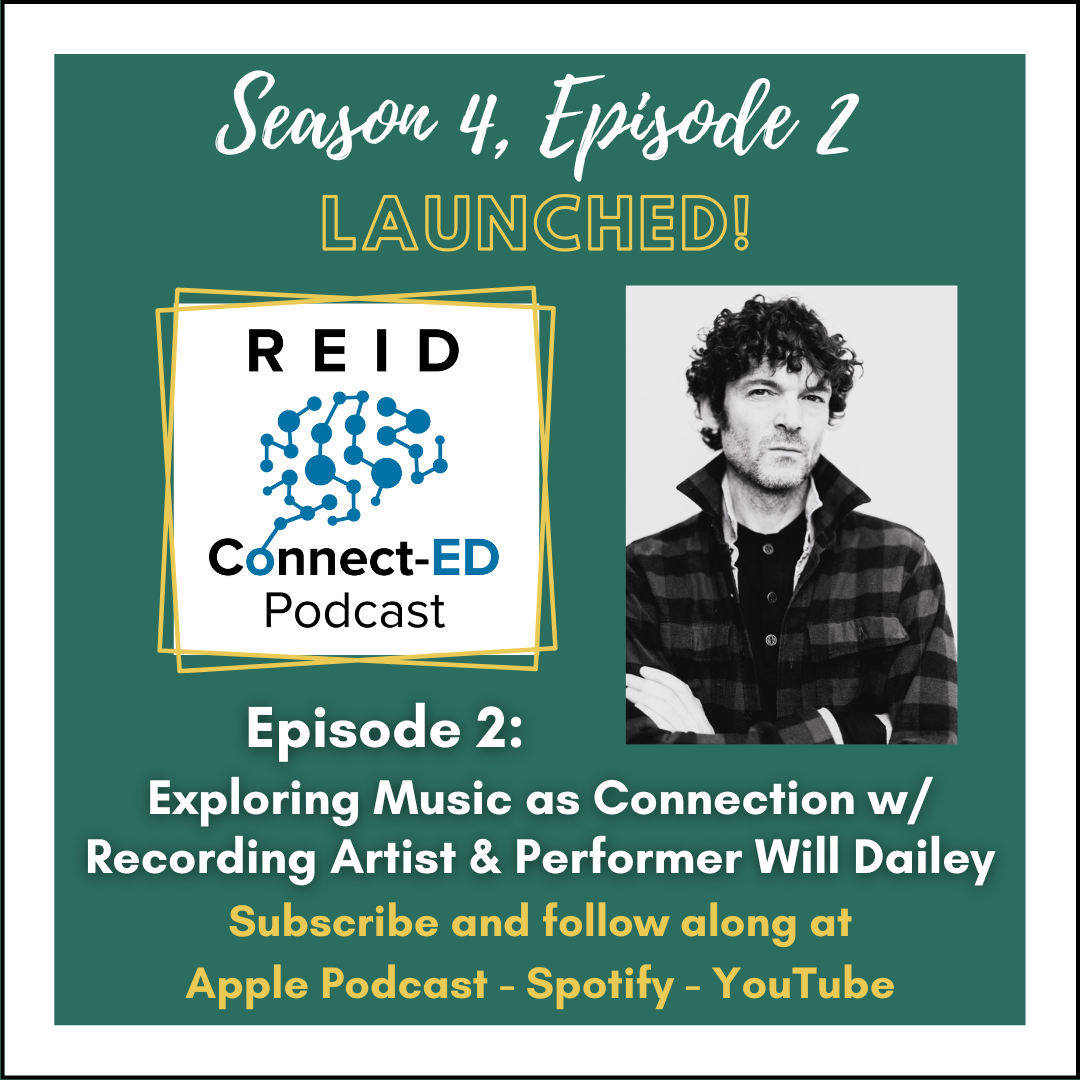
Listen Now!
-
Will Dailey is an acclaimed independent recording artist, performer and artist advocate. His sound has been described as a venn diagram of multiple genres with a rich vintage vibe channeled through his authentic, wry and energetic performances. All inspiring famed rock journalist Dan Aquilante to call him “the real deal”. Dailey's albums are met with stellar reviews. They have 13 million spins on Spotify, top 20 on the national Billboard Heat Seeker chart twice and he’s won 8 Boston Music Awards including Album of the Year, Artist of the year for his album National Throat that he released after leaving Universal Records to start his own label.
He has shared the stage and studio with Eddie Vedder, Willie Nelson, Roger McGuinn, Kay Hanley, G Love, Steve Earle, and Tanya Donelly. In June of 2013 he was featured on a Stephen King/John Mellencamp project produced by T Bone Burnett called Ghost Brothers Of Darkland County and, in that same year, also released an original song he wrote inspired by Jack Kerouac's Tristessa. Dailey has played at Farm Aid four times alongside Neil Young, Willie Nelson, Dave Matthews and John Mellencamp. His latest album, Golden Walker, was released summer of 2018 and hit #1 on Billboards Northeast Heat seekers. The Boston Herald called the album: “A new peak” and named it an album of 2018. In 2021 Dailey set out to play 100 shows across America, sharing stages with Brandi Carlile, Sharon Van Etten and Pearl Jam.
In summer of 2022 Dailey released his single “Easy to Be Around”, his first new music since “the before times” in 2019. “Easy to Be Around” shares an airy groove – but there’s a 68 second surprise attached to it. The single slides into a second song that lists the full credits from the instrumentalists to the cover artist and all the audio engineers in between. In 2023 Dailey embarked on another project called The 10 Dollar Song: A concept where a new composition called "Cover of Clouds" was available exclusively on his merch table, never to be released physically or on digital platforms, during his 25 date spring tour. People could pay what they want to listen to it once on a disc-man and headphones and then write their review in a book that traveled with the disc-man. In an era of music history that’s ruled by algorithms, the double-single of sorts could be considered a risk, but Will Dailey disrupts industry norms - not the other way around.
-
Listen to the full episode if you want to hear Will share stories and nuanced reflections that exemplify these take-aways and much more.Will finds that music is fundamental to the human experience, and particularly the human connection aspect of music that comes with sharing and performing music. After going through experiences within the music industry/business he re-gained a deep appreciation for this. Will has had to grapple with the good and bad of changes that inevitably arise, such as using social media to connect with his fanbase, while also preferring a more genuine way of connecting with others.Will courageously faces experiences that ‘go wrong’ and transforms them into something unique and positive, where he allows expectations to be broken in a way that is refreshing and meaningful. Will finds that when things ‘go wrong’ it is a cue to remind ourselves and hold onto what is fundamentally important about being human.Humor actually comes from expectations being shattered in an unexpected way. Will embraces this on stage with his own humor. Will aspires to find peace in his artistry by not falling into specific constructs and algorithms (e.g., by pigeonholing himself into one genre) that are created around art. Rather, he strives to find ways to be authentic to the type of music he feels moved to create and how he can connect with the individuals who connect with his music.Will often has and still does look for mentorship and wisdom from others who have had experiences within his craft.Will uses genre as an extension of creativity rather than the other way around to ‘get into the marketplace’.When it comes to songwriting, Will refers to the book “On Writing,” by Stephen King, where he uses ‘all the tools in the toolbox’ then throws out the ‘toolbox’.Will wrote a song in tribute to Joni Mitchell entitled “In the Clouds.” He was so inspired to write the song that he did not want to just put it out into the internet world. Instead, he created the “10 dollar song” where he lets his fans at live shows listen to the song on a discman. Will shares how he sees things changing over time.There are so many ways to appreciate live music in so many different forms that cannot be manipulated the way digitization has influenced how we access and listen to music because live music exists on such a fundamental human level of connection.Research has shown that exposure to music in childhood can enhance the connectedness between brain areas, which is very important for child development. Music training and child development: a review of recent findings from a longitudinal study - PubMed (nih.gov) Enjoying live music is a great way to ‘get out of your thinking’.Will started a podcast entitled “Sound of Our Town” where he talks about the live music culture in cities across the United States. Will does creative problem-solving to support local artists, like finding ways for musicians who record with him to perform. Will describes how the moment when he connects with someone about his music, those are the most genuine and fulfilling moments; whether it’s when the song is being manifested and created, when a fan shares how meaningful a performance or song meant to them, or just the experience of being in the same room while sharing music.
-
Alexis Reid 00:11
Welcome back to season four of the Reid Connected podcast. The theme of season four is all about connection, connection with others connect with something outside yourself, and connection within yourself. Today we're so pleased to be joined by Boston music scene Rockstar Will Dailey to talk about the way in which music has created connections in his life. We'll get into that discussion shortly. But first, let's cover his robust resume as a musician, recording artist and performer. Will Dailey is an acclaimed independent recording artist, performer and artists advocate. His sound has been described as a Venn diagram of multiple genres, with a rich vintage vibe channeled through his authentic rye and energetic performances. All inspiring famed rock journalist Dan Aquilante, called him the real deal as we agree. Dailey’s albums are met with stellar reviews. They have 13 million spins on Spotify, top 20 on the National Billboard Heatseekers chart twice, and he's won eight Boston Music Awards, including Album of the Year, Artist of the Year for his album National Throat (by the way, I have a signed copy of that record) that he released after leaving Universal Records to start his own label.
He has shared the with Eddie Vedder, Willie Nelson, Roger McGuinn, Kay Hanley, G Love, Steve Earle, and Tanya Donelly. In June of 2013 he was featured on a Stephen King/John Mellencamp project produced by T Bone Burnett called Ghost Brothers Of Darkland County and, in that same year, also released an original song he wrote inspired by Jack Kerouac's Tristessa. Dailey has played at Farm Aid four times alongside Neil Young, Willie Nelson, Dave Matthews and John Mellencamp. His latest album, Golden Walker, was released summer of 2018 and hit #1 on Billboards Northeast Heat seekers. The Boston Herald called the album: “A new peak” and named it an album of 2018. In 2021 Dailey set out to play 100 shows across America, sharing stages with Brandi Carlile (one of our favorites), Sharon Van Etten and Pearl Jam.
In summer of 2022 Dailey released his single “Easy to Be Around”, his first new music since “the before times” in 2019. “Easy to Be Around” shares an airy groove – but there’s a 68 second surprise attached to it. The single slides into a second song that lists the full credits from the instrumentalists to the cover artist and all the audio engineers in between. In an era of music history that’s ruled by algorithms, the double-single of sorts could be considered a risk. Dailey continued this path of human connection over algorithms by releasing the single “Cover of Clouds” exclusively at his merch table while on tour for a one time listen. A song that will never come out on platforms. Only to be heard on a pair of headphones at the merch table. Those who took the ride heard the almost 7 minute opus. A meditation on Joni Mitchell (another favorite of mine) and the influences pivotal artist on a younger artists path. Once again, Will Dailey disrupts industry norms - not the other way around.
Now, Will and I have had numerous run ins over the years since I have been here in Boston. When I moved up here from NJ, having been accustomed to the NYC music scene where I could find any number of incredible musicians touring, testing, or playing even the smallest spaces, I was worried that Boston wouldn’t be able to meet my musical expectations. An old friend of mine who is a beloved singer song writer himself (now down in Arlington, VA) said, “Lex, you will find your people and spaces, you need to look up this guy, WIll Dailey… you will like his sound and vibe.” Low and behold, my old high school friend, Taylor Carson was right. I started seeing Will’s shows live back in 2008 on some of the famed stages here in Boston/Cambridge/Somerville, at a brewery-Octoberfest, on a boat around the harbor, and many other venues. We’ve talked shop from an educational perspective and I nearly taught his stepson Aidan as he ended up in the class I taught in the year before, when I just switched to new school. Above and beyond all else, Will epitomizes connection in so many ways. We are grateful to have him with us today to talk about his journey, inspirations, creative aspirations as well as so much more.
Welcome Will.
Will Dailey
05:02
Wow, thanks for that.
Alexis Reid 05:05
We're pretty stoked to have you here. I feel like we've had probably parts of this conversation over the years and shared jokes and shared insights. I think going through some of the heaviness of the past few years that everybody's collectively shared together, you've been a guiding light in a lot of ways through social media, which is, I don't know about for you, for me, it kind of feels icky sometimes, because I love the personal connection, and I find such value in it. But it was also such a beautiful way to just continue the theme, the song, the journey of who you are, what you do, and keeping people going. So thank you for that.
Will Dailey
05:48
Thank you. Yeah, no, social media is pretty tricky.
Alexis Reid 05:53
We talk about that a lot here. That it's so powerful, and also just doesn't always feel great.
Will Dailey
05:58
Yeah, you know, it's interesting. So so as an automobile, you know, they're pretty icky, and they're destroying the air that we breathe, and in the land that we bestowed we, we paved over, but it also got us places, and when we, when you break a leg, you can get to the hospital sooner if because of a car. So there's, we've always have to wrestle with these things, and find balance, and you can actually drink too much water, you know, and poison yourself and by the fire you warm yourself you can get burned. So it's not a rare thing. It's not unique to social media. (Alexis: Well said).
Gerald Reid 06:41
Will. One of the things that strikes me about you watching you perform in Somerville over December last year, is I'm always trying to pay attention to people's energy and your energy when you're performing. I just feel like you genuinely just are in it. You really like to do what you're doing. Like there's something very pure about it. Can you can you just speak a little bit to that we're kind of jumping ahead to your performances. But there is something special about your performances, because that's where you connect with people. And you know, this season is about connection. And, you know, you're connecting with your audience in that way. So can you just tell me about that pureness? And am I accurate in saying that in terms of how you feel when you're performing?
Will Dailey
07:23
Yeah, yeah, definitely. I mean, it maybe it wasn't always that way. There are, ya know, using even the social media example. You can take the positives of it on one hand, and the other is, in the case of my industry, you're always being told you're not enough through social media. And, and throughout my time, in the, in the business of music, which, when you have the affliction of not being able to stop doing something, like I have with music, and so many others do right; that you will at some point, wade into the waters of the business of it. And I think sometimes my young age I could could be pulled out of the importance of performing and I refuse to have anybody robbed me of that moment anymore. And that happened. You know, it took a long time to to to, to refuse. I remember one time, I was opening for Pete Yorn in, like at a beautiful theater. And it was like a big deal for me to open up for him and just beyond this bill and this giant, or like 700, 800 type space that was that that predated sound systems it was so ornate and gorgeous, and stuff like that. And we had done the soundcheck and everything when we walked out, and the band started playing all our equipment worked, but the front house was out, like something that had gone wrong with us had blown or whatever. And so I went to sing that nothing came out. The band started to panic. The song started to waver in teeter back, you know, and I just stopped everything. And because I could see tacks on the side of the stage be like, okay, oh, they knew was wrong, but they're not gonna rush your stage or anything like that. (Gerald: Wow.) And I was just to stop and and then I realized once we stopped, because the place was so old, the sound carried so perfectly because it was designed to, to exist before audio and, and I was like, I gotta do something here. And one, one option would be to walk offstage, which would really kind of demoralize the energy that you have to get up to walk out there, especially the opener and stuff like that. Even as the headliner I've seen headliners have all kinds of tech issues and have it be go every which way, but I just grabbed; I let everyone all techs rush on stage and figure things out. And some guys in my band were just like, you know, deer in the headlights and I said, You guys hop off and I grabbed an acoustic guitar and walked out to the edge of the stage. And just sang on my acoustic guitar, you can't always get what you want by The Rolling Stones. Because it seemed appropriate (Gerald: spontaneously?). Yeah, it sounded so gorgeous. And then I guess what happened behind me was the, like, everyone figured out the problem. And then my band's like, okay, they snuck back on stage and kicked into the song with me. And I got, then it got to the mic. So just something going wrong became so unique and, and powerful. And that was like, early on, early on in my career. And an informed like, a couple of things. Like, when things go wrong, it's a great opportunity to, to upset expectations, because expectations can be so dismantling, to having a unique experience, and having an honest experience, and a wholesome experience. And when everything falls apart, you can kind of get to the core, like all the structures we build around our lives, and all the demands we put upon ourselves and each other. When an emergency happens, what's the most important thing and you wrap your arms around that. And rebuild, and try to keep that intact. Um, and I guess, you know, going back to your original question is that with the structures that are built around the music business, which are what we can get into, but had been commiserated… For for decades now, for the music business that has existed for the last 100 years, they really don't matter. You know, the Grammys are great and can be inspirational and be amazing to win one. But they're not as real as like the moment of creation. And no matter what happens to Taylor Swift or Beyonce up there, getting that award does not feel better than when they write the new song, that moment of creation, or when they get it right on track. Or when they're in front of 10 to 10,000 people, nailing the performance with feeling in sync with the audience. Those things are ancient on the cellular level. Like we started with food, hunting, gathering, cooking, sex, and shelter, and music. And we've been evolving with those original elements. When you keep that intact. And when I'm on stage. And I remind myself, my guitar tuning doesn't matter. My pitch doesn't matter. The amount of people in the room doesn't matter at all. Like there's no difference now, and I've done it all, you know, all of the levels of audience size, knowing your matters is answering to that, that truth. And that doesn't mean that I'm always nailing it. And when I get off track, I'd be like, wait a second, dude. Get to that cellular level and that that human element because everybody in that room needs that; is asking you to do that, whether they know it or not. And you have five minutes to two and a half hours every show to continuously access that. And maybe why I started with that, like that show where everything went wrong and the power didn't work because sometimes things going wrong or weird. Or you know, Mick Jagger didn't move like that and beginning only start to move like that. His movement breaks down your expectations originally when he started to move like that now you expect them to.
Alexis Reid 13:59
Maybe not at this age? He’s still defying expectations.
Will Dailey
14:05
Yeah. Doing something but also for him. When and I feel this, someone's like, Hey, you moved weird on stage? Well, sometimes if I'm moving weird, it's like I have to take the rigidness out of my body or the thinking or the where am I now is everyone has a good time? Is the front of house sound good? Do we sell enough tickets to this happen? I have to just like do like shock my body into like, remembering like my center and my core and in like let go. Or like the music is taken over and all those things are true and in my job. I'll probably say this again our conversation, is not music, like into the theme of your your season here. Music I would do no matter what. You know. If I had a day job I I'd be a horrible employee because I just be waiting to punch out and go do music at home, you know, my job is connection. That's, that's how I'm employed. You know.
Alexis Reid 15:10
There's so many things you just said that I know we're gonna dive all over. But I, speaking of social media, just this morning, I just posted this African proverb that talks about how, when the roots are strong, you're not as afraid of the wind. And thinking about that Maren Morris song, The Bones and thinking about the foundation and everything you described about your experiences, like really getting honest and true with yourself, and remembering why you're doing what you're doing. So that regardless of what happens, your truest self just shines through. And it's it's apparent, you know, this is why we wanted you to come here on the show, the name of our, our company is Reid Connect. And it's a bunch of dots. And it's about us in our work in our jobs, trying to find ways to help people connect the dots, to figure out the bigger picture of what's happening for them in their lives. And to be able to do that through music, which for me, it's like the one of the few ways that I can shut my brain off and just be present in a moment. It's like such a beautiful thing. And it's, I think, one of the greatest gifts. So I love the way you described all of that.
Gerald Reid 16:15
I got a couple of things stood out to me what you said. One is, you have to be a very courageous dude, I would say, because when things go wrong, right, it's not human nature, to pause and be reflective. So you're aware, I think you have a lot of courage and you and also you're very reflective, which I think allows for transformation to happen, which is one of the most important things as the therapist, we're always trying to help people to transform. So there's something that is really special inside of you that allows you to have the whole you know, everything going wrong. And yet you're going to be in the moment and see what can come from it. See, see what can come from it. And that's, you know, what a beautiful story that was. And that is probably where your songs come from too is when you are present. And so when we think of connection, I think this is a story about connecting within yourself. And when things go wrong, it's a reminder to think back about what is our foundation, what is our core, so it seems like you use things going wrong as a reminder to look back into yourself and define what's important.
Will Dailey
17:23
Yeah. And in have faith in yourself, it may be weird things can go wrong, first of all, and you know, we are a creature of myth that our our best stories are based on things going wrong within within myth. And like the summer we were playing, we had a thing on the roof of Fenway like a concert on the roof of Fenway and way before a game, and it was going well. And then all of a sudden, the guy at Fenway was like, You got to stop lightnings coming in. Oh, man, we can't have you on the roof here. And this roof garden area.
Alexis Reid 18:02
It’s one of my favorite parts of Fenway. For people who don't know, the garden, the gardens of Fenway Park, they have this whole sustainable urban garden, which is amazing. It was so cool to know that you're able to play there too.
Will Dailey
18:14
Yeah, and the garden; the produce goes into all the restaurants there. It's nice. It's really nice and and other people paid to be here. And we are like six songs into 15 songs and stuff like that. And so I just, you know, grabbed again, grab them acoustic and went under the awning while everyone's scrambled and cleaned up. And a lot of the stories end up with me like having a good time while everyone's working really hard behind me. And just continued like the show, old school in a circle style with the whole crowd tucked in tight. But also like, when things go wrong, all the other like the juju stuff we're talking about. Yes. But everyone gets to see like, things go wrong for everybody. (Gerald: Mhm, normalizes it) People people are at that show have things going wrong in their life all the time. It's happened it just happened right now. And the constant match shifted. And, and stayed stayed with us. Yeah, you know. And so there's just, again, the job is connection, they get to go home and be like, Okay, how do I pivot, you know, do something. And then also, just this is almost like on a business level. Like, I think I created a more memorable day then like, I bought a ticket to a concert I showed up and there was a concert. I know I bought a ticket to a concert; it went awry in this is what happened. And there's just a little bit more memory and the two, the two moments I just mentioned. You know, people keep talking about years later, you know, so that's beautiful. I'm like, sometimes like hey, how do we orchestrate things going wrong?
Alexis Reid 20:00
Interesting. From an executive function perspective, I'm always talking about how do we predict and prepare, right? If we can predict and prepare, we can develop a little bit of automaticity to kind of allow for our brains to have that creative expansion and freedom. But in reality, like our memories that get formed, that are usually the most important and nostalgic, are those memories, when what we predict doesn't expect it doesn't go as we expected. And those are the things we hold on to and we cherish and if you are too rigid, and if you do hold too tight, sometimes you miss the beauty of I think what life's all about.
Will Dailey
20:33
And you get further injured.
Alexis Reid 20:37
Yeah, yeah. Do you know the the Buddhist story story of the second dart? (Will: I have no idea.) Oh, you love this one. So my meditation teacher introduced me to a lot of amazing things. But this is probably one of my favorites. I share with a lot of my clients that when something goes wrong, it's like getting hit with a dart, and you're like, oh, that hurts. Like, oh, my god, I can't believe I got hit by a dart. But the pain of that first start hitting you, actually isn't the pain you're really experiencing. It's the pain of the second dart coming in. Because you're like, Why did I get hit with that dart? Why did that happen to me? I can't believe that happened to me. How am I going to go on, and the internal dialogue that you start to develop that narrative around? Oh, everything's just gonna fall apart. For me, this is gonna be the worst thing ever, because this bad thing happened is the pain of the second dart. And how often do we fall into that trap? Instead of being like, huh, that sucked? What can I do now?
Will Dailey
21:30
Yeah, yeah. And like, you're like, now two darts shy of having a whole set of darts for yourself. And you can have your own game of darts. So that too, I think that's what the Buddhists were implying.
Gerald Reid 21:45
You just read my mind because my next comment was going to be about how, when you're on stage, you're quite funny. And the irony of our conversation right now is that actually, I took when I was in grad school, it took like a cognitive science class. And for some reason, one of our books like our required readings was on humor. I can't remember the name of the book was just a whole book about humor, like one of the core tenants of the book is humor basically happens when your expectations are not met in a very unexpected way.
Will Dailey
22:16
Oh, well, that's, that's example. All hooks are made by upsetting patterns. (Gerald: In songs, you're saying?) No, I think in anything like. So a joke lands; because you're, I'm with you. Okay. You walked into the bar with three priests or whatever, you know, it's, you've heard that one before. And the joke lands when you upset the pattern in some in some way? And, you know, it's funny, I mean, all of music is interconnected. And a hook is when you take that interconnection and just upset the pattern a little bit. And, and we could take any great song that's, that's buried in our hearts or minds right now and, and find a lot of threads that would blow your mind. You know, we might think Billie Jean by Michael Jackson or Antihero by Taylor Swift is like this original standalone thing. There's just so many other things connected to it. But it took a handful of things, and upset some patterns. And you need a little bit of familiarity with all story, with all narratives, with all music with all melody with all jokes, and you just take it, and then the stuff that's really successful, just twisted a little bit. And, yeah.
Alexis Reid 23:46
That’s so cool. I once listened to an NPR show that they were talking about how creative creativity and newness doesn't necessarily happen, right? Everything that is created from here on out is kind of like an alteration, or shift or change or play on something that already exists. And, and I think it's so interesting, especially from the music perspective, I mean, part of why I love what you do, and you connect so well with people is because you're constantly evolving and thinking of new ways to create and to share your music and your craft, and your talent, which is not just about music. As Jerry mentioned, you are not only a great dancer, like Mick Jagger on stage, when you're feeling the flow, but also that like in between you tell these great stories and you are just real and funny, and you put yourself out there. I was wondering if you talk a little bit about that like idea of creativity and how to keep things going and keep it fresh in a world where a lot of things seem to be recycled?
Will Dailey
24:48
Yeah. I mean, a lot of it comes from you first have to accept kind of that ancient cellular level as your primary driving force with with life and art and stuff like that. And my joy in my time through this is more important than; which takes work initially and throughout, in daily to say, the construct thrusted around all of art is not real. And I cannot allow myself to, to measure my own artistic and personal value by the constructs placed around art, then I can give more to my thoughts on that. But my creativity comes to I guess back to that job as my job is connection, not music, and music is me. And my job is connection. And creativity is making sure that I'm answering that call. And so you know, how I might release stuff or, or the way I behave on stage, which is like, Sure, I'm funny, but I know, it's also a little weird, because I'm just trying to break down that construct. Sometimes, if I'm saying something that's like, you don't hear a lot of front men talk that way on a show, where you're rocking out necessarily, or move that way. I'm trying to keep myself centered in that, that ancient practice, remember my job, stay physically and emotionally present. And, and just be like, No, to the construct of, of the business of art, not just for myself. But for my peers. And for my audience, I hate the word audience in a way, for the people who are showing up. You know, because they're showing up for reason, and they deserve something, they deserve my respect. And if I have this knowledge, I'm trying to respect them by delivering, like, the $10 song project that way, because, you know, all of music, recorded music is being thrown into abyss on a daily level 100,000 songs a day. And (Alexis: it's unbelievable), from Bruce Springsteen and Beyonce all the way down to little old me, you know, and like, at some point, the creators in the world are what do we really think that's healthy? To the people who are showing up for us? And are we really think that's healthy for our creations. And I'm not saying in totality, either, like, Screw that, I kind of resist those arguments to like, Spotify is evil, or Spotify, will be gone at some point, (Alexis: it's a vehicle) it’s vehicle, and it'll be gone. If I told you, 15 years ago, that at the end of this street, right here on Newbury Street, was Tower Records. Yeah, three floors of records. And if, if in 1998, the three of us walked in there I go, here you guys. 15 years, this place will be gone, not just this one, all of them around the world will be gone. They'll be talking about your trip.
Gerald Reid 28:08
Real quick, you know, what's funny is that's actually our office building now.
Will Dailey
28:13
Oh my God, that’s great. And I said, your office will be there, we’ll be doing the podcast, and I'll be saying this exact story, saying I told you guys, listen.
Gerald Reid 28:21
Back to the future.
Will Dailey
28:25
Yeah. It the same is gonna happen to Spotify, because the delivery of art does not matter. It's the art that matters. And it's our human expression, expression and connection in the continuity of our right to do it. Is the only thing that matters. And so I forget the question. But. (Alexis: it's all good.) But I'm just protecting the health around the the ancient practices in the cellular level, yeah, with my choices, and not allowing the construct of the business to dictate who I can be in this life, what I can do for employment or work, what brings me peace, in how I feel like I can bring others peace, and if it's only one person, which is how I always have to start and how I actually look at my music, because I use; my goal is to use genre as an extension of the art and not choose the genre. And I think you pay a price within the construct for that. But it allows me to be like, I hope you don't like all my music. But if we spent time together and you tell me a little bit share about yourself now almost like a prescription I can say check out these two songs. And it would be really important to you and you would feel seen and I would feel seen and it would be strange for you to or, you know, I can't imagine like anybody on a blanket level liking anything, everything I did would mean like I'm not really digging deep enough as an artist (Gerald: superficial a little bite). Yeah, and that's what the construct of art does the business of art because and, and I don't, I'm not here to make up a boogeyman evil empire argument, of course, a construct to build around art because it's free labor, yeah, based on human passions. And it always has, and always will be. But once you start to see, you know, the real patterns of what's important about being human, it’d be really weird to turn your back on it, and say, I'm just gonna sit in the genre, I'm just gonna answer to the construct of the business. And if you do that, the business will actually then spit you out at some point and be done with you.
Alexis Reid 30:46
It's a very lonely place, a lot of people find themselves in actually, where they, they feel like they're stuck. Only being like, you know, square peg in a hole, try it like they have to fit, they have to figure it out. And a lot of the clients we work with to actually express that they feel very stuck, like they, they have something inside of them, they're trying to tap into trying to figure out and, you know, that's the blessing that we have in the work we do to help guide people to find their passions and their purpose. Because I mean, we believe personally and professionally, that's like, the point of human existence. But also, you know, to really think about all of these aspects of things is really important. I don't think people give themselves enough time and space to say, what are the things that are really most important to me? How can I express them whether or not it fits in the genre? Or the hole? (Will: The marketplace). Your strength? Yeah, yeah, it's so interesting. And I, you know, as you were saying, All that I was thinking about how there's probably a lot of artists out there that might be a little jealous of you, like, feeling so confident and being so courageous to be able to put it out there. And before, you know, I integrated your bio into the intro, I was actually writing almost the same thing talking about it's really hard to like, put a pin on exactly the way in which you create and share music. It's not one thing.
Will Dailey
32:06
What my sound is Yeah. I mean, thanks for saying it’s courageous, but you know, I have to renew my courage almost daily, you know, and there's like, there's, we all have quiet moments. And I know what if I just played folk music when I was a guitar? My whole life like, Well, I would be in the folk music scene, and I'd be protected within that construct. But then what if something called me? What if something like said, Well, what if my, the antenna or whatever it is, but the muse or whatever you want to call it said, You need to get an electric guitar and turn it up to a 10 and just do a song of feedback? Well, I would be kicked out of any genre would do that any; the genre comes with the algorithm of online music, YouTube, the genre comes with press and media and people who accept you into those cohorts. And, you know, that's why that's why it takes a lifetime for Joni Mitchell to get to the performance she did the other night at the Grammys, you know, because to do it the way that she did it, and, you know, points in her career after she was a huge artists couldn't then get arrested, you know, like, yeah, in the music business, you know, so it takes time for people to see it. And there's some you know, I also, you know, you'll also check, like, what are my privileges to even like, think that way in the first place? A lot of it comes from just failure, you know, trying to play sound like a woke up as a child, and I'm gonna, I'm gonna do it my own way. It's like, no, like, I went to those mountaintops, I went to those structures, you know? And had to run up an avalanche for a while till I said, like, I'm not really getting anywhere.
Gerald Reid 33:55
You learned that wisdom by going through things, right?
Will Dailey
33:58
Right. To a certain degree. I remember, you know, early on, like, on my second record, being in LA and working with producers, like you're, you're a little bit too quirky, like, you could be a huge pop star. We just, you just got to drop the quirkiness and work with me and write songs with me. And I was on the label so, you know, it made me feel gross in that conversation. Like, it was that's pretty much word for word. Like those those things, like you're a little too quirky. I was like, Oh. I remember my guitarist. He's like, that's your superpower. He was so mad, that, you know, at that point, but I'm still internalizing advice and I'm in my mid 20s I'm thinking you know, in your mid 20s, you think like you've been through 10 years of adulthood at that point right and you and it's a chemical reaction that happens to a lot at that age to everyone at that age and and I had been so many ups and downs in the business that I thought like well maybe this guy's you know, I was looking from you're always on I always believe in looking for mentorship, you know, even late in life, and I hope I'm 80 years old looking for mentorship from a peer, or I think the mistake is an 80 year old not getting mentorship from a 20 year old, you know, and vice versa. (Gerald: Yeah, absolutely.) And, or that mentorship is actually secretly, just the reciprocal relationships, however, so I was always, you know, I'm always I was always to in my life looking for Mr. Miyagi or Yoda, right. And still, and still do and have like, very emotional connections with people who were where I feel like I'm getting that. And so, you know, this guy, this producer, very businessy guy is saying this to me, and the guitarist. And once he stopped the guitarist and pulled me aside, it's like, you know, he, like, injected me with a punk rock. And you're, you're right, and, but I remember, somewhere along the line saying, Ah, I am the choice of, I love to use genre as an extension of creativity, not a choice of of the sound I'm gonna use to get into the marketplace, you know? Or are the limits my abilities I would have, we have one shot that we know of, that we can empirically point to. And I'm sure there's a lot more that I know, there's a lot more I don't know about who you are, however, empirically, I know, the idea of will daily gets one shot, you know, and I would hate as far as the way I feel about music, again, back to that intrinsic cellular level. To hear something that would be like prog math metal, be called to it and have to say, No, or whatever it is, like, would be such a huge human mistake. Bigger than any business mistake.
Alexis Reid 36:55
You reminded me when you were talking about, you know, getting into the folk genre. And you could do that, and you would probably be great at that. And I have to tell you that every single year when they say which artists do you want to see at the Newport Folk Festival, I write your name in every single year.
Will Dailey
37:09
Well, that's a little bit of a problem. Like I played a folk conference this year. And the radio DJ from Chicago is like, I mean, I've known you forever but you’re just too loud. (Alexis: Oh, my gosh.) Well, if you're listening to the loud song, sure, like, but you know. What happens is the since digitization, which is the thing I've come up in is the the compartmentalization that really has driven so much of what happens and we are all asleep to this algorithm stuff. And we'll be here and there. And, again, not that it's all bad. Like we started with cars and other examples, but.
Alexis Reid 37:47
Well I was thinking about, you know, the disruption and, you know, I go to the Folk Fest every year, it's it's like my Christmas weekend. It's like my favorite thing. Yeah. (Gerald: Christmas in July.) Yeah. Christmas in July. It's a wonderful thing. And I brought my family and friends and people feel the buzz, they feel the energy. And, you know, I this year, I was like, I don't know enough about the Folk Festival. I need to do a deep dive maybe inspired by your podcasts that we'll talk about in a minute. Like how do we understand the history of it all. And it's funny because there's only one book that I found, at least there's probably more Jay Sweet, hook me up send my way. But the only found one book that wasn't about Bob Dylan disrupting the Folk Festival with his electric guitar. And every year I'm waiting for it to come back. And, you know, I got to see Bob Dylan at the Orpheum this year to talk about a space such as music fills the room. And to have him sitting at the piano and playing his guitar was amazing. And I keep waiting for him to come back. But I you know, I think about how you fit in and expand. It's like you can fit and you can expand, you can fit and you can expand into these spaces where people expect something. And, you know, I want to come back to this idea of the song that you created inspired by Joni Mitchell. Because two summers ago, I got to see her come out live of Brandi Carlile and friends and I talked about at a cellular level how that experience was like just saying that out loud. My body's tingling. It was the most magical, iconic experience. They will forever shape joy; how I experienced joy in my life. Yeah, but tell us a little bit about the song you wrote and why and how it's inspired by Joni Mitchell.
Will Dailey
39:30
I don't honestly know how to write songs. You know, like, I know, it sounds so silly to say. And I catch all these. It's funny, like, I feel like I want to make a social media post is like the best way to be an artist is to read every meme about how to be an artist and what it means to be an artist, and try to incorporate every one of those into your life. And then you are an artist, you know, like, we're just bombarded by so much information like art is this and la la la; and, and then there's so many things online and so many books about how to write a song. And, and my favorite thing about writing actually, is is Stephen King's book on On Writing the first chapter where, you know, summarize quickly and vaguely is you fill your toolbox with every tool you can get your hand on, and then forget about your toolbox. And um.
Alexis Reid 40:26
Besides the alchemist, that's a second book that I give to all the people I work with, actually, really, yeah, oh, yeah, no coincidence.
Will Dailey
41:33
This is some synergy. And I forget what happened first. Like, you know, I had this part of the bit of song songs called cover of clouds, because I forget the order of things. But their album Clouds was bestowed upon me as a child from an adult, the adult in my life, who that was, you know, his music. And so they'll also, you know, facilitated getting my first guitar had a guitar, he had a guitar himself. And one of the first things he showed me before I could play a C chord was how to play Chelsea Morning, which is on Clouds, and an open tuning, completely complicated. Step Ahead, and couldn't quite do it. But you know, so those indelible moments in the myth of your own life and then the music that sticks with you and is embedded and then and then but but an artist, such as Joni, that anytime you wanted to come back to in life, when you, you know, you, you might leave an art form, or a sound or an artist because you're distracted by your own; what is in your friends group and things that are pulling you from going to listen to something else, but you could always come back to certain artists, I think the ones that never stopped creating like if an Elvis Costello, Paul McCartney, Joni Mitchell, there's, there's a real, there's got to be some empirical scientific data about what that what that creates, once in a lifetime creator, like a Picasso, and stuff like that. And like, there's some people whose artistic creation is a pocket in their life. You know, there's some albums by acts that are one album, and it's really great. But the gateway that stays open when you can always come back and there's something new or a new story or, or deeper tracks you didn't know and Joni was kind of always that for me. And recently run that time since like 2000 or 21. I had always had Clouds in my room, like even as a kid, I would have it on the wall or in my studio at home. Now. It's on my wall, the artwork, but I never knew that she painted it. And when I figured it out, I was like, huh, damn it. Oh, one more awesome thing that she has to be able to do. I was like, kind of angry, and disgusted and then I felt like, oh, I can't paint. I can't paint my own covers I’m such a loser. You know, like, I feel like Joni Mitchell is gonna make me feel worse and worse, like, and how, like, there's an aspect to being an artist while being comfortable in pro straight in the shadow of other artists grandeur forever and you'll never be able to do it be like be larger than their light. In that could I think that's can be true for any path in life in any kind of employment. Like are you gonna be a bigger therapist than Sigmund Freud? Does that make you less valuable? No. Yeah, you know, and not at all? And is a shadow a shadow? If you're not in it?
Alexis Reid 43:55
Well, you walk in the footsteps of giants.
Will Dailey
43:56
Right? And if you aren't walking in them, is there a path of any value?
Gerald Reid 44:04
And to your point should everyone be the same should everything be exactly worked out all the time?
Will Dailey
44:10
Exactly. Yeah. And so somewhere in that I just had this like tone poem of glory to her and the trajectory of my life with her, you know, and, and thinking about my own role within echoes like artists like her. And, and also like what she had to do in that era to be not just good and write some like memorable songs but like, in like, this completely unique way that has not been repeated, like people have repeated the Ramones, you know, and you just can't copy and paste Joni Mitchell. And you can Bob Dylan in a certain sense, you know, like, he created a language for people to to pull from because he knew what he's doing; but like she is from, she's pulling from way too many things to, to really understand. So I had this whole song and in in what happened was, I had it in my brain, and it was 2021. And we could finally be back in the studio with masks on so I grabbed my longtime like, you know, BFF production partner drummer, and I was like, Alright, dude. We just need a therapy session recording session, let's just go do a song. See if we, after the trauma of lockdown even know how to do this. If it's in a still, if it's important, if it matters, if we feel good doing it. Let's go work for someone we never worked with. Instead of doing that ourselves. We worked with a guy named John Evans on Cape Cod, who's Tori Amos's, bass player and music director for about 25 years and guy I've known for a while and just always wanted to work together who got to John's place, the three of us put our masks on and do this song. I go, just hear me out. It's kind of like a minute and a half overture. And then the song part and about another two minutes of an outro it's just gonna be a whole thing. And I'm not even worried about what we do with it. And we did it and finished it. And I was like, Cool, maybe send it off to a mixer and listened to it once. And then got on to like the next thing that he didn't my Dave Brophy and I were working on. And then one day, I was just like, Hey, what happened to that therapy session? In a sense, you know, when when it's not a therapy session anymore? Almost like when you go do the work on yourself? Yeah. And you go back, oh, yeah, who am I a year after I did that work on myself? I was driving over to Dave's. And I popped it on my car, like pulled up, where's that file that mix from Cover of Clouds called Cover of Clouds. And the refrain is like, you know, I'm under the cover of clouds, because literally, it's always been on my wall. I'm always in the shadow of it. I'll always be in the shadow of, you know, as a as a creator (Alexis: such a beautiful symbol.) And, you know, so confusing because people, you know, I never thought well, I'll get to that part. But I dropped driving to Dave's I put it on, and I get there. I was like, Dude, you gotta come up to my car right now. Like, we made this like, Oh, my God, we what do we do we get. But if I put a seven minute song into the abyss of our digital lives, and I send it to my very best friend, or my mother, and I said, Mom, I have any song I really need you to listen to my mom's gonna get a text before my vocal comes in, you know. Spiritually. It. I couldn't imagine throwing this song into the abyss. And so I continued to sit on it. And one day, I was just sitting saying to somebody I said, I just wish I could like, just play it for people one at a time and like, just sit down and dude it sounds so silly. And it's like, wait, no, wait. Oh, that's right. I can do whatever I want. Whenever I want. And it's like, Wouldn't it be cool? If I just had it on my merch table? What would I do? I guess I could put on a CD player and they're like, well get an iPod, I'm like, Yeah, I don't know. And I looked up iPods and they're expensive to buy now. You buy a CD player was 40 bucks and a nice pair of like studio headphones. And and then while I’m like, well then it's like a sociological experiment, and you can only hear it once and we'll have a notebook and the lyrics will be in the notebook. And people can write in the notebook after and then all of a sudden, I've been running this like sociological experiment for the past eight months and in the song’s expensive to produce to the not release, I'm I was spending money on it therapeutically without thinking of what I was doing. And and I had my big debt to the song, too. And I've made the money back on that from this and but really what's happening is people are choosing the 10. You know, I reverse engineered it where I didn't think or what am I going to do this song is like I had the song and thought I want to do this. I was like, 10 bucks sounds about right, because it's a shocking number to listen to something was I always say like, if you have $1 Some people like here's 20.
Gerald Reid 49:07
How come not 9.99?
Will Dailey
49:09
And I didn't I didn't want to mix up those that thinking or that world. I wanted to say what? I have a $10 song in that's the way to start the conversation. Because I couldn't say it's called cover of clouds. And it's about that it's like you did a cover of clouds. No, no, it's so many things. And so it's not like I really thought this out because it is a little bit cumbersome on the explanation. And I usually don't on stage or too much describe the Joni Mitchell part. Yeah, you know, but I let that just kind of seep in. Because I also don't like describing songs too much as much as I like the prescription aspect of like, I hope it is what it is for you. And sometimes, for me trying to mess with it what a song is about in the genre, and then someone's reaction is my reverse entertainment. I have this one song in my catalogue that's very poppy, and weird and little left. And it's about a really dark thing. And some people like that was our wedding song is like… delicious, you know? Yeah.
Alexis Reid 50:18
I imagine.
Will Dailey
50:18
And that's a little bit fun. I like to entertain too. And yeah. I'm not I don't know. Yeah, there's I haven't. I'm not gonna say that, because I don't want to ruin people's weddings. But um.
Alexis Reid 50:30
I was gonna ask you the name but now I don't want to know.
Will Dailey
50:37
So anyways, I you know, you know, a couple things that shocked me, we're how when we're throwing things into that abyss, and we're asking everyone to click on our artwork, and we're trying to find time in other people's hearts and minds, in this tyranny of content that we're in, in society, not just music, all the shows, all the movies, all the news articles, all the links.
Alexis Reid 51:05
Consumerism (Gerald: You forget most of it).
Will Dailey
51:07
It is tyranny, and not a human experience, right? In my thinking is, it would be not authentic of me. And not responsible to what I feel like I know, to demand to exist in that space in to say, I'm gonna climb to the top of that inverse mountain. To demand your time. Because my job is connection. Yeah, if my job is connection, and I know that's an inauthentic request. I can't exist only there. Yeah. So. So this project with a $10 song is an investment in my what I said, I've been saying here is my job. And I did not know that the dopamine response of being able to say like, my album is out today, getting a bunch of texts from people and responses, feels good for that day. And what happens for every artist out there, I guarantee you top to bottom, is they get that dopamine response. They get that ego boost and it just declines. Occasionally, like in someone like Joe P, like, well, he's is he has his first thing. So it's, it's always on the up and up. And his next one. He's gonna be one of the things we're damn, the next one didn't do the up and up because there's you can't always go up and up.
So what happened was, I noticed this project, everyone on my team was like, What the hell, man? Come on, you know, like, my mentors, like, this is your best song or like, You're just saying that because, you know, a lot of fans, like, this is my favorite song you ever did. I was like, then you get to have a conversation of would you feel that way? We'll never know. There's no, we have no control group here…
Is this? Is the setting part of our experience. So I get to have those kinds of I'm getting to explore that data. I'm getting to have those conversations in that emotional exchange with people. I am having people who've never heard me before, when I was on tour the wallflowers this summer, get in line to do it, sit at the merch table and start bawling. And we get to have the conversation of why. Is it because of the song? I'm first be like, let's let's explore the fact that it might not be it might be that I've said that you're important by saying like you're the only one right now can hear it. And I think you deserve that. And I think we all kind of deserve that. And look like Pearl Jam just announced a new album. There's a big like, heritage, we call it vintage. Not vintage; but like they’ve been around forever. Right?
Gerald Reid 54:05
And you’re buddies with them right? I don't… this is a resume plug for you.
Will Dailey
54:07
Yeah, before I played with Eddie Vedder before and will again. It had been like a lifelong, like I was a kid, like you know, so it's like built into my existence. And I'm a fan and he's one of the nice or more genuine, kinder creative people I've ever met. If they announced their new album was only available on vinyl, I would have bought 10 copies yesterday. But it's gonna be thrown into that abyss. And I'm a fan. You know, if if someone I don't like Beyonce just announced a new album, I haven't checked it out the songs yet, but I love her. And I always appreciate like, the directions she takes. If she said, Okay, you know, it's harder for her to do like, I'm gonna put it on vinyl. So I'm put on YouTube, but she also has the power to take anything down anywhere and everywhere. You know, in these days, people aren't passing around digital files anymore, like they were in 2005. So Beyonce announced like, it's vinyl and CD only right now, I would have gone and bought it immediately. Because she would have said, like, I really want your time to feel like it matters listening to this and not be on this device where all of these things are asking for your attention. That's how much I value this music. And I'm not saying she is not doing that intentionally. I'm just saying, We're all getting robbed of connection. And the teams around us and the construct around everyone is doing everything it can to monetize our passions or fears, and our insecurities. And we're giving away a lot of free labor. Our thumbs all times are free labor to all these companies. And they are monetizing it. And we're not getting anything for our time and that will change. Like seven year olds were smoking cigarettes in 1930. Things change; all the tragedies that we experience every day, whether it be gun violence, whether it be conflicts in and the industry that is based off conflict and war. It's hard to imagine just like it's hard to imagine Tower Records going away. It's hard to imagine Spotify going away; all these things, bend towards going away, how they go away, is what we can’t control; how soon they go away that what's what we can't control. But the idea of like, everyone thrown their music into the abyss will seem so horrible, just like the idea of charging $25 For N’Sync CD was absurd. Yeah. Also, like…
Alexis Reid 56:51
I can't believe you remember that factoid.
Will Dailey 56:53
Yeah, I’m not paying for that. In the idea of a piece of metal being fired out of another piece of metal into someone's flesh, will seem so archaic, just like an Iron Maiden or guillotine is so archaic to us. It does come to pass. We just have to like start thinking outside the constructs.
Alexis Reid 57:18
Yeah, I think that, you know, the one thing that we can predict and we can expect is that things are going to constantly change and evolve. (Will: Absolutely, yeah)
Gerald Reid 57:26
Can I say something real quick?
Alexis Reid
Yes, please.
Gerald Reid
This is this is what I kept thinking about and kept resonating in my head kept thinking like, all my favorite artists or bands over the years are the ones that I originally saw live. And I think you're, you're speaking to how important that connection is, like the genuine connection with people that you like. And they're the ones who I actually like long term that they stay with me. Last week, we had Hayley Reardon on the interview that she opened for you. What a sweetheart and just an amazing artist. And not only did she talk about the the, the organic process of songwriting and wanting to hold on to that and and get back to that all the time. But also just you know, the reason I connect so much with her music is partly because I saw her perform. I saw her perform. And there's something that resonates with her energy and the way she put music together that her like other people that we've seen, it's not because like, you know, you hear something and then you don't hear it again or other people are listening to it. Alexis always says, people think what you hear more and more and more important, just because you're hearing a lot of it. Right? You know, like a lot of popular songs are popular because someone just keeps playing them over and over to your ears. And then you're like, Oh, that reminds me of like when I was in eighth grade because I heard the song all the time. You know and maybe it's a good song too, and a quality song. But, but but there's something about the connection. And I guess I'm kind of bringing it back to that is it's a deep thing. And like you said earlier, like, culturally across the world music has been embedded in culture and connection and community in all facets of life. And there's something very deep about that.
Will Dailey
59:10
Well, yeah, and I'm always I'm always trying to protect my art to from from all these things that that don't matter. You know that but here's the real, the real fact of what kind of what you described about where you were as a kid and you heard music or or who controls the delivery of information controls what information we know. And that goes for music. Now, as we've said, music has existed for 10s of 1000s of years, and it's been part of humanity on the cellular level and part of our evolution. And is the original art form. You know, the sounds that we make in someone was hunted a woolly mammoth. Someone carved it up. And then some dude is like, not really good hunter not really good at carving it up or cooking it up, grabbed the ribs and like started beating on a rock. And other guys are like, That's pretty good beat. Yeah, it sounds like well, thanks. Just like something I came up with. Are you gonna do anything with that? And like, I don't know. It's just like a little idea I got the other Neanderthals are just like, maybe later on when we're like, eating the woolly mammoth. You could like play it for everyone. And we could. And that's, like, a funny way of like, saying the truth. And that's it's been with us forever. Okay. Recorded deliverable music is 100 years old. Music is 100,000 years old.
(Gerald: Yeah good point, good comparison.)
We lived in a part of a renaissance, that Renaissance is over. Like, all other Renaissance. Renaissance-es, Renaiisanc…? Someone is in the car right now saying, it's pronounced Renaissance, or whatever. Anyways, what we are unable to do right now within the industry and within culture, while in it while everyone's like, what's happening to music and Spotify is not paying enough and blah, blah, blah, we have to first acknowledge the Renaissance. And then acknowledge that it's over. Be grateful for it. Wave goodbye. And think about how you celebrate a Renaissance just like you do for every other art form and medium. Music is an overall piece of art, the original piece of art. But watercolor had a renaissance, oil base, marble statue, people are still painting and watercolor, people are still doing amazing things with watercolor. Having careers with watercolor. They're just not in the renaissance of it, you know, we're still acting like the Renaissance is happening. And once part of the $10 song or part of releasing Easy to be Around with the credits or whatever, like, I have a record on the can right now that will be out this year. I have another behavior that will be invested in like, ethically like I’ve have been. I am obeying that knowledge that I feel like I the way I see it, right. And I think it's an important thing to talk about. If we're going to talk about what is the correct value of music, you know, and when a when AI is coming on, it's going to change everything, and so on and so forth. Because to your point about live music, it's gonna be hard, you can't disrupt that. Because that is the part that isn't a renaissance. That is a right to being human like eating, like hunting and gathering.
(Gerald: You can't digitize live music unless you're U2, just kidding)
But you know, getting up there with the turntable is a part of that connective part but being up there and doing it with people in the room is where it lands, you know, and that's why some people like I just don't understand, like, guys just up there on the stage, like, oh, have you gone to a DJ night and had a great time and had a great time and felt connected to everyone moving and grooving around you and the choices that DJ was making, if they're really good.
Gerald Reid 1:03:12
And there's so many different ways to enjoy live music. (Will: That's it. That's what I'm talking about.) Everyone's so different. Yeah, that's great.
Will Dailey
1:03:18
That's right. Yeah, and you can do it with acoustic guitar, you can do it just by humming and chanting or getting everyone singing along and that belongs to all of our humanity. And it's throughout all culture because it is that ancient.
Gerald Reid 1:03:30
So you’re both in education, and somebody I work with is a musician, in my practice, and he made this comment about how certain cultures generally speaking, most people are musical in nature, like they can have rhythm they can dance. And you know, I don't really know the science or like the research or the anthropology anthropological explanation for this, but he's suggesting it's because they're exposed to music, like real music, not digital music, like music growing up, that it's their brain is kind of developing to appreciate and understand music. And it's, you know, in its real time form.
Will Dailey
1:04:14
Yeah, it is the one thing that should be primary with with language from onset from preschool and by not having it you can, you know, weaken a population that I think, ya know America not having those things by not having language, not not just English, but expose or exposure to language, and having music because music empirically accesses all corners of the brain and unites them. When you're performing them. Performing music or dancing to music. You are engaging all corners of the brain. I can't recite all the corners names.
(Alexis: No, it's real. Data.. Yeah.)
(Gerald: Yes, the corpus callosum. The left and right.)
And by denying that you atrophy the system and the development and and you keep, kind of find us in a situation where in culturally and you are unable to shift in all that.
Gerald Reid 1:05:18
And let me make a quick point about that. Sorry to interrupt is that perhaps that's also suggesting that it helps us to integrate our thinking, left and right side of the brain? The logical the intuitive side of the brain left and right. And, and actually, music has been shown to, like you said, merge the two they communicate with each other. And I'm wondering if that's, you know, important for as you're saying flexible thinking, which is what you're implying, being able to think in a non all or nothing black and white way harder.
(Will: That's 100%.) (Alexis: Yes. Right on.)
Will Dailey
1:05:55
That's exactly it. And, and, you know, music helps me sniff out people who are stuck with that, you know, and part of that, like, not adhering to a genre is a commitment on my part. Because sometimes I get insecure about that. I'm always told like, man, you got to choose and like the algorithms dumping you out because a song like higher education is banjo and if they're all banjo, you'd be like in the algorithm for banjo music. I just wanted to write one banjo song that's, you know, I made that. You've heard me say those stories, but like. And, again, when you feel like passionately about the fact that well, the person likes my banjo song, and then they go listen to maybe a heavier song or weird or song or whatever it is, or a poppier or song. Maybe I'm like, just connecting a synapse there, you know, and that's within my power to try to do with my time on this earth is like the job going back to the job, right? And because it also just pisses me off, that we're in this culture where we're getting robbed of the most powerful points of our humanity.
Alexis Reid 1:07:05
I loved that you talked about, like just feeling things on a cellular level. And then sensorily sometimes being in live music halls is overwhelming for people. But I think that's the one thing that can't also be replicated. Not only is there's this like energetic connection that's happening, but there's, there's the music you'll listen to, and then there's the feeling you experience when you're immersed with music, and other people sharing a similar experience together. Yeah.
(Gerald: Joe P said it's when your mind shuts down. Yeah, people just you're not thinking anymore.)
(Will: Yeah, the bills, the bills are not there. The laundry is not unfolded.)
Alexis Reid 1:07:42
Well. It's a beautiful thing. And for those of you who are listening, who are familiar with wills work and storytelling and the good dutiful way in which you articulate so much of yourself and your experience, you'll probably be noticing that he has so many really great historical references. And I mentioned earlier, and you just mentioned recently that, you know, you have a background in education too. Right. And we talked about this previously, that being able to educate and to share, and to guide, I think is such an important piece of, again, being human. It's a privilege, I think we have, especially when we are in tune enough with ourselves to be able to be vulnerable and open to doing that. But you've done this new thing to not just the $10 song, but recently you, you started this podcast Sound of Your Town, where not only are you just like dipping in sharing your experiences of performing in these different cities and towns, but you give like the most beautiful historical, cultural experience, you bring people into what it feels like to be in these cities and towns. And I imagine part of it is, you know, your experience as a musician touring and getting to meet new people and experiences, places, but you are so careful with, with how you prepare and share these stories. And if you haven't listened yet, you absolutely have to listen to Will’s podcasts, because it's a whole different experience. And it literally is like you're stepping into these cities for the first time. Even if you've maybe lived through your whole lives. Can you share a little bit about where that came from? And what that's like for you?
Will Dailey
1:09:18
Yeah, like I like I said before, we're in the tyranny of content. So when this company approached me to do a podcast, I was like, do we need another podcast? Like that, right? And I have every day I'm like, Does the world need another song, you know, all these things. But there, they said, you know, well, what if this essentially a record label that does music podcasts, and they said, you know, what, it's about we have an idea called Sound of Our Town. And it's just you talking about each episodes a different city in live music culture there. And that was it. That was the prompt, you know. And so I like signed this podcast, record deal essentially, in 2019. However, it was about travel and live music so we were ready to go in 2020 January and then that was put on ice for a long time and you know, when when I was putting the show together, I just thought alright, couple rules. I cannot worry about getting it right, because you cannot capsule encapsulate a city's music culture, you know, in a podcast, and you can't, you know, talk about music, appropriately, this almost has to be like a shot across the bow or a just this, like, what is that? Like just a real quick calling; a wake up to what's there. And, and then the other ones like, it can't be longer than a set of music? Because I can't I can't make the show about live music and have it be longer than going to see live music. You know, it would be ethical. And but I like well, this show could be really overall about it's important. Everything we've been talking about its importance in our lives more than it is about where to go. And where to go apart is like this utility thing that seems really appropriate. You know, but I wanted to just start the intrigue. I wanted the people in these towns who are never gonna’ be like you've got about this, we don't really do that, as I would do if someone else was doing it about Boston. They didn't even mention me. Right? Yeah, of course, that is actually a goal. Because if everyone's posting about and saying like, they got this wrong, they're advocating for their community. Right. And so it was really just post pandemic something designed secretly as utility but to be there to reestablish the this ancient practice that we kind of have been talking about right and do it in a in a modern delivery system with a seemingly something that has utility and and it just kind of get it going. The first season. Were you ever were you writing you'd be like, how are you doing this? And I’d be like, I'm dying. And like the reason why like my album I don't have an album out is because of like this podcast; I just had no idea because we had to write you know, each one was each episode is like making an album because there's a 10 page script. Yeah. And, and then soundscapes and editing and everything. In season two, I was like, I need, I need I actually need, like real writers on each one. Season Two started with writers meetings and like, Okay, here's what I want, go write it, and then I would edit and then write a couple sections. Because I'm just like, I couldn’t be making music anymore if I was making that, you know. And I was losing gigs and like the way I make money, so we had a good thing. It's good. And we're waiting to see what what happens to it going forward. But the good thing about it is it's evergreen. And I think what we might do, because things changed so much in season one, there's every episode, at least, has one club that's closed, is just update the cities we have. Keep it keep it rolling that way. (Gerald: That's a great idea.) Yeah. Because we did do like 20 to 24 cities already. (Alexis: Yeah, that's a lot a lot.) For me to really do it, which is, you know, just have to be like, high production level stuff, which like, I have to be embedded in the city for a week and talk to everybody. That's just not possible.
(Alexis: I can imagine you wanted to, like, do all of it.)
Will Dailey
1:14:12
Yeah, that was really hard. The hard part. And I had to learn on the fly. Because I said yes, yeah. But yeah, it has been nice. And that's like, nice, like, well, it's still just like out there, and people are still listening to it. Yeah. And I was, again, like tending to the soil in which my roots are, by by making it not just; otherwise, I wouldn't have done it if that wasn't true. I do a lot of that elsewhere in my life with my manager and stuff like that the things we do in Boston, at least we we work with a lot of companies and get money into artists hands and stuff like that, so. (Alexis: tell us a little bit about that.) Well, years ago, you know, get a call from some brand and be like, Hey, can we use your song? Or can you be in this photoshoot? Or this video? Or can we sponsor a tour? And then I was just starting to learn working with these companies what that meant. And then I would start running my mouth off and say, Well, what if we did this what if we did that? And a couple of them just said, well, let's come in and talk about it. And one of them was Bose, who, at first, like they use the song of mine, and then they asked me for a photoshoot. And then they did some shows for them in Mexico, on like, a new product that like, can we just do like three concerts in Mexico City where you play on this new sound system that we designed in a concert hall? Like, hey, then they were like, hey, check out this new thing we're thinking of developing, do you? What do you think about is like as a professional and I thought like, Oh, maybe that means I get to get one. Or maybe I can get some headphones? That's how I like thought at that time. Right? Yeah. And then a friend is like, um, you're consulting. And I was like, what’s that? He’s like, people charge them like. I’m like, ask for $100? What do you mean? And a set of headphones? And I was learning on the fly but Bose has been a great partner. And so I've worked on a lot of products that go into artists hands now for many years. And we I am artists in residence at Omni Seaport in Boston, and we have people playing in the hotel all the time, we're about to start a jazz weekend, and I'm curating a jazz weekend. For all the jazz players I know in town and you know, facilitating places to perform where there's a global audience you know, in the restaurant, this restaurant Kestra at Omni Seaport Boston, and there's gonna be Thursday, Friday, Saturday, jazz, there. In the lobby, there's, you know, it's easy for me to get a gig in town, or if like, Omni called, say, hey, would you play in the lobby, I’m like, alright, well, I don't play lobbies. But sure. Do you really want somebody singing or people checking in but you know, what doesn't happen to the cellist who plays on my album, she doesn't get a lot of gigs, just playing cello somewhere. And I thought, Well, man, I check into a lot of hotels around the world. If I walk into one and there's, I imagined my friend who plays cello playing there I’d be like this hotel special or my friend like who makes beats and cuts beats and makes a beautiful beat maker. If I walked in and heard him doing it live in the lobby, I’d be like this place is special. So I'm able to create a work environment for the people that I need to do well in Boston to make records with me still. And I'm able to facilitate an experience. So that's another thing that I do you know, is just a lot of like, creative problem solving for brands. My manager helps me out a lot with it. I'm bad at the the logistics of it.
Alexis Reid 1:17:45
I love that. I mean, you really are the ultimate connector and I’d be remiss without kind of closing things out asking sound of your town you started with Asbury Park. Tell us about your connection there. Because that actually rooted our connection a little further. We mentioned Joe P several times, who's the cousin of my brother and myself, obviously, who started off, you know, Asbury Park down at the Yacht Club playing in residence. And it developed this great relationship with Danny Bones, who I know is a friend of yours, too. I wonder if you can share a little bit about that before we close things out?
Will Dailey
1:18:20
Well, I mean, Asbury Park I mean, it's like that. It's really interesting. Like there's Graceland for Elvis. There's Dollyville, for Dolly Parton or whatever. Seattle is associated with grunge movement, so on and so forth. But there's a living icon in Bruce Springsteen and he owns; he doesn't literally own it. But like, there is an energy from what he created for Asbury Park, or, you know, it wasn't just him creating it, but in the way it's kind of ridden this wave throughout time. And it has an energy to it. And it's very specific. But in the in 2021, was I doing the 100 shows? Yeah, so I'm 2021 I was doing the 100 shows. And one of them was in Asbury Park at Danny Clinch’s photo gallery. And I had met him once before when I was playing with Eddie Vedder briefly, you know, but he's like photographing Pearl Jam. So I didn't meet him that quickly. And then I was playing at Pearl Jam’s festival in California. And Danny was there photographing everybody and he’s like, Hey, man, you're coming to my studio soon. And I was like, Yeah, and so that was 2021. And I get to that show, a couple months later. And he made sure he was there. And he's a very busy man. He photographs every music icon in the world and flies all over and does every album cover and and I'm sitting there in the studio playing and rolling around town and I’m just like this places I haven't been here in a while it's got a vibe, ‘cause the last time I was there, I was playing The Saint. Like it was one of those gigs. We're on the road and on tour. And it was like 10 people in the room, one of my favorite shows ever. And those usually end up being my favorite shows because I love; I don't like to have them too often. But when I do it’s like, those 10 people are like, oh, what's why aren’t there? They feel bad there's not more people there. Or maybe one was like Why aren’t there more people here? And then you give them like the most incredible show. And again, you upset the expectations. So I hadn't been there in a while since…and it kind of turned around and I'm sitting in Clinch’s studio with all my heroes on the wall. And they're like, behind you, in front of you surrounding you and there's an audience there. And I was like, this is like kind of mentally intimidating for me. And I started like, well, well. I need to like work this out emotionally right now. And I played like eight of my own songs. I was like, let me just quickly play a Bruce Springsteen song. Oh, there's a picture of Tom White. So let me just play a Tom White song. There's the Beastie Boys let me just play a folk version of sabotage. Then a folk version of 99 Problems. Like all these songs I've had in my, my being I think as a young 20 something I played a lot of like bars and covers to like, make ends meet and stuff like that. And every job I was working. And Clinch was just like, dude, people have been playing here forever and no one's done that. And then we've been best friends since; he's actually on my new record. Yeah, we get we got along fast. Which is weird because my my, the guy who did the artwork for my album, Golden Walker. He's doing the artwork. He's like, listening to the album while he’s doing the artwork and design. He said, man, my friend Danny Clinch. Just, I just get the feeling he will love you. Oh, you know, and now now the three of us talk, we’re just like, yeah, you knew we’d be friends, man. You just become best friends. We did. So Danny's always been really. I know it's only been since 2021. So three years, but like, I've been playing there a ton in that time. And so it was; with like Bruce Springsteen in my life. And like the artists that made the family members that were like my aunt that that's her Mecca. So it was just an easy episode to kind of kind of do emotionally you know, when I had a vision for it and the way the concert hall there has kind of fallen into the sea. I thought that was an important perspective. But yeah.
Alexis Reid 1:22:21
Yeah, it was very cool. And right after that first episode came out. We were all at Sea Here Now. Right at Asbury Park on the beach. This huge festival Danny Clinch puts together with his team and you and Joe P were on the bill for one of the late night shows and it just just very cool things and I am just grateful that you exist in this world in this way well, to be quite honest.
(Will: I’m glad I exist, too.)
I mean I think it's it's unique again, I think it really is very courageous. I mean, Jerry and I work with people every day who feel and experience a lot of same things that you've shared here today, and sometimes don't know how to integrate that into their worlds in their lives. And I hope that listeners who tune into this episode, feel inspired and, and feel courageous and feel connected to something that maybe they don't see in front of them all the time. But maybe they can hear in your stories and the way you share so much of yourself.
Gerald Reid 1:23:21
I love it. I love it. And to not be afraid of the journey, because look at this guy, what a great, you know, man right here that we're getting to sit next to. And there's a journey that went into it. And I think the people we work with are at the beginning or the middle stages of that journey. So this is a great testament to that.
Will Dailey
1:23:38
One final thought is like, we are all in a world no matter where we are in our life. Like, we're we're interconnected in a digital way. That is constantly telling us, we're not enough. And I'm and in the industry of industry of music, something that happens to me often night tonight is like someone will come up and be a lifelong fan. And they'll say, you know, I don't know why you're not bigger. And I go, I want you to know that you are enough. For me. (Gerald: that's beautiful.) Because if you feel that way, like I should be bigger than that means that's how much space I hold in your heart. What could be better than that?
(Gerald: Oh, my gosh.)
And when someone new comes up and says, Oh, I'm so glad I discovered you and I get to say I saw you when I go, I want you to know like this moment right now doesn't get better than anything else. You having this feeling is everything I dream of when I try to get to that stage, or get to the studio or get to my guitar. So we have this thing in our hands that has the whole world that's telling us some number, or our connectivity, or who we know, or how many people we know or how many connections we have is not enough at all times. And that's its design at this current moment. And we have lost are not allowed to have hold power to the point of just this one right here. Like the three of us. Who cares if anybody listens to this? Think about the way that we feel.
Gerald Reid 1:25:20
100% (Will: That's exactly this is why we do this). 100% Yeah, that's beautiful. So I don't I don't think I maybe will cut this out because that was probably the really the best way of summing everything up. But this is like a lighter note to end on. So I often look at who goes into the production of a song. Apple Music is one of the platforms that actually shows like everybody, Spotify, not as much I think. So I look on Apple Music and I'm looking at my one of my favorite songs. And by the way of all time favorite playlists, all my all time favorite songs.
(Alexis: This is another something beautiful that came from something difficult. You started this during COVID. Right?)
100% Yeah. And so one of my favorite songs of yours is Counting on Karma. I love that song. And I'm just going through the credits. I'm like, Alright, so looking at the credits, obviously, you're on the top as the performer there's some people who went into other aspects background harmony and stuff like that. And then I see Oh, someone was on the clapping. They said to myself, who is on the clapping? Oh, it turns out to be none other than the legendary Boston Red Sox Kevin Youkilis. Like “Yuuuke.” Like the legend of Boston Red Sox and Red Sox Nation. And I'm thinking to myself.
(Will: When you need claps you have to get the best.)
Unbelievable, first of all, did he go solo with his clapping?
Will Dailey
1:26:56
There's a couple other clappers in there with him. But you know, it was he was clearly the leader and the one who’s mic we turned up the most because they were just really warm, great hands. You know, when you can you can take a ball in the hand like that, you know, sometimes raw; and get it get it over to first base or second. They’re gonna be good claps.
(Gerald: How did that happen?)
Will Dailey
1:27:16
You know, you go to the registry of clappers, and he's up there. He's one of my he's one of my dearest friends.
Gerald Reid 1:27:28
That’s amazing. Well, I'm not surprised by that. He’s beloved by everyone. Takes one to know one, huh?
Alexis Reid 1:27:35
Thank you so much. Will for joining us today. We really appreciate it.
(Gerald; You’re the best man.)
I know we are late. Would you mind playing a song?
Will Daily plays his song: "The Submariner"
1:27:47
Gerald Reid
Thanks for tuning in to the Reid Connect-ED podcast. Please remember that this is a podcast intended to educate and share ideas, but it is not a substitute for professional care that may be beneficial to you at different points of your life. If you are needed support, please contact your primary care physician, local hospital, educational institution, or support staff at your place of employment to seek out referrals for what may be most helpful for you. ideas shared here have been shaped by many years of training, incredible mentors research theory, evidence based practices and our work with individuals over the years, but it's not intended to represent the opinions of those we work with or who we are affiliated with. The reconnected podcast is hosted by siblings Alexis Reid and Dr. Gerald Reid. Original music is written and recorded by Gerald Reid (www.Jerapy.com) recording was done by Cyber Sound Studios. If you want to follow along on this journey with us the Reid Connect-ED podcast. we'll be releasing new episodes every two weeks each season so please subscribe for updates and notifications. Feel free to also follow us on Instagram @ReidConnectEdPodcast that's @ReidconnectEdPodcast and Twitter @ReidconnectEd. We are grateful for you joining us and we look forward to future episodes. In the meanwhile be curious, be open, and be well.
Some may say that musicians are inspired by creativity, but we believe that they establish a connection within themselves and to those who listen, appreciate, and join them in the experience of creating and sharing music. From a connection deep within, creativity may spark and cause a chain reaction that has the potential to reach many. In this episode Jerry and Alexis are joined by recording artist and a Boston music scene favorite hometown rockstar, WIll Dailey.
Will is not just a songwriter, musician, producer, performer, but also an artist advocate and someone who’s empathy and connection to his work inspires and supports others. In this episode we traverse many different topics and ideas ranging from his path to creating music, talking about creativity and expression- not only creating music, but figuring out new and creative ways to share music in different ways, his podcast Sound of our Town, what’s next in his career, and so much more. This is a spirited conversation full of amazing stories, incredible connections, and a little humor sprinkled along the way. Listen through to the end to catch Will acoustically perform his song “The Submariner”.
Be curious. Be Open. Be well.
The ReidConnect-Ed Podcast is hosted by Siblings Alexis Reid and Dr. Gerald Reid, produced by and original music is written and recorded by www.Jerapy.com
*Please note that different practitioners may have different opinions- this is our perspective and is intended to educate you on what may be possible.