

S4 E1: Creating Original Music w/Singer-Songwriter Hayley Reardon
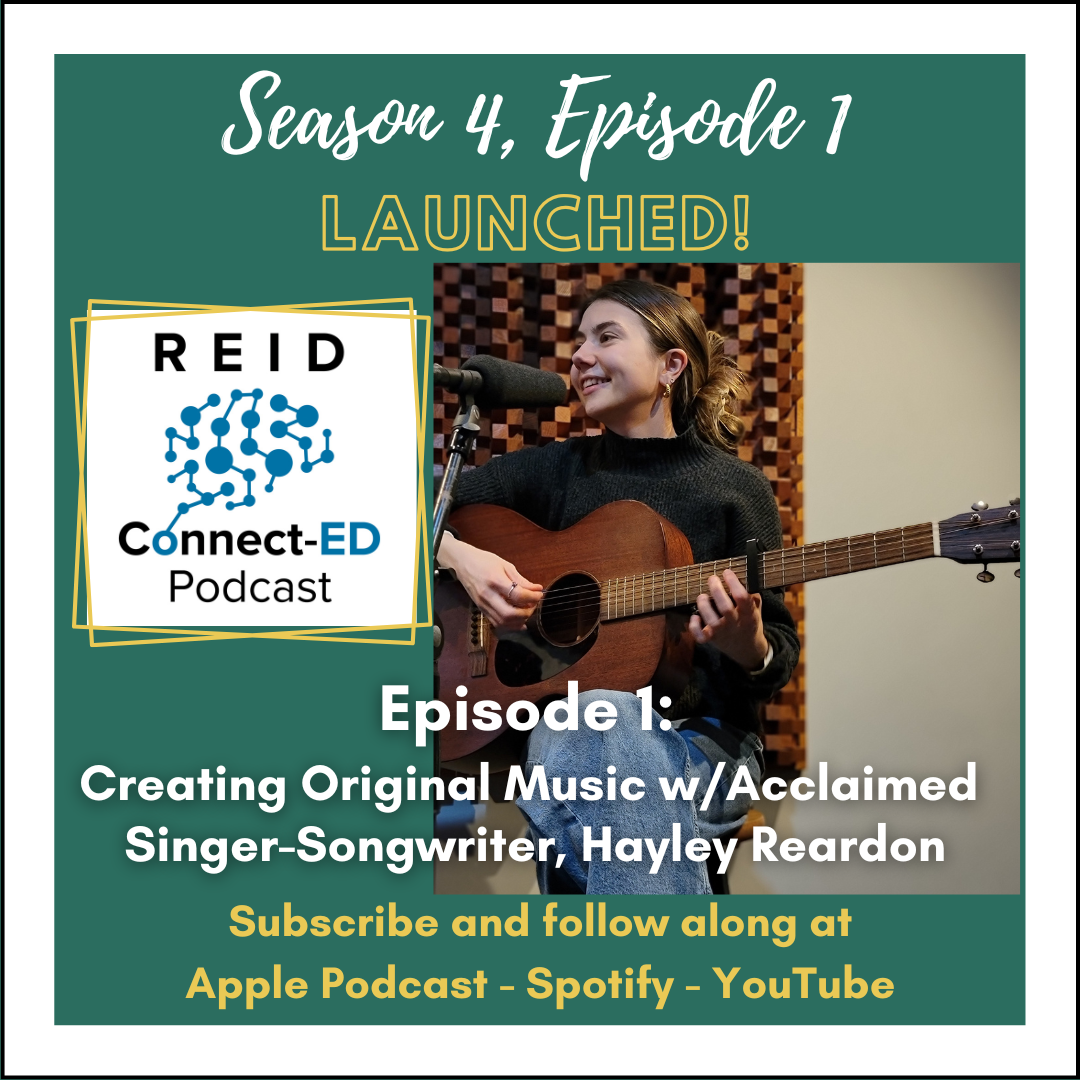
Listen Now!
-
Raised in a coastal Massachusetts town north of Boston, Hayley Reardon is a critically acclaimed folk-pop singer and songwriter. She is a storyteller in the truest sense of the word. Her songs serve as postcards from an artist brave enough to take the road less traveled. Reardon dove head first into music at the young age of 15, and has spent much of the past decade writing, recording, and performing music around the world. Reardon’s songs have been featured on multiple Spotify editorial playlists and Apple Music playlists, with over 7 million streams on Apple Music alone. She has shared the stage with renowned artists including Lori McKenna, Rodney Crowell, and Anaïs (ah-niiice) Mitchell, among others.
She spent three years based in Nashville and much of the past six years carrying her songs and stories all over the globe — including a six-month artist-in-residency stay in Dachau, Germany — gathering experiences, inspiration and soulful connections.
Her most recent profound EP’s, In the Good Light and Changes, were recorded in Barcelona with Catalan collaborators Pau Figueres (producer and one of Spain’s premiere instrumentalists) and Aniol Bestit Collellimir (recording engineer). Visit www.HayleyReardon.com for a full bio, photos, tour info, and links to her music. Her recent live album, Live at Starseed Studios, is available online on all streaming platforms, and the video recording is also available via Atwood Magazine online: Hayley Reardon Is Intimate, Up-Close & Personal on 'Live at Starseed Studios' - Atwood Magazine
Check out Hayley’s music on Spotify, Apple Music, YouTube, and everywhere else!!! Intagram: @HayleyReardon and www.HayleyReardon.com
-
Hayley grew up in the North Shore of Massachusetts where she appreciates the special experience of living near the ocean. She returned to this area to live at this stage of her life after traveling around Europe producing and performing original songs.
Growing up, Hayley was around music a lot through her family.
Hayley loved to write stories, poems, and letters for loved ones when she was a child. It was very natural, inspiring, and enjoyable for her. She did it a lot!
Hayley learned four chords on the guitar from her father and then spent a whole summer putting words and lyrics to the chords.
It felt very natural to Hayley to write songs all the time. It was so exciting and she felt so at home in that space and flow of creativity. It felt like freedom or a “doorway” to freedom from overthinking. She wanted to stay in that space to express herself in such a special way.
When Hayley is writing a song, it does not feel like she is “thinking”. It is not a ‘cerebral’ activity. Rather, she feels very much “in her body.” This has always felt like a relief from all the thinking. She linked songwriting with the ability to access a more subconscious part of herself.
Hayley cannot separate lyric from melody. They come to her together. She describes that there is a “shape” to the lyric and melody that go together.
Hayley felt very supported by her family who recognized her songs were legitimate. She printed out lists of open mics and went to perform whenever she could. The support she felt from her family allowed her to feel like her songs were “worth sharing”. Looking back she realizes how impactful that support was for her to do something courageous that was a little bit scary at first.
Hayley feels best about her original music when the lyrics, melody, and song come from an “organic” place within her.
Writing original music from this ‘organic’ place is similar to the Beginner's Mind where you see and experience something as if for the first time like a child. As we get older, when there becomes more ‘voices’ and more life concerns, it may be more challenging to come back to that more pure mind space.
Hayley originally always hand wrote her songs. However, since her lyrics and melodies are often coming to her together, she often voice records it and then writes it down afterwards. It's like a ‘shape of a lyric and melody’ and her mind synthesizes it all somehow. It is a “mystery” to her how it works. She works better formulating the song in her mind and “in the song.” It is like a subconscious synthesis.
Hayley feels more creative when doing something that is passive, such as while driving or when she is in motion like on a train. She also feels creative after spending time with her oldest childhood friend. Anything that brings her back to the younger, less inhibited childhood version of herself.
Some songwriters get into the mode of creating songs by writing song titles, going to co-writes, and collecting song ideas in a more methodical, cerebral way. She used to feel bad about not doing songwriting in this way. She allows connections and experiences she has in life to come out of her in a more organic way, as they come. She calls it like “finding the trap door” that accesses this subconscious part of herself.
Hayley also tries to find a balance to allow for growth in her music by broadening her process and thinking more consciously and cerebrally about her songwriting. At the same time, coming back to that organic space of making music is something she feels she needs to protect and where she feels most confident and free.
Hayley mostly writes her own songs. She seems to have figured out what works for her. Now she's trying to trust her process. When she was younger it was easier to access this process and trust it. As we get older, there can be more and more voices that can steer us away from our process. She tries to utilize and integrate feedback about her songwriting in a way that maintains the integrity of her organic process. As a songwriter, you may be the only one with the deepest and truest feeling and understanding that makes up the full vision of what the song is and could become.
Songwriting is like therapy in the sense that the song is what you take with you as a reminder of something meaningful. The song is like the wisdom, resolutions, and growth that you take with you from therapy.
Trusting in yourself as a performer is showing up as yourself, knowing that it may not resonate with everyone out there. It is showing up as your genuine self to see what happens and being okay with that.
As a performer, Hayley said it surprisingly felt like a safe place for her. Early on, songwriting felt more like that safe space to her, while performing was more scary for her. Now, performing feels like a way to get “out of her head” and be very present.
Hayley appreciates the singer-songwriter genre as it allows her to not have to uphold some specific crafted “persona”. She likes the “rawness” and realness of a singer-songwriter being themselves on stage. Even chatting between songs is something she has always appreciated.
-
Gerald Reid 00:22
Welcome back everybody to season four of the ReidConnected podcast. The theme of this season is going to be about connection. Connection with others, connection with something outside of yourself, and connection within yourself. And today we're so happy to have Hayley Reardon with us. Raised in a coastal Massachusetts town north of Boston. Hayley Reardon is a critically acclaimed folk pop singer and songwriter. She's a storyteller in the truest sense of the word. Her song serve as postcards from an artist brave enough to take the road less traveled. Reardon dove headfirst into music at the young age of 15 and spent much of the past decade writing, recording, and performing music around the world. Reardon’s songs have been featured on multiple Spotify editorial playlists, and Apple music playlists with over 7 million streams on Apple Music alone. She has shared the stage with renowned artists, including Massachusetts own Lori McKenna, Rodney Crowl, and Anaïs Mitchell, among others. She spent three years based in Nashville and much of the past six years carrying her songs and stories all over the globe, including a six month artist in residency stay, in Dachau, Germany gathering experiences, inspiration, and soulful connections. And her most recent albums were recorded in Barcelona, with Catalan collaborators Pau Figueres, who is the producer and one of Spain's most premier instrumentalists, and Aniol Bestit, who is the recording engineer. You can visit HayleyReardon.com for a full bio photos, tour information, and links to her music.
So my way of describing Hayley Reardon. I like to think of Hayley as a one of a kind artist. An old soul with an incredible musical gift. And let me explain my reasons why as I continue. I first came across Hayley in the spring of 2022. It was around the time when events were coming to be in person, which was following the isolation we all felt during the depths of the COVID pandemic. And there was a TEDx talk. And it was an event that was occurring in the Back Bay Area of Boston, where my office is located. And I really wanted to attend this conference, but the tickets were sold out. So instead, I had to watch the live stream online. And the event was an educational event in nature and so I was not expecting any musical performances or any music involved. However, the entire event started with a live performance from the one and only Hayley Reardon and I just thought to myself - Wow, that music that sound that vibe, where did that come from? Who was that? And it was so, so much up my alley in terms of the music I appreciate. So is the spring of 2022 and Hayley was working on new music at the time with renowned producer and musician Pau Figueres in Spain and Pau joined Hayley in the performance picking on his guitar as she played her songs. And maybe I'm biased but Hayley really blew me away. Her voice is angelic and will make you feel like you're floating. Her vocals are soft and delicate and yet strong and powerful. Even more she has that unique, dynamic and distinct voice that really sets her apart from other artists. How can her voice be described in all these different ways? Well, to me, that's Hayley Reardon for you. Even more, her lyrics and melodies are not just catchy and rhythmic, which they very much are, but they're also deep and they really capture your attention and your heart. On stage she's just so sweet and kind and genuinely seems to be so grateful to share her music with her audience. Some of my favorite songs that you can look up right now if you want - songs like honest, alive, awaken Berlin, in the good light, bleed together; and these songs really calm your soul they're gonna capture your heart with melodies and depth that really epitomize the singer songwriter genre. Go listen to the beginning of her older song entitled good from her feature album good. To me that song listening in the very beginning it feels like you're about to enter a movie scene. She paints a picture with her words and the arrangements in that song it just really captures you and it really has a lot of substance there. The chorus of her song paper mache is an upbeat vibe that feels like a 1990s acoustic throwback, which is when I was growing up. I have been so excited for this opportunity to be with Hayley and get to know her story as a singer songwriter. She really is a singer songwriter who has it all and she's definitely on top of my playlists.
Some things are meant to happen I suppose. In December of 2023 Hayley was playing a show opening up for local Rockstar will daily at the crystal ball Theatre in Somerville, Massachusetts. And I was not supposed to be in town that weekend. But my plans changed. And immediately I got tickets for the show because I had noticed that she was posting that she was going to be performing there. And my sister and I got into the car and jumped over to the theater and got to see Hayley perform for the first time. And it was just so special and waited for about a half hour and finally I got the chance to go over to her after she was done talking to everybody to go meet her after the show and just let her know how special her music really is. The next day, I woke up and just had this random idea. I'm like, well, let's have her on the podcast to talk about the powerful experience of writing and producing and sharing original music. And I hope that this episode really sheds light on how meaningful and transcendent, therapeutic songwriting can really be. For everyone involved, including the person producing the music, but also the listeners. Hayley really is a shining star who's going to continue to wow us all, I'm sure of that. And we are so grateful to have her in the studio with us today. And welcome Hayley Reardon.
Hayley Reardon 05:59
Thank you, Jerry. I could cry that's so affirming of like, many of a whole journey. Thank you. That was beautiful. It means a lot to me. Thank you for your thoughtfulness.
Alexis Reid 06:10
And we're so excited to have you.
Gerald Reid 06:12
So where should we start with this? You know, Alexis, why don’t you get us started with where we're gonna go with this interview.
Alexis Reid 06:18
Yeah, so you mentioned that the theme for this season is all about connection. And we are so grateful to have a sibling connection that we think is really rare, especially in our adulthood. But we also feel connections really deeply. As Jerry mentioned in his introduction, there's a strong connection to your music, and we didn't even know you, but we knew we would love you when we met you. So welcome to our family. First and foremost. I always joke that when my clients work with me, they become a part of my heart and become a part of my world. And I feel the same about this podcast. So we're really grateful to have you here. But thinking about connection, we were talking a little bit before we started about our connection to spaces and places. And Jerry mentioned in the intro too that you come from a coastal Massachusetts town, in the town of Gloucester, and we were talking about how we too, when our mother moved up from New Jersey to Massachusetts, we really explored Gloucester as a place for her to land to be an extension of our family and our home. And though we didn't end up there, we ended up on the cape. They're still like this pull to that space. And I think it's such a unique and special environment and space that people who call it home I think are so lucky. And even though we want to keep it a hidden gem, I wonder if you could share a little bit about; we don't want to geek out too much. Right? But we I wonder if you can share a little bit about what that was like for you just growing up in that space because I imagine it also inspired so much of your journey.
Hayley Reardon 07:51
Yes. Well, I mean, a little bit of this is due to my you know, vague bio. I am, I grew up in Marblehead, Massachusetts, which is also a coastal town, beautiful, but very different, like in the feel than Gloucester. So I grew up in Marblehead and of course, that was deeply inspiring to me, like the being near the ocean as a baseline. Like I didn't know any different to later when I would go on and live elsewhere. It was like terrified, like I was like, What is this feeling? Or like this landlocked feeling? I didn't know it was a feeling. But also, I mean, my my parents are from through and through from Marblehead their parents are through and through from Marblehead. So there was a real sense of like, of roots and, and sort of like lineage in that way and history in a in a town in a way that helped me connect to myself and to my my family and to place in a strong way. So Marblehead is special to me. And Gloucester was very much a surprise to me how much I felt what we were just speaking about before the podcast is this very strong pole and intense connection to that town. And yeah, I mean, I had been traveling I grew up in Marblehead, then I went away, I went to college in Nashville, then I went and spent the better half of three years like most of three years in Europe, really, I would come home before I got a visa I would come home for three months and then go back and I was living in different parts of Germany and and traveling all the time. So I went very far and wide, went to all these cities travel all over the world was like I could see myself here. I see myself here. And then ended up taking a winter rental in in East Gloucester just to write because I was in I was living in Berlin and I knew that I needed to move home, but I didn't want to go home to Marblehead but I knew I needed to go back to America. And I I took a winter rental that a friend sent me a link to on Zillow and it was like available for four months in East Gloucester and I was like, Well, I know I have this pull to Gloucester and I want to just write and it's going to be a brief thing. And I rented it and I just like couldn't leave there after I was so surprised because Gloucester felt like Yeah, another local ya know New England, North Shore town but no, I feel a very strong connection there. And, and yeah, and other people too it's I was saying there's this feeling like when you cross the bridge into Gloucester that I've spoken about with many people that you something something shifts, there's a groundedness of the about the place and the people there.
Alexis Reid 10:16
It’s a really beautiful energy. I think there's a reason so many artists land there. Definitely. Yeah, it's a really cool place to visit to visit.
Gerald Reid 10:31
Those beaches are beautiful, good Harbor Beach, Wingaersheek. The beauty of those beaches.
Hayley Reardon 10:36
Oh my gosh, yeah, it's amazing. And speaks to this feeling of being tapped into like to that connection is is the people there that I felt so embraced there. Because the moment the locals could tell like, collectively, I felt like when people could tell that I was tuned into that special thing about it, and could feel it. They're like, so warm and welcoming, because of yeah, there's this invisible thing there. But yeah, the the beaches, the everything, the community, I like it there a lot.
Alexis Reid 11:06
I imagined to that, you know, when you're opening yourself up to change and being ready for whatever's to come, right, moving back from Germany back to the states to a new town to a new space, that there needs to be a little bit of vulnerability to just like, show up and just unapologetically be there. And I wonder how that inspired that period of time for you. Because you said you went there to write music?
Gerald Reid 11:30
Can I can ask you so a follow up question to that, to kind of pull us back about change and putting yourself out there and being vulnerable. And I want to make the connection to when you started writing music. I really don't know anything about you personally. But I do know from your bio, that you started music at a very early age. So maybe we can get to that point where she started writing music in Gloucester. But let's start from the beginning. Like what was that? Like? What inspired you to get into music? Like who exposed you to it? What like, what, where did that come from?
Hayley Reardon 12:02
Yeah. Well, I like I said, I grew up in Marblehead, I, my dad's brother is a musician, there was always a guitar around the house. My dad, you know, my, my dad wouldn't call himself musician, but he was around his his brother growing up and their band and everything. And my sister is a beautiful singer. And she was always singing and she's 6… 6… 7 All these years, I still struggle with how much older than me, she is math, okay, she's like six and a half years older than me. So, um, so she was always, you know, whatever she did was like, the definition of cool, you know, she was so like, the gap was so much so that she was like, I looked up to her so much and still do but, but she was would sing and was a singer. So. So I had that all kind of in my orbit. And, and I really loved writing I loved. I was always writing little stories and poems, and even like, letters, if there was, if we were having a holiday, I would tell my mom, like, I'm gonna write a letter for each person and put it around the table. So like, I loved to write. And, and then one summer, I asked my dad to show me some chords on the guitar. And to me, the intrigue wasn't, it was writing from the beginning, it wasn't necessarily like, oh, because I want to learn this song. It was, um, it became very apparent to me that I wanted to blend those two things. And so my entry point to music was writing. And I would just, I mean, he gave me four chords, and I just wrote with those same chords for the whole summer. And, and, yeah, so so it went from there. And then later, I went and kind of like, filled in gaps about musicianship, but really, it was this idea of bridging writing with with music that was the spark for me initially, and I had the right environment for that with, you know, my family. So.
Alexis Reid 13:53
I just had this image of your dad gifting you those four chords and a beautiful gift.
Hayley Reardon 14:02
Exactly, he did. He did. I always remember that.
Gerald Reid 14:07
So such a simple thing became so robust in your life, four chords, some ideas in your head that you want to write down and everything kind of unfolded. Take us through how things unfolded into where you are now like.
Hayley Reardon 14:23
Yeah, I It was summertime, I like I said, my dad showed me some chords. And it was very natural to me to just write and write and write, like very in a very intense way. Like it did kind of take over my life. Like I started writing all the time songs. I remember that time being like, Oh, I wrote three songs today, four songs today. Like I wish I was like that now oh my god, but it was so exciting. You know, I was just, I felt so at home in that in that space. And also I did not think like, I refer I try and access that version of myself a lot because because I was so just like, enthralled by the by the flow I could get into when I just sat with a guitar and saying things and just saying words that came out. And, and I was super, super anxious, like, I'm just wired that way, like I've just always been, there's just always been a very kind of like, my natural tendency is to be sort of nervous and overthinking. And, and I remember the freedom I felt in, in the writing, and in that space of like, flow, it was like the one doorway in my being, that is the first one I found that felt like, you know, free from all that free from my head, you know, so I loved it. And I wrote and wrote and wrote.
Gerald Reid 15:34
Can I ask you a question about that? So I imagine that a lot of thought went into what you were writing. So what is the difference between like thinking and overthinking versus putting it into, like, into a melodic lyric or song or chorus? Like, what's, how would you describe the difference between that those two things?
Hayley Reardon 15:54
Well, that's the thing. I mean, this is kind of still this way for me to this day, but I don't feel like when I'm writing that I'm really thinking, I feel like the lyrics are coming; the words, it; first of all, I cannot separate like lyric from melody when I'm writing. So they kind of have to come out at the same time. Because, um, this flow of like, the, the shape of the lyric with the melody is so; it's kind of my, the heartbeat to me of why I love songwriting. And I feel that usually, that only comes out for me when I am, I'm kind of in a, in a flow state and, and writing from, from a subconscious place. And then I'll listen to it and be like, Oh, wow, like, that's what I feel, you know. So usually the songs are ahead of me, because for some reason, I don't know why. And I think it does date back to then when I started. I linked Songwriting with like, yeah, with with, or at least the the thoughts maybe, maybe not, it's not the same form of thinking, I linked Songwriting with accessing this more like, stream of consciousness or something. So So yeah, I don't I don't know that I was like, analyzing or thinking about what I wanted to say I was just pairing words with melody in a way that felt right to me. And I also didn't know back then I wasn't, I didn't, I just wrote about what a thought songs meant to be about, I wasn't like, deeply like soul searching. I was just like, Wow, I love this. This vehicle, this thing of shapes connecting to a melody, and a word like that, to me was not cerebral. It was like, it was very, in my body. Like, I was like, oh, I want this shape in this sound. And I and then it makes this and I like that. So yeah, for some reason, it is separate from my thinking brain and, and it felt like a relief, then I remember that for sure. A relief from sort of the way I was used to engaging with my thoughts in my brain and myself. And then to this day, that's where I try and get back to all the time. It's like that freedom I had then. So. So I wrote all the time, because it felt really good. I remember that, you know. And, yeah, and then my dad was super supportive. I would show my parents my songs I was writing. And then my dad was like, well, these are like real songs. You know, he was like, something; that's interesting. And then yeah, I kind of wanted to try playing them for people. I wanted to go to open mics. And I remember telling him that and he brought me to, to an open mic in our hometown. And I said, I wasn't gonna play I just wanted to watch and. And then in the end, I played, and like my, I put my head, sat on a stool and my feet were on the edge of the stool. My legs were like shaking, shaking, shaking, but I loved it. And he was supportive of me, my whole family supportive of my dad, especially, I would print out lists of open mics. And I'd be like, can we go to this one now? And he would drive me. So So from there, it kind of just became a part of my life, you know, and I was very, very supportive at that. And I was very lucky. So.
Gerald Reid 18:51
What did that support mean to you in terms of doing something that was scary, perhaps?
Hayley Reardon 18:57
I mean, everything because I think that it was like validating that, Oh, these are worth sharing these things you're writing. So, yeah, I meant a lot. And yeah, I don't know. Um, yeah, I think I think in the moment, I didn't know, I didn't notice. It's more now when I look back. I'm like, wow, that was like, where did I you know, would I have taken this in the way; you know, as seriously as I have or like, in the way that integrated this into my life and the way that I have now had I not had that type of support? No. And so, yeah, especially the older I get, the more I'm like, wow, that was very important and impactful.
Alexis Reid 19:39
I think it's so important, Jerry and I work with a lot of young people who are trying to find their voice and their way of expressing themselves and sometimes they have all these thoughts and feelings and maybe energies to that they don't really know what to do with and I think it's so powerful when you can find an expression that feels like it just makes sense. Yeah, right. it probably feels different at different points in time. But it sounds like from your description that it just kind of made sense. Yeah. And I always say that, like, sometimes it's okay, just being okay. Like, it doesn't have to be this transcendent experience. But if you have a vehicle, if you have some framework or some space to kind of just release, whatever it is that's going on inside of you, it's probably one of the most beautiful human things that we can do. And experience.
Hayley Reardon 20:24
Yes, exactly. Exactly. That's yeah. And it's still hard for me to put words to like, what role that filled in my life then. But yeah, that's, that's the feeling of it was like relief. I remember, I wanted to stay in that space. Like, I wanted to stay in the space that I could access through writing songs, but I wasn't as concerned with writing songs. I wanted to be there. That's why I would write all day, you know. So yeah.
Alexis Reid 20:48
I love how you described all that. I mean, it just really humanizes the whole like, singer songwriter, musician, persona, because, you know, you have the space where you can do this, but at the reality of the core of it, that you feel unexperienced so much that I think everybody does in their day to day, yeah, that it makes sense that you're able to tease that apart, and then be able to transcend that experience. To put it all together. I don't know, it's just such a beautiful thing. Thank you for sharing it the way you did.
Gerald Reid 21:16
I think I just figured out one of the reasons why I like your music so much. It's like it comes from such an organic place. And you do use that word a lot, even in our conversations before, like, you appreciate things being organic and natural, and to just evolve naturally. And you're it sounds like you're not trying to force a song, you're not trying to, like, meticulously, like, put together this like pop song or something, you're, you're so true to yourself. I love that.
Hayley Reardon 21:44
Well trying to be I mean, I recognize that that's where all of this was born from. And I recognize that my sensibility, like the things I feel good about are usually from that place. But I don't always I don't have control over when or how I get to that place. I mean, to a certain extent, I I guess I can set the stage for it within my psyche in my life, I guess. But, um, but on this path of like, actually trying to make this my job. I mean, I shouldn't say trying to I, it is my job. Now, however humble, this is my job, this is my path. And so then it's, it's also a more of a challenging dance, because, you know, oh, I need a new, I gotta put out a new album, or I want about an album, or I gotta, whatever I gotta write, I gotta do this. So it's harder to like, keep the, you know, sometimes I have, sometimes I'm doing things when they don't feel as organic. But I know that is my baseline. And I know that's, that's where I like developed my sense of like, what feels good to me. So usually, if I feel like a rub inside myself, I don't know how I feel about this. It's like, musically, it's usually because some part of me doesn't feel like it's coming from that place. So I don't want to lean too heavily on that either and like, not grow and not like, totally push myself. So I'm always kind of weighing that inside me. But But yeah, that's organic is a big, that's that word resonates? Yeah.
Gerald Reid 23:05
Well, you're very reflective to like, what you just said, is very reflective. You know, part of just bringing this to therapy, like part of therapy and new training therapists is like you have to, like, lean into being genuine and present, but also at the same time, like, check in with yourself. And what you just said is like, amazing first, like, so wise and, and beyond your years to be able to say like, ‘yes, and’ and you used that term before like, ‘yes. And,’ and it's good to you know, it's it's very genuine about your growth, and to not get too comfortable to, to keep growing. And that's, it's hard to do.
Hayley Reardon 23:42
Exactly. Like I can have the awareness to think like that, but in an action. I don't. It's that balance is still very hard. For me.
Gerald Reid 23:52
It's the hardest thing to do in life. So no pressure.
Hayley Reardon 23:57
Okay, good. Thank you for affirming that. Because yeah, I can talk about it. But I really don't know.
Alexis Reid 24:02
I also think that's the beauty of like us recording this podcast to write some of the things that we talked about in reflection, where we have this space where we can explore things that sometimes we don't always get to talk about to people, and really interesting people who have found their path and found their passion and are working towards living in alignment with their own values as they do that. We can always go back and listen, because when you were describing how you found music and how you started writing, it reminded me of like this beginner's mindset and like kind of looking through a child's perspective of doing something new that maybe you've never done before. (Hayley Yeah) And when it fits, and it feels like an expression, an extension of your soul, it like becomes this beautiful magic that you want to just keep recreating. And as you said, like when you get older, it's hard to do that. (Hayley Exactly) it's really difficult to like let go of all of the stuff we carry with us as we're like going into these moments to like permeate and ignite the magical passion that we want to flow through us. But there's something really beautiful in you being able to reflect on and express it the way you did. And hopefully we can keep coming back to that space. I often recommend and share that. Sometimes it's just like a little tiny point of joy that we need to hold on to like that one little moment that we can just come back to every day. Even if it's not like writing a full song. Maybe it's just writing a line or a lyric. (Hayley Yeah.) And I think that's what's so beautiful about journaling. And I think songwriting is such an extension of that.
Hayley Reardon 25:35
Definitely, oh, yeah, it's that same space for it's just like, in my I always say like, trapdoor like, I'm, it's coming out. But you know without that thinking I'm saying this right now. So yeah, that that space is so freeing to me, I crave that, like, it's so interesting.
Alexis Reid 25:50
I don't know if this is such a, like a mechanical logistical thing. But do you find that you write like, handwritten in a notebook when you're writing your lyrics? Or do you type them down? Because I feel like there's such a difference between the two.
Hayley Reardon 26:01
That's true. I've done both. I mean, originally, always handwritten but, and I love that, although I have terrible, terrible handwriting. So it's, like problematic for me in the end. So sometimes I feel cleaner to be typing exactly know what's going on. That said, because my writing process, as I mentioned, is like so much. The lyric and the melody have to be written at the same time for me to feel; I don't know, my best about it. Often, I'm only writing lyrics out later. Like, in the moment, I'm kind of doing all the writing and synthesis. Like, I'm not like, it's not like the stereotype of like, bent over a notebook, because I'm doing a lot of it kind of, I don't usually write it down until I'm done. And
Gerald Reid 26:45
Wow, you have a good memory.
Hayley Reardon 26:47
Well, I'm recording it. Like I'm using a voice, making a voice memo, or something. But I'm, yeah, but I can't really work. So far. I'm not as so I'm not as good working out lyrics on paper as I am inside the song, if that makes sense.
Alexis Reid 27:02
Yeah. That’s so cool. We were joking before that Mike, our producer today is like moves things around kind of like the matrix. And I imagined your brain kind of like integrating all the pieces of what you're writing and creating in your head as you go.
Hayley Reardon 27:13
Yes. That’s what I mean, it's like a synthesis. Yes. And that's where I mean, it's my subconscious, like, suddenly, I started to realize in that place, what actually like the details that come through are the moments that come through, I won't consciously even remember that I had stored them or like that they mattered to me, or like this scene, or this thing, or this person has said, or the color of that person's shirt. I don't even know that I remembered them. And then it's like a synthesis place for if I can hit that moment, that it all happens. And then I look back at it, and yeah, maybe write it out, transcribe the lyrics and say, Oh, wow, like, look all that stuck with me. And I didn't know it. So yeah.
Gerald Reid 27:47
Hayley, what are some factors that you feel like do bring out the creativity in you? Have you identified, like, you know, time of year or time of the day, or like, when you're with certain people that makes you comfortable? Like is or just a space that you go to? Like, is there any element or even mentally that helps you get there?
Hayley Reardon 28:07
Yeah, well, usually. I mean, I guess this is, I think, like, proven or supported by things, but I attest to the fact that I'm more creative when I'm driving, or in the shower, or, like, if I'm doing something else, it's like, kind of passive. Or, yeah, I'm like, sort of occupied. I'll have ideas come through. So I start a lot of songs when I'm driving if I'm alone, which is like a case for me not always being on the phone or listening to something or sometimes the car is like, either my office like I'm talking to everybody or I'm if I if I leave space, I will start a lot of ideas. Well, I'm sort of in motion to that inspires me like, even if I'm on a train or I did a lot of touring in Europe solo on the train. And, and that was always very inspiring, like that this sense of motion, like looking out a window or something when I'm actually moving. As makes ideas come forth. And yeah, and nowadays, like when you say people, like there's certain my childhood childhood, oldest best friend, from when I was a kid, when I'm with her, I find that afterwards, I'll be more like anything that links me. It's weird. Anything that links me back to this younger version of myself. That's sort of like less inhibited. I, It somehow unlocks things and I'll be creative.
Gerald Reid 29:29
So when you performed in Somerville, you shared a story of the Polar Plunge, is that the friend?
Hayley Reardon 29:34
That's no that's no that's a different friend. Let's see that. Okay. The Polar Plunge that actually inspired ‘honest’ and that's a friend of mine, you know, a newer newer friend that we've been friends for some years now but but not like childhood. But yeah, we she took me to do this polar plunge ice swimming, ice bathing thing and in the middle of a snowstorm and on Good Harbor beach actually in Gloucester. Because I committed to go with her. Yeah, exactly. I said I would go, because she kept saying she would do it every day. And I was like, what? Oh my god, life is hard enough. Why are you doing this? And she said, because it keeps me honest. It keeps me honest. It just keeps me honest. And I never knew what that meant. I was like, what does that mean? But she couldn't describe it any other way than it keeps her honest. And I was like, that's very mysterious and poetic. And what does that mean? And so I committed to go with her. I didn't check the weather, of course. So it was a blizzard. And I went in, and it was terrible. Obviously. It was like brutal, but I went immediately home and wrote that song. Like it almost wrote itself. So and I did understand what she meant, like I the sensory experience was like really clarifying for me. And then I went home and wrote that song. And the chorus is like, yeah, if I were just honest, I might get what I wanted for once. If I were brave enough to feel it, I might know all I needed was love.
Alexis Reid 30:58
And that's one of my favorites. Beautiful.
Gerald Reid 31:01
By the way, it is played it for my class today. (Hayley: Oh, my gosh, thank you) And they all shared what they wrote. They wrote some really nice, free associations of how they felt when they listened to it.
Hayley Reardon 31:12
That's amazing. Oh, my gosh, yes. I can't wait to hear Thank you for sharing with them.
Gerald Reid 31:15
Okay, so you experience something, and then something catches you, like a theme of life or like, some idea and it sounds like you kind of meditate on that idea? And you try to explain it.
Hayley Reardon 31:30
Yeah, I guess; it's still very mysterious to me. But yeah, I know that there's some sort of like that I feel like I'm gathering about in my life I'm gathering sort of, but I'm not consciously I'm, I've always kind of felt bad about the fact that I'm not collecting song ideas intentionally. Like when I'm among other songwriters, I went to music school for a bit in Nashville. And it was very much like, this idea of, you know, you should be you should have a list on your phone of song titles. And you should be writing all the time, you should be gathering ideas and go to a co write and be like, this is the idea I have. And I always felt like when I was when I'm in my life, normally, I'm not really like thinking like a songwriter. Because to me, that part of me, like the thinking part of me is not the songwriter part of me, you know? So I've always kind of felt bad about this, or like, I'm not, quote, doing it right or whatever. But yeah, I think I'm living and then and then when I go into this room, because it really does feel like a room like a room inside myself. There's some sort of synthesis or this thing that happens and, and certain ideas or moments or connections I've made, that I am not aware I've made come forth.
Alexis Reid 32:40
I think there's, there's so much there. And actually, the science behind is so fascinating, because when we're overly focused on something, sometimes we miss a lot. And the idea of creativity actually comes from this expansiveness, rather than like a direct focus or a line of like, this is the approach I need to take. So it's interesting, because in my work, right, people come to me to help increase their focus in to try to be able to be more productive and do things in a systematic way. But I always offer that it like there's, there's a usefulness, a utility to that. But then also, we need to get to this place of expansion, not just this, like, myopic like, I need to do this thing in this way. And it makes sense, right? If you're learning to become a songwriter, there needs to be some kind of algorithm or equation or process. Yeah. But to live the experience of a songwriter like you're describing, it's like, how do we make sense of all of these influences and inspiration and expressions that we want to share with the world through song? And I think there's a little bit of a difference between the two, which I imagine was probably hard for you going through, like music school, because you're like, Oh, we this is something that I can't just produce in that way. I can't just go through the motions to get to the song. I need to feel it and experience it.
Hayley Reardon 34:05
Exactly. Definitely. Exactly. And and then that that kind of connects to this. This question I was or this idea we're talking about within me it is sort of a friction within me is like I feel very safe as my I feel very confident in my work when I lean on that sense of organicness; like in my head anything that's closer to that sense of like flow is kind of Queen in my head but then I have this like more conscious voice it's like oh, but you should want to grow and you should like broaden your process and you should expect so then then those what and then I struggle to figure out which kind of voice to listen to and and am I holding myself back by being too; so yes, and but that makes sense. I also am again, it's the weirdest thing but they do feel like different parts of me because I I struggle with with when it comes to like, working, I've struggled very much with attention. I have like Mega diagnose ADHD, all the things. But then when I, I'll feel like I'm not consciously paying attention to things but I'll gather all this information I didn't know I gathered, and then I write and there it is. So it almost feels like I have two brains. And and then I'm in this fight of like trying to grow but also not distance myself too far from this thing that feels important that I have to protect in a way.
Alexis Reid 35:28
I wills hare something that I hope is helpful. Because I feel like our whole lives if we pay attention to it, can be as like anchoring ourselves in what we know what we've learned, and then being able to expand from it. So I always say, like we anchor, then expand anchor then expand. And I feel like it's a constant series of points of growth, that we can continue to just experience and try out and learn and test out rather than us. I think when we again, when we get overly focused on like, this is how things have to be. I think we end up in this perfectionist mindset, which sometimes can actually get in the way of us doing our best work.
Hayley Reardon 36:03
Yes, exactly. Yes. And so that's what I'm working on now. That's beautiful and very helpful. Yes, I want to I don't know. I don't know the words. Yes, that's the that's another trap of mine. The perfectionism. Yeah, so it's freedom to me to stay in that organic place. But I got it. I'm learning how to grow into into both.
Gerald Reid 36:26
Let me validate that the last two albums you put out were remarkable. Whatever you're doing, keep doing. And I also want to say that, maybe you can check me on this. But when I look at I tend to look at who wrote songs. I think Apple music is like the only I think Spotify does it too. But Apple Music like gives you a full list of like everything that went into a song. In getting to know you I think this is true. I think you're the only one who writes your songs. In terms of the lyrics and the melodies.
Hayley Reardon 36:57
Yeah, for the most part, there's there's a few songs I wrote with with a collaborator, but but it's rare that I've most of my stuff that I released I write alone. Yeah.
Gerald Reid 37:07
That's, that's special. And I think what you're saying is you've figured it out for yourself. Like how could like how can I do this for myself?
Hayley Reardon 37:15
Yes, it's just a continued effort to be able to trust that that way, you know that because there were no voices when I when I started, I remember, like, having no question like, this is the word I want here. This is the melody. This is the even like, in whatever if I was trying to produce something like I knew exactly what tasted good to me, You know what I mean? Like, as Rick Rubin would say, I was just reading his book, but I knew without there wasn't really it was, yeah, it was so easy for me to access that. Now. There's a lot more voices, and I get a lot more insecure. But But yeah, I think so. I think I do know my process. I just have to trust it.
Alexis Reid 37:49
So I joke that that's what happens when we get older. Like, we started to have more voices, because we've had more experiences. Yeah, versus going back to like, you know, that beginner's mindset, like the first time you tried it, you were just kind of putting it out there and be like, Oh, let's see what what happens.
Hayley Reardon 38:04
Yeah, exactly. And it was just all on feeling like what felt good.
Gerald Reid 38:08
Alexis tends to give me feedback on my songs. And I try to just be like, Alright, I have to be open to this. So like, let me just radically accept it, and be okay with it. And then I think I go back to the organic process again. So it's kind of like, I use her feeling of listening to it as a signpost to be like, okay, something's got to change, but I'm not gonna let someone else dictate what's going to change. And then I kind of go back to the organic place.
Hayley Reardon 38:31
That's what, that's the thing. Me too, then I wind up back where I started. And that's where I struggle with that, yes, I employed the idea, like the new idea, the suggestion, the feedback. And there's a voice of me that's like, oh, it's your craft, you should be wanting to, like, you know, take feedback and develop it more. But I wind it back at the organic place, because I, it's, yeah…
Gerald Reid 38:55
Does that help you though that organic place get to to integrate the feedback in your own way?
Hayley Reardon 38:59
Sometimes that's something I'm toying with, like working with now is like, How can I take the feedback but find another organic solution, like, then whatever piece I want to change, put it back through that same kind of circuit of like, the organic creation place, and then re-put it back into the song. Sometimes, though, the only way for me to go forth and not just stop everything, or freak out perfectionism, like, is just say, this is how it is sorry.
Gerald Reid 39:24
There is an unbelievable metaphor for how therapy works and what we're talking about. So as a therapist, I try my best to trust that there's something within the person that we have to get to and that my idea to give them feedback is not to tell them like exactly what to do differently, but that there's something within them that's going to make sense. And Alexis and I always talk about nuance. Yeah, you know, we're not going to just give like blanket feedback like on like a social media thing. Like you must always do this and your life will get better. Like life does not work that way. Yeah, And so I think that there's a really good metaphor about therapy as like songwriting, because with the patient and myself, we're trying to figure out, okay, what fits, and I'm not trying to force it, even if there's feedback I'm giving, I'm doing a very delicate way. I'm also trying to do in a way that is true to them. It's not like, here's the back, you need to change it this way. Like, well, what do you think, you know, here's an idea, here's some area to reflect on. What do you think would be a change to make? Yeah, so like, kinda like we were saying, like, you can get feedback about songs, but it's also like, I don’t know, for me, I would suggest, like keeping that organic place, doing it in your own way, like using the feedback in your, in your own organic way. So it's like not losing that organic part of you.
Hayley Reardon 40:45
Yes, this is what I'm working on. Yes. Because those worlds do feel so separate within me, I'm working on being able to take like this world and, and real conversations and voices and opinions and, and even the me that's here conversing. And then put, bring it into that room that feels like still kind of isolated within me, and, and then take the feedback in there, if that makes sense. The organic, so yes, that's, that's a beautiful metaphor. And, yeah, that's on the docket.
Gerald Reid 41:16
And their therapy is kind of like building a song together. Because at the end of it, I mean, ideally, you know, you have like, some resolutions, some growth or something. And like, the song itself, you can always like, listen to the song. And it's like, Oh, that makes me remind myself of all these things we gained in therapy, what we talked about, and it's like a reminder, I feel like a song itself is like that. It's like the gift you get from therapy, it's always with you, you can always look back and listen.
Hayley Reardon 41:40
Yes, you take it with you. Yes, beautiful.
Alexis Reid 41:46
I feel like for our listeners to the thing that you said that resonated so strongly with me is this idea of trust in yourself, right, and anything through our experiences, through our training through the work through time. Yeah, we kind of collect all these little pieces of ourselves, that we figure out what fits best in what's going to be most helpful. And to be able to trust in that is such a beautiful thing. And I think, in our world, especially today, it's so difficult to trust too much. And I think that's probably the biggest hurdle for any of us. To be able to overcome is to trust in ourselves. And I personally, am not a musician, though, I've dabbled in some things, my consistency and practice is not great, I will admit. But I have such respect and admiration for musicians and such an appreciation for music that you can trust in yourself. Like, this is a thing that I've created, regardless of what other people are gonna think about it, you're going to share it with the world and see what sticks. Because, you know, the same thing we say, in our work, it's like some people are gonna really resonate and connect with us and some people aren't. And that's okay. Right? And I'm still going to show up, I'm still going to do what I do. And I'm still going to, you know, see what happens and see what resonates and see what this means in the greater broader journey of life.
Hayley Reardon 43:02
Yes, see what happens? Yes. Yes. That's very comforting to me. Because yeah, because of Yeah, still still learning to trust me doing my thing. Because as we all are doing the thing that you know, feels inspiring, and for us; that that room, that's why I always think of it as a room. I'm like, where is I gotta get back? Because, yeah, where the trust is accessible, because now it is, there's a lot of information and voices and yeah, so.
Gerald Reid 43:28
It's also true that I feel like every song is unique. Like, there's, there's so many similarities and songs or genres, but like, no one song is the same as another. It's like a snowflake or fingerprint. And so you only you really have the vision for what the song is going to be, like, in a deeper sense, right? Other people can listen to it maybe resonate or give you feedback. But like, you're kind of the mountain, right? And like, you're the steady part that can have the vision or, just the feeling, right. It's more of a feeling. It's like, you can feel where it's gonna go, even if you change it and stuff like that. You still you're the only one with that full vision or feeling of the song.
Hayley Reardon 44:09
Yeah. Yeah, that's, that's, that's another thing to trust is Yeah, yeah, exactly. And that's, that's why it only gets scary once I come out of that place that it comes from, and then and then I'm out, like, here it is. And then then that's where I'm kind of susceptible to getting; forgetting what the original vision was, or even the sense that I that, you know, that's up to me that I'm the mountain as you say, in the in the writing process, but yeah, that's true.
Alexis Reid 44:46
I love all this. And I think there's so many connections, whether you're a songwriter, musician or not, like life in general through this conversation, and I'm so grateful for you to share that part of your process. But I'm also curious about you know, the performance side of things, right, like being able to show up. And we were talking about this a little bit before, like, you show up as yourself. And in some people have these expectations of who performers are when they show up on stage. But you have and carry with you so much of like what you've experienced leading up to that moment. And I was mentioning before that Jelani, who was a Broadway performer who was on the show previously talked about, you know, you go through all these experiences, and you still have to show up, and you still need to perform. And I think in like everyday life, whether you're a student or an athlete, or a musician, or a parent, or a caregiver, or whatever you are, like, sometimes we show up, and we're like, how am I gonna get through this? Just went through something really difficult. Can you share a little bit about your experience performing in front of people? Because we're here in this safe studio now where we get to have this conversation without people watching us. And it probably feels much different than if we had an audience in front of us.
Hayley Reardon 45:59
Yes, definitely. It does. Yeah, and I mean, performing has been a part of all this that's, like, surprised me or snuck up on me in the way that it's also become a very safe place for me actually, which it was not at first, like the songwriting, for instance, is still, as I said, immediately felt like warm and safe and comfortable. And like, wow, I've been looking for a place like this. And, and performing was not that way. It was very scary to me, at first, but I loved I loved my songs, and I wanted to sing them. So that was an example of me, like, pushing through a lot of fear around that, but now, we were talking about this before, it's it's very, it's a very, also a space sort of, of relief for me, I think, because it's similarly a way out of my head, like, it's true that whatever is going on in your life, you still have to show up and perform. That is one thing that I also love about the singer songwriter medium is it's very, here I am kind of energy anyway, unlike, you know, having to uphold a certain sort of persona. It's like, here are the songs and this is where they came from. And those are living breathing things that I'm going to sing it in the way I you know, it might emote something different on the day that I'm going to this and I can be really chatty or I can not speak at all or there's not a particular persona people are I mean to some extent they are they're expecting like me to be what they know me to be which is like whatever very happy,
Alexis Reid 47:31
beautiful, energetic loving kind person that you put out there to the world.
Hayley Reardon 47:34
Yeah, but there's there's a there's a there's a rawness to the singer songwriter medium which I fell in love with, right early of like, I remember going to, to singer songwriter shows and waiting for the the banter between songs like I the realness and the person with a guitar talking about their life, I've always loved that. But, um, but yeah, but to the to the tune of like, life going on. And you still having to perform, I have found that I don't know if it's the adrenaline or the kind of intensity of performing but it usually no matter what's going on, when I get on stage, I'm able to sort of like, be washed clean of all that, for better, for worse, I was saying this, before we started it, that's still there, when you get off stage, like your whole life is still happening. But there's a there's a freedom to me to performing that I can kind of focus like or just be be there be very present. And again, that feels really good to me, just like songwriting did in the beginning. So I've grown to love performing and feel very safe there.
Alexis Reid 48:38
Yeah, I'm so glad you shared that. Because I think, you know, throughout this entire conversation, I've heard these connections of a really just being present and in tune with yourself. And that seems like sort of like the driving force behind everything that you do, which is a really beautiful thing. And when you can kind of tune into that presence, that energy, whatever comes up in a moment and trust in that, what you tend to do with that. And for everybody, it might be different, but you turn it into something really beautiful, which I think is an incredible gift.
Hayley Reardon 49:09
Thank you. Thank you, thank you for saying I think that makes a connection for me. Like I think that's what I've always been looking for. And that's why these spaces like like writing, that's the thing that I was like, Wow, this feels so good. And being able to be very present and trust myself and, and those are spaces in my life that I feel able to do that is performing and writing. So thank you.
Alexis Reid 49:34
It's amazing. You're welcome. I also am recognizing that we could talk about this forever because I'm so curious about like your time spent in different countries. And you know, there's all of the different portions of your life that you know I love at the beginning. I think it's in your bio that it says like little postcards from all the different places you've visited. And I think that's it's such a beautiful thing to be able to capture right to I always I always joke with my family. I'm like we need to write on all these experiences that we have, because sometimes we forget, and how beautiful is it that not only do you get to capture all those moments, but you get to turn them into the songs that resonate with people in different ways based on something you've experienced and share it, which is really cool. And I'm, I'm curious if you know, not that we could talk about all of these because this probably take hours. But can you think of one moment, maybe traveling abroad or living somewhere different, or just really fully being present? That ignited or sparked an idea that turned into something you're really excited about? Whether it's music or otherwise? (Hayley: Hmm. One moment) Anything that comes to mind?
Hayley Reardon 50:50
Yeah, there, there's a song that yeah, I'm using the song thing as an anchor, because, of course, there's so many moments and, and as I've said, They creep up on me, like, there'll be a moment that happened when I was, whatever driving through, you know, some random country three years ago on a tour, that might come out in a song next week, so I'll be like, where did that come? Like, I want to recognize that I remembered it, you know, but there's a there's a speaking of like, the travel and everything. There's a song on my last EP, my In the Good Light EP, called ‘the little sadness’ that that I started writing on a on a drive that I had, at the, at the end of a very long tour, the tour was in Germany, Austria, Switzerland, it was like a month long. And I hadn't been alone that whole time. And it's hard for me to have a long time. And I was dropping off my friend who is traveling with me at the airport. And I had this one solo drive from from Zurich to Munich, in Germany, and I was alone for the first time. And the first part of that song was just like waiting for me it was it was done somewhere in the ether. And I was able to kind of just grab it, just those this one hour really in the car. And, and it's about this, this feeling, I was shuffling in my head through all these moments that I'd had while I was there. And there's specific ones that the song mentions like, like the the bartender, I had met the night before, who used to be in love with the waitress and took us my other friend and I out on this like grand expedition through Vienna. To you know, these interesting cafes, and guy that showed us the city through his eyes, and this girl is with us that he used to love but they're not together anymore. It was just like all and I thought to myself, in the song it says ‘I have all this new life. I've got to put some it says everyone I love is asleep out there. And I've got all this new life, I've got to put somewhere.’ And I was driving and I was this moment I thought about this moment with this guy the night before. And I thought like How will I ever explain this? Like how will I take this with me everybody my whole life back home? Like how will I you know, there's almost a tiny bit of like this, this loneliness of like you have these experiences with and then you turn away and you leave them and you can't take them with you, which turned out to be like the the core of the song. Anyways, I ended up writing that with the help of another songwriter in the end months later, because all I had was the first few verses. His name's Ryan O'Reilly but but that song is an example of like a very small moment sparking a really, for me, like a very big idea that was weighing on me of like, what do I do with all this, like this life I'm having, you know? So.
Gerald Reid 53:34
There's a line in one of your songs that I think is so genuine, but also speaks to how how you use lyrics to describe your experiences, because I feel like you're you use lyrics to describe experiences so well. And I think the Lyric is, ;there's only one way of summing this up, which is to say, I don't know how I feel.’
Hayley Reardon 53:58
Thank you that song is actually that's the other song that's written with this same person, Ryan O'Reilly. And that was a thing that I said, we were we were working on this song, and we were driving the car. And he was like, Well, how like, what's the core of it? Like, how do you feel? And I was like, I don't know. And he was the one it was very smart. He was like, then that's, that's the thesis, like, that's the idea. And this fit, and I did have this fear. I was like, I don't think I'll ever make sense of this. Like, why don't I know what am I what I feel. And that was his idea. I did not say that as lyricist. I said that is a confused; he was my therapist in this moment. But But I thought that was a really good idea to let that be the lyric you know, and and say, say that, because that was kind of the pain point for me was not knowing. So.
Alexis Reid 54:31
I think that's actually the thesis of this podcast actually is like oftentimes we don't know. Yeah, we need to explore and we need to listen to we need to learn and we need to be present enough to experience and figure it out as we go which I Think is such a beautiful thing and I am so grateful for you capturing it in the lyrics and in the songs that you write and like I said we can stay here for hours and I'm sure I have more questions but hopefully we can continue our conversations elsewhere (Hayley: yes) but I'm so grateful for you to come and share not just your work but a part of your heart today and your journey and your experience because I'm sure it'll be incredibly validating and just beautiful thing for a lot of different people to listen to and to hear so thank you.
Hayley Reardon 55:33
Thank you thank you so much for having me.
Hayley Reardon plays guitar and sings 55:47
I'm crying on the phone
You're trying to make it better
I didn't wanna be alone
Until I wasn't anymoreWith my feet bare on the sand
I prayed on the winter solstice
If I'm flying let me land
And if I've landed help me noticeOn the horizon
Everything's light and
The boats hang like chandeliers
I just wanna taste it
You said nothing is wasted
But there goes another yearIf I were just honest
I might get what I wanted for once
If I were just brave enough to feel it
I might know all I needed was loveAnd now nothing's as it was
But it doesn't feel that different
They said a change is gonna come
But never mentioned we might miss itOn the horizon
Everything's light and
The boats hang like chandeliers
I just wanna taste it
You said nothing is wasted
But there goes another yearIf I were just honest
I might get what I wanted for once
If I were just brave enough to feel it
I might know all I needed was loveGerald Reid
Thanks for tuning in to the Reid Connect-ED podcast. Please remember that this is a podcast intended to educate and share ideas, but it is not a substitute for professional care that may be beneficial to you at different points of your life. If you are needed support, please contact your primary care physician, local hospital, educational institution, or support staff at your place of employment to seek out referrals for what may be most helpful for you. ideas shared here have been shaped by many years of training, incredible mentors research theory, evidence based practices and our work with individuals over the years, but it's not intended to represent the opinions of those we work with or who we are affiliated with. The reconnected podcast is hosted by siblings Alexis Reid and Dr. Gerald Reid. Original music is written and recorded by Gerald Reid (www.Jerapy.com) recording was done by Cyber Sound Studios. If you want to follow along on this journey with us the Reid Connect-ED podcast. we'll be releasing new episodes every two weeks each season so please subscribe for updates and notifications. Feel free to also follow us on Instagram @ReidConnectEdPodcast that's @ReidconnectEdPodcast and Twitter @ReidconnectEd. We are grateful for you joining us and we look forward to future episodes. In the meanwhile be curious, be open, and be well.
Season 4 is all about connection - connection with others, connection with something outside of yourself, and connection with yourself. To start off the new season, Jerry and Alexis were thrilled to have critically acclaimed singer-songwriter, Hayley Reardon, join us in studio to talk about her connection with song - writing songs, producing original music, and sharing her songs in performances. Hayley takes us on her musical journey, starting at a young age growing up in a north shore coastal town of Massachusetts. We discuss the experiences that inspire songs, the creative process that Hayley goes through when developing a song, and what it’s like to share her creations with others on stage and with the world.
Be curious. Be Open. Be well.
The ReidConnect-Ed Podcast is hosted by Siblings Alexis Reid and Dr. Gerald Reid, produced by and original music is written and recorded by www.Jerapy.com
*Please note that different practitioners may have different opinions- this is our perspective and is intended to educate you on what may be possible.