

S8 E10: Making Fitness Part of Your Life w/Fitness Coach Kyle Fitzsimons
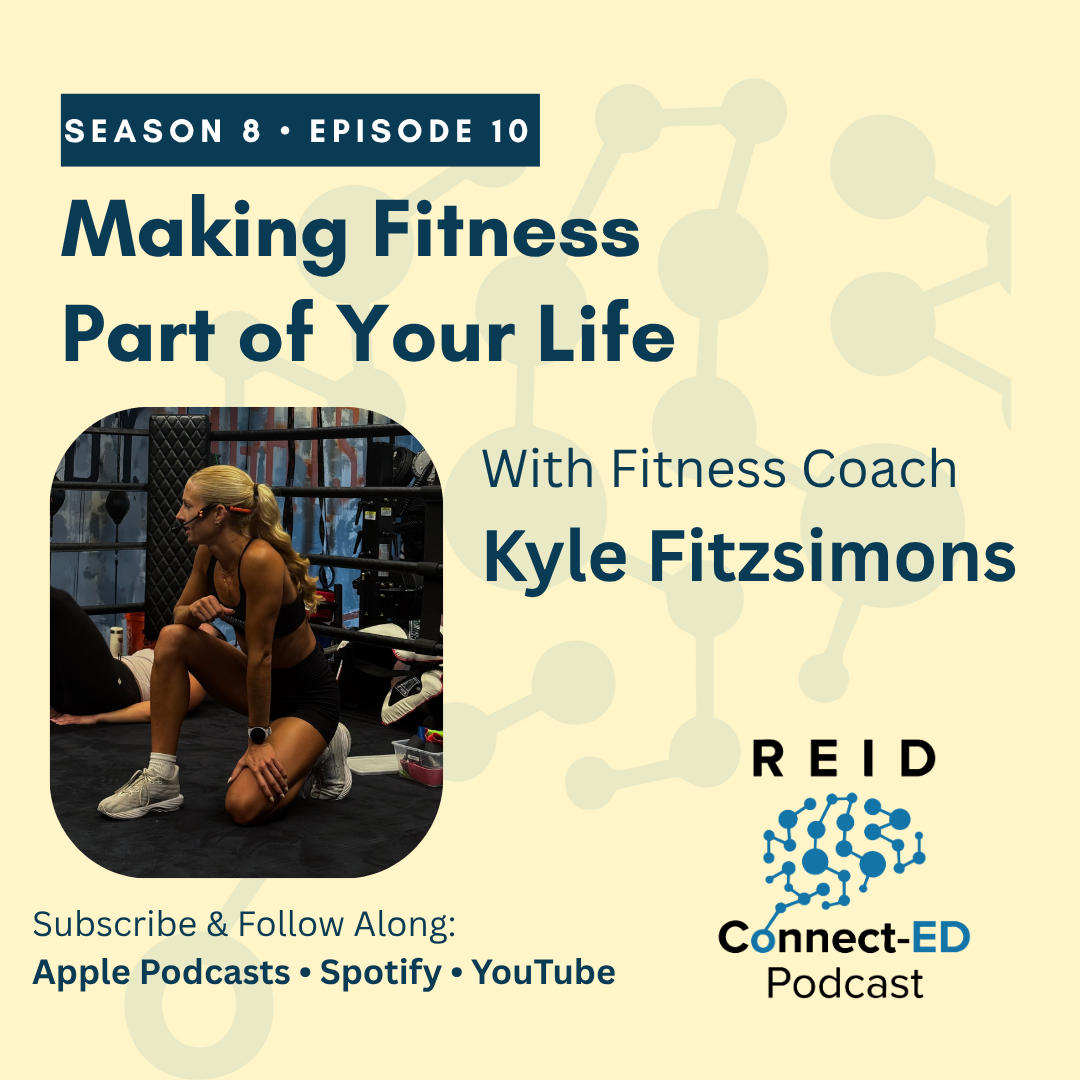
Listen Now!
-
https://www.lifetime.life/locations/ma/prudential-center.html
Kyle Fitzsimons is a Client Relations Manager in Pharmaceutical Marketing, as well as a part-time fitness and running coach. Having grown up playing sports, Kyle discovered running in middle school and joined her school’s track team. What started as a love of movement quickly became a meaningful outlet—one she has continued to turn to throughout every stage of her life.
Today, Kyle teaches group fitness classes at EverybodyFights and Life Time where she leads class formats across strength, running, and boxing. Beyond her classes, she privately coaches athletes training for half marathons, marathons, and HYROX competitions. She also coordinates and hosts fitness events designed to build an empowering, educational, and fun community around movement, including running workshops, outdoor community workouts, and run clubs throughout the city.
Kyle has completed 4 marathons, achieving Boston Marathon qualifying times in 2 of them. Her next major fitness goals are to compete at HYROX Boston and Nashville, run a 200-mile team Ragnar Relay, and eventually complete all 8 Abbott World Marathon Majors.
-
Kyle shares how during high school running became an important routine for her own mental health that has lasted throughout all stages of her life. It is something she can always go to that helps her to clear her mind and decompress from life stressors.
If someone completes their experience on a structured sports team, it can be a difficult transition into figuring out how fitness fits into their life without the structure of a team. Finding a positive fitness community that is positive and supportive and fits one’s individualized needs can be an incredible gift; especially if the person did not even have positive experiences as a competitive athlete on a team.
It can require an openness to finding a fitness community and routine that feels like a good fit and is your ‘happy place’. It can create a ‘3rd space’ where you can see the same people consistently, which is something that is not as common anymore. It creates an environment where you support one another to do hard things. It can also bring together people of similar ages or values or goals that is not based on something like substances i.e., going out to a bar, etc. It can be great for people out of college (or anyone at any age) living in a new city to meet others and bond in a positive way.
Different people can benefit from exercise and/or running for different reasons; for some it clears the mind, for others, it gives them time to think and plan, for others is a way to get out pent up stress.
Not everyone has to do the hardest things in fitness like running a marathon or doing Hyrox. It helps to figure out your own individual short- and long-term goals and finding ways to take one step at a time.
It is important to not get discouraged by comparing yourself to others who are doing more difficult routines and challenges.
Executive function strategies can help you stay on track with your goals and routines and habits. Even putting out your gym clothes, sneakers, water bottle, and bag next to the door can make it easier to take the first step to actually leave home to go workout or exercise.
Breaking down long term goals into smaller steps is essential otherwise you can feel like you are constantly falling short, as its impossible to skip steps to a far reaching outcome.
You may want to blow out stress on a particular day of exercise, but if you aren't mindful you may activate a lot of cortisol and adrenaline and reactively push yourself too hard leading to risk for injury.
Even Kyle expressed having worry about taking on big challenges like running a marathon but she found a way to get support from others to learn about the process, gain training ideas, and feel like she and others are mutually helping each other take on the challenge together.
Kyle mentioned the saying that if you want to go fast then go alone but if you want to go far then do with others.
Being vulnerable is important when you try something new. Others may actually want to offer advice and support. Its easy to fall into avoidance and assumptions that others will judge you but it may not be true at all. Others may be simply focused on achieving their goals and welcome another positive person to be part of the community. It may feel intimidating as if everyone else knows everything and is so much more advanced but everyone has to start somewhere, and everyone still has more to learn.
Being aware of your own thinking is essential to understand your performance. How you think on a conscious and sub conscious level can easily influence how you feel and your performance. Journaling, talking, and reflecting can help to identify patterns of your mind and body to find an optimal zone of functioning and performance.
Expectations that everything should be a certain way or be perfect can quickly lead to disappointment and dissatisfaction. It is important to expect bumps in the road. Some days will feel great, others will feel okay, and some days will be a struggle. But that is normal and it's important to rely on others and vice versa, which is the gift of a positive fitness community.
Sometimes you have to do something new to recognize and appreciate the benefits. Just thinking, “Yeah thats probably good for me,” may not allow you to truly internalize the benefits until you actually take the steps to doing the new activity, such as a new exercise routine, skill, or activity. The motivation to make it a habit may come after feeling the benefits.
It’s easy to get caught up in social comparison, especially with the ubiquity of social media; however, you can choose your own adventure and journey in fitness without feeling the pressure to be like others. That can take figuring out with support from others to see what you want your journey to look like.
When you first start learning a new technique or skill or exercise, you may have a lot of cognitive overload meaning there is a lot of conscious thought that is required to do it correctly and with precision. It may feel a bit exhausting; however, over time, there will be less conscious thought required and it can feel more fluid.
Watching videos of yourself perform an exercise correctly (with the help of a trainer for instance) can help you visualize the correct form before practicing it yourself again.
Kyle shares how running is not actually an individual sport. She’s met some of her closest friends through her running community.
Some athletes in high school and college do not even have positive sport experiences on teams and with coaches and so re-claiming your fitness goals, experiences, and community can be so empowering and uplifting.
-
Alexis Reid 00:09
Welcome back to the last episode of season eight of the Reid Connect-ED Podcast, co-hosted by myself, educational therapist Alexis Reid, and my brother, licensed psychologist Dr. Gerald Reid.
Gerald Reid 00:22
Our theme today is about integrating fitness into your adult life. We have the perfect person to help us explore this topic, Kyle Fitzsimons, an incredible athlete and trainer deeply embedded in the Boston fitness scene. For a very long time, my own adult life was consumed by academic and professional training. It was a long process that lasted into my 30s, and once it was over, I started my private practice. I began teaching part time. I was no longer a student and an intern or a postdoc. I finally had the availability and eagerness to find that third space in Boston, where I could be healthy and also embrace community in a consistent way. Long story short, the pandemic shortly thereafter happened, and so this pursuit was postponed for another several years, until I heard about the opening of the Lifetime Gym in Boston near my office, and everything changed. I became fully immersed in fitness in a robust way. My goals were to be healthy, feel strong without risk for injury, and really just embrace community. After some learning curves and growing pains and some encouragement, I am the healthiest and strongest I've ever been, and I really understand my body more than ever with the help of incredible trainers like Chloe Hart and class instructors like our guest Kyle today, as well as Olivia E and Ella B. They're just wonderful human beings and just incredible instructors. I surprise myself by finding a love for running, which I never would have guessed I would enjoy ever. I get to share the experience with my sister going to the gym, and also one of my oldest friends who works nearby. It's just such a joy to be in a community with them as well, and everybody at the gym who really just makes this community such a positive environment. Truly, investing in being part of this fitness and gym community has energized my life holistically in just so many ways. There are so many different ways to integrate fitness into your life, and by no means is there a one-size-fits-all approach, as we all have different contexts, all different circumstances, all different preferences. However, the science is clear, the experience is clear. Being physically fit, and even more, embracing a fitness community that feels right to you, can have so many positive impacts on your life in such a holistic way-mentally, physically, socially, emotionally, and so on. So let's introduce our incredible guest for today, Kyle Fitzsimons, to talk about her fitness journey, both as someone who is highly engaged in fitness herself and also as an instructor and coach supporting others in their own fitness journey.
Alexis Reid 02:53
Kyle Fitzsimons is a client relations manager in pharmaceutical marketing, as well as a part-time fitness and running coach, having grown up playing sports, Kyle discovered running in middle school and joined her school's track team. What started as a love of movement quickly became a meaningful outlet, one that she's continued to turn throughout every stage of her life. Today, Kyle teaches group fitness classes at Everybody Fights in Lifetime, where she leads different classes across formats, from strength, running, and boxing. Beyond her classes, she privately coaches athletes, training for half marathons, marathons, and high rocks competitions. So impressive! She also coordinates and hosts fitness events designed to build an empowering, educational, and fun community around movement, including running workshops, outdoor community workouts, and run clubs throughout the city. Kyle has completed four marathons, achieving Boston Marathon qualifying times in two of them. Her next major fitness goals are to compete at High Rocks Boston in Nashville, run a 200-mile Team Ragnar Relay, and eventually complete all eight Abbott World Marathon majors. Wow, those are some incredible goals! Thank you for joining us today, Kyle. Thank
Kyle Fitzsimons 04:09
you so much for having me. I'm so excited.
Gerald Reid 04:10
This is great. I just want to start by saying everybody at Lifetime that I've mentioned. Oh, we're gonna have Kyle on the podcast, and they all know you, and they look up to you, and they're like, "I'm like, what do you think I should ask her? And one of them, Olivia, goes, just ask her how. It's a question I'm trying
Kyle Fitzsimons 04:30
to figure out myself too.
Gerald Reid 04:31
So we're gonna get there, but before we do, I just want to you know get to learn about your story and your journey with fitness. It's such a big part of your life, and it's such a positive part of your life. So, where did it all begin? You know, how did you know? What's the origins of you being so involved in fitness?
Kyle Fitzsimons 04:47
I played sports like most kids did growing up, and I found running as an off-season sport. It wasn't supposed to be my main event, but then throughout high school, is it slowly became my focus. In terms of high school sports, there was also a couple rough patches for me in high school growing up, just with my family, and so I really found running as my outlet, the most impactful emotional, mental outlet that I had, no matter what. And I still hold this, you know, thought process today. I could always lace on my sneakers and go out for a run, and it's just it puts my mind at ease. So I've always really grasped onto it and used it throughout all my life, kind of as like my biggest mental superpower. And it's really really cool because now I get to show people how to do it themselves, coach them through it, and help people with their own fitness goals.
Gerald Reid 05:39
I love that. We just did an episode about music therapy, and one of the themes was music's always there for you. You know, you have a special song that really brings comfort or inspiration or whatever it brings, and it's always there at all different points of your life. It seems like fitness has been like that. Yeah,
Kyle Fitzsimons 05:55
yeah, running definitely has.
Gerald Reid 05:56
Yeah, it's always there. Awesome, cool. So, so first of all, so you, what kind of sports were you involved in? Was it always running?
Kyle Fitzsimons 06:04
No, I did swimming and field hockey, a little bit of soccer. Yeah. So I was doing those sports, and then I just thought, okay, I'll join the track team because it's in the winter, and I'll just do that. And I loved it. I also did high jump, so that was kind of my specialty event in high school. Me and my best friend from high school, we did these high jump camps, you know, growing up, and in the summers, and we loved it. So it was something that we then did, and it became kind of my focus in the running portion with it as well, the track portion of it. So those are the sports that I did, and then eventually it was high jump and running were my two main focuses. The end of high literally
Alexis Reid 06:38
turned into a superhero. It wasn't just a superpower. He put on a cape and went high and went for it. That's awesome. Yeah,
Gerald Reid 06:46
your grandma seems like a bit of a superhero too. She is. Is she a bit of an inspiration? She is
Kyle Fitzsimons 06:51
the light of my life. She is 91 years young. Wow.
Kyle Fitzsimons 06:55
And she's like the typical matriarch. Like our whole family just centers around her. And so she actually ran her first marathon 50 years ago.
Alexis Reid 07:04
No way! Yes, wow. So this is
Kyle Fitzsimons 07:06
before women were really running marathons, and she had had five of her six kids, and she ran this marathon. And it's crazy to think how the times have changed because she ran that marathon in Keds. What? I don't even know if Keds are still around anymore. Oh my gosh,
Alexis Reid 07:23
I'm not sure if they're
Kyle Fitzsimons 07:24
maybe they're a brand. I'm not sure, but back then it was the Keds that were just flat with no souls.
Alexis Reid 07:29
Yeah,
Kyle Fitzsimons 07:30
and it's so funny how much technology and information has changed over the years, and like the fact that she ran this marathon in Keds and did the entire 26 miles, and all of her kids were watching and spectating. And then she ran on. She went on to run another one after she had her final child. And she's just she's a superwoman.
Alexis Reid 07:51
That's amazing. I was just envisioning our grandmother because she used to wear the keds all the time, and she didn't run. But I'm pretty sure she probably clocked a marathon every day and just like moving around doing. She did every day. I mean, it's the
Kyle Fitzsimons 08:02
only sneakers that woman really wore 50 years ago. I mean, I'm pretty
Alexis Reid 08:07
sure they're coming back. Yeah, if they are, they probably are. Yeah, it's like the old
Gerald Reid 08:11
basketball players.
Alexis Reid 08:12
Hopefully, not for running though. Yeah, or maybe with running with more technology. Yeah, you know, a little more of a
Kyle Fitzsimons 08:18
sole to the shoe. Yeah, yeah, for sure.
Gerald Reid 08:19
It's like the Chuck Taylor All Stars that they used to wear for basketball. It's like, how do you play basketball? Goes back and back, amazing. So, so running was a big part of your life. It was very therapeutic for you as well. What was the transition between being involved in sports in a structured way? You know, through high school, maybe college, and and then just keeping it part of your life later on afterwards, after you didn't have that structure, where you had to kind of make it yourself, because I think that's a big transition. You know, working with athletes too. You know, once they're done with sports, it's almost like there's like a blank canvas. It's like, what do I do now? What do I do? Nobody's telling me to run anymore. Can someone just tell me to do something? Yeah. But they also don't. You know, like that. There's kind of a love hate with it when you you know put so much energy into being an athlete, but there's a lot of freedom. But with freedom, it could take a lot to figure out how to navigate that. So what was your your journey like that?
Kyle Fitzsimons 09:10
For me, running was not a want but a need. It again, it's been my my biggest form of therapy is just being able to run. Yeah, it eases my mind. It's like that tool for me. So for me, it's something that I needed to do. And the more, depending on the different phases of my life, things that are going on in my own personal life, I'm running more or less. But it's always that tool that I know I can come back to. But interesting about the transition out of high school and college because I don't think it's talked about enough. No, I mean when I left high school and college sports, it was something that no one really talked about. You know, you were told, "Okay, welcome to the real world. It's gonna suck, but they don't really tell you how to make that transition happen because you're with a group of people that are your own age. You're in a highly saturated environment with people. Your own age, the same ideals. You go to a college where people do a lot of the same things. Then you might go to a city where there's not that many people your age, or a company where you're the youngest by 510, years, and then suddenly that peer network is not there, and that community is not there. So it's really hard to make that transition. But anyone that I know, I have a lot of younger cousins. I tell them this: when you leave college, you know, try to go somewhere where you know you can find a community, a city where you know some people, even just one friend, to help you make that transition possible. And for me, finding a fitness community was so important in that journey and in that transition.
Alexis Reid 10:40
I always say that that's the most important thing to hold on to is this this some sense some form of community and networking because you think about all the different transitions in life and you're right nobody really educates you to be ready to even go into college yeah if you're not on a formal team sometimes it's difficult to find your people and when I work with young adults and college age students. I'm always saying, you know, can you find a club, a group, even an intramural club that you can play sports in some way? A run club, I think, is a really great way just to come together and just have people that you can share in community. That's not related to substances. It's it's really based on how do you take care of ourselves. How do we come together and motivate each other? Yeah, it's such a beautiful thing. And then the transition out of college, Jerry. You and I talk about this all the time from a sports psychology perspective. These athletes-they've been athletes their whole life. That becomes a part of your identity. And then, how do you make that transition? I wonder if you have any advice that you give to even the athletes you work with, or folks in your classes, about how to help them tune in to what actually helps them instead of just gravitating towards what's available. Because I think there's probably even more of a nuanced approach to determining, like, what is your next step.
Kyle Fitzsimons 11:55
Yeah, if you're not sure. Yeah, I think you have to try to find what your happy place is, and when you think of happy place, people are thinking, you know, the beach is my happy place. But what are the activities that really make you fulfilled? And it might be a pottery class, it might be knitting, it might be, and then for some people, it might be fitness. Maybe it's not that at all. And whatever those kind of activities are, find the people that you can see yourself doing them with, or find a group that does them, and any kind of community that you can make, whether it's even just one other person, is really helpful in making any transition out of college into figuring out what's next and finding people to support you along the way.
Gerald Reid 12:36
Something that's special about fitness, I think, too, is that you know, as a therapist, you always want to meet people where they're at and find what works, as we're saying for someone. And I feel like fitness does. It could be intimidating for people because it's like fitness must mean this one thing. Even if you're like you're an athlete, like you may even have bad experiences as an athlete on certain teams, right? But like to know that in the fitness world, there's so many options, or there could be, I think, is a really hopeful message for people that you know there are different ways to get your needs met and different levels of it, right? Like not everybody has to do high rocks, right? Right. Yeah. But there's different ways, and I think it requires a lot of.
Alexis Reid 13:17
Thank goodness, not everybody has to do high rocks. Yeah, really. Or do it too with the buddy. You can partner now, right? I
Gerald Reid 13:24
think Michael at the Lifetime's like, this time I'm going to do it with a partner. With somebody, yeah, yeah. But you know, I think it takes some vulnerability and openness, which I think when you're going through high school and college, there's so much structure. Sometimes you're always kind of just told what to do that you have to really open your mind to possibilities and be vulnerable to say, "Well, maybe I can try this or try that, or what are the options? and go look for it. There's a lot of different ways to to do this.
Kyle Fitzsimons 13:49
Yeah, yeah, and it it doesn't have to be this crazy goal. It could be just, I want to go to the gym four times a week for the next three months. Yeah, you know, and that's that's a huge goal in itself, and to push yourself to do it, and make sure you're doing it, and finding a gym or a community of people that help motivate you and hold you accountable to doing it is also really helpful.
Alexis Reid 14:10
Can I just give you credit, Jerry? Because Mom and I, our whole lives have been like, "Oh, come to these classes with us, and you're like, "No, no, no, I don't know, I can't do that. And then all of a sudden,
Kyle Fitzsimons 14:19
the tables have turned. The tables
Alexis Reid 14:20
have turned, right? He and his buddy, who he's known since kindergarten, they go to the gym together, and they'll go to classes. And you know, Jerry's like, "Oh, come try this yoga class or come try this bar class. I'm like, "You're doing what? I'm like, "I've been trying. He's like, "It's really hard. I don't know how you've been doing this all these years. Yeah. So it's impressive. So I'm I'm stating that because I think there's also a little bit of a misconception around like more structured classes that might be offered at a gym that they're mostly for like females who you know come together and do you know the group fitness from the '80s you know you have those like you know quintessential '80s videos for working out Jane Fonda
Gerald Reid 14:58
yeah with Jane Fonda and.
Alexis Reid 15:00
Stuff, but you might think that that's it. But I think it's a really good opportunity to explore like different muscle groups that maybe you didn't know you had, and you know to be able to build in stretches where you might not gravitate towards doing that. It's a good opportunity to kind of mix things up. Yeah. So just to kind of you know give a little bit of a nod to you, Jerry and Jonathan, and also to think about the classes that you teach because your class is intense. I know there's more to what you do than just the GTX class, but yeah, can you just describe like the different levels of people who might join a class that you
Kyle Fitzsimons 15:33
teach? It's it it truly ranges. Yeah, I'd say the youngest. We do live in a city, you know, where people are usually out of college, adults that are living in the city taking these classes. But I'd say the youngest types of people in my class are sometimes parents will bring their high school kids, and then all the way up to there's a woman that comes to my class and she's 71, I think. Wow! And so there's a huge range, and you've got to be able to know that you're teaching to a range of people, a range of ages, a range of of abilities, but it's it's cool because there's different ways that you can bring up and down different movements to make a class something that everybody can do.
Alexis Reid 16:11
Yeah,
Kyle Fitzsimons 16:11
you know, we're not saying everyone you have to lift like your max weight. You know, max out the reps, max out the weights, and there's ways to like structure it so that anyone and everyone can do
Alexis Reid 16:23
it. Yeah, I right around the same time we joined the gym, and just to be clear, you don't need to join like a very fancy gym to be able to be exposed to some of these classes. You can join your local Y, especially during the summertime in the cities. There's lots of free classes that are outdoor classes, outdoor classes, so many things all around. So my my endorsement is to try something that maybe you've been intimidated to try if you're feeling comfortable and ready. But I I share this story because right before we joined the gym this past fall, it was like I was kind of just working out at home. It was like post COVID. I didn't really like get into these big groups anymore, and I was teaching a workshop to teachers, and I was making the comparison of like you know a student who might be a little bit nervous entering a new classroom or you know going to a class that maybe they hadn't had success in before. And I was describing like my experience entering the gym for the first time since like pre-COVID, which was like four or five years, right? Yeah. And I'm like, you know, I walked in and it was a beautiful space. There was people all around. Everybody seemed nice. I said, but I was intimidated. Yeah, I'm like, I knew how to use a lot of the machines. I had still been working out, but there's still like this, like stigma. I think around being a part of a gym where you know you might expect everybody to be, you know, in look a certain way, or wearing a certain outfit, or know everything to what they're doing. What advice would you give to somebody who's like just getting into fitness again at whatever stage of their life they might be in?
Kyle Fitzsimons 17:53
I think there's a couple different things you can do. One of them is to take classes because, especially if you're just getting into it and you don't know what you're doing. You'll pick up a lot of things during classes that then you can take into an open gym setting.
Alexis Reid 18:06
Great advice.
Kyle Fitzsimons 18:07
Obviously, working with a coach if you want to get a personal training coach. I know that you know requires additional expenses, but whether it's the the classes or the coaches, like they're the ones that can teach you. But also go with a buddy. Yeah. You know anyone that you know that has been to a gym before that might know something that you don't know that you feel comfortable with, because that's how I've really learned how to use the gym. Because baseline, I started as a runner, so baseline I was never that gym rat that was there figuring out every single machine. So when I was right out of college, I went with one of my cousins, and I said to her, like, I don't know what that is. Can you show me how to use that? And just going with a friend or a buddy that can teach you the ropes a little bit, so you get more confident little by little, and then finding the things that work for you. So knowing, okay, this space intimidates me, and over here, all the gym bros are like maxing out on their crazy weights, and I'm maybe a little scared, so I'm gonna go over here where there's a lot of yoga mats, and I can do the things that I know that I've learned in classes or that a friend has taught me, and it might feel like a little more of a comfortable space. I think in the big gym spaces, there's different pockets, so finding the ones that you feel the most comfortable in, and then scope out the scene, go with a buddy, go with a friend, and then ease your way into the things that maybe challenge you a little bit more.
Gerald Reid 19:25
I think that's such great advice. Like when I first started going, I think there's an evolution, as you're saying. You have to be vulnerable and say, "I'm going to start here, and be like, "Oh, maybe after that, I'll I'll expand and try something different. Yeah. But I definitely need to be nudged by you, you know, like try the trainer, get some new ideas. Because I thought I'm like I'm fine. I'm just doing what I'm doing. I'm using the machines, and I was told like you don't need to use machines. Like there's other things you can do. Yeah, I think as you're saying, like you just take it one step at a time. I think people get so anxious when they maybe think too far ahead and they don't just take one step at a time, or they think they. To have everything figured out all at once, but it seems like even for you, you know, people look up to you as like an amazing athlete. But even you had to like kind of figure out what that next step was and be vulnerable. I think you really had to learn how to be vulnerable in the gym. Yeah, and it's not being vulnerable to be like, oh, like you're you're making yourself at risk of being judged. It's like being vulnerable allows you to grow. It's like the only thing that allows you to grow. Actually, it is.
Kyle Fitzsimons 20:23
I work with this great brand called LSKD, and they're an Australian brand making a big presence and splash in the U.S. And their motto is 1% better every day. And it's such a good motto that I really try to live by too. You're not trying to go from point A to Point Z tomorrow. That goal is overwhelming, and honestly, it's not possible. Right, most of the time, you really have to just do 1% better every day. Because if you can do 1% of something more that pushes yourself outside of your comfort zone, or do something that really pushes you to do you know better yourself, you're going to little by little accumulate to those bigger goals and be able to eventually accomplish them.
Gerald Reid 21:06
And once you do something, you realize the benefits of it. We think about that in in like therapy. If someone's like avoiding something or kind of in like a depressed mood, they don't they don't kind of take action to do something to feel better. One of the messages is like sometimes you just have to kind of do something, and the more you do it, you you realize the benefits. But you really have to experience it to understand the benefits, right? You can think about and say, "Oh, it's probably good for me. Right, that might work. But like to actually experience it, by the way, especially with people like yourself who encourage and are positive and can help you to do that in a with a positive mindset, it's one of the most fulfilling things you can do in your life. Then you can really reflect on it, be like, "Oh, here's all the reasons why I feel so much better now because I did it.
Alexis Reid 21:47
Right. Speaking of being vulnerable, I think in my own head, sometimes I'll watch like social media reels of like fitness trainers, and I'm like, "That's the move I should be doing. Yeah. And sometimes in my head, I'm like, "Oh, because I watched it. It's like I'm doing it, but you don't really do it. Yeah. So you can get motivation anywhere. Anywhere.
Kyle Fitzsimons 22:03
I mean,
Alexis Reid 22:04
I try to bring it into what I do, but you know, I think you know any step is a good first step, like you're saying, Jerry. And I think it's what you said was so valuable, and I just want to highlight it that you said you know you were with your cousin and you had somebody to ask a question to. Yeah, I think a lot of times we make assumptions that again, like you said, Jerry, like you, you think you need to know everything. You know how to do everything perfectly well, and that's never really the case. You assume
Gerald Reid 22:27
people won't help you,
Alexis Reid 22:29
right? People actually might want to help you. Yeah, and I think that's probably one of the most important things, especially to protect your body and not get injured, is to ask questions or you know watch a tutorial.
Kyle Fitzsimons 22:39
Yeah,
Alexis Reid 22:39
thinking from a learning perspective, you know, you go to the gym and you might forget how much like everything else applies in this context. Where to be able to learn something new, you need to start small. You need to build up those baby steps or 1% more each time and break it down. I'm thinking from an executive function perspective, where learning anything, you need to break it down to the first step, and sometimes just like putting on sneakers just to break it down a little bit. What I tell the people I work with, and like you know, pick out your outfit, fill up a water bottle, and put your sneakers by the door before you go to bed. Yeah, you know, if you really want to make it a goal to like take care of your body, even in the slightest way, just to show up is what helps to build that motivation because I don't know about you. Sometimes I wake up and I'm not motivated to get up and go to the gym because it's
Kyle Fitzsimons 23:28
dark and it's cold in Boston. Oh my gosh! And you want to get up in bed? Yeah. Anybody who
Alexis Reid 23:32
knows me knows sleep is like my arch nemesis that I'm constantly trying to improve all the time. But it's difficult when you're tired to still show up. But I did it this morning. You know, I I was running a little bit late, and I'm like, oh, I committed to this class. I need to go, and I walked in three minutes late, and I felt so bad that I was interrupting folks, and I still showed up, and I made it through, and I felt so much better. And you
Gerald Reid 23:53
have to trust that you're going to feel better after that. That's right. Well, that's the key. Yeah, that's why I'm sharing this
Alexis Reid 23:58
incredibly vulnerable moment on my own. Yeah, yeah, yeah, for sure.
Kyle Fitzsimons 24:02
No, that little tiny, you know, doing the the night before putting out your clothes-that's something that helped me tremendously because at the beginning of COVID, motivation was low. I did not want to do anything. So many for for most people, and so I eventually signed up for a half marathon once races were starting again, and the only way that I would get out of bed and actually do the workout is if I planned my outfit the night before. Because if I wake up and the outfit's there and I didn't put it on and I didn't do it, then it's just staring at me. Yeah. So you know, putting the outfit out the night before to say, okay, I'm gonna wake up. I'm gonna run. It's there. I'm just gonna get up and go. It's the small, little, tiny things you can do to help your habits of getting to you know doing the goal and completing it. Yeah, I
Alexis Reid 24:53
think it's always important to like assess like what is the barrier that's getting in the way. Yeah, is it something mental, right? Like I, I don't. Think I can do it, and if that's the case, what's going to help you to feel more prepared? I always say we can't predict everything, even though our brains want to predict everything, but we can prepare. Yeah. So even the smallest preparation, I think, can make a big difference. Yeah, absolutely, it's true.
Gerald Reid 25:14
Okay, so let's talk about just getting used to making changes and and and and kind of taking the next step and growing and getting stronger or making progress. You guys are kind of talking about like reducing cognitive load. I feel like when you're starting something new, you have to think so much about it. Like when Chloe's training me, she's like, "It's hard because you're thinking so much about what you're supposed to do. Yeah, and eventually you're not gonna have to think so much. Yeah. Do you also
Alexis Reid 25:41
say because I I find myself saying this every time I'm with Chloe. I'm like, why is this little thing that should be so much easier for me so hard? Yeah. Can you talk about why sometimes like the smallest movements feel so difficult? Feel so
Kyle Fitzsimons 25:54
hard. Yeah. I mean, there's so many different reasons. Yeah. You're tired. You're you know you didn't get enough sleep the night before. Maybe you're not hydrated enough, but there's so many things that will throw you off. So there's so many times that you'll go to the gym or you'll do a run and it doesn't go well, and it's hard to not ruminate on that and turn that into a mental spiral. Yeah, because it's like, oh my gosh, why was this so hard and so challenging? It shouldn't have been. I've done this before. I know what I'm doing. Why couldn't I just do it? And there's so many factors as to why things will hinder your training, and you have to keep that in mind because every day and every workout, every run is not going to be the same, and you're going to have those hurdles in the way. But sometimes you just got to get through the hard workout and say, okay, I know that was hard and it shouldn't have been, but I'm going to come back tomorrow and I'm going to try it again. And you're just getting 1% better. You're building on that strength little by little. And in three weeks' time, in three months' time, the things that you thought were so hard are really, you know, kind of like muscle memory at this point. Yeah,
Gerald Reid 26:58
yeah, and you know, and and you can learn from it sometimes too. I feel like so you could probably speak to this when you're running. Like it seems like being present is so important, and like it could be simply your mind wasn't present while you were running, and that could have kind of messed you up.
Kyle Fitzsimons 27:11
Yeah,
Gerald Reid 27:11
can maybe thinking ahead or like thinking about the outcome or like thinking about the past. Or can you speak to that a little bit?
Kyle Fitzsimons 27:17
Yeah, I'd say so. I have a lot of friends, and a couple of them, I'd say all of my friends that are big runners have different ways of thinking about running. So for me personally, it's where I go to just wash out the noise of everything that's going on in my day to day life. I have another really good friend who uses running as her place to think through the things that she needs to think through, and her priority, her priorities, her work, what she's got to do. She'll then open up her phone and start writing out notes while she's running the 15 mile run. Wow! Say okay, I've got to do this tomorrow and that the next day. And for me, I let my mind just spiral into whatever and kind of decompress. So people find running, you know, or any kind of athletics, do different things for their mind. It helps to clear your mind in general, but it's a it's a good tool to use and to see kind of like where your mind kind of goes and whether it's to help to narrow down your thinking of the things that were on your mind or to clear your mind. No, both are beneficial.
Gerald Reid 28:20
Yeah, that's that's. I think that's such a good point. People have different experiences with what works for them. Yeah, doesn't mean one's better than the other.
Kyle Fitzsimons 28:27
Yeah,
Alexis Reid 28:28
there's a lot of discussion and conversation about meditation in a similar way that you can't go into it with an expectation that it's going to do something for you, right? It's almost like when you approach something you know is helpful for you to kind of just see what comes up in that moment, not to try to like curve it or change it in some way. Maybe it's a little different with running than meditation, but I feel like in meditation, if you go in, you're like, oh, I need to feel calm, so I'm going to sit and meditate. Like that's when your your head's and your brain's going to get noisier than ever. You're trying too hard, right? You're trying too hard, and you're overthinking what your expectation is. It goes back to this idea we talk a lot about around expectation. If you expect something to happen, sometimes there's going to be barriers that pop up that you might not have anticipated, and then that experience that's supposed to be pleasurable and joyful and calming sometimes isn't. So I think you know. I want to build on this a little bit more too. That you know, those small movements that sometimes are difficult could be because you haven't rested, you're not hydrated, maybe you haven't done it before. But I think there's, for me at least, and and I imagine a lot of other runners. Um, I can't call myself a runner anymore. I've had too many injuries that I avoid it, yeah. And I'm working back towards even like a little bit, but I find that when I pay too much attention to all of the different mechanics, when I'm trying to put those mechanics together in some kind of exercise, that I lose myself in that over focus instead of just being. Present in the movement, yeah, and I imagine the way you're describing your runs versus your friends' runs is kind of similar, right? When you overthink what you think you need to do or what you have to do, once you've been practiced enough to be in the flow, sometimes that can be the barrier in and of itself.
Kyle Fitzsimons 30:17
Yeah, because if you're too much in your head, then about the mechanics of it about running. Let's say you had a prior injury and you kind of stumbled on the run, and oh my gosh, is my knee going to be okay? Is it okay? No, now it hurts. Now I feel a little bit something, and it just you know kind of spins you out of control sometimes. You know, in terms of being present and trying to like move away from that negative narrative, and not negative narrative all the time. Sometimes it could be just, oh, I'm too much in my head about how I should be doing this squat and how I should be, how my knees should be and where my body should be. And sometimes you have to just feel present in the moment, not worry too much about the breaking down of the movements, because then also that doesn't help you, you know, be present and just go forward into it. Yeah, just focus
Gerald Reid 31:04
on maybe just one thing and keep that one thing at a time. Yeah, yeah. I was talking to an athlete the other day, and it was like he's has this kind of fear of falling or getting injured, and we were talking about how like you being anxious about it is actually making you more at risk of actually getting injured. It happening, right? Yeah. So he's learning to like you know shift that energy to feel like, and also it's just more enjoyable when you're not just constantly worried. So we're kind of talking about if you're going to do this, you might as well not be you know so worried about it because you're not even enjoying this whole journey of your athlete, you know, athletic career. So yeah, it's important to realize that your mind could affect your body.
Kyle Fitzsimons 31:40
Yeah, your metacognition is so important, especially when you're doing longer trainings, training blocks. You know the way that you think about your performance and the awareness of how you're thinking about your performance is really impacts how you then perform. If that makes sense, oh, 100% You know, yeah, and the way that you think about the things that you're doing, your own performance, and then how you're thinking about what you have to do, all the things on your plate, all the runs, all the workouts affects then what you actually then produce.
Gerald Reid 32:12
Let's put that into perspective because you just said a lot of things could affect what you're thinking.
Kyle Fitzsimons 32:16
Yeah,
Gerald Reid 32:17
as as a psychologist, I'm always thinking like there are so many things, but a lot of people are not even conscious about what these things are. Yeah. So in my mind, I'm thinking like even reflecting, journaling, talking, having conversations is really important. You know, what are your goals? What are your short-term goals? What are your long-term long-term goals? What are your worries? What do you you know think other people are thinking? What are your expectations? What are you trying to? What makes you happy, as you said? Like, there's so many aspects that go into fitness and your experience with it. I think if people don't reflect and talk about it or journal or try to understand themselves, like I think unconsciously or subconsciously we kind of act it out without realizing, like, oh wait, why did I do that or how did that happen or like you know? So I think it's valuable to reflect. Yeah,
Kyle Fitzsimons 33:00
without like a clear focus of like how to go forward or what the goals are, it's so important to get yourself out of your own head. You know, whether it's like you said, talking to a friend, talking to somebody who is trying to accomplish the same goals as you, or writing it down, it's so important.
Gerald Reid 33:15
Yeah,
Alexis Reid 33:16
I I want you. I'm going to tap into your your coaching side of things. I know you have multiple roles and you wear a lot of hats. But if you were coaching a runner, as you do, and let's just say you know it's me. I used to run before I ran in high school. I had you know shin splints and a car accident, which left me to like not run anymore. How would you help somebody get started, whether they had run before or not, like what are the steps and phases? So, if you're an audience member out there and maybe you've never run before, or you're thinking of it, I just I love the idea of running, jogging, walking, any level or version of it, because it doesn't require any funding. You can do it anytime and anywhere, right? Regardless of the weather or any equipment, right? I mean, if you have, yeah. Listen, I mean, I love a good rain run. Yeah, it's kind of a nice thing. It washes everything away, as long as you're being careful with sweat or tears or you know, it's true. You can't tell the difference. But I like, I love this idea of like just getting out and moving your body. So if you were to be coaching someone who wanted to get into that, what would be like the first phase that you would start to prepare them, or how would you prepare them?
Kyle Fitzsimons 34:33
I think you start really small. Depends on what the goal is. You know, maybe let's say the goal is I want to run three miles. One of my friends actually just did this, and you
Alexis Reid 34:42
are speaking to me. Actually, yeah, there you go. Yeah,
Kyle Fitzsimons 34:45
and you're going to start so slow. You know, maybe your goal is I'm going to start by running without stopping for eight minutes. Maybe it's even five, and then you walk a little bit, and then you'll run again and walk and run. So kind of oscillating between those. I
Gerald Reid 35:00
don't think people realize that. Yeah, yeah, you think yes. Like in your classes, you're like, okay, now bring it back and then bring it up. Bring it lower, lower intensity, higher intensity.
Kyle Fitzsimons 35:09
Yeah,
Gerald Reid 35:09
it's not really something I thought about until you started to kind of you know instruct us to do that. Yeah, you're
Kyle Fitzsimons 35:14
not going to turn around tomorrow and run those three miles. You know, if you think three miles, maybe that's going to take you 30 minutes. It's 10 minutes a 10 minute mile. So you're not going to do that tomorrow if you haven't run a mile in so long. So you're going to start by, and you're also not going to start by running three miles tomorrow, even at a walk, run, walk, run. You'll start by doing okay five minutes of running. Now walk for five minutes. Five minutes of running, walk for five. Now next week you're going to push it to eight eight minutes of running, and maybe it's only five minutes of walking, eight running, five walking, and little tiny increments will get you to that higher sustained effort. You're building your aerobic base there by doing it that way. I
Alexis Reid 35:53
love that you're like highlighting this because there's so many folks across the lifespan, especially young people though, that kind of fall in this all or nothing mentality. I know if if I can't run three miles, then I'm just not going to do it. Yeah. So I love you emphasizing this this idea. I mean, this is kind of like my mentality. I'm like, I'll do a little bit at a time. Yeah. And let's see a little bit. Even a fast walk or a slow jog is better than none. Yeah. Yeah. So I really appreciate you sharing this because it it can feel defeating and it can feel intimidating, or if you start to compare to other people you see around you, and you're like, oh, well, if they're doing it and I can't, what's wrong with me?
Kyle Fitzsimons 36:29
Right.
Alexis Reid 36:29
So it's like I really appreciate you sharing that. So okay, so what if you are progressively improving your what did you call it your aerobic piece, aerobic pace? Yeah. Then how do you know when you're ready to kind of like go to the next level or amplify your pace a little bit more?
Kyle Fitzsimons 36:47
You'll feel it. So, let's say you've done now, you've hit the goal. You can run three miles without stopping. Once you've done that, now maybe you're going to start going a little bit faster. Like you know, you can run three miles at a 10 minute pace, and you've you've now completed that goal. Maybe the next thing you're going to do is start to go a little bit faster. It just it's that small little build, and then the more that you do it, and the more that you practice it, the more that you're going to continue to build your aerobic base. And what's going to happen is over time, the when the first time that you are going to start this journey, your heart rate is going to be pretty high. You know when you're in those running increments.
Alexis Reid 37:24
Can you talk a little bit about heart rate too? Because I don't think people really understand how that impacts or benefits them to understand it.
Kyle Fitzsimons 37:31
Yeah. So let's say baseline, you're not a runner. You're not you know big into like intense athletics. Your heart rate when you're going to attempt these different things, whether it's a class or even five minute stint of running, even if it's at a 12 minute running pace, is going to be higher. But the more that you practice it, and then the more that you extend the amount of time that you can sustain that pace, the lower your heart rate's going to go. And it's because what's happening is that your heart rate is getting more acclimated to the amount of oxygen that you're putting in your body, and then the rate at which you're running, and that's what we call your aerobic base. So you're building that little by little, and you're going to feel it because then suddenly you started three months ago not being able to run more than eight minutes at one time without stopping, and now you can run for 30. Your heart rate you're going to see is significantly less during that 30 minute stint than even it was probably at that eight minute stint, and it requires less
Alexis Reid 38:29
effort. It requires less effort. Yeah, exactly. Yeah.
Kyle Fitzsimons 38:32
So that's kind of like how that will interact with it. Something too that's really good is is to build your zone two. So you kind of hear like zone two thrown around a little bit.
Alexis Reid 38:43
Can you talk a little bit about that too?
Kyle Fitzsimons 38:45
Yeah. So zone two is kind of like your very steady state, and when you're training within your zone two, there's a lot of value in training in it for time versus miles. So let's say I'm a coach, and I actually do this with one of my not students, with one of my athletes. Yeah, so I do this with one of my athletes. I have her do zone two training blocks. So I say you're going to run for 40 minutes at your zone two. Now, a Garmin watch, a Whoop, any kind of fitness wearable is going to show you what your heart rate ranges are if you do the VO two max testing at lifetime. Same thing, you'll see what your ranges are, so you'll know at baseline right now. My zone two is within 119 to 132, so 119 to 132 beats per minute. I think that's what my range is right now, and you want to stay in that range for 40 minutes, and it's hard because your body wants to go a little bit faster. I was just gonna say, and it is so hard to keep it down low. Yeah, yeah, and you might have to get slower as you go throughout the run. But what that's doing is it's building what we call that aerobic base, and that's your engine, that's your endurance.
Gerald Reid 39:57
Interesting.
Kyle Fitzsimons 39:58
So building that zone two. Builds your long-term endurance, and you'll find it then easier to progress to get to longer distances or faster miles because you've built that that zone two and that base.
Alexis Reid 40:12
I'm going to just say something, and I don't know enough about it, but I'm curious if you have any information about this. At my age, in my 40s, as women, we have a lot of like cortisol, and sometimes it's like adrenaline will fuel me in my workouts to like get to this higher level where I can do hard things. But I've been learning through Chloe and previously Mia, my trainers, that like I actually need to be more in my zone two to build up my endurance and being able to increase and improve my fitness, which is a-it's been like a really difficult like mindset shift for me because I don't think I would call myself like a serious athlete, but you know I've always been pretty fit and have stayed active throughout my life, and now like I'm starting to learn about myself and my body differently at these different phases of life, which I think is really interesting, and understanding like stress sometimes can increase for me my adrenaline, which pushes me to do hard things, but that's not necessarily what I need. Yes, yeah. So it's an interesting adjustment. So just having this is not an endorsement, even though you know Whoop is a Boston-based company, and we, as a family, all have whoops. Yeah. But we, you know, have learned a lot. I've learned a lot through just paying attention to where I am throughout my workouts, whether it's doing a bar class or lifting weights or being on the treadmill or doing something else, because it helps me to better adjust rather than just do, which I think is really important, especially in preventing injuries. Perhaps exactly. No, I'm not a trainer myself, but I'm learning as I get. It's very true. Yeah,
Kyle Fitzsimons 41:50
yeah. I think a lot of times people get that boost where they're like, "I'm so stressed out, I need to go work out. So they go and they push themselves to the max. Yeah, and that's when you get injured, you know, because and it goes with anything, whether it's lifting a weight, going for a run, when you're stressed out, you just need to like go out and do something. That cortisol is spiked. You feel like you know the adrenaline is pumping, and you're like, I can lift this 80 pound weight. Let me try it, and then you might get injured. So it is important to like take that into account too as you're training. Yeah, that's
Gerald Reid 42:22
great. I mean, in the sports psychology world, we think of it as the like individual zone of optimal performance, and you want to reflect on when do I perform the best? What was happening? What are the what are the factors that help me to do it? And to your point, I think it's so good to learn about yourself. Like, how do I have the best or a higher likelihood of having a really good training session? And it takes reflection to figure out, you know, what was going into it. And all this learning is so important. I mean, we're not really taught these things. Like in high school, I don't know. I learned how to do a pull-up. Yeah, right. Wait, I don't think they even do that anymore. No, I don't think they. Maybe you have. I think we
Alexis Reid 43:05
just had those metrics, like we had to run a mile, we had to pull up, yeah. But we were never explained, like how to do it well or like why this is important. We just did it. Yeah,
Gerald Reid 43:15
and I mean, some like I don't, and coaches are not really even trained sometimes as to like how to teach proper technique, how to do you know different types of training that's going to help. I mean, sometimes even like even if you think you have like athletic coaches on teams, you may not even be getting all this information to learn about your body. Yeah. So I feel like you know just learning even a little bit has been so. I think it's so empowering. It's like, oh wow! Now I know myself. I feel more in control of my body.
Kyle Fitzsimons 43:44
Yeah.
Gerald Reid 43:44
Like learning how to like you know build my glutes and different parts of my legs, like to protect my knee, and learning form. I even tell Chloe, I'm like, Chloe, could you videotape me doing this so I can like really visualize it and help? Like learning is so, and I had to be vulnerable to do it. Like I was very resistant to doing this stuff, so I'm like, I'm just gonna go and do my normal routine. I think we had bullied
Alexis Reid 44:07
you, bullied you a little bit to start. No,
Gerald Reid 44:09
absolutely. I'm glad you got it,
Alexis Reid 44:11
but like in the best way. Yeah, in the best way. Yeah, I had to
Gerald Reid 44:14
be humble enough to say like I was just like, no, I'm doing my routine. I'm doing weights. I'm doing this. I'm doing that. But it's like no, there's so much more to it that's like beneficial to me, and and now I actually like running. If if I never did on this, I would have been either running and injuring myself, or just not enjoying running the way I do. And I'm I love running. Well, running
Kyle Fitzsimons 44:31
and getting getting injured. Yeah, you know,
Gerald Reid 44:33
yeah, I'm
Alexis Reid 44:34
pretty sure your your class is the one that got him into running, which is really cool. That's really cool. Yeah, yeah, yeah. The GTX. That's a lot of fun.
Gerald Reid 44:40
100% Can I can I
Alexis Reid 44:42
embarrass you for a second? Because for those of you who can't see us or don't know us, Jerry is like very fit, and he always has been even before he started this fitness journey. Like at this stage of his life, and I'm like, I'm working out really hard trying to even like get close to it, and it's hysterical because he and I have. Same trainer, we work out differently, and you know I have been trained by some great people. Give props to my friend who's also a bar teacher here in Boston, Just Diaz, who did a lot of like core training. Like I do a lot of yoga and I do a lot of breath work, so I I focus a lot on my core, but my core doesn't look like my brother's, and I'm like, why is this happening? But it's interesting, and my point is for anybody out there listening that even if you seem like you're in good shape, it doesn't necessarily mean you're building up your body and your muscles in a way that allows for you to do all these athletic things that we're talking about here, or that you teach in your classes, or to just like get outside and Run, core strength is so
Gerald Reid 45:43
important. Yeah, and I was not doing core strength, like building core and understanding how important has been life changing. Yeah,
Kyle Fitzsimons 45:49
it's also hard because it's really tough because a woman can do the same exact workouts that a man does, and then a man's outcome is going to look different. Totally, you know, and it's it has a lot to do with our hormones, metabolisms, and so that's also the really hard part about females doing the same type of athletic events as males and like seeing different results. But it's cool to be able to teach a whole like array of different people and walk them through it, and just know that your outcome might look something different to someone else. But as long as you're still putting in that deposit to yourself-that's really what's most important.
Gerald Reid 46:22
And by the way, Chloe said you have better form than me. So thanks, Jerry.
Alexis Reid 46:26
I've never actually been-I don't think I've ever actually been better at things than my brother. So this is like one thing that I will. I'll take it. I'll take it. Take the win. I'll take the win. I'll take the compliment. Thank you.
Gerald Reid 46:37
Can we talk a little bit about just running a marathon? Because I mean I've I can't even fathom doing it. One of my students did it last in the middle of like a master's program. He's like, I just had an Uber drop me off like you know 15 miles away, and then I just started running. I think that's what
Kyle Fitzsimons 46:55
you do.
Gerald Reid 46:56
Like what is what is that journey like? You know where do you even start with that?
Kyle Fitzsimons 47:03
It's a roller coaster.
Gerald Reid 47:04
It is
Kyle Fitzsimons 47:04
really you have to go in knowing it's going to be a roller coaster, and it starts not for everyone, but sometimes because you've watched another marathon, you've watched a friend do a marathon, or you have a really great cause that sparks this interest in you, and that's the excitement. That's like you're so excited to do it, and then you sign up, and then you're like, "Oh my gosh, I'm so nervous. And then you have to break it down. You you get a coach, you figure out what your training plan is, and then as you go through it, it's it's you're gonna have some hiccups along the way. It's hard to maintain that motivation as you go, but little by little, you're gonna find yourself getting faster or being able to run longer than you ever thought imaginable, and it's it's truly a roller coaster. But it's completely 100 worth it at the other end.
Alexis Reid 47:52
You know, there's the reason I we wanted to have you come on and talk about this for so many reasons, but especially because this idea of like you get to do something that you're doing for yourself that is healthy, that's benefiting you, with a community of other people. Yeah, like there's a really beautiful community that, like, anywhere you go, if there's somebody else that's in the room that has run a marathon, I feel like you can have this like connection with that. You could be like, I feel what you felt. Like, I know what it's like to go through this, it's such a really cool thing. Yeah, that must just it just must feel amazing.
Kyle Fitzsimons 48:26
It does well
Gerald Reid 48:26
for the listener. I mean, Kyle has done marathons, and she can you just clarify this? Did you feel like you couldn't do it at first? Was there was there part of you? Yeah, yeah. I think it's important for people to hear that the
Kyle Fitzsimons 48:38
most I I had done half marathons before, which is 13 miles. I was so nervous. I was so nervous. I so I found out that I was able to get a bib for the New York City Marathon, and that was my first one. And I'm from New York, and it was going to be so special. So I'd done the 13 miles, but just the thought of doing 26 whole miles was just you know that feeling of like your heart drops to your toes, and you're so nervous, and it really is the sense that you're not trying to do this goal tomorrow, and it had it had to be so slow. So the first long run that was after 13 miles, I remember ending that run. It was for a 14 mile run, and it was the longest I've ever run in my life. And I just started crying because I was like, you know what, I can do
Alexis Reid 49:28
it. Yeah, I
Kyle Fitzsimons 49:29
never thought I could do anything over 13, and I just did 14 miles. I think I can do this. That's awesome. And so it's it's that little by little effort, and it was so nerve wracking though. And any big goal that you have for yourself, whether it's fitness or work, whatever, is going to be nervous and nerve-wracking. But it was it was really cool to be able to say, okay, little by little, I think I can do this.
Speaker 2 49:52
Wow.
Speaker 3 49:53
Yeah.
Gerald Reid 49:53
What else helped you? Just while you were running, just those days. Like, what what was it that helped you? To number one, get through it, but I don't even want to say get through because I feel like if you're involved in fitness, part of it should be fulfilling and somewhat enjoyable too. Like what what part of it was that for you?
Kyle Fitzsimons 50:12
It's really the community I built around it, and I think this goes for anything that you do. There's the classic saying of if you want to go fast, you go alone, and if you want to go far, you go together. And I really think that pertains to fitness because, and I think what it really translates to is, if you want to go far, you go together. But what it equals is you're not getting burnt out. So you couldn't, you know, go blinders on and do a ton of marathons, you know, right out the gate after college. Say I want to go do this. You know, whatever you have that goal for yourself, and you go alone, and you're just doing it by yourself. It's your own goal, but you're going to get burnt out. But it's when you find a community of runners of friends that turn into people that feel like family that push you and motivate you to do it, and they're the reason that you get out of bed on a Saturday morning because all 20 of you are going to be running 15 miles together, and that's not something that you want to do on a snowy Boston morning when it's 18 degrees. But if you're there with a group of friends and a group of people that have become your fitness community, it pushes you to do it. And it's really the reason that I've maintained and sustained doing all these marathons and have such a drive to continue doing them because I have such a great community of people around me that also loves to do them, and we run together. And you do sometimes you do the the faster, shorter miles on your own, but doing those longer miles that really are so challenging mentally and physically are the ones that I find the most benefit of doing with a community, and that's what has kept me motivated.
Gerald Reid 51:42
That's really important in the sense of like, let me put this in perspective. Alexis and I just went to the Newport Folk Festival. All musicians, musicians could be competitive with each other. This festival, they were hanging out with each other. Yeah, they were performing on stage together. They were laughing together. They were having a great time. I think nowadays that's rare. I think what you're saying is so important: is that you can be in a community where people are not vying for some ego thing. It's like we're here together, supporting each other. Yeah, it's so rare nowadays to have that.
Kyle Fitzsimons 52:17
I know,
Gerald Reid 52:18
it's so special. It really, and it's mutual.
Kyle Fitzsimons 52:21
Yeah,
Gerald Reid 52:21
you know, as much as they're supporting you, you're supporting them. It's a, it's incredible to have that.
Kyle Fitzsimons 52:26
Yeah, and you think of running as an individual sport, but I've found it so far from that. the The most amazing people that I've met, some of my best friends, are the people that I've found in Boston that I run with and have run with for years, and it's a community that has supported me. That you know, I'm going to all these girls' weddings and bachelorette parties, and it really it's fun because it's turned into like this community of people that we all the same goal, right? So we're trying to like push ourselves to do it, and then those people turn into your friends that feel like family, and it's it's a really cool way to meet people and stay motivated, and and hold yourself accountable as well as your friends.
Gerald Reid 53:04
There's another part of this that's really important too. That's beautiful to hear. Is that there's not many spaces where you see the same people over and over. Yeah.
Gerald Reid 53:14
When you get older, I think the hardest part about getting older sometimes I say this to young people when they're going to graduate. They're like, you just don't run into the same people like consistently, and that's challenging for building connections and community and relationships. So to have that, just the context of where you just continuously show up, and and that's got to be motivating for people to continuously show up, and the other people are continuously showing up. You know, it's it's just mutual thing.
Alexis Reid 53:39
In my work, I talk a lot about how we don't really learn things until we go through this like friction point or this challenge. And once you get through the challenge, you get to the other side. That's often where like the greatest learning happens. And I think the same thing happens when you're working on a fitness goal, right? Like when you're doing difficult things together, you form a bond, right? You you're able to establish this connection because you can empathize with each other. You know, not exactly the same feeling as somebody else, but you can share in this experience together. Yeah, which is also, I think, such an amazing thing that doesn't require catastrophe to be able to manifest and to bring together, which is pretty cool.
Kyle Fitzsimons 54:21
It's it's. I think it's one of the best communities I've been a part of is the running community throughout my life. But really, my time in Boston. For example, I you know trained for the Boston Marathon. I had a whole group of friends that were doing it this past winter, and every single time that we went out on the Saturdays in Boston this winter, were 20 degrees and it had snowed a foot the night before. Wow! So the moment of snow, yeah, the moment you step outside, your feet are soaking wet and now freezing, and you're going to be outside running for three hours. But you're doing it with your friends, and it's the only reason you're doing it. You know, is because you have this community people that you all agreed. Okay, we've got to. Do this. We're going to do it together, and so it's a lot of fun. Yeah.
Alexis Reid 55:03
Okay, so let's take it down a step because I know that you do a lot of like community organizing of like different fitness events around the city and in different contexts. So if you're not a marathon runner, what are some other options of things that you've been able to put together for people to, again, come together around fitness and a little bit of a wellness journey.
Kyle Fitzsimons 55:22
Yeah, I've done a couple different like track events. So anyone who like kind of wants to get into running like doesn't really know what's going on on a track. We do like a track event in the summers predominantly, but you know anyone can join. And you know I kind of teach people you know what the different meters are around the track, kind of what it looks like to do a speed workout, kind of a four way into any type of running where you're either going faster or slower. Speed work for half marathons, marathons, whatever your goal might be, and then also a couple different run clubs throughout the city at different points throughout the year, and then also outdoor workouts. So putting together outdoor workouts are fun. Recently, or I'd say in the last year, I have put together just a group of friends and people that I like to collect, kind of that do these Hyrox workouts on Fridays. Can you explain what HyRox is for folks who don't know what the High Rocks? Yeah, so there, it's a fitness competition that started in Europe, came to the U.S. and they have them in a lot of major cities. So it is kind of a running competition. I'd say that's the base. You have to be able to run about five miles, not all at once, but five mile five miles collectively, roughly. And then there's different stations. So there's eight different stations, and they're all kind of strength-ish slash cardio-based events. So you're going to do a row machine, a skier, wall balls where you're squatting down, hitting the med ball to the wall. Then you have lunges, burpees. There's all sorts of things, and then you're running one kilometer between each event. So it's this big kind of competition. You could do it alone. You could do it with a partner. I've always owned it with a partner. It's a lot of fun that way. Nice, and it's it's kind of blown up a little bit. So there was one in Boston last last year, last fall, and then there there's going to be another one this coming fall. So you know, I just kind of anyone that I hear that is doing high rocks or wants to do it, I'm like, come on, we're going to work out all together on Friday, and then Friday afternoons we we get after it and program a workout, and it's a great way to meet people too. If you're not a runner, but you want to do some sort of fitness challenge with a bunch of people that want to try to do it too, and it's kind of an open forum, then you just come on in and builds community that way too.
Alexis Reid 57:38
That's awesome. Yeah,
Gerald Reid 57:38
nice, love it. Hmm, what else can we ask you, Kyle? What else is on your mind that you want to share? Um,
Kyle Fitzsimons 57:49
I've got a good tidbit that for runners specifically that was told to me like years ago, and I've always thought about this, and it really pertains to like whether you're a runner or any kind of fitness journey that you're on, is the rule of thirds, which is a third of your training, whatever it is, is going to be great. You're going to leave feeling fantastic. A third is going to be fine, going to be good, but a third is is going to be bad, and you are going to feel that third. So that third, you have to know going into whatever fitness journey that you're on, that a third of your training, your workouts, your runs are going to really challenge you mentally, physically. They're not going to feel good in the moment. They may not feel good afterwards. But it's also that third that's going to make you so much stronger and make that final goal so much sweeter. So, I think a lot of people go into it thinking, okay, I'm just gonna like do this fitness thing. It'll be fine, no bumps in the road. But those bumps in the road happen, and those challenging workouts happen. But it's part of the journey, and you have to remember the other two thirds are gonna feel pretty good, and whatever your goal is at the end will feel so much sweeter because of that third that was really so challenging. So it's a kind of a motto I have to remind myself of too when I'm doing my own training, but it's good for anyone that's getting into any kind of fitness goal.
Gerald Reid 59:07
I love that Mia Brown, who played at Northeastern Hockey, said the same thing when she came on the rule of thirds. Yeah, and I imagine being part of a positive community is very important to get through that 1/3. That's tough. Yeah, and to be able to rely on other people,
Kyle Fitzsimons 59:22
yeah.
Gerald Reid 59:23
Do you think this is a question for you? How can people be more vulnerable in this space? Because I feel like one of the overarching themes of why people have a hard time with this is vulnerability. So, like, what can you just speak on that as a topic?
Kyle Fitzsimons 59:39
Yeah, you. I'd say, ask questions and also introduce yourself. I think that's maybe the hardest part. Is you know you go to a gym for the first time, you go to any kind of community event for the first time. I mean, I feel this too when I join other run clubs that I don't know anybody. It's so hard when you you know you feel like oh all these people know. Each other, and all these people are friends, or people have their own thing, and they don't want to be bothered. But if you introduce yourself to one person, it kind of breaks down that door, and then it gives you the confidence to say, "Okay, I can talk to this one person. I introduce myself. I'm going to keep that momentum going. And then being vulnerable with the people around you, it kind of helps to like break down that a little bit. And then if you you know don't know what you're doing at the gym or with running, just asking questions, you'll find that people really want to give their advice and give their knowledge to people that ask. And it's funny because, like, I think everyone has this connotation that okay, I'm at the gym or I'm at this event. Like, people don't want to talk to me or they they don't want to have me bother them, but I think people want to be bothered. You know, people want to share their knowledge and they want to meet new people, and so just being open in that way-it's-it's that small little step of one introduction, ask a first question, and take it from there.
Gerald Reid 1:00:56
Cool.
Alexis Reid 1:00:57
That's kind of why we name the podcast in our company that we have private practices in the way we did, but it's all about connection. Connection, right? How do we connect the dots of the things that we need, the things that are important to us, our strengths, our challenges? All of it comes together. Yeah, and I think it comes together in just being open enough to say, "Hey, there's something I want to work on. Can you help me to do that? Yeah, I think I think we all are having societally like a crisis of disconnection as we talk about a lot here on the podcast, and I think fitness is one of the ways in which we can actually come together. And again, you could do it at any stage of your life, at any level, in any way.
Kyle Fitzsimons 1:01:37
Yeah,
Alexis Reid 1:01:38
and there's people all around, no matter where you are, that can join you in some way on that journey.
Kyle Fitzsimons 1:01:45
Yeah,
Gerald Reid 1:01:45
I just feel like it's such a gift, right? I mean, like when you're younger in college, like just to know that this is available and there's ways to do it that can work for you. It's such a gift that I think people can be open to and realize it is a gift. Like, like I said before, I think people can be involved in sports and athletics. It may not like. There's so many people who do not have positive experiences as an athlete, you know. And to know that there's like another level, there's another phase of your life that could be positive and and based on your own needs, you know, it could be individualized to you. It could be, you know, people like yourself who are just you know there to support and be positive. It's it's a really important topic that I think is important for us to be talking about. I just
Alexis Reid 1:02:30
I just want to be clear because we're talking a lot about able-bodied folks who could run, who can walk, and just to be clear that you know even if you have a physical disability, there are different ways to be able to engage in some version of a fitness journey too. Yeah. Again, this comes back to asking questions and understanding what your needs might be and the right people to connect with to be able to help you on your own individual journey. We've talked a lot, kind of in generalities, to try to like reach the broader amount of folks that might be listening, but everybody's journey might look a little bit different. Every body is different, right? And we have different needs at different times. Yeah. So it's it's just important to tune in. You know, Jerry and I do a lot of work with the people we work with every day, and ourselves too, to be able to tune in and figure out, okay, what is my need? What is the essence of who I am, and what do I need at this phase, on this day, in this moment? And I think all the things you've been talking about and you share in the work that you do in the fitness community helps people to tune into that, which is a really beautiful thing.
Kyle Fitzsimons 1:03:36
Yeah, and and like to the point of, you know, when you leave college and high school athletics. It's so hard because you're, you know, you're really drilled in by these coaches for, you know, like you said, so like so many years, and then it's hard to find that motivation. But then you also have a bad experience because you think I don't ever want to do another crazy run again, or I never want to have to go to the weight room and get yelled at again, and so it's hard to come back and find it. But I think there's different ways to reframe it and reshape it, and find it for yourself. But you just got to find like the right community to do
Gerald Reid 1:04:12
it. Totally,
Kyle Fitzsimons 1:04:13
yeah.
Gerald Reid 1:04:13
So I hope there's people out there listening too. Like, if they're you know not only want to be part of the fitness community, but to be contributing to it, you know, like what was your shift between becoming part of the fitness community to wanting to contribute to it the way you do? Because you're helping people, you know, like whatever we're talking about right now doesn't happen without people like you, and there's a lot of people like you, and like I'm so happy that you're here to share your experience, but like, when did that shift happen to like want to contribute?
Kyle Fitzsimons 1:04:44
I during COVID, a friend of mine hosted this workout, and we did it on the local track because gyms were closed, and so two sometimes three times a week we would get up, and there was a whole bunch of us that would just. Go to the track. Sometimes upwards of 30 people, and we would do these workouts. And whenever she was away, I would host the workout. I'd write it up and then do it. And so that was kind of my foreway into it because I loved working out with my friends, but I loved creating these like challenging workouts that me and my friends could do. Because then I also showed myself how far I could push myself because I'm doing the workout with them, as well as push other people and how to motivate people because the onus is on you. It's like, well, you programmed this, and then you got to then also like bring in the motivation of like I did, but I'm right there with you. I can do it with you, and we're gonna do it together. So that was kind of my my four way in into just being in the fitness kind of community, and then I, I joined Everybody Fights in Seaport, and I loved it. I just I fell in love with it, and I do have a background in boxing. I've done boxing for many many years,
Kyle Fitzsimons 1:05:53
and I talked to them, and I said I think I kind of would love to be a coach, and they said we really only have availability for boxing, and I said that's kind of convenient because I have been boxing for many years prior to this, so that was my way into then formally working at a gym, and then it it went from there. And so, like you find the little tidbits. It's funny because had I not done that outdoor workout with a friend, and then when she was away, whatnot, I would then do it for the group that was still showing up. I probably wouldn't have thought about doing it, but I just kind of fell into it. I think there was a part of me that always knew I wanted to work in fitness, but it wasn't until I had the opportunity to in that even small incremental way that then pushed me into doing it.
Gerald Reid 1:06:38
Amazing. How did it feel when you started doing it. It
Kyle Fitzsimons 1:06:41
was really fun. It was really fun. I I knew I always wanted to do it like deep down. And then that very first boxing class that I taught was so great. I mean, I practiced for hours and hours. And talking about like filming yourself doing things, like I was filming myself on the mic, trying to hear like listen back to it. What did I sound like, and it's good practice. It was just a lot of fun, yeah. And I've had a lot of fun with it since.
Alexis Reid 1:07:06
It's awesome.
Gerald Reid 1:07:07
I'm amazed at how excellent you all are at communicating in these classes.
Kyle Fitzsimons 1:07:11
Yeah,
Gerald Reid 1:07:12
like it's amazing. Like you're you're so clear and like direct and like you know what you're gonna say. Like everything is very fluid. It's kind of an undervalued maybe part of like how great you all are. Yeah, I
Kyle Fitzsimons 1:07:25
appreciate that. It it takes a lot of practice. It does. I had a I had practice probably with it in college. I was part of a group that did all the college chores on campus, so I had the practice of like talking to larger groups through a presentation. I guess you know, in that sense, in person. So that probably helped me, I'm sure, along the way. But
Gerald Reid 1:07:46
nice,
Kyle Fitzsimons 1:07:46
you know, just working little by little. I've been doing it now for two years, so just practice.
Gerald Reid 1:07:51
It's amazing. It's awesome. I
Alexis Reid 1:07:53
think you said it very well, Jared. That it's such a gift that you bring your enthusiasm, your passion, your expertise to the groups that you're a part of. It's very cool, and now we get to share it with the audience here too, which is so beautiful. It's really
Kyle Fitzsimons 1:08:05
cool,
Gerald Reid 1:08:05
absolutely.
Alexis Reid 1:08:06
So as we wrap up the podcast, we always ask our guests what's something that you're grateful for and something that maybe you're hopeful for in the future.
Kyle Fitzsimons 1:08:16
I'd say one thing I'm grateful for is my health. You know, you think your health is your wealth, and I really believe that. And it health can mean so many things for different people, but being able to move my body is really important to me. And I think it's really important for people to be able to do that if you can. You know, and it's it's a gift. So I'm really grateful for that. And then what was the other
Alexis Reid 1:08:40
one? Something you're hopeful for? Oh, yeah.
Kyle Fitzsimons 1:08:42
Um, I it you kind of said it in the intro, but my next goal is to run all eight world marathon majors, and so I'm really hopeful to do that. I want to try to do it in the next five years if I can. So that is kind of a goal that I'm I'm working towards. It's going to take a long time to do that, but I'm really excited. I'm hopeful for that.
Alexis Reid 1:09:04
Well, we'll be cheering you on. And is there anything else that's coming up in the Boston area that listeners might be curious about, or how they can get more information about joining some of the amazing fitness classes and offerings that you have?
Kyle Fitzsimons 1:09:18
Yeah, if anyone is interested in track workouts, I host some of those with Castle Island Track Club. So those are free outdoor workouts on the track. If you have never done a track workout, but think, okay, maybe let me see what this is all about. You know, there's those that I host and work with, and then if you're interested in High Rocks, I have a group that gets together and does them. So if either those things interest you, also marathon running. I have a lot of friends that do, you know, that are training for these marathons, and I have a lot of people asking me, "Oh, well, I'm training for this next marathon. Do you know a group that would get together and do these long runs? Because I can't. I don't think I can do it alone. You know, any of those types of people that are interested."
Alexis Reid 1:10:00
And do alone, right? And maybe you shouldn't do it alone. Maybe not train alone either. Yeah, don't train alone.
Kyle Fitzsimons 1:10:04
Any those kind of you know individuals, you know, come knocking at my door.
Alexis Reid 1:10:09
Very cool. And how they may
Gerald Reid 1:10:10
find you.
Kyle Fitzsimons 1:10:11
You can find me on Instagram. My handle is Kyle Fitz.
Alexis Reid 1:10:16
Cool. And Kyle up on the bio too. Amazing. Awesome.
Gerald Reid 1:10:19
Cool. Well, thank you for taking the time to to chat with us. And I just always had a feeling like when I met you, I'm like, we got to get her on. She's just like a special, you know, human. And like what you're doing for people, like I said, I think it's underestimated how important you guys are because you're showing up week after week. You're being positive. You're encouraging people. You're educating us. You're, you know, whoever's involved. I think it may not always be verbalized to you, but I always go out of my way to verbalize how like grateful, you know, Alexis and I are to people like you who really, you know, make a difference in our lives. So thank you.
Kyle Fitzsimons 1:10:54
I really appreciate it. Thank you.
Gerald Reid 1:10:59
Thanks for tuning in to the Reid Connect-ED podcast. Please remember that this is a podcast intended to educate and share ideas, but it is not a substitute for professional care that may be beneficial to you at different points of your life. If you are needed support, please contact your primary care physician, local hospital, educational institution, or support staff at your place of employment to seek out referrals for what may be most helpful for you. ideas shared here have been shaped by many years of training, incredible mentors research theory, evidence based practices and our work with individuals over the years, but it's not intended to represent the opinions of those we work with or who we are affiliated with. The reconnected podcast is hosted by siblings Alexis Reid and Dr. Gerald Reid. Original music is written and recorded by Gerald Reid (www.Jerapy.com) recording was done by Cyber Sound Studios. If you want to follow along on this journey with us the Reid Connect-ED podcast. we'll be releasing new episodes every two weeks each season so please subscribe for updates and notifications. Feel free to also follow us on Instagram @ReidConnectEdPodcast that's @ReidconnectEdPodcast and Twitter @ReidconnectEd. We are grateful for you joining us and look forward to future episodes. In the meanwhile be curious, be open, and be well.
S8 E10: Making Fitness Part of Your Life w/Fitness Coach Kyle Fitzsimons
In our final episode of Season 8, we speak with Boston-based fitness coach at EverybodyFights and Life Time gym, Kyle Fitzsimons, about how adults can integrate fitness into their life. As a young person, fitness may be built into your schedule and routine, especially for those involved in athletics. However, once that structure goes away, individuals enter adulthood where there is a need to figure out how fitness can become part of one’s life in a way that feels fulfilling and can bring social connection. In this thoughtful discussion, we talk with Kyle about how to approach finding one’s own version of a fitness routine and community, as there can be a variety of options to choose from and/or to create with others. We also discuss sport psychology and executive function concepts that can be helpful. Kyle is an avid and incredibly seasoned runner (including marathons); however, our discussion connects with individuals across all facets of fitness and fitness classes, whether it be strength training, yoga, cardio, and so on. We discuss the physiological, mental, emotional, and relational benefits of a fitness community, which may be more important than ever given the widespread societal challenges with mental health and social isolation. We are just so grateful for Kyle to join us to bring to life her experiences and wisdom gained throughout her vast experiences not only as an athlete but also as a trainer and fitness coach bringing joy, inspiration, and connection to so many people in the Boston area. Taking one step at a time, despite feeling vulnerable at first, may ultimately lead to life-changing experiences of embracing a fitness community.
Summary:
The holistic benefits of fitness routines
The gift of a positive fitness community
The transition out of structured sports team environments
Executive function strategies for motivation and goal achievement
Working through feeling vulnerable around others
Be curious. Be Open. Be well.
The Reid Connect-Ed Podcast is hosted by Siblings, educational therapist, Alexis Reid, M.A. and licensed psychologist, Dr. Gerald Reid, produced by CyberSound Recording Studios, and original music is written and recorded by www.Jerapy.com
*Please note that different practitioners may have different opinions- this is our perspective and is intended to educate you on what may be possible.
