

S3 E7: Re-evaluating Our Relationship with Sleep w/ Dr. Jade Wu
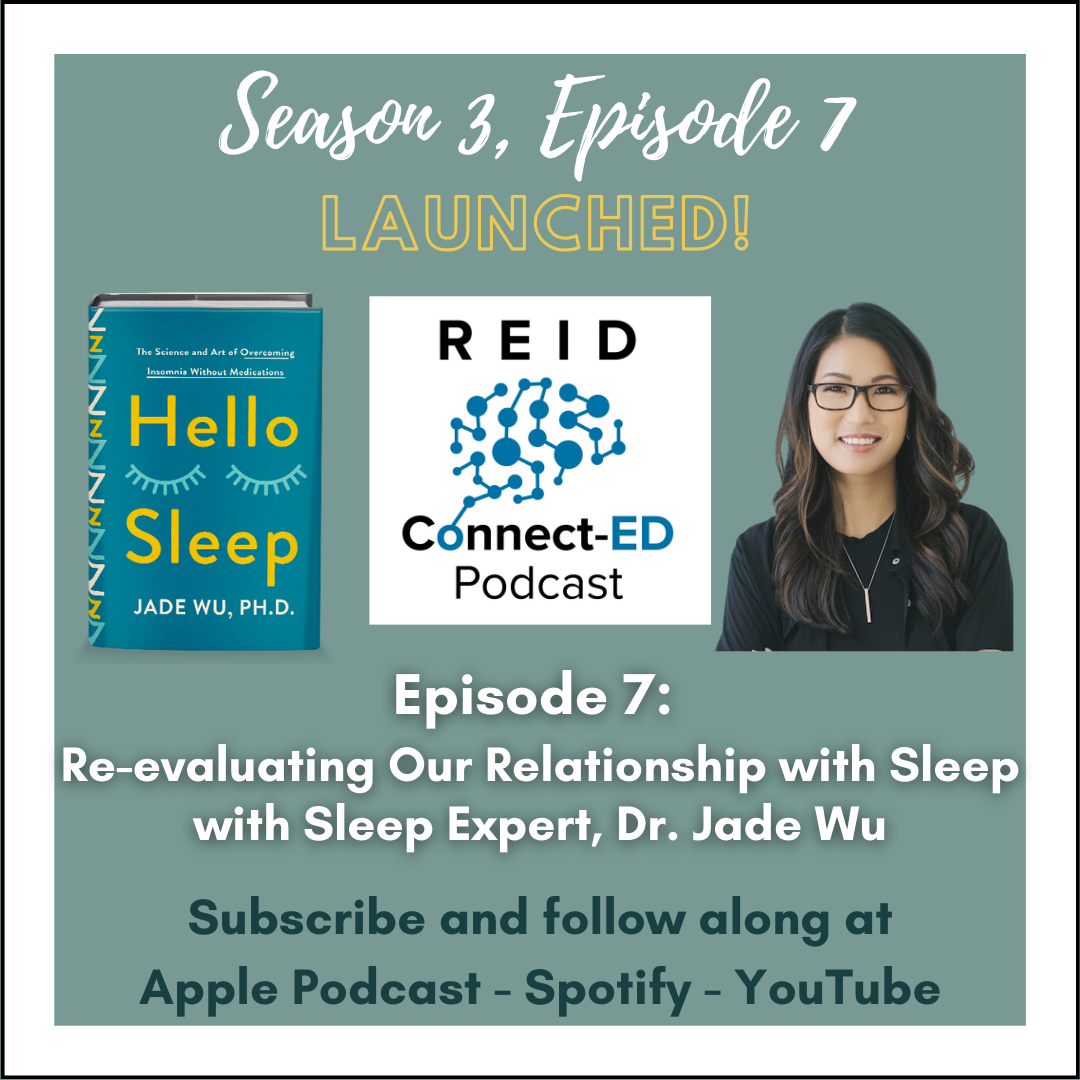
Listen Now!
-
At Duke University School of Medicine, Dr. Wu’s research focuses on treating sleep disorders in those with chronic illness. She presents at international academic conferences and serves as a reviewer for top-tier scientific journals, such as Behavioral Neuroscience, Sleep, and Sleep Medicine Reviews. She is the former Co-Chair of Outreach and Public Education at the Society of Behavioral Sleep Medicine.
In the clinic, Dr. Wu uses evidence-based non-medication treatments to help people improve their sleep (and waking life). She is especially passionate about helping new parents navigate sleep challenges during pregnancy and postpartum.
She earned her Bachelor’s degree at Cornell University, completed her PhD at Boston University and her medical psychology residency and clinical fellowship at Duke University School of Medicine. Her book, Hello Sleep provides helpful insight and information about sleep and how to change our relationship with it.
Hello Sleep: The Science and Art of Overcoming Insomnia Without Medications
Book on Amazon:
https://www.amazon.com/Hello-Sleep-Overcoming-Insomnia-Medications/dp/1250828406
-
We sleep for roughly 30% of our lives, yet it’s something we don’t get acquainted with in terms of understanding it’s importance and how we can improve our sleep.
There is not a one size fits all approach to improve a person’s sleep. It can depend on the individual, their context, their culture, and their day to day experiences that may vary.
There are a lot of functions of sleep, such as hormonal release, the metaphorical ‘janitor’ cleaning out the toxins in your brain, consolidating memories, integrating new learning/skills, and even processing emotional experiences. For example, during stage 2 sleep, we gain procedural learning. If we study before we go to sleep, it improves our memory more than if we don’t sleep.
We need to give ourselves space and time to develop new learning and new skills rather than expecting things to improve immediately. Sleep and rest is not ‘wasted time’.
Emotion regulation is important across all areas of life and functioning. Sleep is really important for improving our emotion regulation because our brain is doing a lot of ‘behind the scenes’ work to process our emotional experiences.
In the fast paced lifestyle we often fall into, we may not have space to process our experience and stressors and so when we lay in bed at night, we may be flooded by all these thoughts and feelings that have gone unprocessed during the day. This can lead to attempts to distract ourselves from thinking because it can feel overwhelming, which can actually intensify the emotions we are feeling due to this avoidance (i.e., distraction) as opposed to having a system or space to process more directly and efficiently. This is why therapy seems to be so useful for people because it provides the space to process.
Creative people may be able to enhance creativity and allow inspiration to come to them when there is space for it, without constant distraction, over-stimulation, and busyness of our mind and environment.
Time management and prioritization can help you feel less stressed by the end of the day as if there’s never
Not having enough space and time for spontaneous play and freedom from rigid schedules can lead people to seek it out very late at night when there is ‘free time’, known as revenge procrastination. However, this is not helpful for circadian rhythms, emotional regulation, and bodily functioning.
Adolescents are more wired to be ‘night owls’ and their circadian systems may not be aligned with the way in which their days are scheduled relative to daylight cues, school schedules, and how activities are scheduled.
Poor sleep and poor mental health can exacerbate one another in a reciprocal way.
REM sleep, which is very important for emotion regulation, happens most in the latter third of the night, which is the morning hours.
‘Sleep debt’ can sort of be paid off in short increments but you cannot ‘pay off your sleep debt’ over long periods of time.
A good balance and amount of stages of sleep is important.
Medication for sleep is not meant to cure a sleep issue, it’s technically meant to get past a crisis in sleep. There are so many different medications that are used to address sleep, many of which are not even approved as a sleep medication; however, it does not appear that any one medication addresses the core mechanisms that lead to insomnia.
People react differently to substances. Alcohol can impair quality of sleep despite feeling ‘knocked out’.
The way in which we tell ourselves “I have to _____ in order to sleep well” may simply be a story we tell ourselves rather than the reality of what works best.
Melatonin comes out at night and tracks the amount of light that is in our environment. The more light, the less melatonin and vice versa. It naturally occurs.
The use of melatonin supplements has significantly increased in the past 10-20 years. Problematically, the amount of melatonin in a container may be much higher than is actually listed in the pills. Additionally, having too much melatonin in your system in the morning, by taking it too late at night or by taking too much, can make you groggier during the day and harder to sleep on time the following evening.
Society as a whole uses caffeine a great deal. Caffeine blocks the molecule in your brain that keeps track of how long you have been awake and leads your brain to be ready for sleep. Caffeine tricks your brain into thinking that you are more awake than you actually are. Too much caffeine can prevent you from realizing when your body is actually tired and ready for sleep.
The half-life of caffeine is how long it takes for the caffeine to get ‘out of your system’; some people process caffeine shorter or longer than others. All in all, it’s important to not use caffeine past the morning hours. During pregnancy, the half-life is much longer, keeping caffeine in your system much later into the evening.
There are social and cultural influences on what we feel we need to function (e.g., “I need my coffee to function in the morning.”). There are also social and cultural influences on how we think about taking naps during the day.
Brief naps, that are at a consistent time, can be very helpful, although napping for too long can significantly impact your sleep drive (readiness to sleep at night) and circadian rhythm and actually make you feel worse upon awakening.
Appropriate naps have been shown to help athletes. Early stages of sleep can improve procedural (physical movement) learning. Athletes also need more sleep than the average person in order to recover from all their physical exertion during the day.
Dr. Wu suggests we think of sleep as a “friend” in order to nurture our relationship over the long-run. See her book “Hello Sleep” for more!!
We can learn to listen to your body to know when you are sleepy in the evening. This can be difficult when we’re distracted, it can be difficult to notice your bodily cues.
Sleep activation is often a byproduct of being active during the day.
Higher levels of mindfulness during the day may mimic the benefits of sleep. There is overlap in the brain between mindfulness, sleep, and mind wandering, which suggests benefits across these states of mind.
-
Gerald Reid 00:19
Welcome back to the Reid Connect-ED podcast. Many of us already know that sleep is important. It seems simple, right? Count your sheep and get to sleep. Parents have been telling their kids to do that forever. The irony is, it's really not that simple. As much as we may want to get better sleep, or more sleep. As much as we know, it's important. Why is it so hard?
Why is it that 32% of adults and 34% of children in our country report getting less than the recommended amount of sleep each night, and it's even worse for high school students 77% report not getting enough sleep.
So getting better sleep getting more sleep. It sounds easy to do, but it really isn't. It's much like trying to stay in the present moment more often, which we're often encouraged to do be mindful be in the moment. It sounds simple, but it's really not as easy as it sounds.
So here we are today and today we have a very special guest Her name is Dr. Jade Wu. Jade and I have crossed paths while taking a few classes at Boston University back in the early mid 2010s. When we were in graduate school, I always admired Jade. I characterize her in so many ways. She was highly intellectual, able to think very critically in classes.
She was also very highly creative and able to tap into her imagination through the beautiful art that she creates that she had not mentioned in her bio but I elaborated on and even more, she just a great person to sit down and chat with during lunch. So Dr. Jade Wu is a clinical psychologist and a board certified behavioral sleep specialists. She received her doctorate in clinical psychology and training from Boston University, and completed her behavioral medicine residency and fellowship at Duke University, the School of Medicine there.
She regularly appears in print media, such as the Huffington Post, as well as on TV and radio programs such as NPR and ABC news to share sleep health research with the public. Dr. Wu is the author of Hello sleep the science and art of overcoming insomnia without medication.
In the clinic, she uses evidence based methods and a collaborative approach to help people restore sleep health with a special interest in helping pregnant women and new parents to thrive through good sleep. And her favorite activities are napping and playing with her two children.
Probably about three years ago, during the middle of COVID. I remember watching CBS Sunday Morning, one of my favorite shows to watch while I'm getting my day started and I remember, all of a sudden, I'm watching this segment, I'm like, oh my god, it's Jade! And I haven't seen Jade in so long. And me and my family, we're so happy to be able to see you on TV. And ever since then I just amazed that all the stuff you've been doing with sleep research and helping people with such an important topic that even therapists don't always get the most training and unfortunately, you know, so I hope that this episode is good, not for the public only, but also for the people in training to become therapists, because it's so important, but not only always really emphasized how important and how we can address it with our patients and so forth. So thank you for joining us today.
Dr. Jade Wu 03:43
Thanks so much for having me. This is a nice reunion for us as well. So I'm excited to be here. Excellent.
Gerald Reid 03:51
So let's start broad as we always do in this brief, connected podcasts, we're going to start broad and just ask you, you know, why is sleep important? You know, for the for the listener? Why is it important? You know, what is it about sleep? You know, how can we understand it from a functional standpoint?
Dr. Jade Wu 04:08
Well, the shortest answer for WHY do we sleep is? Well, if, if it wasn't important, we wouldn't do it so much. Right? So if you think about it, we spend what like 33% of our lives in this very vulnerable prone position where we're not aware of our environments, where you know, we're lying belly up, and we're in the dark, like, prone to getting eaten by saber toothed tigers. If we're going to do that, that must mean there's pretty, you know, important things happening during this time. So since you know, prehistoric times we have figured out a few reasons for why we sleep. One is just that it's good rest and restoration for our bodies.
So for example, we know that human growth hormone and string is released during sleep We know that your immune system gets a nice boost during sleep, your body literally heals tissue during sleep. Your brain acts as a janitor during sleep and sort of filters out some of the unneeded byproducts that has accumulated during the day. And that we know is an important process. Because if we don't do that, then we will have cognitive impairments, dementia, Lewy bodies and whatnot. So yeah, lots of good reasons to sleep.
Gerald Reid 05:30
That's such an interesting metaphor that the janitor in our brain just kind of sweeping away the toxins and so forth.
So the thing about sleep, though, is interesting to me is that we don't really learn about it, right, we talked about this in our communication episode last two weeks ago, is communication is so fundamental to our socialization to our relationships. And yet, we don't really learn how to communicate well, and effectively, and so forth. And sleep seems like it kind of fits in that category, too.
As you're saying, it's essential to so many aspects of our being and yet we don't really learn about it or, or understand it. So what do you feel like people really need to know more about to prioritize, you know, sleep? Or how can people, you know, prioritize the importance of it?
Dr. Jade Wu 06:16
Yeah, that's a great question. I think, in a way we've had sleep has been making a comeback, which I think is awesome. In the past 10 ish years or so. And that's, you know, that's making people realize that sleep is important.
But I think we need to be a little bit more nuanced in our understanding of sleep. Because it's one thing to know that it's important, it's another thing to know how to actually do it well, because sleep is a very individual kind of thing. It's like, nutrition, yes, there are some general principles, but it doesn't necessarily, it's not a one size fits all, there are cultural components, there are individual lifestyle components, or genetic components, you know, a lot of things come together to impact your sleep, and also kind of influence what makes for good night's sleep for each individual person.
So that's why it's actually really hard to give general sleep advice. And I think that's why, you know, there's maybe six or 10 items of sleep hygiene, you know, tips that everybody kind of gets from their doctor from WebMD, from whatnot. And those are a good starting place. But there's just so much more to sleep that I could tell one person, but it will backfire for another, and it doesn't even apply to a third person. And so I think that's what kind of gets in the way of people being more acquainted with their sleep.
Alexis Reid 07:41
Jade, I so appreciate you sharing that perspective because oftentimes, in my work and Gerald's work, you know, we don't like boiling it down to a soundbite, or one or two things on a list, because really, everything is so nuanced, and people might respond differently depending on the context.
And from my work from an educational and learning perspective, I always emphasize the importance of sleep. And, you know, our circadian rhythms are so different. And they could be different at different points of the year, as I'm sure we'll get into and talk more about. But a lot of the students that I work with, in particular, adolescents and young adults, who are just kind of grinding and often might procrastinate, and try to do their work the last minute, I always help them to understand that you really need to prioritize rest, like real rest in good sleep. So that all the work they are doing from a learning perspective, gets fully embedded in their brains during that time, because as much as you're putting in, to be able to retain and be able to use it later. Sometimes if you're not giving yourself the opportunity to sleep and rest, that gets lost. So I wonder if you can speak a little bit to the process of how we actually hold on to information when we're sleeping. And I would love to hear more about you know, some of the things that our brains are doing while we're sleeping that helps to nourish us to be able to be thinking acting, you know, creative beings.
Dr. Jade Wu 09:13
Hmm, yes, absolutely. Yes, I mentioned some of the physical benefits of sleeping earlier, but the cognitive benefits are very much huge too. So as you mentioned, it solidifies new skills and information that you've learned during the day.
So for example, during Stage Two sleep, which is you know, also called Light sleep. Our brains are actually rehearsing procedural learning that we did earlier in the day. So for example, if you learn to play a song on the piano, or if you learn how to surf a tennis ball, or if you learned a dance move, you will actually wake up better at that skill than when you were when you went to bed. Because during Stage Two sleep, your brain is literally rehearsing and making you more familiar with that procedural skill. So that's more of like a motor learning. But there's also informational consolidation.
So for example, if you study before bed and actually get a good night's sleep, your retention of that memory and ability to pull it up for your test tomorrow or for you know, your creative use tomorrow is way better than if you don't sleep. And so it's like, if you learn information and immediately have to do something with it, that's kind of like the worst. If you learn some information, and then let it percolate while you're awake, that's a little bit better. If you learn information, and then you take a nap, that's even better. And then if you learn some information and sleep, a good night's sleep, that's the best. That's like, the best performance the next day
Gerald Reid 10:49
Jade, are you saying that after my students are done with a lecture, they should just take a nap immediately?
Dr. Jade Wu 10:55
Yeah, yes, absolutely. That's the best way to succeed in Dr. Reid’s class.
Alexis Reid 11:00
I think that's just that's such an important point. And I think that, especially in this society, we talk a lot about this on that and the podcast that we're constantly going, and we're in this like mindset that, you know, productivity and doing more and being more and constantly in motion is sometimes what is, you know, expected.
Whereas what you're saying, and we know from the science and the literature is so important, is we need to actually have some restful moments. And I will say, and, you know, anybody who knows me, would totally call me out, because I personally have a hard time with rest and sleep myself.
So when Jerry was saying, for the therapists and dreaming, I was like, What about the therapists in action, too. And educators and parents, and you know, we'll get into this too, but, you know, I think it's so important to have that message. So thank you for sharing that like to be able to consolidate into think about the things that you've been learning and doing to be able to use them most efficiently, you really need to give yourself time to rest.
It's like that space in between. We talked about this in terms of communication, last episode Jer, that sometimes we need to give ourselves space and time to effectively communicate. And I think the same goes with when we're learning and trying on new things that we need to give ourselves the space and time to get good at it. And in the social media world, Jerry and I work a lot with young people who think they just need to be the best at something right away. And I think what we're talking about here in terms of sleep is you need to give yourself the space and time for the learning the work the performance to develop in a way that it's going to constantly improve and get better.
Dr. Jade Wu 12:42
Absolutely, yeah, I think a lot of times, people think of sleep and rest as just empty space, or just wasting time, like I could be using this to get better at my craft or to study more or to work harder. But I mean, we want to work smart, in addition to working hard, right? Like you hit a certain point where more stimulation and more information overload is not actually going to make the quality of your learning any better, or even the quantity. And you're absolutely right, I think that space in between is absolutely crucial.
And in all measure, one more reason is emotion regulation, in order to do anything successfully, relationships, school work, creativity, sports, you know, athletic performance, to do anything. Well, emotion regulation is just so important. And sleep is really, really good for that too. Because we are actually going through our memories and our emotions, and our brain is doing really important behind the scenes work to help us tag, you know, what is an important emotion for the tag on this memory? And what should we let go of? And you know, how do we recover from this stressful event? How do we get emotionally resilient in order for an upcoming stressful event. So these things are absolutely essential to doing anything well, and we can get a big dose of that during sleep.
Alexis Reid 14:11
I'm going to let you and Jerry take off on that a little bit more. But I have to say I tell all my clients, I think emotional regulation is actually a superpower, especially in this day and age. And to be able to like really give yourself the time to get there and to better regulate yourself across different situations and learn how to recover from things that don't always work out. Don't always go well. You know, sleep is is a really nice little prescription to be able to do that.
Dr. Jade Wu 4:37
Yeah, for sure.
Gerald Reid 14:39
It reminds me of why I think therapy is so useful, especially now with how fast paced everything is because it really slows people down to think clearly and reflect and not just react to everything. I feel like I'm
Dr. Jade Wu Absolutely.
Gerald Reid Especially with the phone too, right like when people go to sleep. It's so easy to be on your phone before you go to sleep and it's just more stimulation, rather than what you're saying is, we need the process. It's like we don't want it to become obsolete to just kind of do nothing in process.
Dr. Jade Wu 15:08
For sure, Oh, I love the word marinate. Because that's kind of what it is you're just letting things sink in and just settle. And we actually do know from research that mind wandering, which is just kind of twiddling your thumbs doing nothing, not having new stimulation come in, that is so important for your physical health and your mental health.
And it actually boosts your performance afterwards, too. So it's kind of like a triple whammy of awesomeness. And, to your point about, you know, not having just needing time to process the day, I think that's so true. Like a lot of my insomnia patients say, I just can't turn off my brain at night, my brain just really wants to think about all this stuff at night, like, Well, do you give it space to think about that stuff during the day? And they're like, No, I'm busy because of this.
And that, well, then, when else is your brain supposed to do it? It kind of seems like when it's quiet and dark, and you're alone and lying down, is maybe the only time your brain has a chance to do the processing it needs to do unless you actually dedicate some time during the day to let it do that, right?
Gerald Reid 16:17
You know, I'm going to use a metaphor. It's almost like the kid who is afraid of the dark because they're afraid the boogeyman is going to be there. It's almost like when people close their eyes and slow down, they're afraid of what their mind will thing. It's like the boogey man is inside, they don't want to look inside which I can understand, you know, that we can have difficult emotions, you know, scary thoughts are stressful, complicated problems that we don't want to think about.
But that's exposure therapy, right? We were both trained at card center for anxiety and exposure therapy is a big part of it, is to help people gradually face the things that they're avoiding. And I think trying to fall asleep falls into that category when you're trying to push away the things you don't want to think about. And sometimes you kind of have to at least find a way to do it. And I'm not saying that's easy. I'm not suggesting that's easy. That's why therapy is useful to help create a context and a scaffolding to do that. But I think if you don't have any type of structure or guidance or way to do that at night, or if you don't commit to trying, right, you're just going to be kind of falling into this avoidance pattern that actually makes you more anxious in the long run.
Dr. Jade Wu 17:21
Yeah, I think that's exactly the right way to structure or the exact right framework for that is it is an avoidance strategy, whether we know it or not to be constantly stimulated. And I'm very guilty of this too. I constantly have a podcast on or I'm watching a show, or I'm doing something, you know. And it's actually pretty rare nowadays that I'm literally just being. And when I actually get the chance to do that, because I forgot to bring my phone somewhere. It's actually kind of remarkable what it's like to just sit in a waiting room and have nothing to do for like 15 minutes while you're waiting. And it's like, oh my gosh, I'm rediscovering waiting. It's like, whoa, mind blowing. And I always commit to doing more of a and it's so hard. But so important.
Gerald Reid 18:13
It is hard. I think I have the benefit too, I call myself a walking experiment, because I did not use social media, briefly used it during college with Facebook, and then did not use it for like 20 years. It's like, I think that's the reason I was able to write so many songs. And I think that's the reason is because my mind was open. I wasn't constantly distracted. And so I think, you know, it's hard, it's hard to get to that point. And it takes a lot of practice. And you know, it is a habit too and we all fall into habits and we're all guilty of it. Like you said.
Dr. Jade Wu 18:44
I just think that's such a great example about you producing music during this time, like prolifically during the time when you didn't have social media.
I work with artists to a lot of creative people who have insomnia. And they you know, talk about waiting for inspiration to strike or feeling kind of too frazzled to really feel inspiration. It's like, well, how is inspiration supposed to come knock on your door when you're constantly answering the door for all this other junk that's coming through, right? Like you gotta give space for inspiration to come find you. It's trying to come find you, it really wants to come say hello. But you have to like, actually, like reserve some space, you know? So, yeah,
Alexis Reid 19:31
I want to kind of double down on that a little bit. And you mentioned avoidance and I see this so frequently because primarily my work is around cognitive skill development with executive function. And you know, I work with a lot of people, regardless of if they're students or they're in the workforce where they often report just procrastinating and doing so many things and it impacts not only their work production, their studies but also their sleep too.
So this idea of avoidance, by like keeping Busy with so many other things instead of getting to the core or the goal of what you're working towards, I think that does create so much overstimulation in your mind that it gives you a good excuse. I always say, we're doing so many things. And we're avoiding, I always say procrastination is often tied to avoidance of some way, for some other reason.
And I think that avoidance is really an important thing to recognize. Because it delays the inevitable, it actually delays the thing that we're trying to do. And we're going to benefit the most from and Jerry loves to point out this idea of this. You know, people who stay up really late at night, because they feel that they have no other time to themselves, except for at night, when nobody else is around when there's no other distractions where they feel like they can do their best work. And we talked a little bit about this revenge procrastination over across other episodes, but we also talked about it to your point with our cousin, Joe P, who's a musician who literally produces and writes most of his songs, like at four o'clock in the morning. And we joke about this all the time, because I call myself a night owl, I kind of always have been, I think it's because I was born at three o'clock in the morning. That's my joke, but it doesn't really serve me well, not quite well all the time.
Because like you said, like inspiration and creativity, it comes when your mind is quiet, it doesn't necessarily need to be late at night. So my curiosity here is, you know, talking to all those people, as you just were mentioning, who might, you know, think you need to do your best work late at night, or you might be procrastinating until everything else around you quiets down? What would you say from a sleep or mental health perspective about that approach?
Gerald Reid 21:50
I'm going to say something that, first of all, it's hard to do, because I think it boils down to two things. And one, you may control me and maybe when you can't control one is I think time management. Because if you're are having some sort of like, mental space at night, when you're it's quiet, no distraction. Like you can recreate that same thing in a healthier way during the day. But but maybe that's not possible to so I don't want to just discredit people who like it. I can't do that. Right. But if it is past kids, exactly right. There you go.
Dr. Jade Wu 22:23
Like kids, that’s the main barrier to my creativity.
Gerald Reid 22:27
You'll get your time again. Jade is an incredible artist, by the way. Like, I can't even emphasize how amazing it looks like a real picture. I think time management for those who are capable of doing that, if it's feasible and realistic. And also prioritization, you know, like, sometimes you have to just prioritize different things.
Alexis Reid 22:50
For sure but you know, I say this all the time, right? And you just nailed it, right? The way I would coach and guide, somebody is struggling with these things. How are you prioritizing your time, right? We can't necessarily manage it. And to Jade's point, sometimes during the day, there's just stuff that comes up that you have to tend to, and you have to deal with and the prioritization. I, you know, I think what I'm looking for here is a little bit more of like, why should we prioritize sleep so much, especially when things are so busy? And I'd love to hear more from both of you about more of the mental health side of it?
Gerald Reid 23:24
Yeah, I think it's hard to because people's lives are just so busy and work has been impeding on people's lives outside of work hours now, too. And Jade, you can probably speak to this, right? You probably see this all the time. It's like when we grew up, right, without like, having email all the time. Like during nighttime, right? We can separate and prioritize our life with work and without work school without school. And so, you know, it's, I think that's one part of it is that you're always on, you always feel like you have to be doing something.
And with schoolwork to write and when you're in school, if you're in college, if you have assignments, they're always there, they're always lingering, right? So he's feel like you had to be doing it. And that's again that time management that prioritization into feel like you can break it down into smaller chunks to get it done earlier.
Some of the college students saw in high school students are like, Well, my friends play video games at two in the morning, that's when everyone has time to play. We like to play it in the morning. It's sad to hear, right? Because it's like, I know, there's no time after school, let's go play outside or like go do something like back in the day right now. That's like, that's the only time they have because there's so damn busy.
Alexis Reid 24:30
Yeah, that's true.
Dr. Jade Wu 24:32
Yeah. It's like all the stars are misaligned for teenagers, especially because of the demands of school and extracurriculars and their schedules being so scheduled, that that kind of spontaneous play just doesn't feel very possible. And, and there's so many things I could say about that.
Like being outdoors is really good for your sleep, being like being outdoors during the day where you can actually get prospects from light and during your eyes telling your brain that it's daytime, having less light at night, by the same token is also important for sleep because we don't want to trick the brain into thinking it's daytime when it's actually nighttime. So teenagers kind of have it flipped, where they're like, indoors, doing homework, or like doing scheduled activities during the daytime, they get up in the dark to go catch a school bus, they come home in the dark after sports practice, and well, I guess sports might be outside, which would be good. But then they have like video games at two in the morning, which is reversing their days and nights, which is not good for their circadian system, not good for their sleep, and in turn, not good for their emotion regulation, cognitive function, hormonal regulation, and all of those things downstream.
And teenagers are just naturally night owls anyway. So this is just exacerbating something that is already difficult for them. It's not their fault, they're biologically hardwired to have a later chronotype. So they just are not sleepy at 9pm 10pm. And they are just so sleepy at 7am 8am and 9am. You know, so we're forcing them to live misaligned by their circadian system. And we're cutting off the amount of time they can sleep. And we're curtailing the amount of natural kind of daylight cues that they need in order to become more morning people. So in every single way, I think we're failing our young people with the way that school is scheduled with the way that activities are expected of them. I could go on forever on a soapbox about that.
Alexis Reid 26:47
I love it. We appreciate it.
Gerald Reid 26:48
That's that's, that's such a, that's such an interesting big picture perspective, right to look zoom out and say like, Okay, let's look at all the different factors involved. But I appreciate you saying that, and then it becomes reciprocal, where you don't get enough sleep, your mental health gets worse. And then because your mental health gets worse, you have a harder time sleeping, it's just the site, it's just such a cycle, right. And then and then he got all the conflict between the kids and the parents and the fighting, that just certainly doesn't help anything, it just makes everything more stressful as well.
Dr. Jade Wu 27:19
If anybody needs emotion regulation, it's teenagers. And, like they're not an emotion regulation during sleep happens, particularly during REM sleep. And REM sleep is most hefty in the latter half and latter third of the night, which is the morning hours, which were totally just cutting off. For teenagers, by making them get up at 6am, they really would be getting most of the ram between 6am and 9am. And we're just lopping off a whole chunk of RAM, where they shouldn't be getting their emotion regulation in overnight.
Alexis Reid 27:53
That's so important. I have so many conversations with parents just coaching them to understand that, you know, on the weekend, if you're if your teenager needs to sleep, let them sleep, you know, and help them to understand why it's important. But it can't be, you know, at the expense of them staying up till two o'clock in the morning and then sleeping in but really, you know, understanding how, you know, important and beneficial it is for them to sleep.
But I wonder if you can speak a little bit to you know, the different stages and phases of sleep. You mentioned circadian rhythm. And, you know, I often share that, you know, we can actually catch up on sleep, you know, a lot of times people will work till all hours of the night and then they all just catch up on the weekend. I wonder if you can speak a little bit to those three factors that I know are your expertise.
Dr. Jade Wu 28:41
Yeah, you're so right. It's, you know, people talk about sleep debt, and sleep that can be kind of paid off in the very short term, like on the scale of a couple of days. That is not something we want to regularly Oh, during the week, and try to pay off on the weekend. Or even Oh, for like, just this exam season or just this, you know, busy season at work or it's just during grad school. It's too late. I mean, you can't sleep for like three months straight after you graduate from school to make during your four years in college. That's not how that works. So…
Alexis Reid 29:22
Though we do have some people who have tried it.
Dr. Jade Wu 29:25
You know, that's called depression. When you finally get through your like crisis years and you're like, Okay, I can finally relax and like, give myself a break. And you find that like you're so unmotivated and you're so lethargic. And your mood is so low and you're sleeping like 11 hours a day. That's your body finally catching up to you and saying like, “no enough is enough”. Like we're, we're just gonna crash. So yeah, you can do that, but it's not the best way to do it. So Yeah, so that's, you know, in terms of catching up with sleep to go back to the sleep stages.
I actually don't super love the word stages when it comes to sleep, because I think it gives this the idea that, Oh, there's sleep that's better or worse. And you know, you need, you should be getting like the deepest stage of sleep and like, the more the better. But really, it's more like different types of macronutrients. You know, if we use a metaphor here, a good balance is what we're striking for, and you need all different types of sleep.
So for example, state was called stage one and stage two sleep also called Light sleep, that makes up about half the night. And that's good. You know, because there's really important good things happening during this phase of sleep, like procedural memory consolidation, like, you know, learning how to surf that tennis ball. Stage three, four, which we collectively call deep sleep, or slow wave sleep. That's more the sort of physical rest and restoration happens. That's where the janitorial work happens to clear out the toxins. That's where the growth hormone, it gets released the sex hormones, especially during puberty. Younger people especially have a higher proportion of deep sleep, because their bodies are growing and changing so much. Whereas older folks have less of that changing, they're not going through puberty any more, they're not growing like a foot a year. So they have a lot less of that deep sleep. And REM sleep. This is like the most mysterious and possibly fascinating stage where dreaming mostly happens during REM, emotion regulation happens during REM, memory consolidation happens during REM, and your body is actually kind of acting up a little bit during this time, in some ways, like your body, your large muscle groups are paralyzed. So you don't act out your dreams and punch your partner in the night. Or like fall off the tree or whatever, if you're sleeping in a tree.
But your heart rate is faster, your body temperature is higher, you know, there's lots of things happening in your body. And your brain activity actually looks a little bit a lot a bit actually like your brain activity when you're awake. So it's just a very dynamic and busy stage of sleep. So I would say all the stages are qualitatively different, they're all important, and getting the right balance, and the right amount in total of sleep. is important. It's not like the more deep sleep or the more REM sleep the better.
Gerald Reid 32:38
That is such a great way of putting it. Thank you. I mean, this is one of the reasons we want you to come on and share this. Can you? Can you explain a little bit because I know, you know, one of the ways people try to get better sleep is using substances, whether it's, you know, marijuana, or sleep pills and stuff like that. How does that? And what's the research say about that in terms of how it affects sleep?
Dr. Jade Wu 33:00
Yeah, that's a great question. Because there's such a wide range of different substances that people use, whether prescription or self medicating or over the counter or even, you know, illegal and whatnot. Because people are so desperate to sleep that I have so many patients that say I have tried, you know, all of the different prescription medications that there are I get, you know, like gummies from out of state and I've tried every single over the counter thing. And they, they have wide ranging different effects.
But one overall statement I can make is that none of these medications or substances really help get to the root of the issue. So there is a wide range in how helpful they are, and also how harmful they could be. But even the least harmful and most helpful substance is really there to sort of ties you over. They're meant to get you through a really stressful time. Tide you over a rough spot before you can kind of get back on your regular schedule.
That's what it's technically meant to do, like the FDA approved medications like Ambien, Lunesta, and you know those other popular ones. And then there are the medications that are prescription and FDA approved but not specifically for sleep. So that's like the Trazodones and some of the benzodiazepines and other medications that are that will sort of knock you out or make you sleepy. Even antihistamines, for example, antidepressants, antipsychotics, anti seizure medications, I mean, I don't think there's another disorder in the world that is treated by such a variety of different medications that kind of tells you first of all, how desperate people are to sleep and two, how little we actually under and how these medications help sleep or don't, because if there was something that actually targets the mechanisms of insomnia and really do help, we would all be flocking to that one thing, except we're, but instead of that we're kind of like reaching out grasping all these straws and seeing what kind of helps, right?
So anyway, there are all these medications are used off label. And those are particularly, they can be helpful, especially for folks who also have comorbid conditions, maybe they do have seizures. And, you know, one, anti seizure med might sort of kill two birds with one stone, great, like, don't change your medications without talking to your doctor, or, you know, don't listen to this podcast and like stop taking your medications, of course. But one fun stat I'll tell you is about 1% of the adult US population takes Trazodone. For sleep, I don't mean 1% of people who have sleep problems, I don't mean 1% of people taking sleep medications, I mean, 1% of the whole population takes this medication for sleep. And it's not even FDA approved for sleep purposes.
So, you know, it's just kind of interesting how, like, we use such a diverse range of medications. And then we have the over the counter stuff like the Z quills and other antihistamines and various herbal things. And of course, there's the big one melatonin, which has the use of melatonin has quintupled since you know, the late 90s to the late teens, so within like a 15, 20 year span, there's five times as much melatonin being used.
And we also know from a couple of big studies recently, that the amount of melatonin in the bottle like in the pills can be wildly different from what's written on the label. So up to five times different. So if you're taking if you think you're taking a three milligram pill of melatonin, it could be 15 milligrams, and the amount that we actually use to help people shift their circadian rhythm is half a milligram. So like that's how big of a discrepancy there is in what the evidence supports and how people are actually using their medications, potentially.
So it's actually a little bit concerning because there could be side effects, you know, like nightmares grogginess. And it also could shift your circadian rhythm, if you take it at the wrong time, it could actually backfire and make you have a harder time falling asleep at night. So melatonin is a particularly kind of prickly one. And okay, and then there's the like, recreational stuff like the, you know, marijuana, alcohol, especially, those are probably the two most popular ones. Alcohol actually is bad for your sleep. So that's the one I would least recommend for all of the things because it actually backfires. Even though it feels like it's knocking you out, being knocked out and being asleep are two totally different things.
So you might be knocked out, but you might may not be getting any deep sleep at all, you may not be getting restful sleep, your sleep is likely to be interrupted, your body temperature is higher, your metabolism is working really hard to clear the toxins. So your body's not getting to fully rest during sleep. When it comes to cannabis, it's a little bit more gray area. The THC component is likely not helpful for sleep, especially in the long run. The CBD component may be helpful at certain doses, but not at other doses. And nowadays, when you get CBD, you also might get like serotonin and melatonin kind of wrapped in one.
So I would say even if it seems like a harmless over the counter supplement, still talk to your doctor and, you know, look at the bigger picture of what other substances you're taking what other medications, and also just like what is actually causing your sleep problem, to figure out whether substance is a good match for you. And whether there's a better alternative. And I know I just went on a huge rant, but like this is like a very little discussed topic that I think people should know more about.
Alexis Reid 39:16
I think it's so important. And we had, our last episode was about communication. We talked about these narratives that we actually say to ourselves, how we communicate to ourselves about what works and what doesn't. And I think sometimes we get so hooked on I have to do this, otherwise I can't and for the situation sleep well, or I can't get to sleep unless I do this first.
And to some extent and we'll talk about this in a few minutes. I imagine. You know having a good sleep routine and hygiene at the end of the night can be helpful. But when it comes to supplementing with a substance that you're putting into your body, you just don't know what's going to happen. And I wanted to go back to you know, this idea of people feeling like they have a lack of melatonin production. I wonder if you can speak a little bit about what melatonin is and how it is naturally developed in our bodies and why we might think we need to take it as a supplement to help for sleep.
Dr. Jade Wu 40:09
Yeah, that's a great question. So melatonin is like one of the most misunderstood things I think in, in sleep and circadian science. So melatonin is a naturally produced hormone that we all have. And it's really a timekeeping hormone. So sometimes it's called the vampire hormone because it like, you know, comes out at night. I think that's a fun way of putting it.
But basically, it tracks the amount of light that's in the environment, it's kind of inverse, slated to light when there is a lot of light in the environment is telling your brain that it's daytime. So your brain is like, Nope, we don't need melatonin. But when it starts to get dark and gets progressively darker, and the environment, your brains die, oh, looks like the night is coming on. Better start ramping up the melatonin production.
So in the evening, as it's getting darker, your melatonin production ramps up, it stays high through the night. And then it subsides in the early morning hours and should be gone by the time you're like up and about, you know, in during your day. So what we want is a nice robust melatonin curve, which means it's low during the day, and high a night and consistent in the timing from day to day.
If you have that, then you have good quality sleep, you feel good during the day, and all the rest of your body systems can function at their optimal.
So if I like to think of it kind of like an orchestra, it, it doesn't help. If every individual musician is playing beautifully, but they're all out of sync right, then it just sounds like noise, they all have to play in sync and on time together. For the orchestra to actually sound good.
So your body's kind of the same way, like your circadian rhythms. Like almost every cell in your body has its own local clock and your organ systems have their own clocks. You know, different hormones have different clocks. So for all those billions of clocks to play, like on time, and in sync together, your master clock has to know what time it is. So the maestro needs to keep be really well. And that master clock keeps time really well. If the amount of light in your environment is pretty stable from day to day, and it's bright during the day, and it's dark at night. And that's how melatonin kind of tracks that light and dark. Um,
Alexis Reid 42:32
I'm just thinking Jade, that even in my own home, sometimes my clocks are off by a minute or two, I can't imagine how complex that system is in our body.
Dr. Jade Wu 42:41
Right? It's like actually kind of miraculous that anything works in our bodies at all. Because always need to coordinate. Right. So but then like, it's also then not surprising that if your circadian system is disrupted, like in some neurodegenerative diseases for people who do shift work during jetlag, you know, social jetlag, when these things happen, your cognitive function goes down, your emotion regulation goes down, your mood gets worse, your physical health gets worse, your metabolism gets worse, you hold on to more body fat and, like, lose weight less, if you're trying to lose weight by like, you know, eating healthy and whatnot, you can eat the exact same thing and exercise the exact same amount. But if your circadian rhythm is off, you're just not going to be as fit or healthy. So, you know, like, literally everything gets worse if your circadian rhythm is off.
So that's how important melatonin is. But that doesn't mean that just taking more melatonin is better. Because first of all, it's about timing. If you take melatonin at the right time or the wrong times, it's either going to be a drop in the bucket and do nothing or might even backfire. So for example, for the people who are taking, you know, like what they think is three milligrams of melatonin at bedtime, which is like a pretty common behavior. And let's say that is actually 15 milligrams of melatonin because the FDA and that's like such a high dose that is stays in your system into the latter half of the night into the morning when melatonin should be subsiding and getting low. So you're actually getting a big dose of melatonin that's lingering in your system on the wrong side of the curve.
So that's going to make you groggy during the day and make it harder for you to sleep on time the next night and the next night. So, so for example, for people who are night owls, who wants to becoming become more like conventional, you know, bedtime, whatever. Like let's say you go to bed and you want to do more like an 11pm
Alexis Reid “So you mean me?”
Dr. Jade Wu Yes, me Well, traditionally before I had kids, and so instead of taking that, you know, melatonin at bedtime at 11pm, hoping it'll knock you out at 11, what would be better, we'll be taking half a milligram of melatonin of like eight, or seven, maybe even 6pm.
Because what that tiny little dose of melatonin does is it kicks, like kicks off or jumpstart your natural melatonin ramp up. So it's almost like nudging your natural melatonin system to get started sooner, which shifts your curve earlier, makes you get sleepy earlier and be awake earlier. And that's what you actually want, right?
You don't actually want to just be super groggy all the time. So and also, the contrast between how much melatonin is in your system during the day versus night is really important because, again, your circadian system wants to know the difference between day and night. So if you take a big dose of melatonin, that stays with you, during the day, then you're actually closing the gap between your daytime melatonin and nighttime melatonin, which is actually again going to backfire and make it harder for your body to tell when it's day and when it's night. So that's why melatonin is one of the most misunderstood sleep aid medication things ever.
Alexis Reid 46:24
And it's not lost on me that you mentioned that there's an uptick in melatonin use in about the past 10 to 15 years. And I imagine that there's also some parallels in, you know, our screentime use our you know, being in front of a lot of lights indoors instead of being outside more and letting you know, the natural rhythms of the day in the sunlight dictate kind of how our brains tell us that it's daytime, we're supposed to be awake versus nighttime, we should go to sleep.
Gerald Reid 46:52
Yeah, just for young people listening to this social media didn't always exist. There was a time just because you're born with a theory of mind. Like we didn't grow up with it wasn't like there.
Dr. Jade Wu 47:08
No, in the days of yore we just had to sit around and tell stories and read books. And twiddle our thumbs.
Alexis Reid 47:16
It's so funny that boredom is a luxury now.
Dr. Jade Wu 47:20
Boredom is amazing.
Gerald Reid 47:26
I totally hear that. Can we go in reverse almost? So I know like caffeine use is I mean, how many? How many people in the United States or like in the general public drink caffeine or use caffeine? It must be astronomical.
Dr. Jade Wu
I have a stat here. Hold on. I don't want to get the number wrong. Okay, caffeine. Okay. So Americans consumed almost 27 million bags of coffee in the 2019 to 2020 fiscal year. Now, I don't mean the little bags, you might give a coworker for Christmas. I mean, 132 pound industrial bags of coffee. Little quote from my book.
Alexis Reid
Wow. That's incredible
Gerald Reid
Like in Santa’s bag. So Jade, how does I think that like, again, this is another thing that we just do. And we don't think critically about it. And no one really teaches us about it, like communication, like sleep. What about caffeine? Like, what? How should? Or could people use it? Like, you know, because I've learned a little bit about the half life of caffeine and how that can linger into your sleep hours and keep you up. So can you tell us a little about that.
Dr. Jade Wu 48:38
Yeah. So caffeine is also a really fascinating substance because it's, we’re just collectively are so addicted to it. And we all love it so much. And I am not saying to anyone that they need to give up their caffeine. But here's our here's some things to know. So caffeine is half life, for most people is generally going to be between two and a half to four and a half hours depending on the dose and you know, your individual genes and what you ate and all that.
Gerald Reid 49:06
Can you just explain what the half life is for the audience.
Dr. Jade Wu 49:09
Oh, yes. So basically, it means at that time, like when two and a half to four and a half hours have passed, about half of it still live in your system and half of its gone. So that doesn't mean it's gone in two and a half to four and a half hours. It means half of it is gone. And then half of what's left will be gone in another two and a half to four and a half hours.
So you know, many hours later, you might still have some in your system. And people are differentially sensitive to coffee. Some people have much longer half life of coffee in their body. Some people have shorter, one thing I'll say off the top because this just blew my mind and nobody told me is that during pregnancy, guess how much longer the I already gave it away kind of it is longer, guess how much longer.
Gerald Reid 50:00
It is much longer.
Dr. Jade Wu 50:01
It is much longer, much longer like, like, possibly five times as long. So, which means if you, if you drink your, if you usually in nonpregnant times drink a 9am coffee, and you're done and that's like totally fine for you, great when you're pregnant, that same one cup of coffee at 9am, most of it may very well still be in your system at 9pm.
So for people who are thinking about pregnancy or are pregnant, if you're wondering why you suddenly have insomnia, your, your caffeine might be part of it. So start switching to decaf or cutting down or doing it earlier, you know. So anyway, that's just a one off the top. And caffeine is. So how it does and how it works in the brain, the caffeine molecule docs at the same place on your brain cells that adenosine docks at adenosine is basically your sleepiness chemical.
So throughout the day as you're awake, and just going about your day, as time passes, adenosine accumulates more and more and more in your brain. And its function is basically to keep track of how long you've been awake and how much energy you've expended. So that once you hit a certain point, it's like nudging your brain, in addition to the melatonin is nudging your brain like okay, you've done a lot, now you've been awake for a long time, it's time to get sleepy. So adenosine, the more you have to sleep, here you are. But caffeine, docks at the same spots at the same sites as adenosine. So it kicks adenosine out of the way and tricks your brain into thinking there's less adenosine than there actually is. So it tricks you into feeling way more awake, and way more energetic than you actually are. And that's okay, like first thing in the morning.
That's fine, too, like a modest, moderate extent. But if you do a lot of caffeine, then your body never gets to honestly feel how tired and how sleepy it is. So caffeine can actually make you more tired, because it is making your body run on fuel that it does not have, and tricking you into not taking the rest that you need. So that's why people need more and more and more caffeine over time, in order to feel just a baseline level of awakened functional.
Alexis Reid 52:25
I'm so glad you said that. I mean, going back to these narratives and stories we tell ourselves about how we should function, especially as we get older, if we grew up around parents who would have their morning coffee every morning that just feels like a part of adulting, right? Like, oh, I need to start my day with a cup of coffee. But I love your warnings, and I'm so glad you brought up the part about pregnancy that I know you speak a lot of in your book, because it's so important to recognize that as your body changes, as we develop an age, we might need different things at different times. And we can't just rely on the same thing. Or even what we think we're supposed to be doing because others around us or others as we've been growing up, did, right? it might not have actually been working for them the way they intended, but it was what they did. I think it's really important for us to also just be aware and recognize of, you know, take stock, like you said at the beginning of the episode of what actually is going to be most beneficial for me and serve me well and my body versus just kind of taking blanket statements and advice from either social media or, you know, the interwebs as we joke about, or from other people around us, we really need to understand what's at the core of what's getting in the way and what really can help benefit us the most.
Dr. Jade Wu 53:39
Mmhmm, absolutely. I think you're so right, especially when it comes to caffeine. This is such a good example of cultural and social kind of influences on how we feel we should function or what we need in order to function like so many people just casually say like, Don't even talk to me until I've had my coffee. And we you know, have so many memes about coffee and fridge magnets. And it's just like it's so permeates our culture and our language even that I think we just take it for granted that of course you need caffeine to function.
So yes, it's worth I think examining for our individual bodies. What do we actually need? And when you're tired is a really good time to ask, what is my body trying to communicate to me? Is it actually caffeine that it needs? Or is it water? Is it rest? Is it mind wandering? Is it twiddling my thumb? Is it taking a nap? Is it talking to a friend? Is it laughing at a joke? Like there's so many things that could explain why you're tired? Other than you didn't sleep and you didn't drink coffee yet?
Gerald Reid 54:51
So Jade, I'm going to take this in a little bit of a different direction but still in terms of the daytime hours. So part of my practice is working with athletes. It's and performance and not only the performance, but their mental health too. And so I looked at the literature about sleep and performance in athletics, and one of the systematic reviews of all the studies that were out there. And there's, you know, sometimes there's not too many studies to have a robust answer, but of all the studies that were out there, it's just that taking a brief nap was actually very helpful for their athletic performance during the day, if they were sleep deprived, especially if they were sleep deprived. Can you tell us a little bit about naps? Because they think also, that's kind of like not an either or thing as well. It's like, some people have a hard time taking a 20 minute nap, because they'll end up sleeping for the rest of the day. And then their whole sleep cycle gets upside down.
Dr. Jade Wu 55:41
Yes, oh, naps are another one of my favorite subjects. I always say nap responsibly, like, short nap, like napping in a certain way can be like, the best thing you do in your life with netting the wrong way can also like just totally not like ruin your life. So it's like a little bit like you got to you got to figure out the right way to nap. And so first, just to point out, I think a modern American culture is maybe one of the only cultures that doesn't nap, or like, looks down on napping.
Like I grew up in China, where we walked home from school to nap. And then we walked back to school for afternoon classes, like everybody was including the teachers were expected to do this. And obviously, in Europe, there's siesta culture, Latin America, you know. So I think if humans have historically and all over the world done this so much, there must be a good reason for it, right? So napping is in and of itself a good thing. But the best way to do it is to do it around the same time, which is like midday, early afternoon-ish. And briefly, so about half an hour. And the reason for that is we don't want to, if we sleep too long, we get into the deeper stages of sleep. And that will not only make you feel groggy, or waking up out of the nap, you might actually feel worse than before.
It also eats into your sleep drive that you've been saving up for nighttime. So it's like eating a big cupcake right before dinner, you're not going to have as much, you know, an appetite for dinner, and you won't have as much sleep try for nighttime sleep. So in order to still preserve your circadian clock, preserve your nighttime sleep, but still get that awesome little refresher boost. Half hour nap midday.
And the reason is especially good for athletes is because those early stages of sleep those lighter stages, as I mentioned before, particularly good for procedural learning. So like, if you practiced, you know, like a triple Axel, you know, that's going to stick in your mind just that much better if you nap afterwards. And so many athletes are not sleeping as much as they should. Athletes need more sleep than regular people, because their bodies are actually expending more energy and doing just doing more, and they're putting more wear and tear on their bodies. So of course, they need more sleep.
That's why LeBron James sleeps 12 hours a night. But if they need to function as a normal student, like college athletes, you know, or to function as parents or whatever, they are actually even more sleep deprived than the average person because their need is higher. So that's why a nap is especially important for an athlete.
Alexis Reid 58:35
I'm so glad you said that. And I'm going to kind of combine both of the topics we just talked about, because I have students that are student athletes, and they will take a pre workout drink or supplement at like, seven, eight o'clock at night to get like a final workout in before they even start their homework. And then they think they can recover enough in like four or five hours of sleep before the next day starts. And I'm like, oh, whoa, what are we doing here? I'm like, You need to talk to A. your doctor about the what's happening physiologically for you when you're doing that. But also, cognitively, it's going to impair your ability to show up across everything you're trying to do. Whether it's, you know, for your sport or for your school and learning.
Dr. Jade Wu 59:22
Mm hmm. Yeah, absolutely. I mean, even if the only motivation was to be better at your sports, I mean, think about what cognitively not to mention physically, that's so obvious, but like cognitively, you need to have fast reaction time you need to sustain your attention. Make quick and good decisions, like so fast that you can't even really think about it. You need to regulate your emotions. So if you like lose a point, you're not just like losing it so that you you know, lose your focus for the rest of the game. There are so many things you need to do cognitively and emotionally during performance during games. That If you need sleep, and like all the stages of sleep, even more than the average person
Alexis Reid 1:00:06
Even more, especially during adolescence, if you're still in that teenage young 20s, ah, it's so important. And it's so funny, I have to just tag on this real quick from an executive function perspective, you know, if you're actually not going to sleep enough, you're going to be more dysregulated. In these moments, it's actually going to shut down your ability to be able to think strategically to be a good problem solver or critical thinker, to be able to react and respond and be flexible in any situation. So you might just lose or not have a good performance athletically. And just think that's it. And you get really into this rigidity, of like, all or nothing, I couldn't do it, therefore I stink. And it can totally impact the rest of your career. So I just I needed to point that out. Because it's such a downward spiral if we're if we're really just pushing ourselves so much not thinking about the nourishment that we need, and how important that is, especially at this stage of life. And for athletes.
Gerald Reid 1:01:01
Yeah, I love how we're looking at this topic from so many angles. Yeah. As I pointed out, this is one of the best reasons to bring Jadon is I've always known that she's very critical thinker. And to she meshes well with us in this way that you can approach a problem with one solution and say, This is the only way to approach it, you got to look holistically and say, what's what are all the factors. And so you know when to bring in a little bit, a couple other things. And we'll kind of come to the end of the episode because we can talk forever, and we love chatting with the Jade.
How about things like, you know, just kind of tips, you know, no, no, we don't want to talk too much about tips and just say through this one thing, but some of the things people can consider, you know, I think like exercise, and I think he had said people using melatonin more than ever in the past 10 years. And there's also more social media use, there's probably also less exercise happening. The more technology we've been using in our day to day, stuff like exercise, and, you know, just when people are, you know, they're winding down routine and how they kind of calm down at the end of the night could tell us some like stuff like that.
Dr. Jade Wu 1:02:06
Yes. So how I like to answer this question, because it's so tricky, since everyone's sleep is different. And I don't want to give advice that's going to help one person and hurt another. So here's how I like to approach it. I like to start out general with, like a general philosophy, and then give some concrete examples. So that people can judge for themselves. Like if I follow this general philosophy, that means here's what I should do on a day to day basis to better my sleep. And the general philosophy, I always come back to think of sleep as a friend, not a chore, or not an engineering problem.
Not like you know, insert whatever, however else you've been thinking about sleep, sleep is a friend. And if you think of sleep as a friend, then it's easier to think about looking how do I nurture this relationship? How do I maintain this, for the long run is not a one night stand is a lifelong friendship? Right? So. So what are some ways that you want to treat your friend to be a good friend, so you want to make space and time for them? Right? So that means like, when you're having dinner with a friend, don't be on your phone the whole time, like pay attention to them, actually talk to them, ask them questions. Same thing with sleep, don't be on your phone the whole time that you have any sort of downtime, listen to your body, like let sleepy cues naturally occur to you. So you know, when you actually feel sleepy in the evening. That's a really good indication that that's a good time to go to bed. And that you'll get enough
Gerald Reid 1:03:39
Hey Jade, I'm gonna say something real quick about that. I think paying attention to our bodily cues is so important. Because I think when we don't do that, we miss out on the natural opportunities to do what our body's telling us we need. And also it can make us more irritable, right? If you're like, it's like the child is fighting, going to sleep and they're just like acting cranky and stuff. It makes us more irritable.
Alexis Reid It’s like my dog!
Gerald Reid
Yes, your dog does this too. Because he's not paying attention to his cues. He's like, No, I want to keep playing and kids do this too. They want to keep playing with their parents and stuff. But pay attention even if ADHD right? If you're distractible, you're not paying attention to what your body's telling you that could be important as well.
Alexis Reid 1:04:17
It’s kind of like socially reading the room, right, like reading and understanding what you need in those moments.
Dr. Jade Wu 1:04:22
That's so true. Yeah. And you're so right, it's, it can be harder for some folks to experience those queues i for night owls for people who have ADHD. So for, and I count myself amongst the night owls, so for those of us that don't just naturally feel really sleepy very obviously, around the time where we should be going to bed.
We might need a little bit more help like setting a bedtime reminder on our phone, or, you know, like really working on establishing that habit of doing a wind down routine and just make it so enjoyable, that you actually are motivated and want to do it. So you might need to kind of it, there's no shame in helping yourself with these, like, cues and incentives and whatnot. So yeah, I do whatever works.
Alexis Reid 1:05:18
Yeah, I always say to Jade, like think about something that makes you feel relaxed. And then write a whole list of things that help you to relax and wind down whether it's, I like to say, you know, sometimes you need to wash the day away, whether you take a shower at the end of the night or bath, so that you can kind of like quiet your mind and like release at all. Do the dishes, something that you don't need to like think that hopefully will overstimulate your brain, I find that sometimes reading sometimes for people's overstimulating. For me, I get like into it, I don't want to put it down. But for some people, it helps to relax them. But you know, I always say just, you know, write a whole list of things that could work because just because one thing works doesn't mean it's gonna work all the time. So having some options I think is helpful for that wind down routine.
Gerald Reid 1:06:00
The classical sleep playlist on Apple Music or wherever. Oh, my God, that helps me so much. Classical music, that's like meant for sleep. Unbelievable.
Dr. Jade Wu 1:06:12
Yes, yes. And another plug for the podcast for another podcast that's by a friend of mine is called boring books for a time, and is literally just a lady with a nice voice reading super boring books, like the Farmers Almanac from like, 1865, or whatever, you know. So if that doesn't for you, by all means, you know. So there's lots of options.
And it really is less about specific activities and more about you paying attention to your cues and being honest, and like making space and time for sleep. And that's like a major way you nurture that relationship. Right. Another one is to not just take, take, take only but you have to give, you have to invest into the relationship.
So like with a friend, you don't just take gifts from them, you give them gifts too. So when it comes to sleep, your sleep gives you gifts every single night, like sleep is a very generous friend. So the way we can be generous back is to live a full life, like during the day. So being outdoors, being physically active, socially engaged, mentally engaged. Because you know, sleep is just a byproduct of how much expenditure you've done during the day. So if you haven't earned it, then like your body doesn't need it. You know, so being active during the day, that's another good way to be a friend, friend to sleep.
And the last one I'll say is to be a good friend, you need to be flexible and forgiving. Right? So it can't just be like my way or the highway, I need you to precisely show up at this time in this specific way. And I need you to perform for me, I'm going to be on top of you monitoring your performance. Like that's like asking for a restraining order. Like that's not a good relationship. Right. So when it comes to sleep, we can't be super rigid about our expectations. Like we have to sleep exactly at this time in this way. And I get mad if I can't fall asleep. Or I blame sleep for all my problems during the day. That's not fair. So, you know, allow that change happens over time. There are some days are going to be different than others. Like sleep is resilient doesn't have to be the same every night. You know, just roll with it a little bit allows for some flexibility.
Gerald Reid 1:08:34
That is one of the best metaphors I've ever heard for sleep. Oh my god. That's why your book is called Hello, sleep. Hello, sleep.
Dr. Jade Wu 1:08:42
Yes, exactly. It's a relationship starter, right. Hello. So
Gerald Reid 1:08:44
So okay, let me let me let me add to that a little bit. So if you're in a relationship, if you're going to treat it poorly or be angry at it, it may get irritable back at us. So as you're saying, if you're like, Oh, I can't fall asleep, I can't stand sleep. Sleep doesn't live like I can't, I can't do it. I can't do you get angry at sleep? Doesn't that actually make it harder to fall asleep?
Dr. Jade Wu 1:09:05
Oh, it sure does. Because when was the last time you were able to scold yourself into sleeping? Right?
Alexis Reid 1:09:11
I think the same thing to goes with. Like if you're having a bad relationship and you keep having the same bad interactions over and over again, you need to change the context, or give yourself some more space. So I always say to if you're like waking up in the middle of night, don't stay in bed and just keep saying Go back to sleep, go back to sleep, go back to sleep. Like you need to kind of change your space too.
Dr. Jade Wu 1:09:34
That's funny at all. I love it. You guys are expanding this metaphor perfectly.
Alexis Reid 1:09:40
I love it. It's so well done. And I love how succinct and concise you've made it. It's so clear and accessible and we're grateful for that. I would be remiss if I don't mention and ask you one more big question before we wrap up because this is something that I struggle with myself and this is not a question for me, but I talked about this with my meditation teacher all the time, because I've been avoiding longer meditations because I keep falling asleep during them.
And I call it my naptime when that happens. But sometimes, you know, my own fear of like letting that go too long, and then missing things that I have scheduled that I need to do. But, you know, I wonder and I'd be remiss not to ask, because I've read and engage with so much of the literature on meditation and how beneficial it is for us. And I know it's not a substitute for good quality sleep. But I wonder if you have anything to share about, you know, meditation as a tool, because it comes up so often in learning, in mental health, and athleticism and performance. You know, how, how does meditation mimic or support sleep? I wonder if you can speak on that.
Gerald Reid 1:10:51
And let's also use the word mindfulness. Also, not just meditation that mindfulness could, be helpful.
Alexis Reid 1:10:56
Right, it doesn't need to be a formal meditation practice. But just being more mindful
Dr. Jade Wu 1:10:59
Absolutely. I love that you brought that up, because it is so good for sleep. Mindfulness, excellent for sleep, not because not only because it, you know, lowers the kind of volume of the sympathetic nervous system, the fight or flight system, it also helps to ground us in what's actually happening. So when people start to get frustrated with not falling asleep, or waking up during the night, and they start like a rabbit hole of like, Oh, I'm not gonna be able to function tomorrow. This is so frustrating, I hate being awake during the night. That's the opposite of being mindful, right?
If they actually were mindful in that moment, and just noticing their breathing, noticing the sensations in their body, that is actually like, usually not actually that terrible. And it just makes it more realistic assessment of the situation. So those are kind of the immediate ways that mindfulness and meditation can help sleep.
And I also want to say that harkening back full circle to how we started this conversation, I think we just want to build in more downstate time for our brain. And whether that's meditation, a more sort of active mindfulness, napping, sleep, mind wandering, I think they're all kind of related flavors of similar things. And in fact, there is neuroscience research, showing that some of the brain activity during sleep versus meditation versus mind wandering are, there's overlap, there's actually a lot of similarity. And I would say meditation doesn't fully replace sleep, but it kind of does a little bit.
Like that's why people who are very experienced and kind of prolific meditators generally need less nighttime sleep, because they're meeting some of the needs of their body that they need from sleep through meditation. So that's another reason to be flexible with sleep. Because if you're getting really good with your meditation, you might actually need to sleep a little bit less at night, and there's no need to be alarmed or you know, frustrated about that. It's a, it's a fluid and dynamic thing.
If you're meditating long, so long that you're routinely falling asleep. I will say that's not necessarily a bad thing. I mean, that's good information for you to know, that's your body telling you that you were sleeping enough to fall asleep. And if this is not interfering with your general sleep quality at night, I say by all means, no big deal.
But if you find that you you're struggling with consolidating sleep at night, then trying to maybe not get to the point of actually falling asleep during meditation could be a good place to start like a low hanging fruit, where you get the benefits of your meditation. But not take away sleep drive enough that it interferes with your nighttime.
Alexis Reid 1:14:04
It's all a journey, Jade, it’s all a journey.
Dr. Jade Wu For sure.
Gerald Reid 1:14:11
Excellent. Well, Jade, this has been one of my favorite episodes and so nice to have you come on here. I'm so happy. I you know, we just had an instinct that this was going to happen. I tried to get a hold on. I think you were sick for a long time. No, don't there's nothing to be sorry. But I just we just had an instinct that this this is gonna be really good and really great. So I'm glad that we stars aligned to we got together. So helpful for our listeners. It's such a, you know, as you said, in the very beginning, it's a it's like, what? A third of our entire lives is sleep. So let's talk about it.
Dr. Jade Wu 1:14:44
Absolutely 33 years consecutively of your life if you live to get 100, that’s a lot of time to be spending, you know. Like I always say if you had to spend 33 years with someone consecutively in a room one person, what kind of relationship do you want to have with that person? And that should inform how you want to treat sleep. So on that note, I thank you so much for inviting me. This was really, really fun. Y'all are so smart and asking like such fabulous questions, setting me up like the perfect lowballs for me to rant about my favorite active, our favorite topics. So I appreciate that.
Alexis Reid 1:15:22
We love how passionate you are about it. We appreciate it because we share that same enthusiasm for doing this work and helping others. So thank you so much for all that you do. And we're grateful that you made some time for us this morning. Thank you.
Gerald Reid 1:15:32
Thank you, Jade. And we're gonna put your book up on our Instagram page in the website. It's called Hello, sleep. Awesome. Thank you.
Dr. Jade Wu 1:15:40
Thank you.
Gerald Reid
Thanks for tuning in to the Reid Connect-ED podcast. Please remember that this is a podcast intended to educate and share ideas, but it is not a substitute for professional care that may be beneficial to you at different points of your life. If you are needed support, please contact your primary care physician, local hospital, educational institution, or support staff at your place of employment to seek out referrals for what may be most helpful for you. ideas shared here have been shaped by many years of training, incredible mentors research theory, evidence based practices and our work with individuals over the years, but it's not intended to represent the opinions of those we work with or who we are affiliated with. The reconnected podcast is hosted by siblings Alexis Reid and Dr. Gerald Reid. Original music is written and recorded by Gerald Reid (www.Jerapy.com) recording was done by Cyber Sound Studios. If you want to follow along on this journey with us the Reid Connect-ED podcast. we'll be releasing new episodes every two weeks each season so please subscribe for updates and notifications. Feel free to also follow us on Instagram @ReidConnectEdPodcast that's @ReidconnectEdPodcast and Twitter @ReidconnectEd. We are grateful for you joining us and we look forward to future episodes. In the meanwhile be curious, be open, and be well.
In this episode Alexis & Jerry are joined by sleep expert, Dr. Jade Wu. As a Board-certified sleep psychologist, researcher, author, and speaker. Together we will discuss the underpinnings and benefits of sleep for well being, learning, and mental health. Listen in to learn about important topics like circadian rhythms, melatonin, substance use and sleep, mindfulness/ meditation, impacts of sleep on learning, sport, creativity, and performance, and much more. Be curious. Be Open. Be well.
Be curious. Be Open. Be well.
The ReidConnect-Ed Podcast is hosted by Siblings Alexis Reid and Dr. Gerald Reid, produced by and original music is written and recorded by www.Jerapy.com
*Please note that different practitioners may have different opinions- this is our perspective and is intended to educate you on what may be possible.