

S2 E8: Talking Tennis Coaching w/ Tennis Coach Kevin Pease
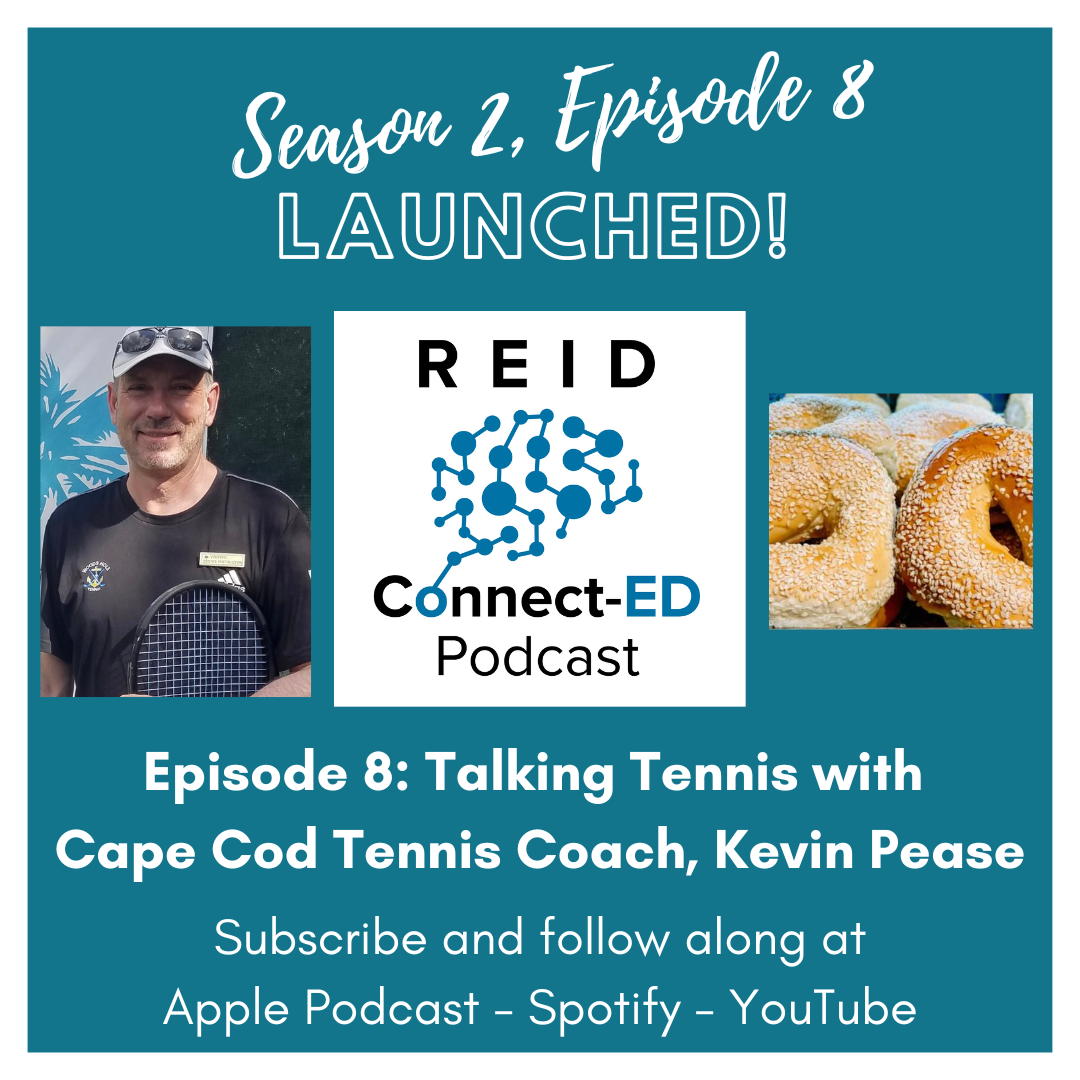
Listen Now!
-
https://www.kevinpeaseschooloftennis.com/
Kevin Pease has a B.S. in Sport Management from the University of Massachusetts, Amherst (Varsity Tennis), has held national rankings, and has won the USPTA Coach, Pro and Player of the Year Awards in New England. He is certified as a member of the USPTA and USPTR, USTA High Performance Staff, and Wilson Advisory Staff.
Check out Cape Cod Bagels in Falmouth, MA.
-
Identifying your own needs in times of uncertainty and stress can go a long way in being resilient and sustaining your own well-being. Tennis can be a very positive experience for individuals of all abilities, talents, and levels. It can create a sense of community, learning and growth, and self-esteem; and hopefully fun along the way.
A coach plays an important role in a young person’s life.
As a young person, you may not always get what you want in terms of making teams and so forth, but there can be an alternative path that may end up being even better for you in the long-run. Kevin shares his personal experience.
Sometimes the thing in life that you can thrive at and truly find meaning in seems to almost ‘choose you’ and you can feel quite fulfilled in life by following that path.
It is not easy to break into playing tennis professionally and is an incredible sacrifice to make. However, each person can have their own journey in tennis. Even enjoying hitting the ball back and forth can bring about great feelings and a sense of bonding; it can even feel meditative.
Tennis can be a difficult skill to learn, although you can improve and learn a lot early on. To get significantly better at a higher level and to make incremental progress, it takes a lot of practice and hard work and instruction to build the skills. It can lead to frustration along the way.
For some, coaching can feel like a meaningful pursuit rather than just pursuing playing beyond the school years. One can become a very good coach if they dedicate themselves to the craft of coaching.
Getting to be part of a team in high school and college can be a great experience for tennis players and other individual sports.
Kids can enjoy tennis lessons in a lot of different ways, anything from improving their eye-hand coordination, to improving their spirit; maybe things are not going so well in school for them.
Tennis can be competitive on any level. It doesn’t need to be “I’m a ‘good’ versus ‘bad’ player.” Anyone can compete in their own way and enjoy it.
As a coach, it helps to support the tennis player to feel comfortable. This can be done by being very present with the player; not over-reacting to a mistake or perceived ‘failure’ (not taking on the player’s challenges yourself); and instead it can be better to build trust in the player in their ability to execute what they are capable of executing.
Tennis players/athletes can easily fall into acting out of fear (fear of failure, fear of expectations, etc.) that can hold them back from playing freely.
Tennis players can fall into ‘all or nothing’ thinking where when things are not ‘going well’ can lead to feeling like it’s ‘not worth trying’, which can be a form of perfectionism that can get in the way of progressing, learning, and enjoying the sport.
Coaches building a relationship with their player is important. Mistakes will be made but the player can realize they are not being judged, so they don’t need to be too hard on themselves or afraid.
The mental aspect of tennis applies to individuals of all levels; even those at the highest level. Sometimes the mistake is actually a mental distraction that can be a ‘quick fix’ if it’s addressed in a positive and supportive way.
To have a long-term goal can be motivating and inspiring, but it’s important to not feel as though everything needs to be controlled in order to get to that goal in the way you think the path needs to be.
Being open to learning and getting feedback and fulfilling your role, without an ego, can help you expand yourself and progress.
Playing sports is often a great way to learn about yourself as a human. It is actually a courageous act to be part of sports because you put yourself on the line to be vulnerable; you will be put into challenging situations; you will have others observing you. And so, being honest and open to reflect and talk through the mental challenges that come with this can go a long way in building one’s mentality and overall well-being in life. There are lessons to learn, which can be difficult but empowering.
-
Gerald Reid 00:00
Hey welcome back everybody to the Reid Connect-ED Podcast. Today we have a special guest with a tennis coach in Falmouth, Massachusetts, which is on Cape Cod. I will introduce him by way of story. In March of 2020, the world put up a closed please come back later sign, otherwise known as the global pandemic. It was a time of uncertainty, isolation and stress. And as a clinical and sports psychologist, I had to take the advice I was giving to my patients and clients. I had to reflect on my own needs and how to take care of myself. So in moments of clarity, I thought to myself three things. One, I need creativity. So I dove into writing songs Two, I felt nostalgic, so I made a music playlist with every possible song I've ever liked in my entire life from every genre. And guess how many songs I have on the playlist now?
Alexis Reid 01:01
13,000 ,
Gerald Reid 01:03
Hmm, that's over shooting. And three, I said to myself, hey, I need tennis back in my life tennis, tennis tennis. And as the world gradually opened up, and tennis became a viable option. I didn't find just any tennis instructor, I found the one and only Kevin Pease of the Kevin Pease School of tennis and Falmouth, Massachusetts. And before I introduce Kevin as a special guest today, here in the Boston Cyber Sound studio. I want Kevin to know how appreciative I am, that I found him to bring tennis back into my life at that time, it made a profound difference in living through COVID years and beyond. So I really want to thank him for that. And since joining his tennis clinics, I have significantly upped my tennis game. But more importantly than anything, Kevin really makes tennis fun and interesting and educational. And he's so he's so attentive. He's such an excellent teacher. He's very funny in the subtlest ways. And he's always encouraging of my improvements. His tennis clinics really feel like a community, he makes everyone feel a part of that community. And Kevin is really a unique individual. And I think today's conversation is going to be engaging, insightful and a lot of fun for us.
Gerald Reid 02:10
So Kevin has a BS in sports management from the University of Massachusetts Amherst. He was part of the varsity tennis team. He held national rankings, he won the USPTA coach, pro and Player of the Year award in New England. He is certified as a member of the US PTA and US PTR. And USTA high performance staff and Wilson advisory staff. He's just a great guy, we're so happy to have him. And he drove all the way up from Cape Cod took him two hours in traffic. And he was rewarded with a bagel from Cape Cod bagels, to his surprise, not expecting that to have that in Boston, but the bagels are amazing. So, Kevin, we're so happy to have you today. And this is gonna be a great opportunity for us to talk about tennis.
Kevin Pease 02:56
Well, thanks. Thanks for having me here. Jerry and Alexis. Yeah, yeah, you know, my goal is in tennis is to get bagels from the bagel shop. But not bageled and on the tennis court, you know, in tennis, 6-0-6. So would be the double bagel. But, you know, the Cape Cod Bagel, you know, brought up here from from Falmouth was really quite a, quite a gift to me. And, you know, I was just so touched by it. That's amazing. So, yeah, so there's always going to be a little tennis inference in most of what I say, because it's been a big part of my life, but it's been great meeting you and your family. And, you know, you said some very kind things. You know, so you know, what, what can I say that? You know, you asked me a question, I'll just go with it.
Gerald Reid 03:44
Yeah, for sure. Kevin, you know, I think, you know, I work with athletes, and I do work with a lot of tennis players in my sports psychology practice. So I think one of the aspects would be great to hear from his for us to have a conversation about, you know, the mentality that goes into tennis and growing and learning and becoming better and the mental side of it, but we want to hear from you too, you know, what is your journey with tennis, you know, you've been around the block quite a few times. And you know, you have a whole family that is just ingrained in tennis and coaching. So we would love to hear about your journey, you know, this season season two is about people's individual journeys. Everybody's journey is different. You know, there's no, there's no better or worse in terms of journeys, everybody is unique to them. And there's lessons along the way there's growth, there's, you know, really impacting people's lives in ways that doesn't always get noticed. And I know you have impacted my life. I'm sure you've impacted many people's lives along the way and your family has as well. So tell us about how you and your family really got involved in tennis A coach is a special role in people's lives, especially with youth.
Kevin Pease 04:47
Well, I think it for me it would have to go back to you know, even before I was a coach, you know what, what pointed me in that direction. And when I look back at my childhood, one of the key points in my life was that Um, back then they used to cut and Little League, right? There's to cut players. So it was a 12 and under team, you know, X amount of players can make this team and I was told we have too many pitchers. You know, we don't need another pitch and I'm good. This is how insane that was. I'm a lefty. He kicked me off and in the minors. I was great. Now I get out there to the tryout he starts to get me I'm throwing lefty sliders. Okay. And he says, Well, now you got to throw overhand. Well, you know, tryouts really, you know, I'm gonna change my slider. Now. I'm gonna throw overhand. I mean, of course, you know, things are a little different today. But listen, it was actually good thing. Because when I didn't make that I said, You know what, right next to the baseball field was, which is a sport that I love baseball, I started playing tennis. I mean, I literally just went over to the courts. I mean, it wasn't like within one minute, but, you know, that summer, I started playing, showing up and I'd hit with anybody. And I fell in love with the game. And you know, had a pretty, pretty successful early on experience, the first tournament I played, I made it to the finals. And no, there weren't just two people. Because, you know, people say how many people were in that? What was the Cape Cod term at that time where people were signing up, but, um, so that really launched my interest, and I just loved hitting a tennis ball. More than anything, I think when I look back, you know, hearing the sound of a tennis ball off off a racket was an amazing sound. It was like, so catchy. It's like, wow, I just, I have to do that. You know, and it's not like you, you sat around and thought about it, it like chose you. Right? So that, and I've tried to deviate from that. I've tried to leave that or, you know, you know, at times to say, well, what are we going to do for a real job? You know, what are you gonna do? Well, to me, it's always been a real job. I've never looked at it that way. You know, coaching. And I think Red Auerbach said this. He said, Just do what you do best. Right now, that's a great quote, just do what you do best. I mean, that sums it up. You know what you do best? Now that's, in a way, I think sometimes that you get chosen by that, you, you it, it comes to you. You just got to see it. You know, and once you see it, then you can follow that path. So that's how I started. And then of course, in my family, it was a rule that everyone had to play. At least try it. Now. I wasn't a parent that. I mean, I did push I admit that. But not to the point where there's too much crying. Maybe a little once in a while. That's normal, though. Yeah, a little bit. But overall, I mean, I've got three kids today, they're tennis, professionals, they are coaches. And in no way did I tell them, you have to be a tennis coach, that was something they chose on their own. So
Alexis Reid 07:49
I would imagine that the love of the game that you exude, also just shined through your household and in spread to your kids, too. Right. There's there's something about that finding the thing that you're really good at and following it. That becomes a passion and a love. That's just hard to ignore, contageous.
Kevin Pease 08:06
Yeah, you know, that's a great observation. Alexis, I think you're right. I think if you really love something, and you have an interest, and if someone else in your family has that interest, it's natural to want to share that. That doesn't mean you force them, you know, I didn't force that interest. But that was one, it was also an opportunity, right? Because I'm at a club. So I could pick the kids up after school, bring them over to the club, they could do their homework there, they could hit balls, I put him my kids, I would put in all the classes, you know, whether they were beginner classes or advanced classes, I'd have them there with me. So they would either help or demonstrate. But even when they were in those, you know, say starter classes, and they were a higher level they were learning too, because they're naturally when you teach you learn, or you reinforce, right. And when you express it physically, orally, emotionally, and all the ways possible. It really sticks with you. So I always felt that, you know, making them a total part of what I do was something that was natural and just came.
Alexis Reid 09:11
There's there's something that is really cool about tennis in particular, I think it's it's a sport that now cuts across cultures and socio economic classes. And literally anybody can play. There's so many free courts available publicly around the US. And for us as a family. It was a sport and a game that pretty much anybody at any age could play. Right, which was really neat. felt like a really natural place to commune to come together and enjoy something mostly outdoors, where you can play be competitive, kind of get out of your own head and just kind of put it all on the court, but also enjoy that time together. So I imagine I can only imagine what you and your kids and family were like growing when they were growing up and playing together.
Kevin Pease 09:58
Right. Sounds like we've had some similar experiences in that area. Yeah, but what you said about enjoying it with your family that too, one of the things I enjoy about the game is just hitting the ball back and forth. You know, I that doesn't mean I haven't played competitively. I think I've lost a little bit of that intense, competitive spirit I do you like to win, but I enjoy more of the experience of going out hitting the ball and having a good time. Yeah, you know, I think, you know, for the vast majority of the population, that's going to be the case, or whether you're a super player, or what I mean, how many people can make a full time living playing tennis on the tour, you know, that's a very elite group. And it's not an easy one to break into huge sacrifice too.. huge sacrifice everything and have the talent. So you know, it's, it's, I would say, it's as hard as being a rock star, you know, how many rock stars are there? That's true, or, you know, music stars, what other genre you pick, I mean, there's only going to be a few at the top, the very, very elite performing class, right?
Alexis Reid 11:01
I think that's a cool thing to win or lose competitive or not just just hitting the ball back and forth to each other. And you know, that's where I live these days, my servers not that great. But just that, in and of itself is is just a great exercise, both mentally and physically. And again, it brings together like Jerry started off the episode talking about this sense of community that sometimes gets lost in the busyness and most definitely, in the pandemic, to be able to bring people together and share a sport that, you know, requires skill, obviously, but maybe not a ton of skill to still get something out of it.
Kevin Pease 11:37
Well, I don't know. I mean, I do actually do know, when I say I don't know, I guess I'm playfully disagreeing.
Alexis Reid 11:43
That was a setup. Yeah.
Kevin Pease 11:45
Did you set me up? Because you did it, you did a good job on that, ya know, I feel that with tennis that it is, it's a difficult skill to learn. But that being said, I think initially, when you first take pick up the game that you have, you can you can improve very quickly with some good instruction, your learning curve is quite high in the beginning. But then to get a little bit better, you've got to put significantly more time in. So then you can start looking at the things like the 10,000 hours or the, you know, 18 minutes a day for a year, you know, produces, you know, 100 hours, you know, what, what is it? You know, that secret number? I mean, I don't know if you can not put a number on it like that, I think certainly you would say it's a lot of time and dedication. But I think tennis is a huge skill sport. And you know, I think people can get frustrated with it. But I think you have to remember, just be patient if you enjoy hitting the ball. I've never really seen anyone that doesn't like hitting a ball. Right? So it's meditative. You know, that's the best thing you just hit a ball back and forth. It's meditative. I don't think you want to improve, you may think of a couple of things you're trying to do when you hit but when you get into the rally, you're just hitting it back and forth. You're just it's it's meditative.
Gerald Reid 13:07
I worked with this girl, very high level national ranked player and said, you know, what is your favorite part, we got to get back to just enjoying the favorite part of tennis to kind of relieve the pressure. She was just love crushing the ball. It's that feeling you're talking about? There's nothing like it, you know?
Kevin Pease 13:23
Yeah, hitting a really hard shot. You know, that goes in that's deep in the court and solid and has a lot of pace. You know, I've always enjoyed that myself. But they don't always go in. But you know, that one that does go in keeps you coming back? Right. So
Gerald Reid 13:38
yeah, and we'll get back to some of the sports psychology stuff I'm interested to talk to you about. But let's go back to your story. So you know, you talked about how, you know, baseball didn't work out and you were resilient, to not just give up on sports altogether, not just to kind of wallow in it, but to say, you know, obviously had to grieve that and say this, you know, I'm disappointed, but I'm going to move on to something else and enjoy it. So, you know, that's a great lesson for kids to grow up with as well. And so how did you end up getting into coaching after you got into playing? Like, what were How did that transition happen for you?
Kevin Pease 14:14
Okay, so let's go back to you know, I'm on I'm out the court, I'm hitting against the backboard hitting with anyone that comes to the park, there was no pickleball back then. Okay, so tennis courts, you could just go and play tennis. You didn't have to fight the pickleball players. Okay, but don't get me started because I have my opinion about that. I am a pickleball court
Gerald Reid 14:32
pickleball. It's a trigger word. Now.
Kevin Pease 14:33
It's a trigger word. I can go down that path. And I can I think I can do it eloquently. But I'm not going to do it right now. Because I want to talk about what you ask you ask. So I got I was playing more and more with the kids and my goal was to make the high school team. So I didn't get cut as a freshman. And we had a good team. Very good team. I didn't start but I did play in maybe a match or two varsity match. I had performed well on the team. There's a lot of kids on that team. And then my sophomore year, I started getting into the matches around the time that I started playing. I was also the We Are the club that I'm teaching right now opened up an indoor club. And I loved it so much that I convinced my parents to let me take a few private lessons from the local pro when the lessons were like $14, a half an hour. And you know, that time, that was a lot of money for us and our family. But I think maybe in my four years there, I may have got six or eight lessons. But I became good friends with a pro and I said, you know, was there anything I can do to help out here with these lessons? He goes, Sure. So we had these beginner groups, and I would be feeding balls. And now, I remember once I was feeding the ball and the balls, you know, pieces, feed them, you know, to backhands or whatever it was, and we had these lines going. And, of course, what I did was I hit the ball and they hit it and then I hit it back to them. And we started to play and then I can see the student kind of getting excited about it. He goes, No, no, just feed the ball. Don't Don't go rally because you know, you have a coach, you have to have a plan. You can't have a renegade helper. But I never forget, it's like you know, but we would always stuck with me as to how much people really love hitting the ball back and forth that you can't forget that, you know, so as a coach, I think as I've aged, I've always tried to add that. So I worked my way into that. And I got into the first real experience teaching I was a counselor at a Catholic camp called cathedral camps and Lakeville. So I went to the camp and they put me on a specialty as a tennis instructor. They never had a tennis department. So I was helping out doing that as an activity. And then they camp closed to become just a day camp. And I couldn't go anymore because we lived through Firestorm it broke my heart. I want it I was so upset. So then I contacted a local guy in town. And he was the pro at Yacht Club. And I helped him out. And then so from that on from then on, I just got involved in teaching at clubs.
Gerald Reid 17:03
How cool is that, though, that you had this like passion for coaching at a young age? Yeah, yeah, people don't know this about me. But when I came out of high school, even my senior year, I got into coaching. And it's just like a passion. Like, I really enjoyed that. Not everybody was into it at a young age. And for you to like, I just want to point out how unique that is, you know, not everybody people want to play and they want to compete. I think, you know, we kind of we have that similarity in that way. We both had a passion for wanting to coach and to support other people. Yeah, it's
Kevin Pease 17:32
interesting, you should say that, I guess that's true. I think at the age of 14, I was coaching almost around the same time. And it was a few years earlier that I was getting into it. But that aspect became more prominent as I went through college, and I got a degree in sport management and as a tennis professional, as part of my degree program. And, you know, it just seemed like a natural thing to do. But I was definitely more in the teaching end of it. And I think, you know, I've made a good career, but I'm not always happy with that decision. You know, playing is great. But you know, you don't have to be the number one player in the world to be a good coach. You know, that doesn't mean that there aren't some great coaches that had been great players. That's certainly not true. Because there have been and I could name them. But you know, I think, what is it Mr. Holland's Opus? Do you remember the movie? Well, Mr. It was Richard Dreyfus was in it. And he was a music teacher. And his his life ended up being the Unfinished Symphony. That, you know, he wanted to complete, but his real calling was all the students that he had affected as a music teacher in his town. So that was his real talent. So, you know, you know, if you're not going to be a rock star, maybe you can be something else in the music industry that is really good for you. That's maybe even better than a rock star. So you don't know. You know? I don't know. That's amazing.
Gerald Reid 19:02
I mean, look at the Miami Heat coach. His name is Erik Spoelstra. He wasn't like a big basketball star. He's one of the best coaches in the league right now. Because from what I remember about when he started coaching, he was all in he wanted to learn. He wanted to be the best coach ever. And he's doing great right now. You know, so if you have a calling to coach, go for it.
Kevin Pease 19:20
I think you're right. Yeah, I think it comes down to following your what what feels right to you, and you seem to have an affinity for? It picks you, I think, doesn't it?
Gerald Reid 19:30
Yeah, for sure. It picks you.
Alexis Reid 19:34
Even when you try to fight against it and try to do something else.
Kevin Pease 19:36
Well said. Yeah, it brings you back. Yeah. You know,
Gerald Reid 19:41
and, you know, Kevin, you have perspective too. And I think when you're younger, it's good to think ahead to you know, what do you want your life to what do you want to look back on terms of how you lived and what you contributed at the end of the day, and I think the earlier you can think about that sometimes the better so that you can look back It looks like I made a difference. And you know, I have patients tell me really appreciate how much you taught me and how you're making the world a better place one person at a time. You know, I think stuff like that, you know, it's and that's not stuff you're gonna see on ESPN all the time, you know?
Kevin Pease 20:15
Wow, that's incredible. That's a great story.
Gerald Reid 20:17
Well, you know, I'm only sharing it because I know you have stories like that, too. I've seen kids, you know, come out of your clinics, and the parents are kind of there to, you know, to have the kid come out and to take them home. And I've seen, you know, before we have our clinic, and I see the smile on their face and the parents face. So, you know, that's, that's a special thing, Kevin, you know, really
Kevin Pease 20:36
nice. Jerry, you know, it's, I'm lucky, you know, I feel lucky. You know, I guess that's where gratitude comes in, where you feel you, you can do something with people that that they enjoy and that you enjoy. It's never hard going to work in the morning. You know, for me, I really look forward to, you know, getting my coffee, get my bagel, get ready, get in there, get things going. And it's never a chore. Because I look forward to it.
Gerald Reid 21:02
You know, you do really well, Kevin, I'm, I'm always trying to understand people as much as they can. And you, you have the ability to stay very present when you're coaching. And I think that's why you're so funny.
Kevin Pease 21:16
I don't know, it may turn some people off, if you don't get it, you know, and I sometimes I'm a little, I'm a little out there in the humor, but I always try to pull it in, I think I'm trying to I don't know, if I'm trying to make myself relax, or I'm trying to make the student relax. I don't know why. But if I can get them to smile a little bit, I find that they do better. And as a coach, I've like if I can give a tip and then I'll have the students start hitting them, I might switch the subject for a second. That's not about the task at hand, but still feed the ball, they start doing it. It's the strangest thing is like they will actually complete the task. When I'm not, you know, and then some people say, Geez, I wish I could do this. When I'm playing. You know, why can't I do this? When I'm playing? I'm doing I can only do this here with you. And I'm thinking now you wouldn't you think the opposite would be true when you're with a coach and someone's watching you. But they feel you know, relaxed enough that they can execute the skill. So I'm thinking okay, well, it's working for this student, so
Gerald Reid 22:20
feels good. If you're being present, you're helping them to be present to, you know, regardless if it's a joke or not, you're present with them. When you're present with someone, you're grounding them helping them be present. And to your point, that's the most important thing in tennis. Every tennis player I've ever worked with. It's always one of the fundamentals is help yourself to be present when you're playing tennis. There's so many expectations, there's so much pressure people watching college coaches watching this or that. And it's so much about learning how to see the big picture, ground yourself in the moment, and to be fully in it and to show up the way you want to show up in that moment. So I think you know, there's there's a subtlety to what you're doing that I think is really more important than maybe realize for sure,
Alexis Reid 23:03
I would say that that's probably the most important advice in life in general, and in showing up and relationships showing up in school, showing up in pretty much everything you do. But in sport in tennis, when it's such an individualized sport, especially. Because when you're out there on the court and you are by yourself, it is just your own voice in your head, or the other external factors that are impacting you. And in my work, it's a little different than sports psychology, but so many of the same skills apply. You know, I always talk to my students about how sometimes they need to distract themselves from the distractions. And the distractions are often their own self doubt, their own worry, their own, trying to be so perfect in specific in their approach, that they lose track of that moment. And that's where sometimes it doesn't go well. And it's so funny. I have a student who has sixth grader who said to me, you know, sometimes when I overthink things, it doesn't go well. And she said, You know, it's kind of like, you know, when I'm trying to shoot a free throw and basketball. You know, sometimes when I overthink it, I miss, but I just want to swish it. And when I swish it, it feels so good. Usually that's when I'm not really thinking about it. I just let it flow. I let it go. So you in your comedy in your creating comfort for your students is really allowing for them to let go of all that extra stuff. And going back to what you were saying before Jer like you know, that's why people show up to play sports, especially right you want to let go of everything else and just be in a moment, at least I guess when you're not trying to be professional. For us who are novice
Gerald Reid
Even at that you know even for high level as I've heard athletes seem ideal when I get on the rink or the gym or the court or the field. Like that's my state that's my place to get away from life and to just be free again because life can be stressful. Yeah, it's kind of a safe haven to to enjoy even that high level. Yeah,
Kevin Pease 25:04
that's very interesting. You know, I think it's mostly at the level that I'm working with now. It's not, by and large at the higher level of junior competition years ago, our high school team and found that this was in 2007, our team won the state title division one, which is pretty impressive for a little school out on Cape Cod, where if you draw a circle around our radius, 15 minute radius, most of the population is blue fish. So that being said, You're lucky to get someone that plays tennis, forget about win a state title. But the work ethic that that went into that for those kids and, and, and one of them was my son that was on that team. It the work ethic there was it was the summation of a lot of work that got to that point. And today, you know, for parents to take kids around the New England to compete, I don't see it as much. And I don't see it as much in other clubs in the area either, it's not just our little club, but I think today kids have a lot of other things pulling at them in this country, be it other sports, other activities. And you don't see the kids specializing, which is what you'd almost have to do, you would have to do to become really great at the sport at a young age, you'd have to put a lot of time in and train year round.
Alexis Reid 26:38
And I'd imagine pretty early on you need to make that decision. Right. Yeah, to get to that level now.
Gerald Reid 26:44
Though, I do see athletes who you know, they're they're a bit older, they switch sports and their high level. But yeah,
Alexis Reid 26:49
I mean, I'm thinking of like Carlos Alcarez right now, number one, and in men's tennis.
Kevin Pease 26:55
Yeah. For a lot of people think about Carlos Alcarez right now.
Alexis Reid 27:00
Yeah, um, by the time of this recording, you know, we're during French Open time. So they're out there In Rolland Garros playing at the moment, right now,
Kevin Pease 27:09
and the amount of work that these people put in to get to that position, but even what about the people that are at the top of, say, New England level, and the amount of work they have to put in,
Alexis Reid 27:20
it's still a lot of work, and the dedication and the sacrifice is put into,
Kevin Pease 27:25
so I'm just saying, I think I see a trend where it's, it's not as much as it once was. But what we do is try to get kids ready to play high school tennis. And that's, that's our goal. And we tell people, you know, what's the magic formula? Well, if you come to us when you're fairly young, and you come in a half an hour a week, and just keep showing up, you're gonna make your high school team. And I had a girl who did this years ago, and she had with her mom a little bit outside the practice. She ended up walking on at Williams was number six. Yeah, wow. And she, she, she went 19, and two as a senior. Her name was Betsy Todd, she went 19 and two, as a senior, and I thought that was an impressive, she didn't really play that many New England tournaments, either. So I thought that was incredible. And then she went on, and she worked on whim. So to me, you know, you can do it. And if you really want to play college tennis, if that's something you want to do, there's a place you can go to play, whether it be on a varsity team or even a club sport.
Gerald Reid 28:27
Absolutely. Yeah. And if you love the sport, yeah, you feel enjoy it. And to your point to, you know, the kids who are on the circuits and doing the tournaments, they may not even be part of a team. And sometimes they play in their high school team. But a lot of times they don't if there is such a high level. So there's a team atmosphere and a team experience that if you get to college, like you said, it could be on any level highest level, like lower level doesn't matter. Being part of a team is such an important aspect. And you don't always get that in tennis or other individual sports. So it could be something to strive for. I want to be on a college team. I want that camaraderie I want that. That positive experience for sure.
Kevin Pease 29:03
At the very least though, I see kids coming in that are taking lessons that maybe aren't the most gifted athletes. And it gives them something to do that they can come on that court. And I hear from parents will say, Geez, you know, my son or my daughter really looks forward to these tennis lessons. Like that's, that's something they enjoy. Now. You know, maybe that's improving their hand eye coordination. Maybe it's improving their spirit. You know, you know, maybe things aren't always going as great as school at school was the other kids I don't know. But I think it does give kids an opportunity to get across all spectrums of level. You know, it comes down to do you love it. Do you love the sport? I mean it can be competitive tennis can be competitive at any level. That's the thing. Totally. Yeah, there's no such thing as a good level or a bad level. I don't I don't like that. Throwing those kinds of terms out because you Because then you become associated with, or I'm a good player, I'm a bad player. I'm a good person, I'm a human, when you start equating that to your value as a person how well you play your tennis, that is not a good way to do it.
Alexis Reid 30:12
Now you're speaking our language, Kevin, that's the way we think about things. Is that the way you think about things, it's too extreme. It's all or nothing, right? And when we fall into those extremes, we lose the joy, we lose the purpose, we lose the experience, right? Yeah. But I wanted to go back in and ask you a couple questions, because you brought up some points that I, I'm curious about, I'm sure our listeners will be too. But before I do, I would be remiss from a developmental perspective, not to mention what you just brought up about the hand eye coordination. You know, I think I think 10 is even the very basic level of just, you know, lobbing a ball, to even a young kid with some sort of racket to be able to hit, it builds up a lot of these physicality components of how we increase those skills from both a physical biophysical and neurological perspective. So even just doing that activity, even at a young age, engaging and interacting, that there is no right or wrong as you're just trying to hit a ball is actually a really great place to start. And when I, when I mentioned that, maybe not too much skills involved, I didn't really mean that, I meant that, like, literally anybody can try in some way, who has the physical capacity to be able to hold a racquet in their hand and, and swing it. And I think there's something nice to be sad about that. So from a developmental physical perspective, there's a lot to be gained from even just tossing a ball and trying to hit it with a tennis racquet, which could potentially turn into more or maybe not, but I think the action and the activities is very valuable.
Kevin Pease 31:45
Well said, I, you know, when you're, when I see these kids come out that you know, the first day, maybe they swing and they miss, I mean, missed the ball. Or maybe they're starting to get the swing and they miss every fourth ball. But their misses become fewer as time goes on. And they do develop the skill, if you hit the nail on the head, when you said that it goes beyond the hand eye coordination, there is something the mind and body is becoming intertwined with that, too. That's really important for kids to experience.
Alexis Reid 32:19
And to see the progression of the misses becoming contact becoming accurate with some kind of skill building over time, it's really nice to be able to see the progression. And I imagine, as I've experienced, even a swing and a miss can turn into a wonderful opportunity to share a laugh or joke
Kevin Pease 32:40
Oh yes, sharing a laugh. It's very important to do that, that as a coach, that you don't bear too much. While you can't bear a negative emotion in front of the student when they do that. Because then you're owning it too much. Gotta you've got to let that go and laugh with them, or, or make them feel at ease. Or, you know, one of the things that my daughter and I said, you know, we, we we picked up this phrase will say, that's not the real you. That's not the real you. And then we kind of laugh and we go on, because it's like, I don't see that. I didn't see that. Yeah, you know, and you didn't either. And we just let it go. Yeah, we don't get overly we don't try to, you know, get into a lot of correction, or you need to do this or that. Because we know, we've seen the skill performed. And once you see the skill performed once, that's the aha moment. And then to get that to repeat again, and again, that's being consistent. And when you become consistent and repeating a skill over and over. That's when you become better. And you become good. Yeah. Right. That's so great. It's not about doing a lot of complicated things. It's about being able to do a few things exceptionally well over time.
Alexis Reid 34:01
Totally. That's such great life advice, just for tennis.
Kevin Pease 34:05
Just a few things exceptionally well, you'll do just fine. Yeah, you can't do everything well, and you don't have to do everything well. But if you become like you said earlier, if you become good at shooting threes, I mean, really good. You can make a pretty good living at that. Right? Like if you got if you went on the court, Alexis, and you never missed a three that you ever threw up. Tell me the NBA wouldn't be interested in having you come aboard. Right.
Alexis Reid 34:29
But my family is laughing because I hit very few shots and basketball. But when I did, I celebrated well, because I was very proud of myself. But, but you're right. And, you know, there's so much packed into this. But I think even you know in those moments where things don't go well, I think this is you know, bringing it back and zooming out a little bit for a moment. This is a big struggle of a lot of young people, even a lot of adults right now that feel Like if I can't do this perfectly well, and Jerry and I did a whole episode on perfectionism, then what's the point? And I think, you know, the levity you bring to your coaching into your clinics, and though Jerry's experienced more than I have. And in my few times of being a part of that work, you bring this levity that just opens up opportunities for players on the court that maybe they wouldn't have had before. And I appreciate your your comments about being a coach and letting go of it. You know, because it's not about and I say this all the time in my work as an executive function coach, and educational therapist, like, this isn't about me. Now I'm here to guide you, right? This is about your experience, and there's going to be good and bad.
Kevin Pease 35:45
We're just a guide. Yeah, that's just a guide. That's it, right. But you made a good point about, you know, the level of a player, when you see them making that mistake once or twice. This is I'm talking about the first time they come in now, not the 10th time, because then you've established a relationship, they know what to expect. And when you see them make the most those mistakes, and you are encouraging. And you say, oh, no, this is how it goes, you're, you're doing the right thing. I don't judge your quality by what the ball is doing. I said that I said, if I see something wrong in your technique, I'll mention it if it really needs to be fixed. But if it doesn't just swing, you're doing great missing is part of learning, you have to miss in fact, the more mistakes you make, the better you're going to get 100%. So you have to get rid of that perfectionism. Totally, because that's going to get in your way and it gets it first of all, it gets in the way of your enjoyment. Number one, I think,
Gerald Reid 36:51
Kevin, I mean to do that, at a young age is invaluable. Because I've seen young and old I've seen kids, I'm saying this to give perspective, I've seen kids play at a very high level that applies even then. Because if you feel like you make a mistake, or things are not going well, first of all, it could be simply because you just got distracted or you got nervous, or you're worrying about something. And that is like a quick fix, if you treat it that way, oh, I'm sorry, I got distracted by looking at something or thinking about the outcome of the match, I just have to stop doing that, get back into my flow and be more relaxed and also intense but relaxed. And that doesn't require an overhaul of my entire tennis game. No. And so for you to help them to feel at ease. It's not a threat, that I made a mistake, it's not going to activate my anxiety as in this is the worst thing ever. Because when the anxiety comes on, your focus gets skewed. That's what anxiety does, it skews your attention to something that is not going to be very helpful to you to get back into your flow.
Kevin Pease 37:55
And you have to be allowed to make a mistake. And as a coach, when you see the player make the mistake if you know they're on the right path. It's okay to make the mistake say no, no, just just like say you're working on the search, say, don't just toss up another one, you know what you're doing? I don't need to keep talking to you. Because this is a distraction from their learning. Right, you have to make the mistake you have to there's already self dialogue going on in a player's mind. And athletes mind, right, there's always self dialogue. So you have to be careful what you say, not to interrupt what unless they're saying something negative, they might be saying the right thing, they need to experience that. Now as a coach, you try to help them overcome an obstacle that they're facing. But you don't want to present an obstacle. Love that, you know, you don't want to present an obstacle. See, you want to, you know, the best thing you can do as a coach is you can accelerate their learning curve. As a, you know, a student you want to you want to bring your athlete along so that they can do better, hopefully quicker, but not in an anxious way in a fun way. Totally.
Alexis Reid 39:05
That's such a great point. And essentially, you're helping them to build trust in your relationship as a coach and them as a player but also building trust in themselves. Right, because I think that's another aspect of humanity right now that sometimes we're lacking is having trust in ourselves to be able to make a mistake and recover. I just taught my three year old three and a half year old god daughter this weekend about how we recover from situations that don't always go as planned.
Kevin Pease 39:35
You mean You mean like what to do after oops,
Alexis Reid 39:39
yeah, after oops, after, a big emotional moment, right? Like what do you do with yourself? I you know, we see a lot of adults, you know, especially, you know, maybe in politics these days, making these big mistakes, but it's like, okay, mistakes are going to happen, right? We can call it out, name it, but what do we do afterwards, I think is really what matters the most and that recover free period, especially as an athlete, especially as an athlete, you know, on a court sometimes by themselves, that's the most important part. That's actually what I love about watching tennis. I love the grace and the athleticism of it. But I also love to watch how the players respond when they don't make the point that they're looking for. When they do make an error or something goes wrong or not as expected, I always like to watch how they respond. And if or if they don't recover, because it's so fascinating to me.
Kevin Pease 40:32
Well, I remember taking classes from Jim Lehrer in sports psychology, you've probably heard of Jim Lehrer. Right. But you know, and he has all these steps and things that players would go through. But you know, the biggest thing is, you know, you want to, you don't want to be writing the emotional when you get into higher level sports, because I think emotions are good sports. It's hard to be a robot. I mean, you're playing sports. I think it has a lot more to do with music or anything else, because you get excited by it. You're excited to listen to that great song, you're excited to be out there competing. It's exciting. Love it. Right? It's exciting. So how can you be excited not have an emotion and energy? How can you be excited about something and not have an emotion? Yes. So the way is to channel that emotion into? What is it our energies, our life, energy, our What do you call it, our mind, our body? Emotions, everything goes into that one thing. Without being destroyed by that thing, where we put some sort of limitation on it. Yeah, we don't want to be limited by our emotion. Right? We don't want that to limit us. We want that to fuel us, but not to limit us. And to be again, fear’s an emotion, for sure.
Kevin Pease 41:51
So if you can't play tennis, because you're afraid of you're losing your opponent or losing for your team, or, or you're not going to be good enough, then if that emotion can control what you do, then you have now let fear dictate what's going to be your decision, which is not a good way to do it. You don't want to let fear. You know, fear is good if you know the bridge is broken. And you can see if you drive your car over that's good fear. That's common sense. That's fight or flight. Yeah, right. Yeah. But you don't want that in life to everything you're going to do. Because you're not going to be able to get where you want to go.
Gerald Reid 42:23
When you think of the future, something and you have a goal, like you said, there's nothing wrong with having a goal, you want to feel motivated and inspired. But you can begin to think you have to control everything along the way along the path. And this whole podcast is about you can't control everything, you know, and when you begin to think, oh, I have to control what that coach thinks of me, I have to control this aspect of aspect. Things that you can't control along the way of your journey, then you become anxious and everything is a threat. Everything's like, Oh, if this doesn't go, well, it's gonna ruin what's going to happen in the future. And you know, as you get older, you get perspective about that, you know, the best thing you can do is understand how you want to show up and to develop yourself. I remember the first lesson I had with you, you commented on how, when I was engaging with you, you commented, I really appreciate how open you are to just learning what I'm saying and implementing it immediately. I remember that very distinctly, because that shows what a great coach you are, you know, because we can work collaboratively. Like just, you know, just give me some instruction, I'm going to be open, I'm going to be receptive, I'm not going to have an ego. I just want to and you know, as a sports psychologist, I feel like I could have had an ego like, Oh, I got approved the Kevin like that I'm mentally tough, or I have great tennis skills.
Kevin Pease 43:37
I want you to know that you actually are good, or you haven't you have when you have good tennis skills, first of all, thank you. But you need to be willing to improve, you know, and accept what someone else says or to listen to it. That's just a good feature to have an attribute to Him as a human being. Because if you're willing, you're willing to listen to others or look at other perspectives. That's how you grow, right? If you were limited, you would, you would live in your world, and you will be quite happy there. Right? It's if you wanted to be limited, you could choose to be limited, and that's okay for you. But if you don't want to be limited, you could say I don't want to be limited. I want to see I think there's something better out there. And I want to go for that now exactly. Where's it going to be? And you were talking about the path to get there and to control every coach and all that on the way 80% of success is showing up? Right? Show up. You know, what's the other one that Bill Bella checks that do your job? Yeah, do your job. You know, and you can control outcomes you can do your best to control an outcome. You can at the end of the day, you already know you can only control yourself. So you give the best effort you can do in life or on a tennis court. And then you see where it goes. It's okay.
Alexis Reid 44:54
For listeners out there. We're here with life lessons with Kevin Pease. I mean, you're sharing so much more than just about your role in your experience as attendants tennis coach, which I think applies to all aspects of life. But I want to go back to this idea of you know what you quoted Bill Belichick, do your role do your job. I actually think young people sometimes have a hard time recognizing what their role tends to be. You know, sometimes they go into a sport, especially in their mindset, or even athletics, or I'm sorry, even academics, where they think that their role is just to be the best to do the best to get the A's to win the matches are the competition's for whatever they're participating in. And I think that a lot of this process gets lost of how we get to that point. And we've talked about this before on the on the podcast. But going back to what you had said about, you know, you're trying out for a baseball team as an 11 year old 11. Right.
Kevin Pease 45:57
12, I think at the time. Yeah.
Alexis Reid 45:59
So as a young person, and you're getting feedback that you know, if you can't make a change right away. And we already have so many pictures of you, and we are cutting you and we did. Yeah. But instead
Kevin Pease 46:09
At that time, that was you know, a big deal. You're a 12 year old boy, you're in your you're in your neighborhood. It's a competitive team. It's the cool thing to make in your little group, right? You got to make the team. We have too many pictures, and you're and you're athletic. What am I going to do? What am I going to do now? You might get what am I I mean, I didn't want to play right field because that would mean I'd have to catch a fly ball. I could get hurt. You know, that ball could come down and hit me in the head flying protect me. I was I was just a pitcher. I didn't want to be in the outfield. I didn't even like hitting that much. I just wanted to pitch Yeah, so funny is I got into tennis that you know, serving became my best shot. Oh, that's so funny. You know, without a doubt, you know, I'm a lefty in the service. You know, sort of a one hit wonder that way. That's probably way above average.
Alexis Reid 46:58
That’s one way to win a match.
Kevin Pease 47:00
Yeah, well, you know, the football doesn't come back. I can hold serve. If I can play my cards, right. I might not have to hit a forehand or backhand. I'll just went all my serves, get to a tiebreaker and pray my opponent double faults. I take the set. Seven, six. I'm good. I don't have to hit a forehand or backhand. I figured it out. Some people have made a living like that. Ivo Karlovic on the tour. He's like six-ten. Basically, he gets into a tiebreaker. Every match. None of the guys on the tour want to hit with him because he doesn't hit you know, I guess he didn't have a very classic rally, you know, but that guy serves at 145 miles an hour. I think he owns the highest speed and can you imagine getting hit by a surf and 156 I've played against the surf to that work. For me. His name was Ryan he served that 133 It hit me in the chest. And I was back. I was back at the curtain. 20 feet back. I was like, give me the hit you back that far. Yeah. But it was on me. Like, it was like a cobra strike. 133 miles an hour? Can you imagine a pitch coming? 140? Oh, my goodness. We're talking about this like muscle velocity. Yeah, you know, I mean, like, like the pros in baseball, the ball can go, what is it a good pitch over the high pitches like 105 was around there. It's like 106, right. I mean, that's crazy fast. Yeah. But can you imagine, you know, adding another 30, 40 miles an hour to that?
Alexis Reid 48:23
No, I can't. But I think you know, I don't know if you were doing this back at 11-12 years old. But like, somehow you had a reflection and an opportunity to pivot, which I think is so important. And I think that, you know, being able to give yourself some space from the emotion that's going to come up, especially when something you love doesn't work out the way you wanted it to, to be able to step back and be like, alright, what am I going to do with this? And to be able to pivot into tennis, which, you know, maybe that was your trajectory, the universe had a plan that we didn't even know about?
Kevin Pease 48:58
My mom hit with me a little bit in elementary school. I mean, she barely knew the rules. I think we just hit back and forth. Yeah, you know, so that was my exposure. We played badminton out in the yard. Yeah, during cookouts. I mean, that was the experience.
Alexis Reid 49:11
Yeah, that's kind of talking about Yeah,
Gerald Reid 49:14
from background experiences.
Alexis Reid 49:16
But it's so cool. And to wrap that up, the idea of it is like, when we give space to reflect and I think as coaches as therapists, I think that's really at the root of our work is to be able to give individuals space to reflect on what happened. Oh, yeah. And think about, you know, Okay, what's next, again, going back to the recovery, going back to learning components of it, to be able to give a little bit of space, a little bit of perspective. And then, you know, acknowledge the options
Gerald Reid 49:46
I can, I can tell you likes, like working with athletes to like, we'll have conversations and then I'll ask them, like, did you talk to your coach about this, or did you have time to like process this? And a lot of times the answer is, no, because things move so quickly in life in like, you know, clinics, and you're kind of moving through training and stuff. And to have the space to reflect and to talk openly in a non threatening way is so valuable. It's just so valuable to process things. And a lot of times you can kind of help guide them as he said. But Kevin, I want to, you have a wealth of experiences and like, stories and stuff. Do you have any, just like, along the way, even people you've spoken to or observed or had interactions with that really stuck with you in terms of could have been funny story could have been, you know, some wisdom you gained from observing people and stuff like that in the world of tennis. Do you have any things that stand out to you that you can share with the audience?
Kevin Pease 50:41
Well, I feel fortunate, I've had a few lucky experiences in life with tennis to meet some really great people. I was a young pro at the age of 23. I just started off in Falmouth, and I was at the US PTR convention in Hilton Head Island, South Carolina, which by the way, has the most tennis courts, per capita or per population in the world. It's like a golf and tennis Mecca. I don't know if I'd want to go live there. But it's it's nice to visit. But Arthur Ashe was there, and so I met Arthur and he was with Dennis, who was the president, founder of the US PTR. And, you know, Arthur, helped lead the way to what we call the modern era of tennis, where he brought him who he brought, he escorted the amateurs into the pros, basically. And in created the new modern pro tour as we know it today. So, you know, one of the quotes that Arthur said, and it's at the US Open, it's up, it's up on one of the cement walls, I believe it's a monument that says, you know, “by what we we get, we make a living, but by what we give we make a life.” Yeah. And so you know, that, Arthur, although I never knew him really, personally, I had met him. I felt like he was something special on this planet. And it certainly, you know, for black people in sports, but beyond that, I think he's just a great human being what he's done for people, and a vision he had for tennis and for the world. So I would say Arthur Ashe would be right up there and one of the most important people I ever met another one is Nick Vollettieri. Nick founded the Nick Bollettieri Tennis Academy, in Bradenton, Florida. And I had met Nick. First I'd met Nick probably, I would say, 1984, I was at the USTA teachers conference in New York at the Rockefeller Center, Rockefeller Center. And we, he put on an excellent exhibition on coaching, and players. And one thing I remember about Nick is he always got his players to get he got the most out of the players. And in a very work hard environment, but never a positive hard work environment, which is amazing, you know, he got the most of his players. And it wasn't just about tennis was about life. He said, The skills that we're teaching here, this type of attitude is the attitude you need to have to go into life, which is a winner's attitude. You know, and determination and motivation and to even though you're sick and you don't feel good, you still go out there and you give your best effort. And you can find a way to win. And that was so impressive to me. I was so motivated by hearing him talk about what it is to have a winning attitude. And it was yes to win the match. It was yes to improve. But it was more about the the battle we face within ourselves to win that battle. Yeah, nothing like sports to experience the Yeah. So I'm going to going down and kind of a deep thinking philosophical row, which is more my bed. I wish I could come out. I need you. You need a funny story. Probably. Right. You need a funny story. Funny tennis story?
Gerald Reid 54:23
Well, I want to really say one thing real quick, though, about what you said. Because sports really does make people vulnerable. And I think this is maybe an under underestimated part when we watch athletes. You know, what, I just did an interview on WBUR about like how sports gambling affects the athletes experience. And one of the things I talked about is that athletes are human. And I don't think us watching athletes perform. We forget that they are human. Right? I mean, we're like, oh, they're a piece to a puzzle or they're just on a team or they're just like a video game character or something, but they're human beings. And so your point about that You know that sports is a vulnerable place to be when you're performing in front of people, and you're putting yourself on the line and you're, you know, you're down 05 in a set, and you know, you're feeling horrible about what's happening, like, I think we lose touch with how courageous you have to be as an athlete. And, and, you know, it really can bring out the best in you if you can have the support to learn how to do that. And it could translate into other aspects of your life,
Kevin Pease 55:27
I can understand, because when you're in those intense competitive situations, have you noticed that the champions tend to thrive? or raise their level? Again, seemingly? And it's like you say to that person about that person, how many levels do you have? Like, I like that I didn't believe that was possible. You just took what the bar was, and you raised it again. And the message though, is maybe we're not always going to raise the bar, like that person did at that venue, but we can raise our bar. Right? Can we not? Right? So if you can remove somehow those obstacles that we face in our head, so that when you're outperforming it flows, like it does, like say football is just out, and your opponent has hit it, and then you take a free swing out, and you hit the best shot of your life. And you'll say, how the devil could I just or the person serves, they hit a great surf and you swing, and you make a great return, you go, wow. And then they hit the next one that's not half as good on the second and you miss it, and you go, how can I be the same person? You know, Where's this coming? It's got to be self talk, or it's got to it has to be something inside us. That psychological component that some people have the ability to, as you, as you say, maybe transcend easier than others. But that doesn't mean we all can't do it. Right? Yeah. Right. So as a coach, as a psychological sport, coach, if you can get people into that state, that happy place that Happy Gilmore was one of my favorite watch that movie I'm going I'm rooting for Happy Gilmore, this crazy movie. I'm looking at Adam Sandler, like, I'm thinking he's God, I'm thinking, This is me and my way, you know, it's like no one, you know, here he comes, he's climbing up, we all like to see that. This this person, don't we all like to see a winner climb the way up, it's like, so much more rewarding to see someone come out of nowhere and just steal the show, especially after they've had roadblocks or something. We're just rooting for that, you know? So, yeah, it's a great, it's a great thing. And I do think it transcends even tennis, it's a bigger thing in life where you can, you know, see that it's a challenging situation, but there's an opportunity there to, to rise. And to take that into make it a beautiful thing.
Gerald Reid 58:02
Amazing. You know, I, you just made a comment. I'll make one more comment about this, to match with your funny story. You know, when I work with people who have experienced trauma in therapy, is I do therapy. And I do sports psychology, too. And one of the things that have said, from time to time, and this kind of just came out spontaneously is, you know, you're working so hard to overcome and to, you know, work through this trauma. And I bet if you were a movie character, and everybody's in the stands, or in the seats, just watching your movie play out, what do you think they'd be thinking as they're watching you working through this trauma. And I completely help them to shift their perspective to, they're all like, on the edge of their seats rooting for you. And that transcends from shame and guilt to oh, what that I experienced. And you know, how you feel about yourself to know like, this is, this is a whole new frame of mind, to empower you to feel like you're doing something admirable that people will would if they if they if they only knew what you've been through and how you're working through it, people would just like their hearts would drop, they would feel so inspired by you. And that makes people feel like their life has meaning.
Kevin Pease 59:15
Wow, wow, that's incredible stuff. Totally, I feel that you know, if you can manage in life is an art form. And if you have the right mindset, you can achieve what you want you and you without being cliche, you have to think positively. What other choices there really that if you don't think possibly what is your other choice? think negatively. Well, how far is that gonna go? How far is negative gonna go? So you better think positively. And just keep thinking positively and do you have to do the positive thing, which is the hard thing? Not the easy thing, right? The easy thing will give you the hard result. Right The hard work gives you a better result. Right? No, no one ever complained. She is, you know, unsuccessful. I really work too hard. You know, I wish I didn't work so hard to become successful. Is it? And I'm defining success on a broad way here. Of course, you know, I'm not. I'm not touching that. Yes, your success. I'm not telling you what I think success is that's tough for you to decide for sure, yes. But for you to get what you want for you to be successful, then you're going to have to put in hard work at that. It does not come easy. It's not going to show up at your door. So in what causes that it's action, right? It's action. There's nothing better than action to cure that.
Alexis Reid 1:00:42
I always say that, oftentimes, the greatest lessons and the greatest memories are, they come from the struggle, they come from the challenge, they come from the hard work, it's really, it's really fascinating. It takes a lot of courage to go inside of yourself. To your point to I have to make mention that I have an elementary school student that I'm working with who's doing a capstone project for his year.
Kevin Pease 1:01:04
Wait, wait a minute, a capstone project capstone project of fifth grade. Like when you're in college, trying to get your graduate degree
Alexis Reid 1:01:13
It’s semantics It's awesome. That's why I bring it up.
Kevin Pease 1:01:18
But no wonder no one is going to college anymore.
Alexis Reid 1:01:22
They’re peaking at fifth grade. So this, this kid had a really brilliant question that he was curious about. And I'm mentioning it because Jerry was involved in this process, too. He said, How do crowds impact athletes, and to the point of this conversation
Kevin Pease 1:01:43
a fifth grader came up with this? this fifth grader may have something in social psychology coming up.
Alexis Reid 1:01:54
Well, he's a very talented kid, he sounds like it. And even better, he got to interview Jerry to talk a little bit about the mental side of it. And I bring this up. Because, you know, when you think about that inner voice that you were mentioning, and thinking about how when we project these thoughts, or this narrative about ourselves, it sometimes dictates how we perform. And to Jerry's point about, you know, thinking about the crowd cheering you on. You know, there's external factors, like an actual crowd that can impact how you feel and how you perform, which can lift you up and give you those energy, the energy and the motivation, or it can sometimes get in your head and make you question how you are. But I think it all goes back to what we were talking about before, in when you have when you build a trust in yourself, that you've had that agency to develop the skills to work hard, but you also have faith in yourself. And I've mentioned this before on the show, but in you have this, this trust in something outside of ourselves that things are going to work out, like when baseball didn't work out, and it propelled you into tennis, that things are going to end up on a path that they probably are supposed to. There's there's this I don't know outwardly idea. I don't even know if that's the right term, to think about this whole process and the culmination of putting all these pieces together, because it's never just one thing. It's always a combination of things. Its its community, its family, its support, its coaching, guidance, mentorship, and then the feeling of agency in developing your own inner narrative. And, you know, I have an athlete that I work with who says, I need to be hard on myself. That's what pushes me and I'm like, well, to what expense is that voice pushing you or knocking you down? We want to find like, somewhere in between that whole Goldilocks effect of like, not too much, not too little. Just right. And to your point before, you know, like, just rate is different for different people at different times. And we need to listen to that. We need to pay attention to it because I think that's what fuels success in people's life and to the point.
Kevin Pease 1:04:06
Threes for that extra two hours. That's going after you and that's what's gonna do. I already have the talent.
Gerald Reid 1:04:16
You guys said that if someone made a lot of three points, they get recruited to the NBA. I tried to implement my sports psychology stuff, which I wish I knew when I was in high school and younger. And I made 19 threes in a row and you saw it. I didn't hear any coaches calling my name.
Kevin Pease 1:04:31
You made 19 threes in a row.
Alexis Reid 1:04:34
He was in a competition with one of our good friends. It was awesome.
Kevin Pease 1:04:38
Oh, a shooting competition.
Gerald Reid 1:04:39
Yeah, I have a video of I've never done that in my life. But I implement the things that I teach now that I actually know that and then No, I'm older. But Kevin, I want we do have to wrap up because we want to try to keep time limited on our episodes, but we can talk forever because you are. You're one of the best people to chat with for sure. Do you have any parting stories or words that you can think of for our audience?
Kevin Pease 1:05:07
In terms of tennis or their life? How about both?
Alexis Reid 1:05:10
I think they're one in the same
Kevin Pease 1:05:13
tennis? Well, I used to run this program called tennis for life. Right, but you're being serious. I didn't know that. Yeah, I used to run that tennis for life. It was a program that I ran in town, and I, you know, would introduce people to tennis and teach them how to play. So I got to call it tennis for life. And they said, so how many people would say to me, Well, how many lessons is this gonna take? before? You know, I can play tennis? My answer would be 1000s 1000s. You're it's, it's a life lesson. It's for life. You don't, it's not like you, you take it, and then you're done. It's a journey. Yeah, you know, you, you experience it. So I think, you know, be careful what you do, what you choose for experiences, make good choices that you that you would picture be yourself being happy doing, possibly for the rest of your life. Because those are the decisions that are going to, you know, in part, some sort of effect of your life that's either good or bad, and you want to make the right choice. I think tennis is a great choice for people because it's elegant. It's a form of movement, expression. Social, you know, has a lot of great physical components to it, it's good for your body, I guess I'm selling tennis right now, of course. But don't take it too seriously. You know, you'll, I mean, it's one thing, if you're, you're applying, you want to become a division one athlete, and you're applying for scholarships, that's a little different. That's not for the most of us, that's not going to be the case now. So you know, you do it, because you enjoy it. So that's, that's what I'd say do it because you love it. You know, and, you know, use the life lessons that you find in tennis, you can apply them to life, right? Anything you can think of in terms of, you gotta get better at this, you got to get sure you always got to get better. But do it because you enjoy it. And this was the path that you want to take.
Gerald Reid 1:07:08
We're grateful that you are a tennis coach for people that cross your paths, because you do make it enjoyable. And that's a special special thing. And we're so happy that you found tennis at an early age and can share that not only with your family, but with us in the community. And I remember you said something very on point you said, you know, if you want to be the best 10 of tennis players in the world, you got to do five things, everybody five things. Number one, yeah, eat well, number two, sleep well. Number three, workout and take care of your body. Number four, you know, like practice, and number five, quit your job and play tennis all day long.
Kevin Pease 1:07:55
Jerry, I remember that. And I remember those five things that I told you and I am surprised that I forgot them. And but it's true. If you really want to get better at something, you've got to really look at how you spend your day. And you got to skew it towards what you really want to do. Right now, because life's too short. You know, if you really liked something, start planning now to do more of that and do less of the thing you don't like, right? You don't want to do you know the rest of your life, you'd want to be doing more what you don't like, do more of what you like, right? Because you're going to be better at it. If you don't like it who wants to do something they don't like to do? I don't.
Gerald Reid 1:08:31
Yeah. And you do things you love with your family too, which is tennis. And that's a really cool thing as well. So we can mix and match things we love and bring them together
Kevin Pease 1:08:39
That’s true. That's true. I just you know what, there was one point, you know, I guess I'll end with this that, you know, there was a point I wanted to be a highly ranked national player. But now I just want to be ranked in my household. You know, if I could be in the top five on my house, then I'm good. And I've got like three ahead of me right now. So you know, I gotta I got some work to do. I want to beat those top players.
Gerald Reid 1:09:04
That's great. That's great. I love it. Kevin, thank you so much for being here.
Kevin Pease 1:09:08
It's great. Thank you so much for having me. I have a lot of fun here.
Gerald Reid 1:09:12
Great. Hope you've all had traffic on the way back down now.
Kevin Pease 1:09:15
Smooth Sailing. It will be going the other way. Yep.
Alexis Reid 1:09:17
Thank you. I'll see you on the court soon. See you soon.
Gerald Reid
Thanks for tuning in to the Reid Connect-ED podcast. Please remember that this is a podcast intended to educate and share ideas, but it is not a substitute for professional care that may be beneficial to you at different points of your life. If you are needed support, please contact your primary care physician, local hospital, educational institution, or support staff at your place of employment to seek out referrals for what may be most helpful for you. ideas shared here have been shaped by many years of training, incredible mentors research theory, evidence based practices and our work with individuals over the years, but it's not intended to represent the opinions of those we work with or who we are affiliated with. The reconnected podcast is hosted by siblings Alexis Reid and Dr. Gerald Reid. Original music is written and recorded by Gerald Reid (www.Jerapy.com) recording was done by Cyber Sound Studios. If you want to follow along on this journey with us the Reid Connect-ED podcast. we'll be releasing new episodes every two weeks each season so please subscribe for updates and notifications. Feel free to also follow us on Instagram @ReidConnectEdPodcast that's @ReidconnectEdPodcast and Twitter @ReidconnectEd. We are grateful for you joining us and we look forward to future episodes. In the meanwhile be curious, be open, and be well.
In Episode 8 of Season 2, Alexis and Gerald are joined by Falmouth, MA Cape Cod tennis coach, Kevin Pease of the Kevin Pease School of Tennis. Kevin and his children have been immersed in the sport for decades and he shares his personal journey of coaching and his love for the game of tennis. Topics like sport psychology, coaching, youth development, excellence, and life lessons are woven into the conversation, including Kevin’s witty humor along the way.
Be curious. Be Open. Be well.
The ReidConnect-Ed Podcast is hosted by Siblings Alexis Reid and Dr. Gerald Reid, produced by and original music is written and recorded by www.Jerapy.com
*Please note that different practitioners may have different opinions- this is our perspective and is intended to educate you on what may be possible.